

Where Swiss Craftsmanship Meets Jakarta: The Story Behind the Swissôtel Circle
At Swissôtel Living Jakarta Mega Kuningan, design is more than an aesthetic choice. Every detail is thoughtfully created to reflect a sense of place, connect guests with their destination, and express the values of Swissôtel.
One of the most distinctive expressions of this philosophy is the Swissôtel Circle, a contemporary interpretation of traditional Swiss paper-cutting art, reimagined with stories and elements inspired by the destination.
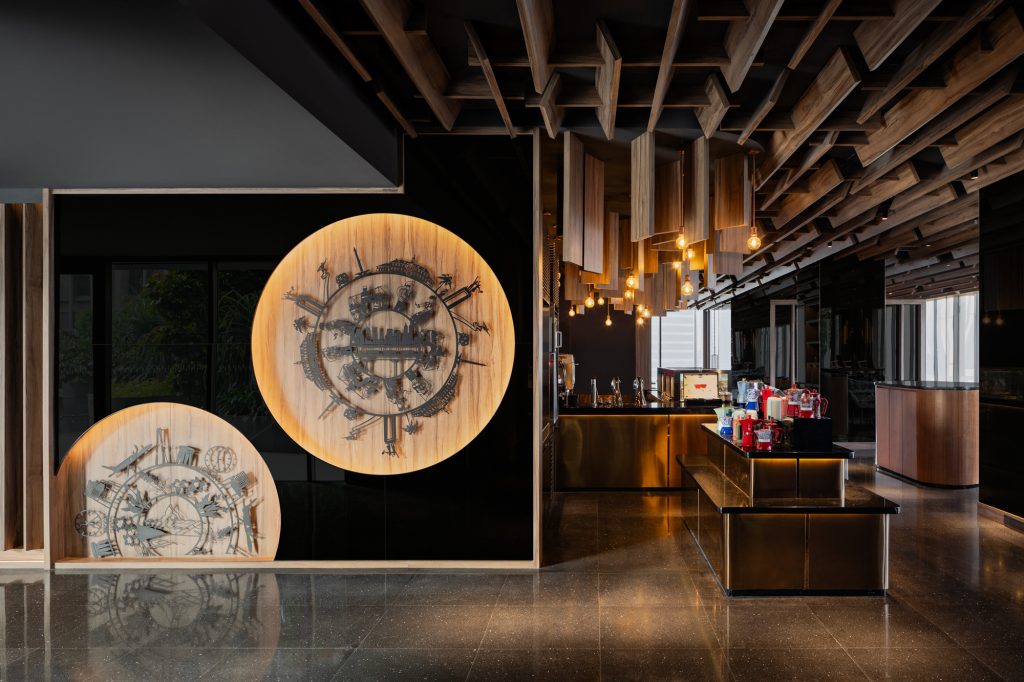
At Swissôtel Living Jakarta Mega Kuningan, the Jakarta Mega Kuningan Circle brings together landmarks, cultural traditions, everyday life, and the modern character of Jakarta within one intricate circular composition.
From a distance, the artwork appears as an elegant silhouette. Look closer, however, and individual figures, landmarks, objects, and cultural references begin to emerge.
Each detail becomes part of a larger story: the story of Jakarta, seen through a Swissôtel lens.
A First Introduction to Jakarta in the Sky Lobby
Guests can discover the Jakarta Mega Kuningan Circle in the Sky Lobby of Swissôtel Living Jakarta Mega Kuningan.
Located in an area where guests naturally spend time during arrival and check-in, the artwork offers an opportunity to discover Jakarta even before settling into their serviced apartment.
While waiting for the check-in process, guests are invited to take a closer look.
What initially appears to be a decorative circular artwork gradually reveals familiar landmarks, traditional culture, transportation, culinary heritage, music, dance, and the modern Jakarta skyline.
In this way, the Circle becomes more than a piece of artwork in the lobby. It becomes a visual introduction to the destination—an invitation to discover some of the stories, traditions, and characteristics that make Jakarta unique.
From Swiss Craftsmanship to a Global Destination
The inspiration behind Swissôtel Circles comes from the tradition of Swiss paper cutting, known as Scherenschnitt.
This intricate form of silhouette cutting has a long history in Europe. The technique was introduced to Europe from China via Persia and the Balkan states in the late 17th century. By the 18th century, silhouette cutting had become a popular handicraft in Switzerland.
Artists used the technique to portray people, places, landscapes, animals, and scenes from everyday life. Silhouettes were also used to decorate walls and windows throughout Switzerland.
Swissôtel takes inspiration from this tradition and interprets it through a contemporary visual language.
Rather than simply reproducing historical Swiss silhouettes, Swissôtel Circles combine the craftsmanship and storytelling tradition of Swiss paper cutting with the identity of each destination.
This approach allows the same artistic language to tell different stories around the world.
What Is a Swissôtel Circle?
Swissôtel Circles are carefully composed circular artworks made up of individually illustrated elements.
The elements are arranged so that, when viewed from a distance, they form a clearly defined silhouette or ornamental pattern. When viewed up close, however, the individual illustrations reveal additional stories and details.
This creates two experiences at once.
From a distance:
The artwork appears as a cohesive and sophisticated circular silhouette.
Up close:
Guests can discover individual landmarks, people, objects, traditions, and cultural references.
This relationship between the whole and the individual details is central to the Swissôtel Circle concept.
The artwork encourages guests to look closer, explore, and discover.
Discovering Jakarta Through the Circle
For Swissôtel properties around the world, creative destination-themed Circles incorporate local and country-specific elements that reflect the character of their surroundings.
The Jakarta Mega Kuningan Circle follows this philosophy by bringing together different aspects of Jakarta—from its historic landmarks and cultural heritage to its modern transportation and evolving skyline.
The composition can be understood through several layers, beginning with the Outside Ring, moving into the Inside Ring, and finally reaching the Centre.
Together, these layers create a visual journey through Jakarta.

The Outside Ring: Jakarta’s Iconic Landmarks
The outer ring introduces several recognizable symbols associated with Jakarta.
-
Monumen Nasional — MONAS
The Monumen Nasional (MONAS) is one of Jakarta’s most recognizable landmarks and an enduring symbol of Indonesia’s capital. Its presence establishes the Circle’s connection with the city itself, giving guests an immediate visual reference to Jakarta.
-
Museum Kota Tua
The Museum Kota Tua represents Jakarta’s historical roots and its connection to the heritage of the Old Town area. It reflects a different chapter of the city, one shaped by history, architecture, commerce, and the development of Jakarta over time.
-
Palm Tree
The palm tree adds a tropical element to the composition, reflecting Jakarta’s climate and landscape while providing a natural contrast to the city’s architecture and urban structures.
-
Monumen Selamat Datang
The Monumen Selamat Datang, or Welcome Monument, is another iconic symbol of Jakarta. Positioned at one of the city’s best-known urban intersections, the monument has long served as a visual greeting to people entering the central area of Jakarta. Its inclusion reinforces the Circle’s role as a welcoming introduction to the city.
-
Pancaron Statue
The Pancarona Statue adds another layer to the representation of Jakarta’s contemporary identity, reflecting the city’s evolving public spaces and visual landscape.
-
Bajaj
Among the landmarks, the Bajaj brings the Circle closer to everyday Jakarta. Rather than representing only famous monuments, the artwork also celebrates familiar elements of daily urban life. The Bajaj has become part of Jakarta’s visual identity and offers a more personal and playful reference to the city’s streets. Together, these elements create an outer silhouette that represents Jakarta not simply through its skyline, but through the places, objects, and experiences that contribute to the character of the city.
Inside the Ring: The Flavours and Rhythms of Betawi Culture
Moving inward, the Circle reveals elements associated with Betawi culture, the cultural heritage of the communities historically associated with Jakarta.
-
Kerak Telor
A kerak telor seller represents one of Jakarta’s traditional culinary experiences. Kerak telor is closely associated with Betawi culinary heritage and is particularly recognizable as a traditional Jakarta food. Its inclusion in the Circle highlights the important role that food plays in understanding a destination. Cuisine carries stories of communities, traditions, ingredients, and generations—and offers visitors a way to connect with the cultural character of a city.
-
Tanjidor
The Tanjidor represents the musical heritage of Betawi culture. Traditionally associated with brass and percussion instruments, Tanjidor adds a sense of rhythm and celebration to the composition. Its presence reminds us that a destination is experienced through more than what we see. Music, sounds, celebrations, and performances are equally important parts of cultural identity.
-
Tari Betawi
Betawi dance adds movement and expression to the Circle. Traditional dance is an important form of cultural storytelling, communicating identity through movement, costume, music, and performance.
At the Centre: Jakarta Today
At the heart of the composition is Jakarta’s MRT and skyline. This central element represents the Jakarta of today: modern, connected, dynamic, and continuously evolving. The placement of the modern cityscape at the centre creates an intentional contrast with the traditional cultural references surrounding it. Traditional food, music, and dance exist alongside modern transportation, architecture, and urban development. This reflects one of the defining characteristics of Jakarta itself: a city where heritage and modernity continuously intersect. The past remains visible in its traditions and historic landmarks, while the future is represented by its evolving infrastructure, skyline, and urban lifestyle. This balance also resonates with the concept of Swissôtel Living Jakarta Mega Kuningan—a contemporary serviced-apartment experience situated within the energy and diversity of Jakarta.
Look Closely: A Hidden Surprise
There is another characteristic that makes Swissôtel Circles particularly engaging. Every Swissôtel Circle contains a humorous detail waiting to be discovered. For the Jakarta Mega Kuningan Circle, guests are invited to look closely for Ondel-Ondel. The distinctive traditional Betawi giant puppet is one of the cultural symbols associated with Jakarta and adds a playful element to the composition.
Where Swiss Heritage Meets Jakarta’s Identity
One of the defining characteristics of Swissôtel Circles is their modular composition. The circular format allows Swiss and destination themes to be brought together, creating unexpected relationships between different cultural references. This concept reflects the diversity of modern Swissness: a contemporary identity that can engage with different cultures and destinations while maintaining a connection to Swiss heritage and craftsmanship. In Jakarta, this creates a visual dialogue between Swiss paper-cutting tradition and Indonesian cultural identity. The technique and craftsmanship draw inspiration from Switzerland. The story, however, belongs to Jakarta. MONAS, Kota Tua, the Welcome Monument, Bajaj, Betawi culinary traditions, Tanjidor, traditional dance, Ondel-Ondel, the MRT, and Jakarta’s skyline come together to create a distinctly local narrative. The result is not simply a Swiss artwork placed in Jakarta.
It is a Swissôtel interpretation of Jakarta.
More Than a Decoration
Swissôtel Circles are not intended merely to function as wall decoration. They are designed to incorporate stories for guests. At Swissôtel Living Jakarta Mega Kuningan, the Jakarta Mega Kuningan Circle becomes part of the guest journey from the moment of arrival. While waiting for check-in in the Sky Lobby, guests can pause, look closer, and begin discovering the destination around them. For international guests, the Circle can provide a first introduction to elements of Jakarta that they may encounter during their stay. For local guests, it offers a different opportunity: to recognize familiar places and traditions presented through a new visual perspective. In both cases, the Circle encourages a moment of curiosity.
What is that landmark?
What does that figure represent?
Where have I seen that before?
And can I find the Ondel-Ondel?
Celebrating Local Culture with Respect
The Jakarta Mega Kuningan Circle is also an opportunity to encourage greater appreciation of the destination and its cultural heritage. By incorporating local landmarks, Betawi traditions, culinary heritage, music, dance, and everyday life, the artwork introduces guests to aspects of Jakarta beyond its hotels and business districts. Swissôtel Living Jakarta Mega Kuningan encourages guests to engage with these cultural elements with curiosity, appreciation, and respect.
This includes:
- Learning about local traditions rather than viewing cultural elements only as decoration.
- Respecting cultural and religious sites, including appropriate dress, behaviour, and photography practices where applicable.
- Supporting local communities and businesses when exploring Jakarta, including local culinary and cultural experiences.
- Being respectful when photographing people, particularly during cultural performances or community activities.
- Appreciating cultural practices in their proper context, recognizing that traditions represent living communities and histories.
- Exploring Jakarta responsibly, with consideration for local customs, communities, and the environment.
In this way, cultural storytelling becomes an invitation not only to discover Jakarta, but also to experience the city thoughtfully and respectfully.
A Circle That Tells a Story
The Jakarta Mega Kuningan Circle brings together many different sides of the city.
- Its landmarks tell the story of Jakarta’s places.
- Its Betawi elements tell the story of its cultural heritage.
- Its food, music, and dance reflect its living traditions.
- Its MRT and skyline represent its modern identity.
And the hidden Ondel-Ondel adds a little moment of discovery along the way. Together, these elements create a visual story of a city shaped by its past while continuously moving toward its future. For Swissôtel Living Jakarta Mega Kuningan, the Circle also represents a meeting point between two identities: Swiss craftsmanship and Jakarta’s vibrant local character. So, the next time you arrive at Swissôtel Living Jakarta Mega Kuningan, take a moment while waiting for check-in to look beyond the silhouette.
Look closely.
Discover the landmarks.
Explore the traditions.
Find the hidden details.
And perhaps, somewhere within the Circle, you will find Ondel-Ondel waiting to greet you.
Welcome to Jakarta, through the eyes of Swissôtel.