
Extended Stay Hotels with Kitchens: Complete Guide
Extended stay hotels with kitchens have transformed the accommodation landscape for business travelers, relocating professionals, and families seeking flexible housing solutions. These properties bridge the gap between traditional hotels and residential apartments, offering fully equipped kitchens alongside hotel-style services. The extended stay segment has seen remarkable growth, with developers and investors recognizing the value of kitchen-equipped accommodations that meet diverse traveler needs.
Understanding Extended Stay Hotels with Kitchens
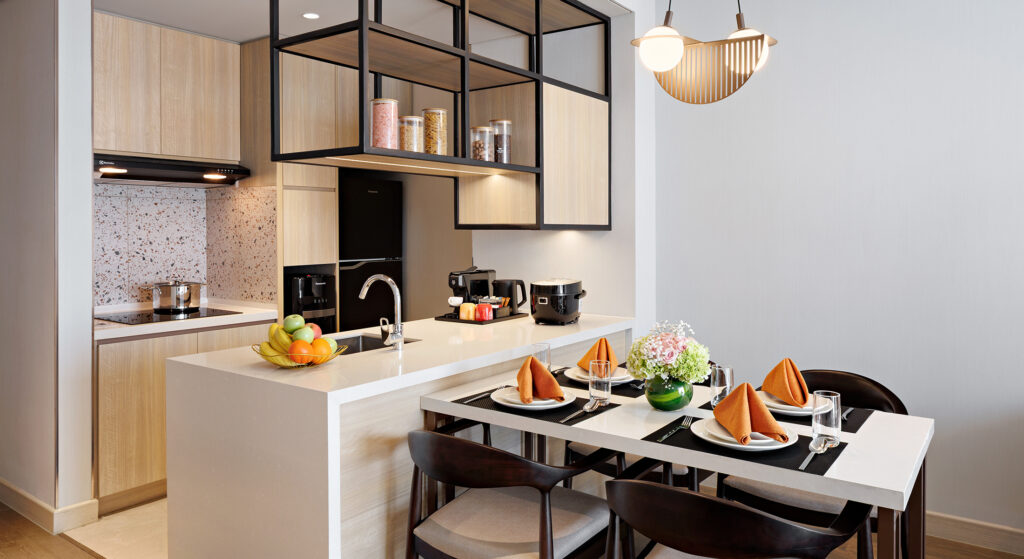
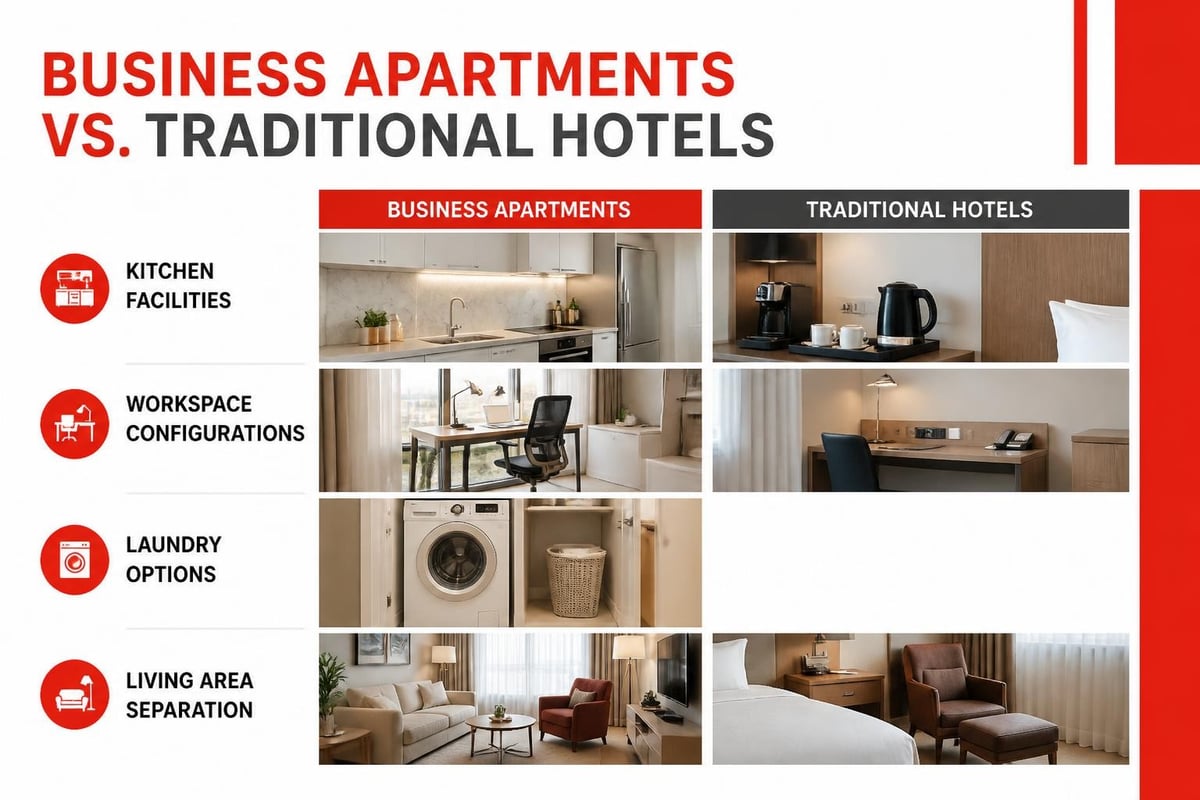
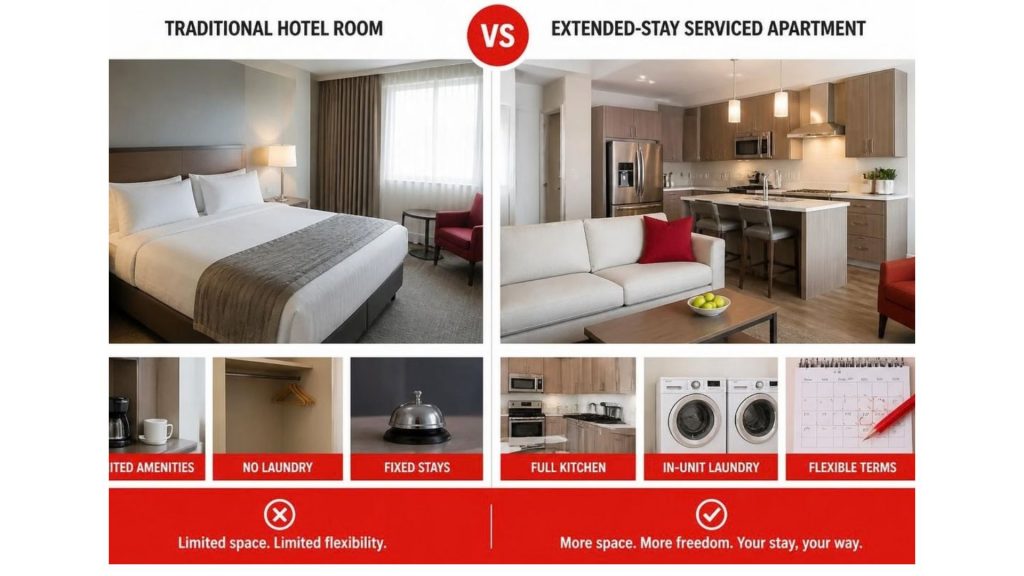
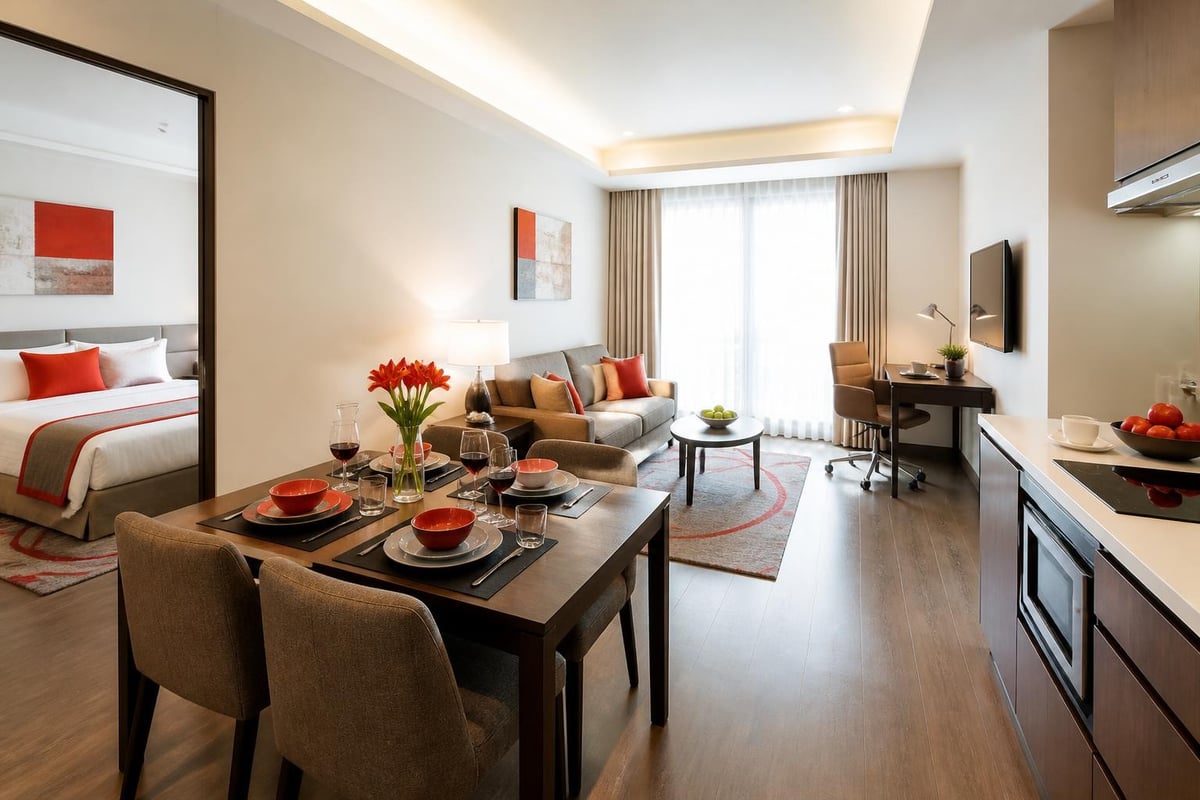
Extended stay hotels with kitchens represent a distinct accommodation category designed for guests who require temporary housing beyond typical hotel stays. Unlike standard hotel rooms with minimal amenities, these properties feature full or partial kitchens that enable guests to prepare meals, store groceries, and maintain daily routines similar to home living.
The defining characteristic of extended stay hotels with kitchens is their residential functionality combined with hospitality services. Each unit typically includes cooking appliances, refrigeration, dishware, and counter space that allow guests to function independently.
Core Features and Amenities
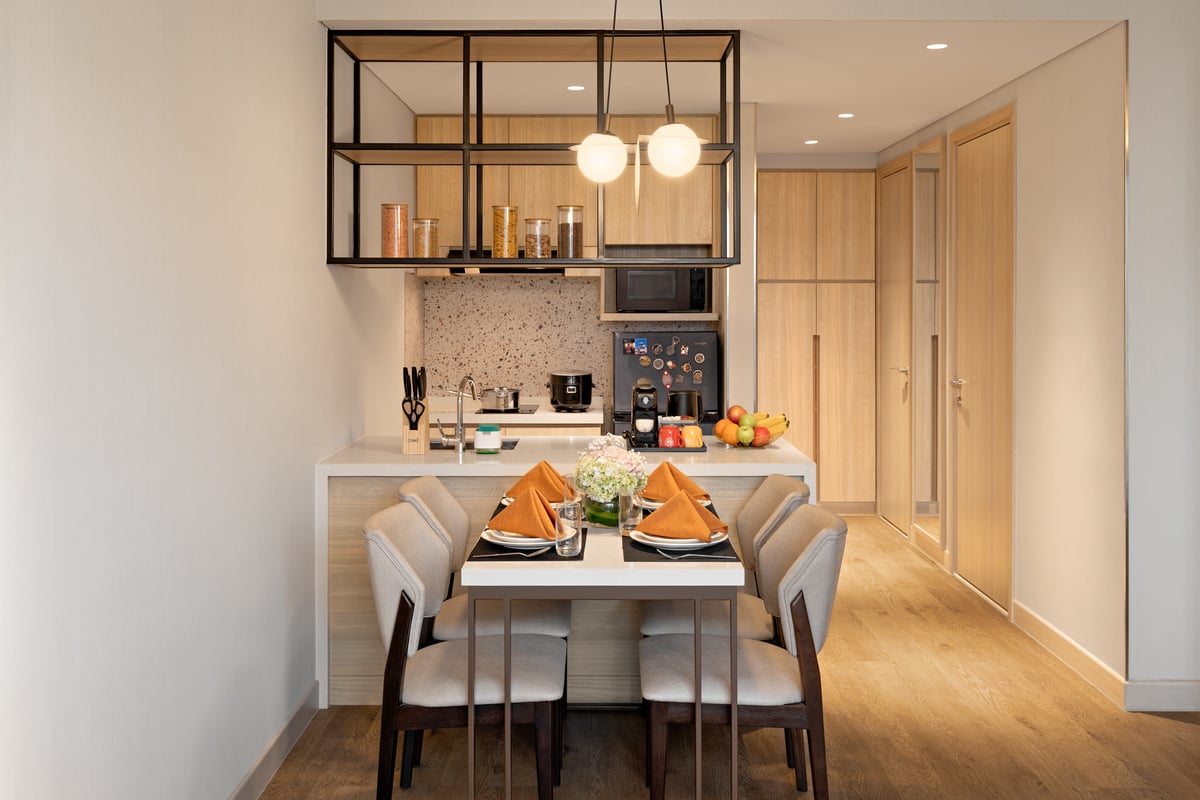
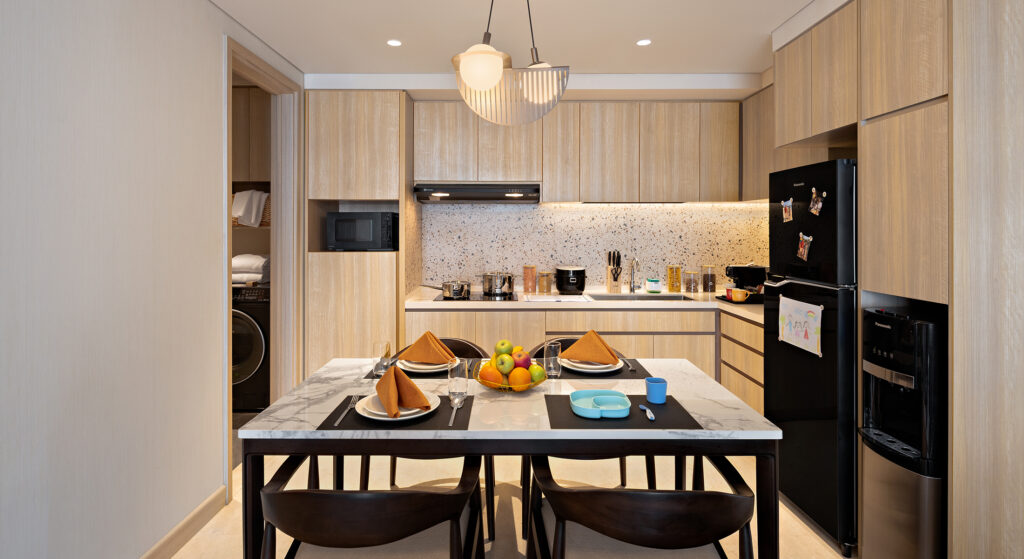
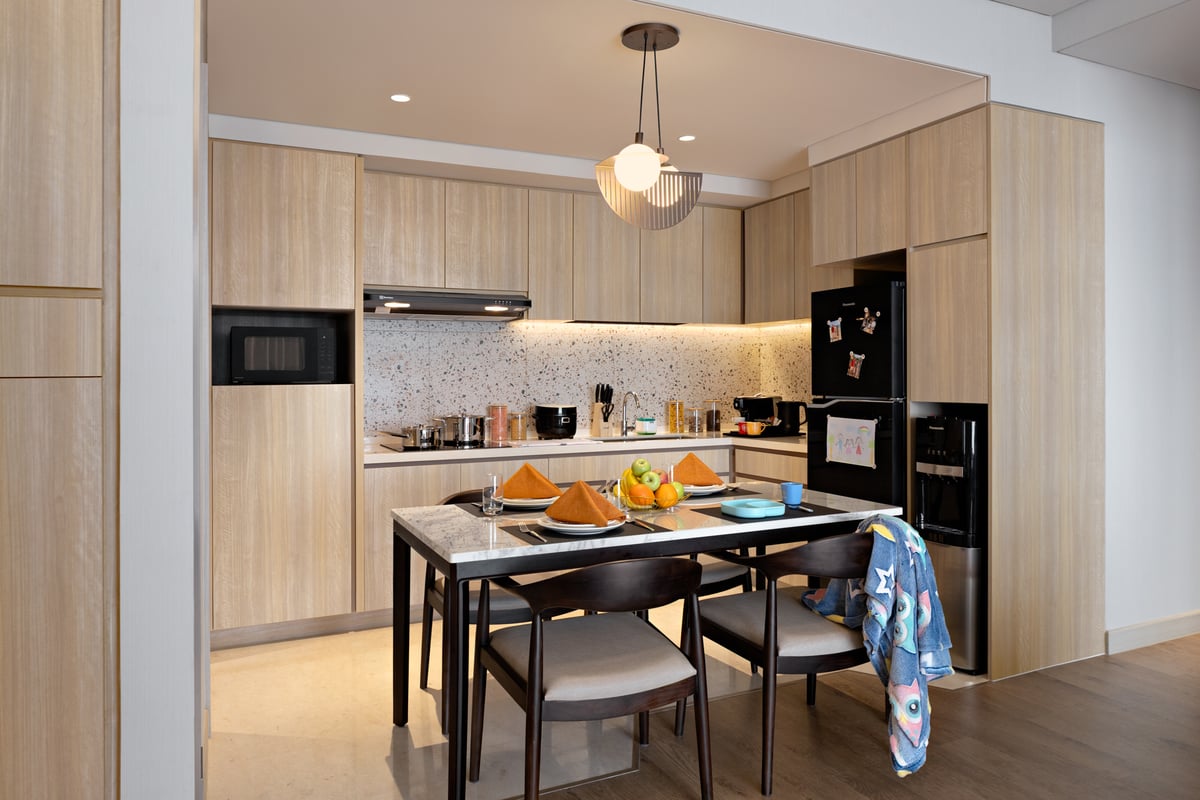
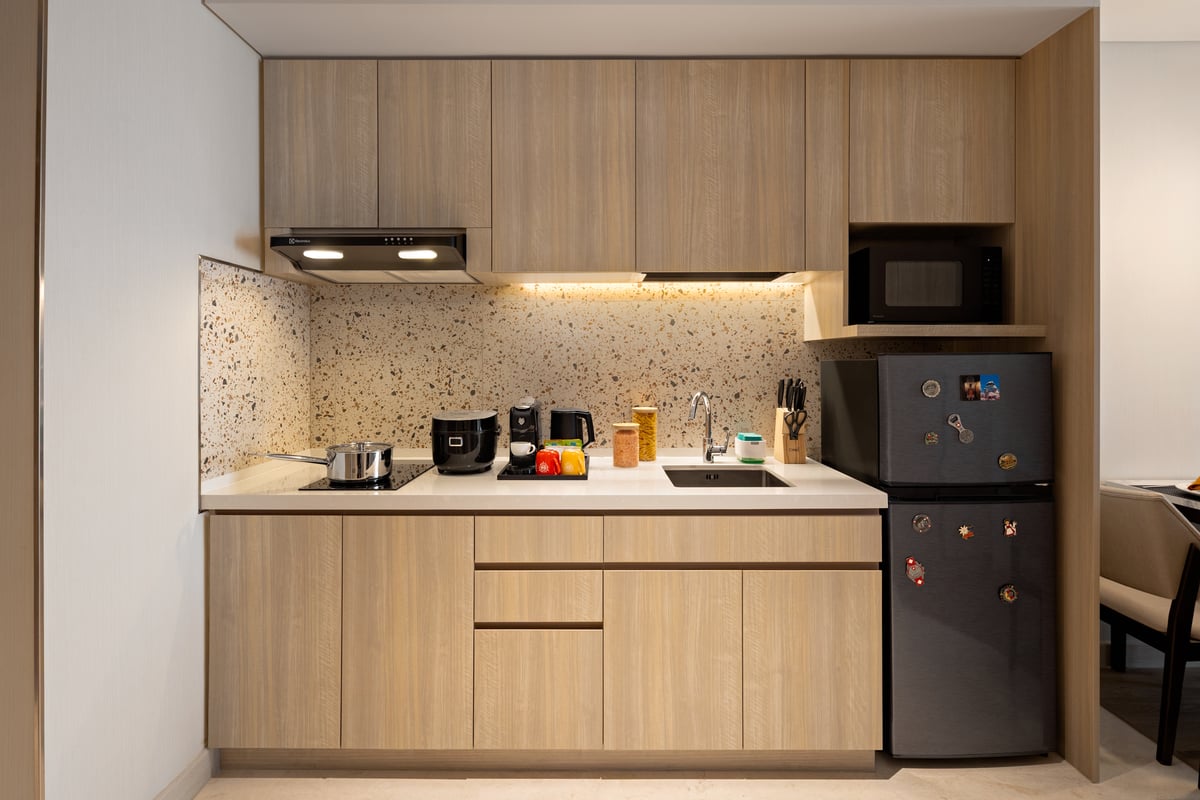
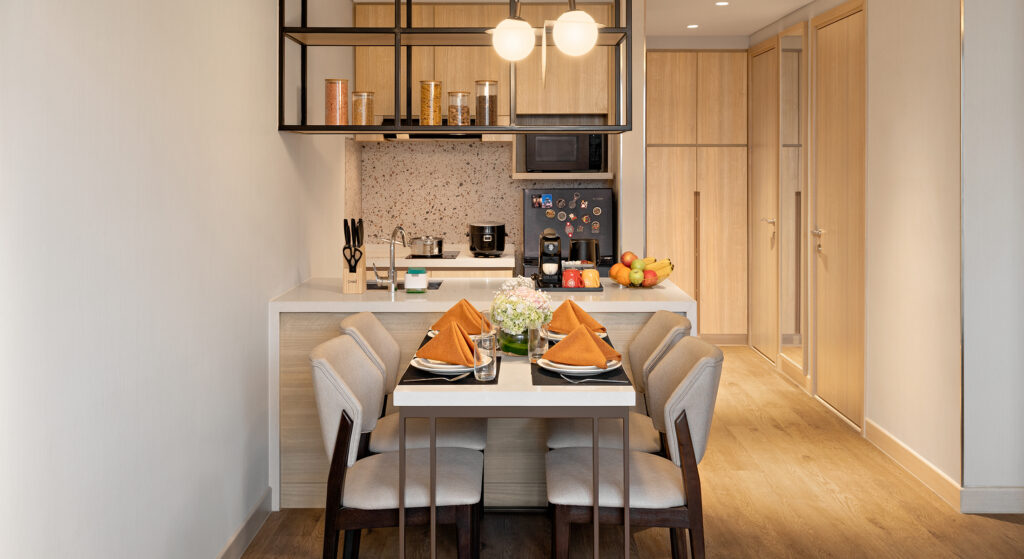
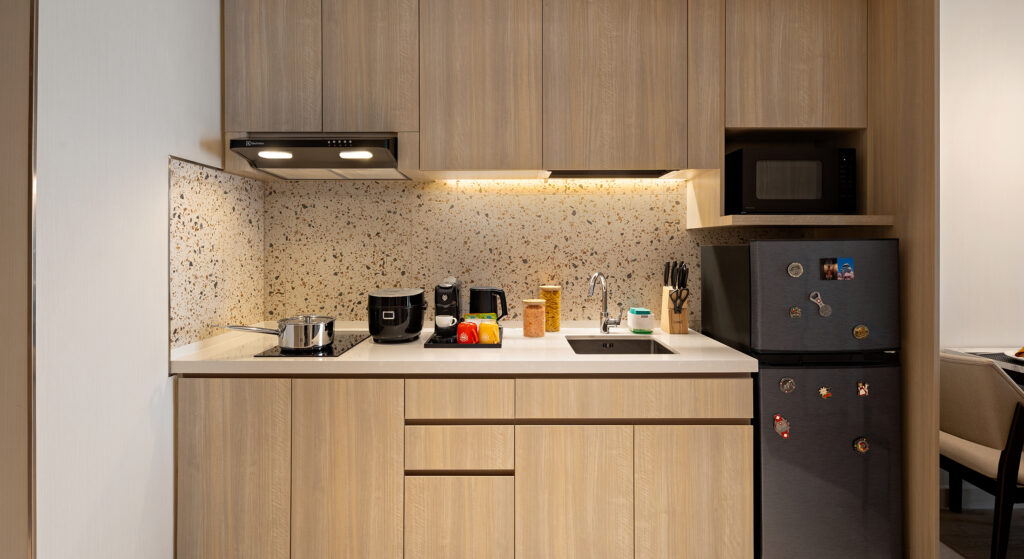
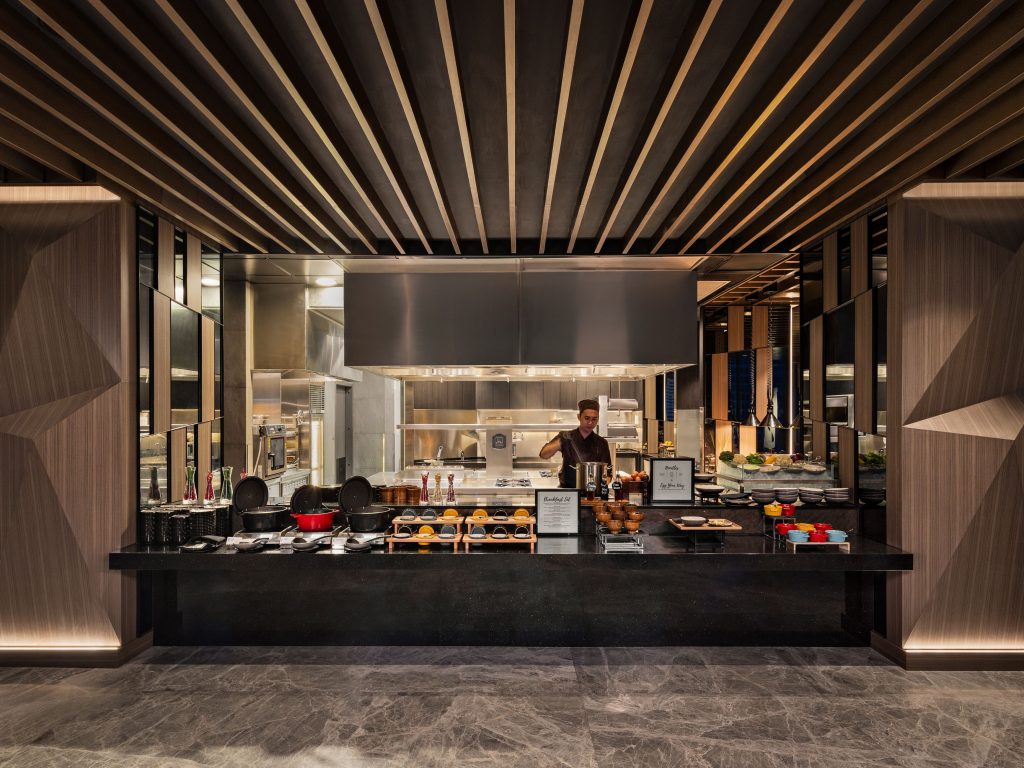
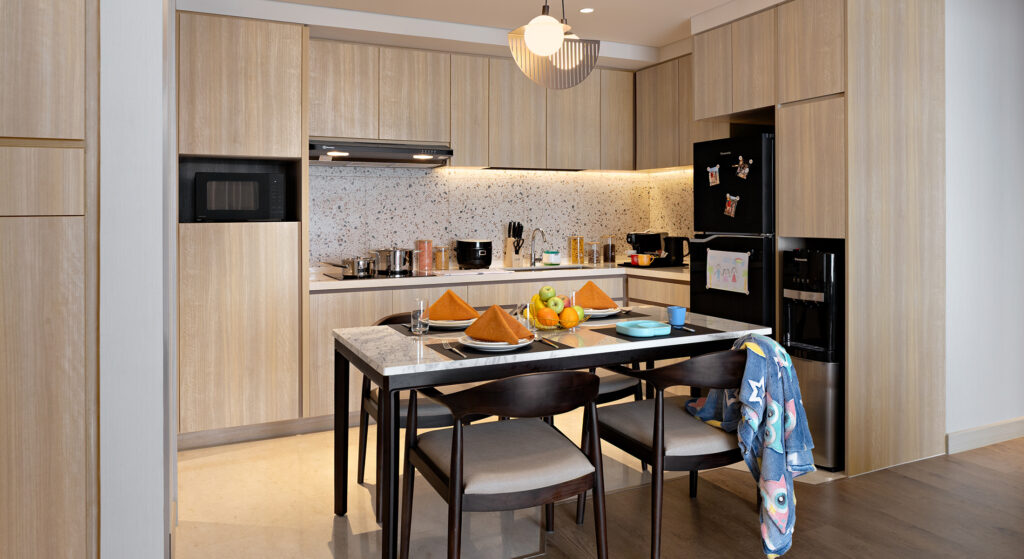
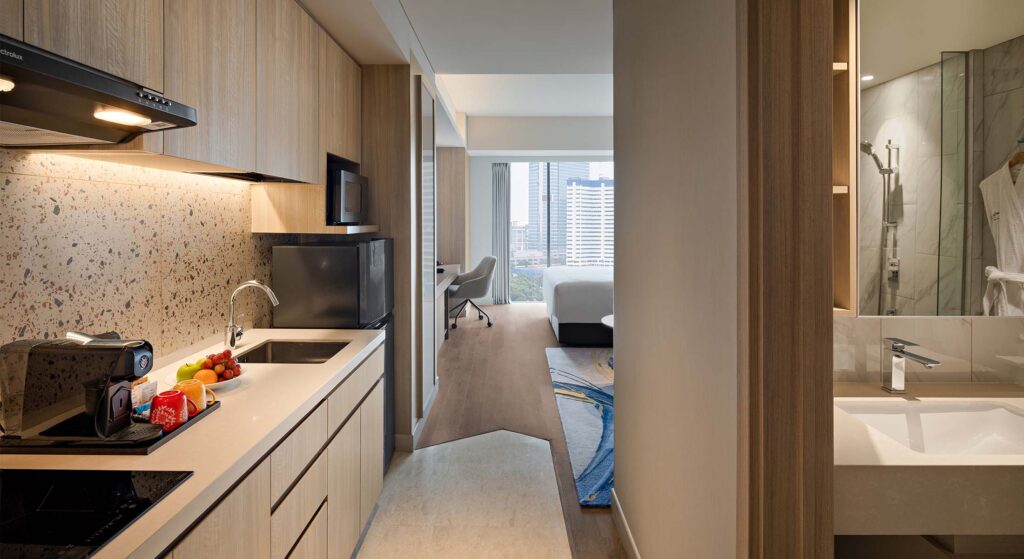
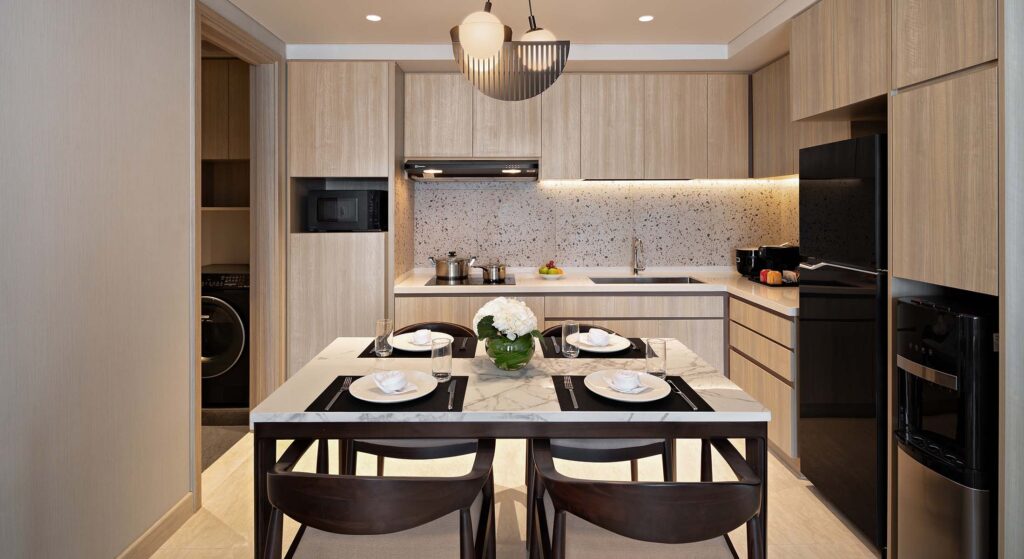
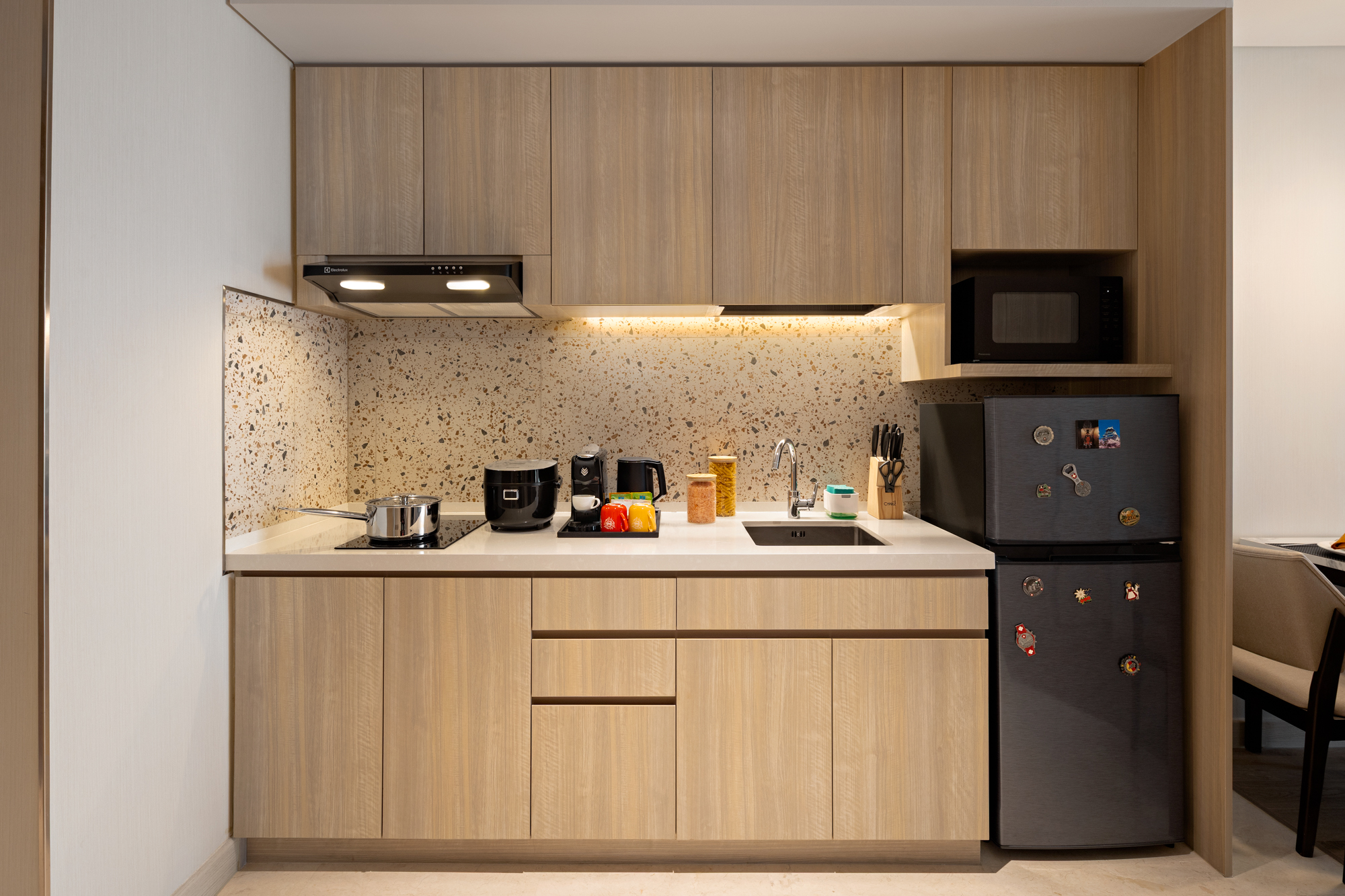
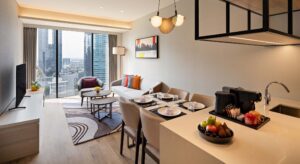
Modern extended stay properties offer comprehensive kitchen facilities that vary by brand positioning and price point. Full kitchens generally include:
- Full-size refrigerator with freezer compartment
- Cooking range (induction, gas, or electric stove)
- Microwave oven for quick meal preparation
- Dishwasher or adequate sink space for manual washing
- Complete cookware and utensils including pots, pans, knives, and serving dishes
- Small appliances such as coffee makers, rice cookers, and toasters
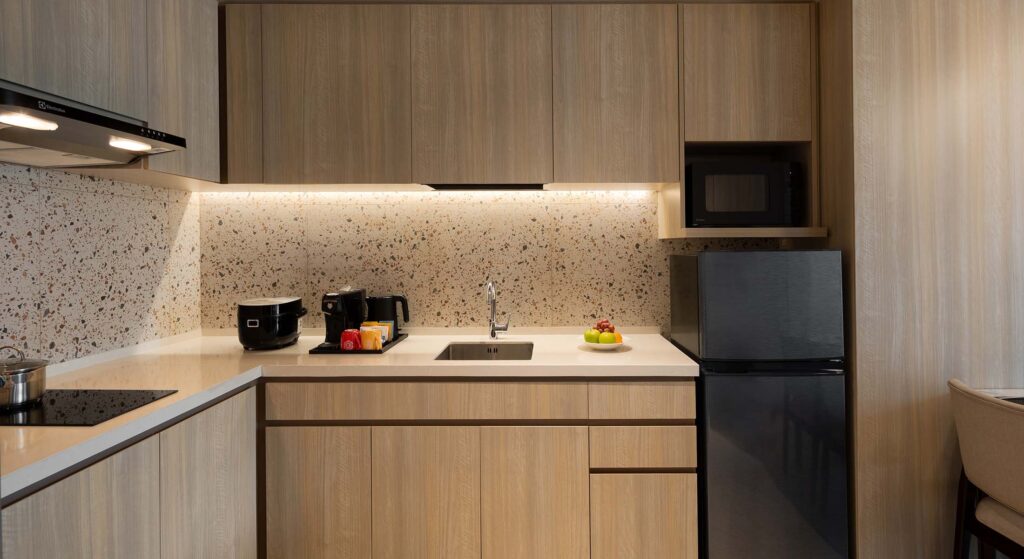
According to industry analysis from JLL, in-room kitchens remain the primary differentiator driving extended stay demand, with guests prioritizing cooking facilities when selecting accommodations for stays exceeding seven nights.
Target Markets and Guest Profiles
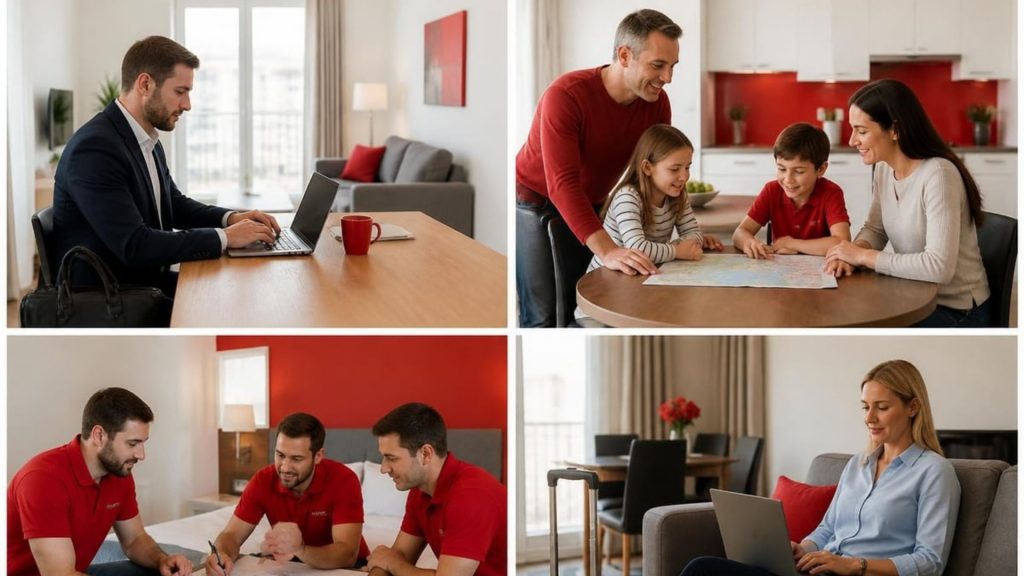
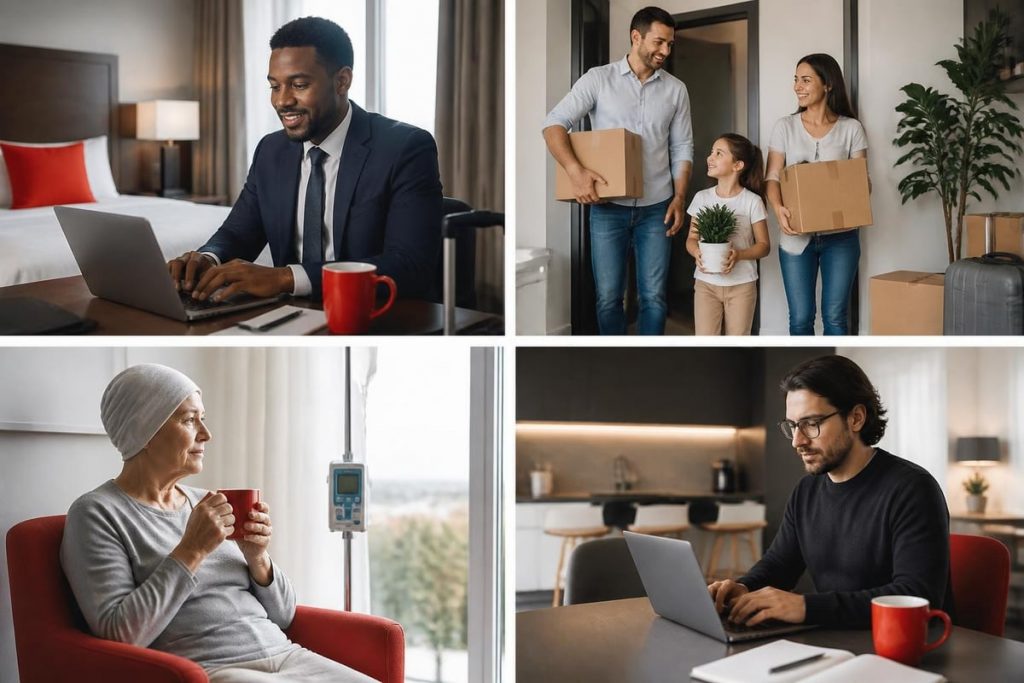
Extended stay hotels with kitchens serve multiple market segments, each with specific needs and preferences that kitchen facilities directly address.
Corporate Relocations and Business Travelers
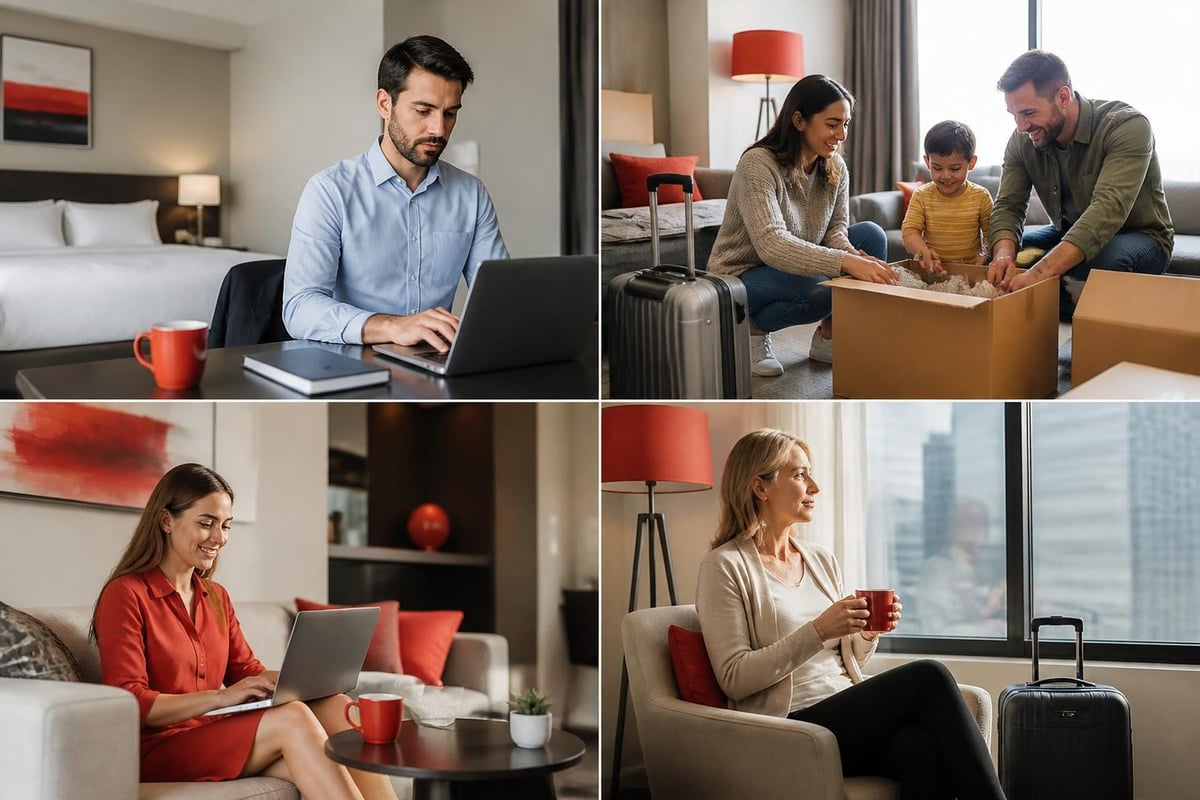
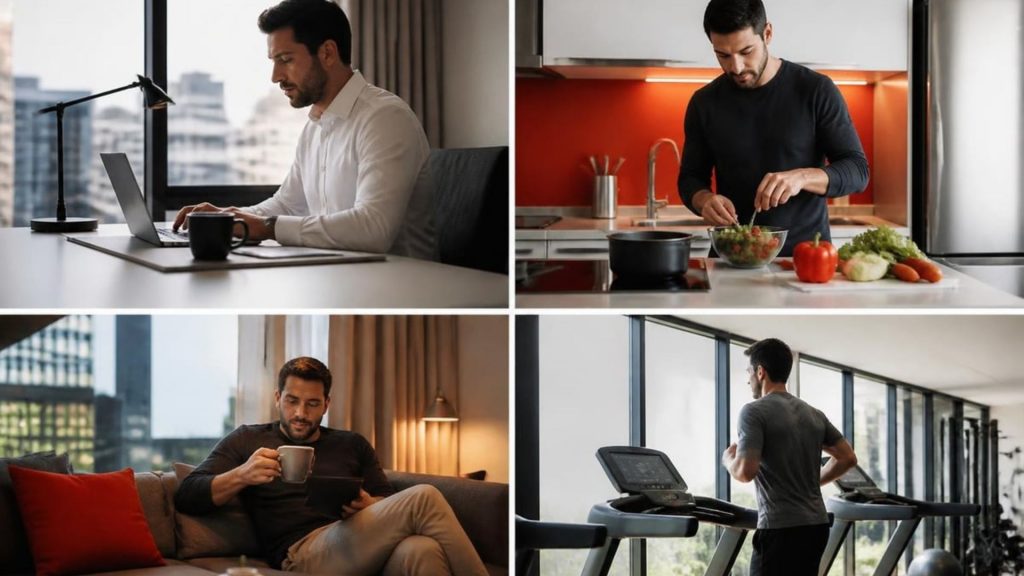
Business professionals on project assignments, training programs, or temporary relocations represent a substantial portion of extended stay guests. Companies increasingly prefer accommodations with kitchens to reduce per diem expenses and provide employees with comfortable living environments during extended assignments.
The ability to prepare meals offers significant cost savings compared to dining out daily. Business travelers can maintain dietary preferences, work schedules, and wellness routines more easily when kitchen facilities are available.
Expatriate and Long-Term Residents
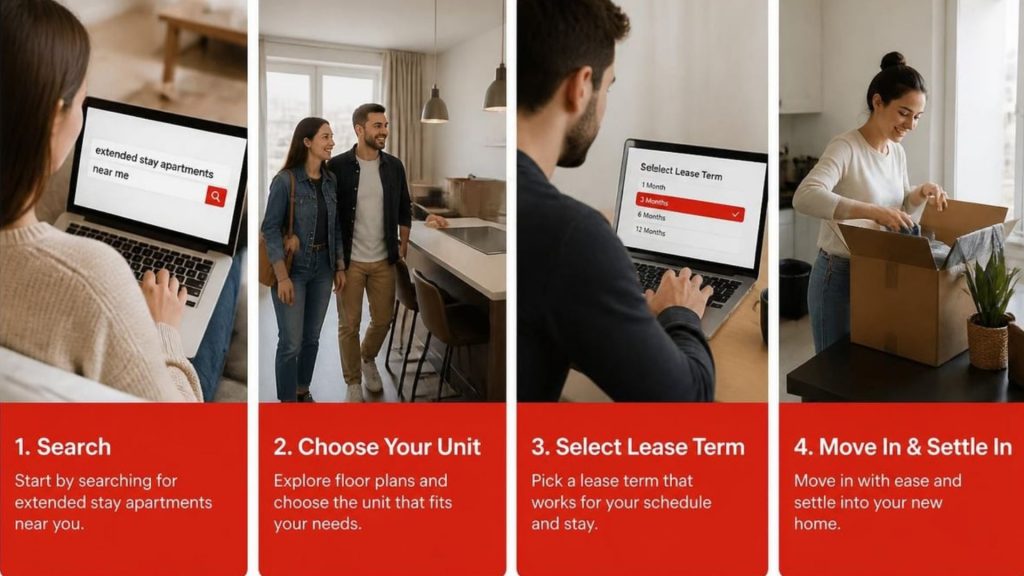
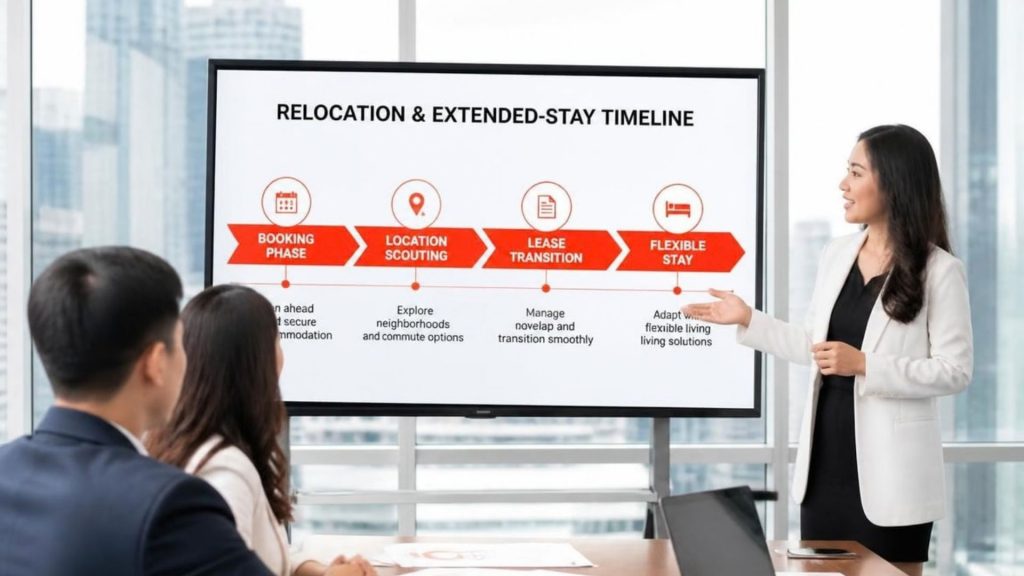
International professionals relocating to new cities require bridge housing while searching for permanent residences or awaiting lease start dates. Extended stay hotels with kitchens offer immediate move-in capability without the commitments of traditional leases.
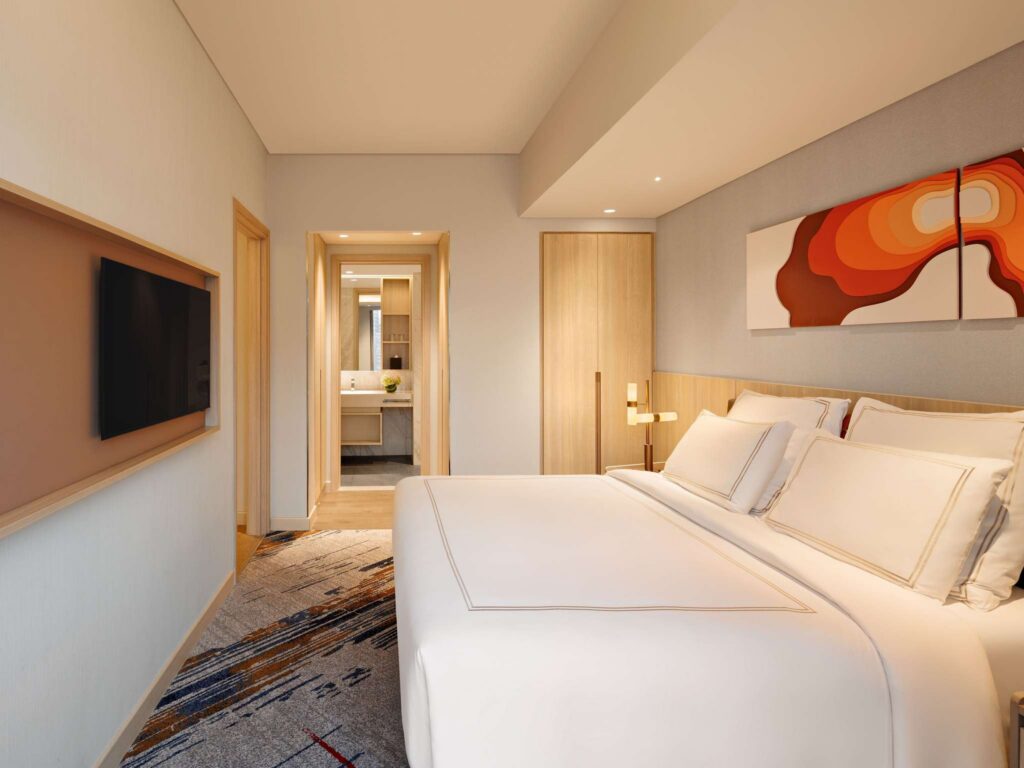
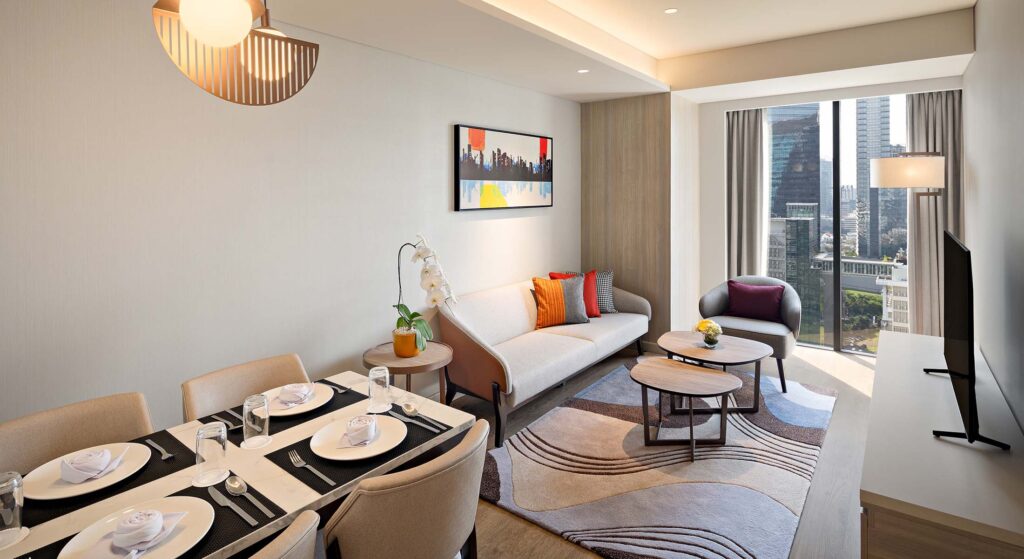
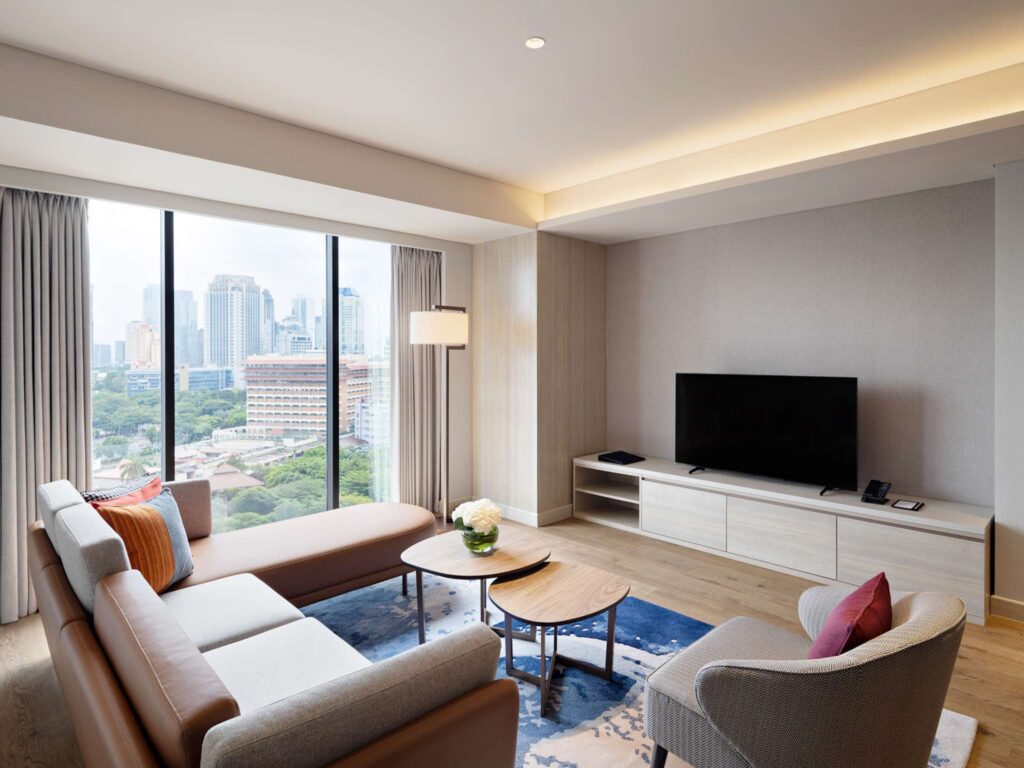
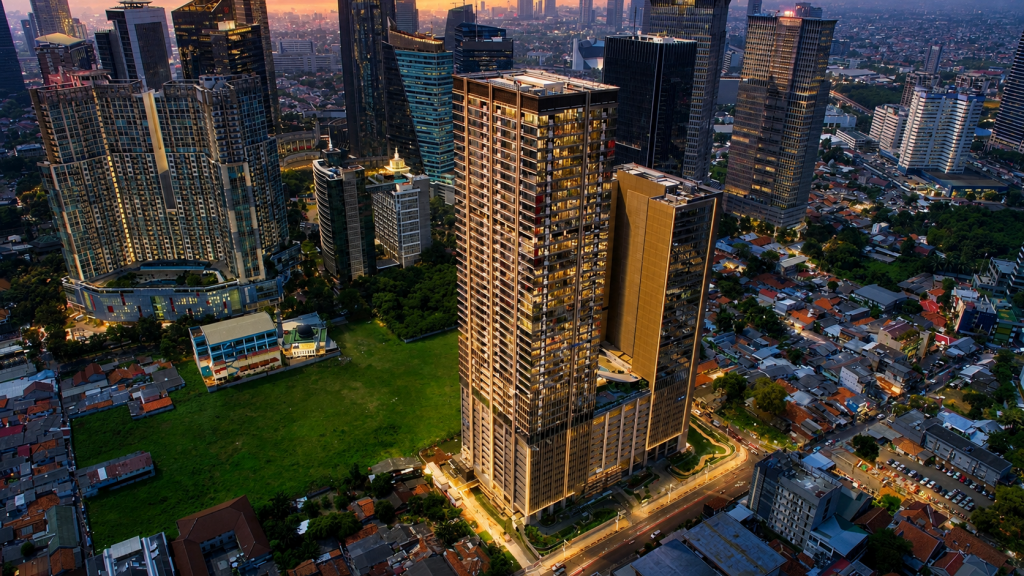
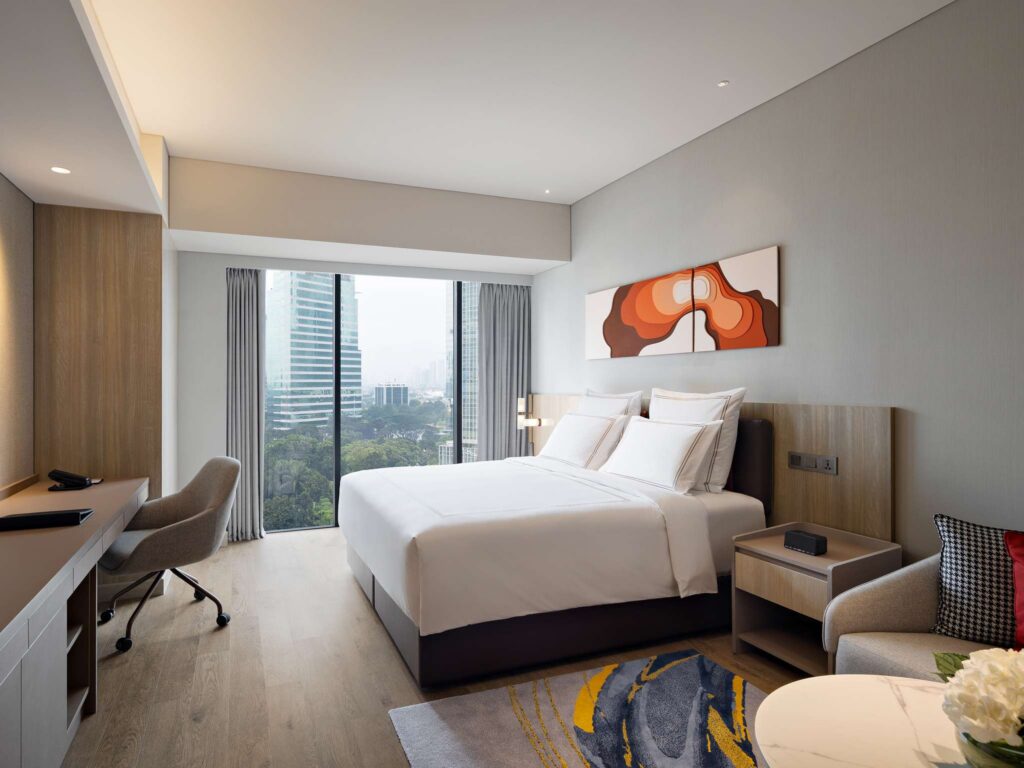
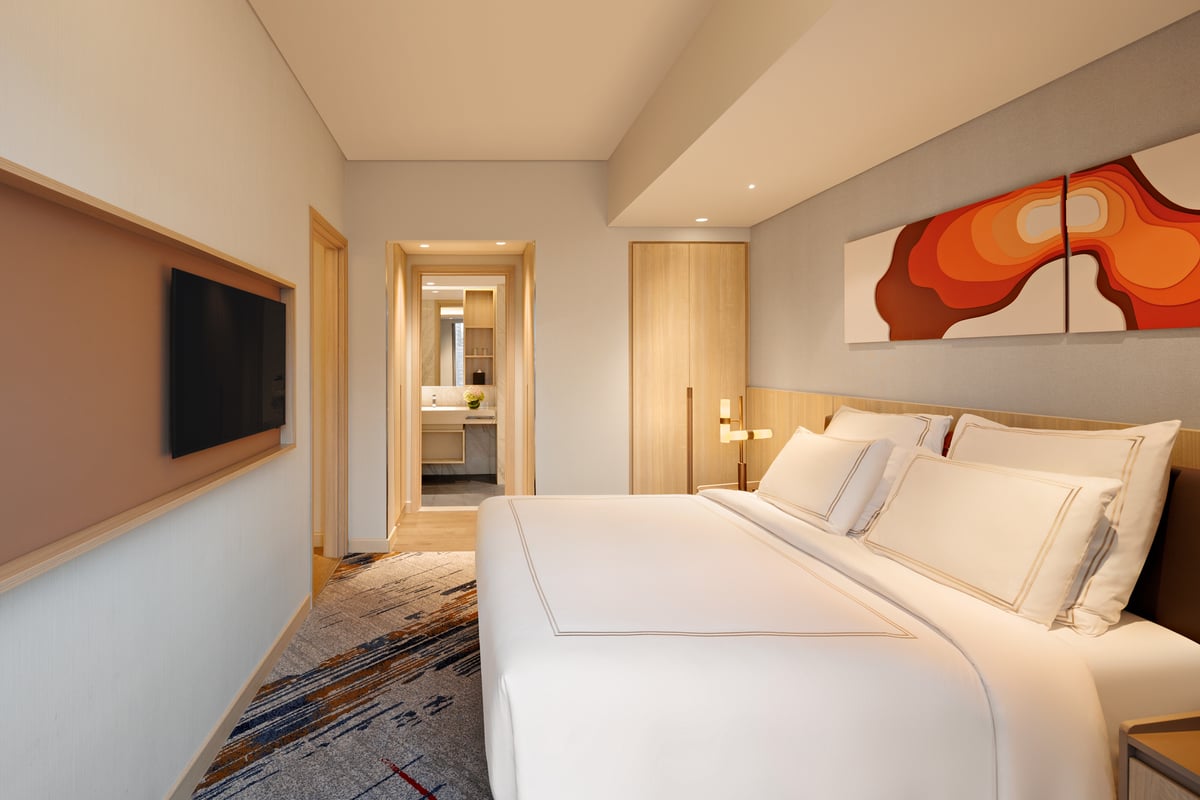
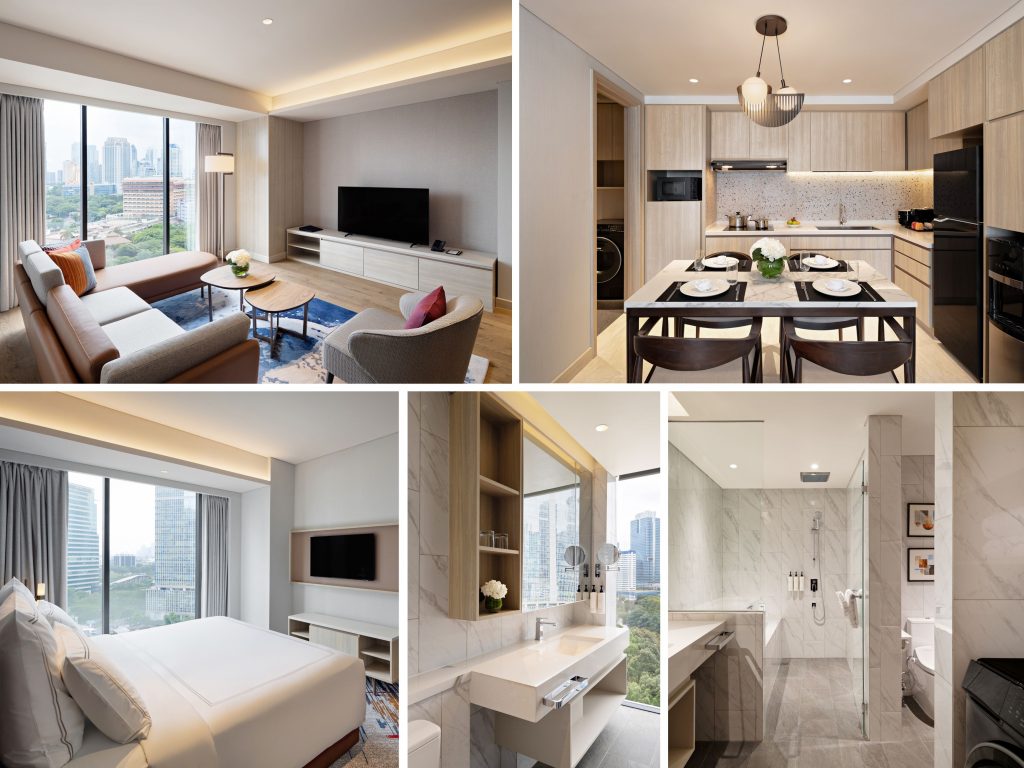
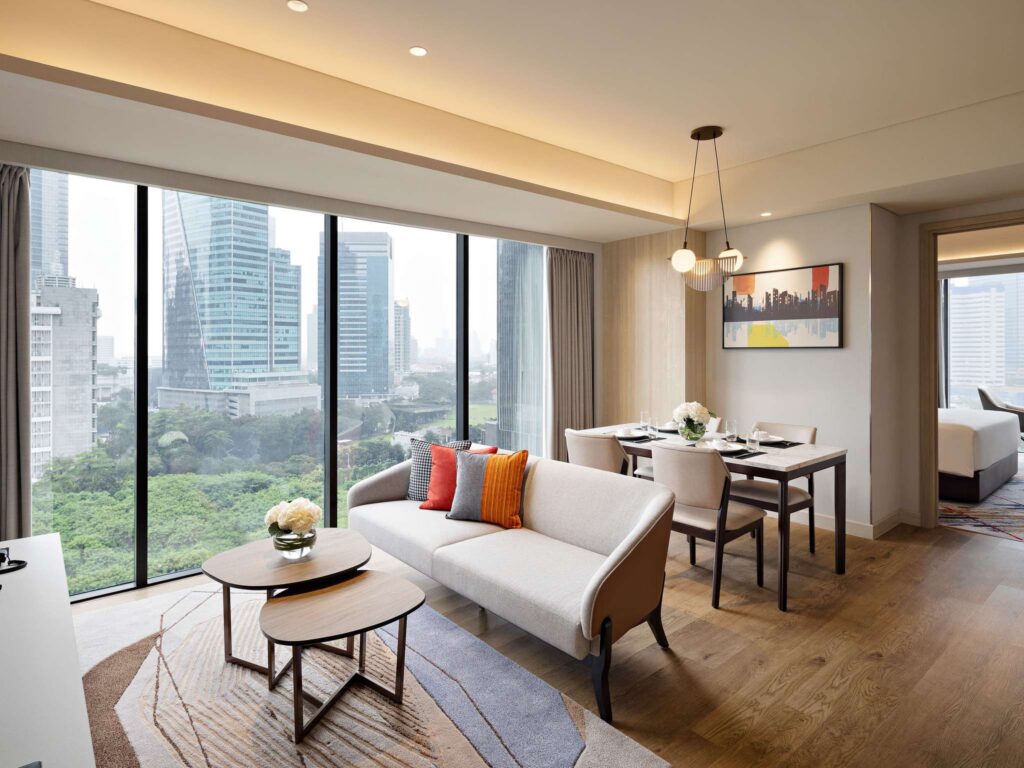
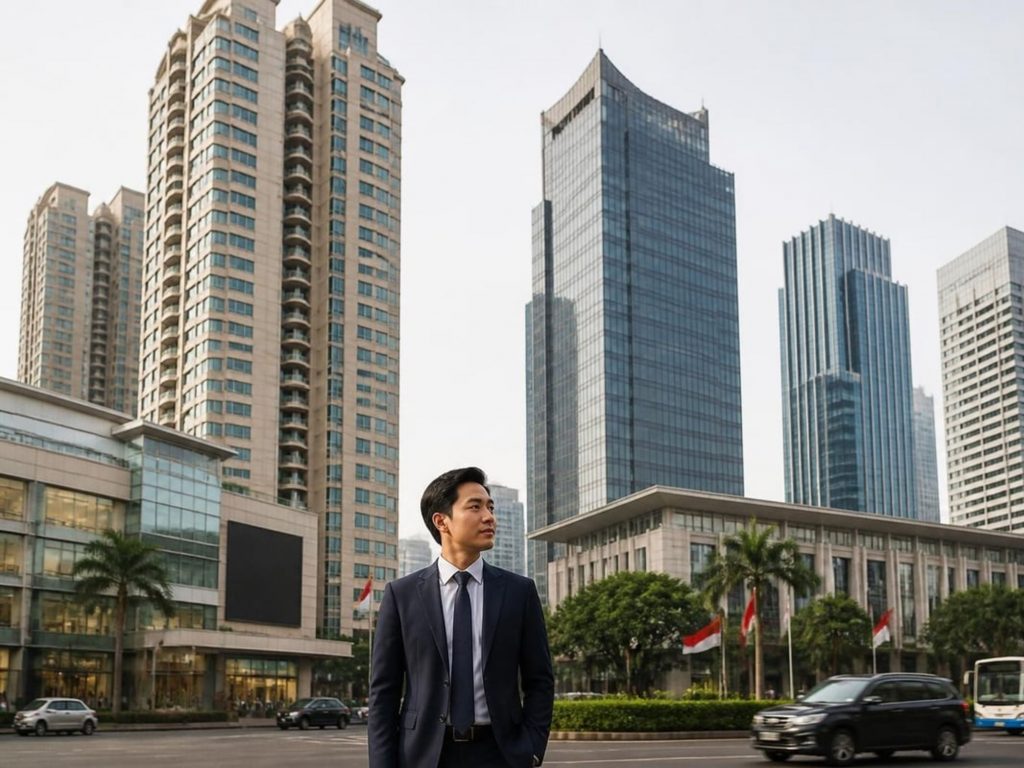
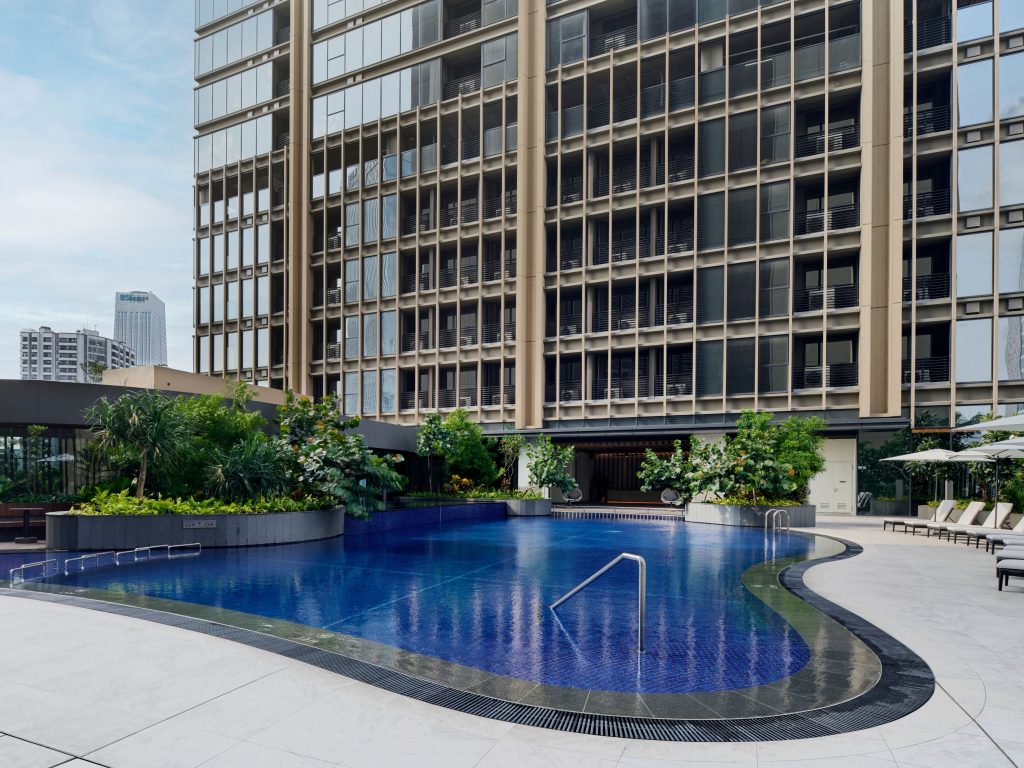
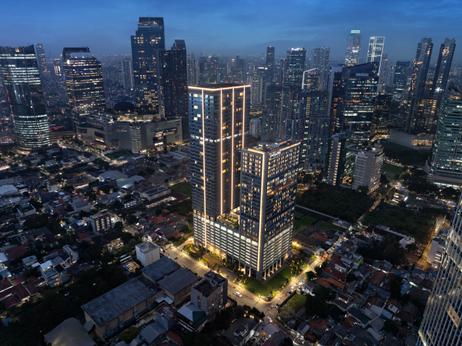
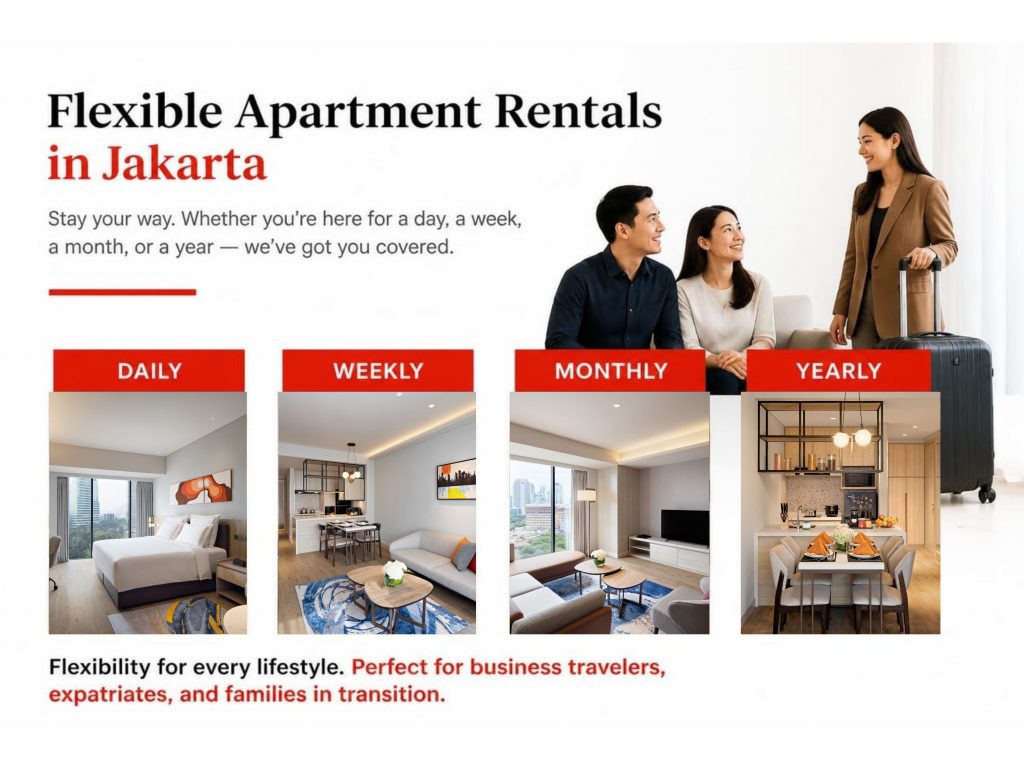
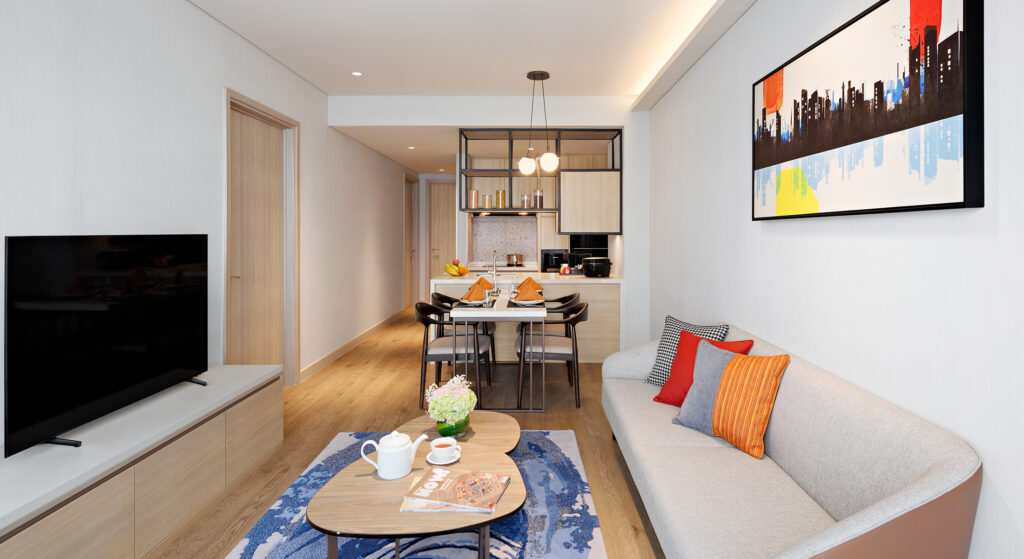
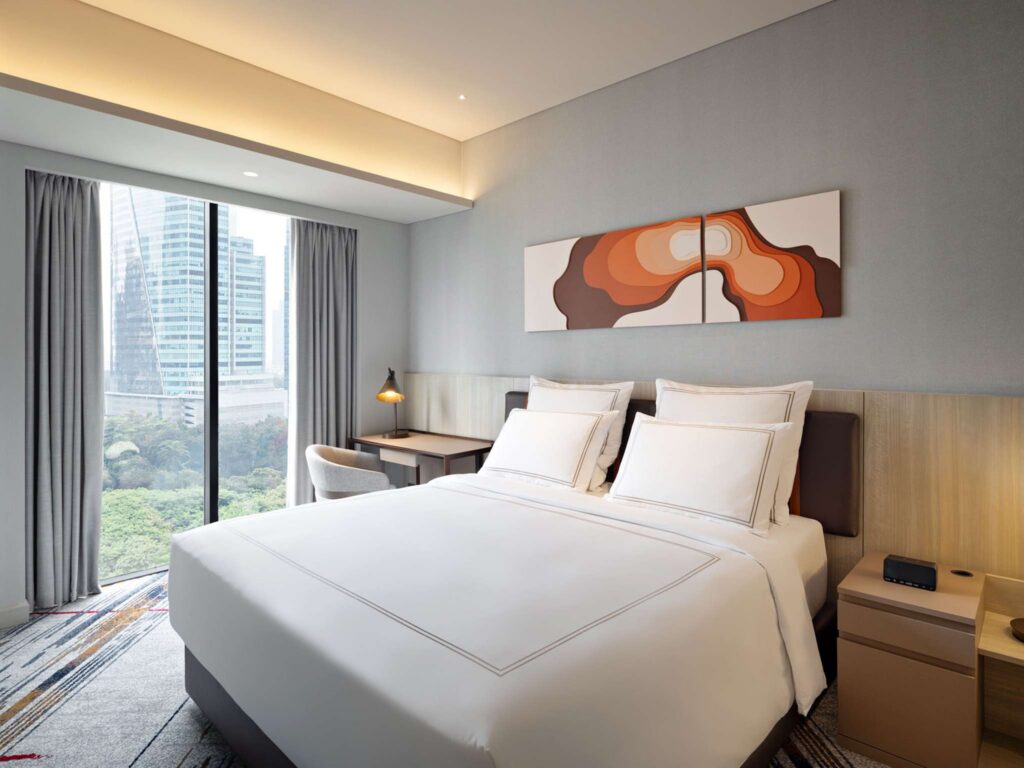
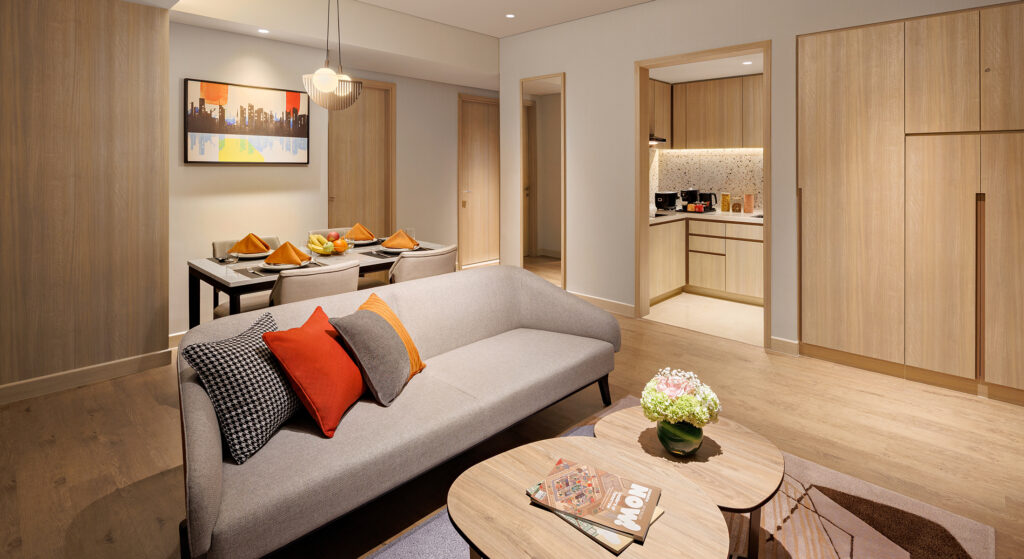
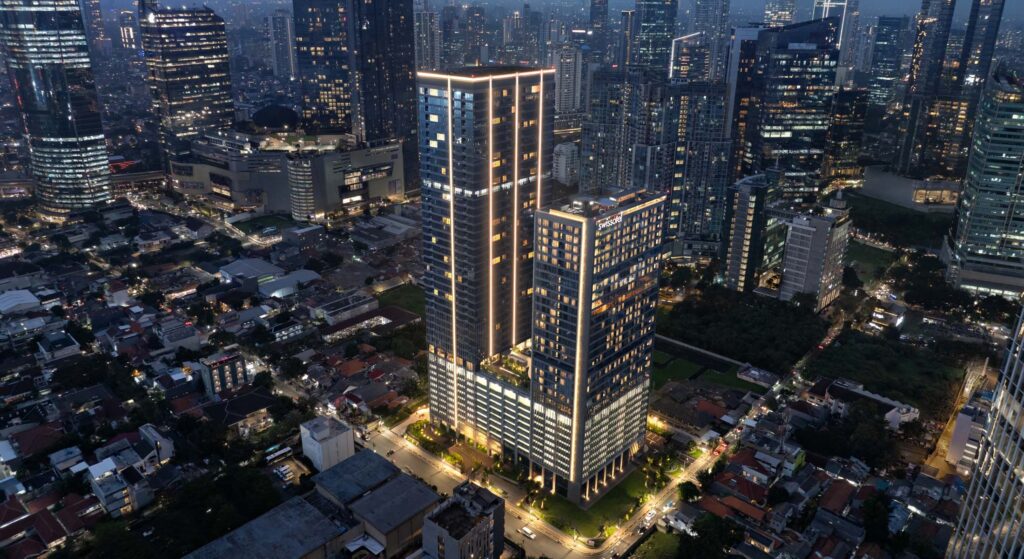
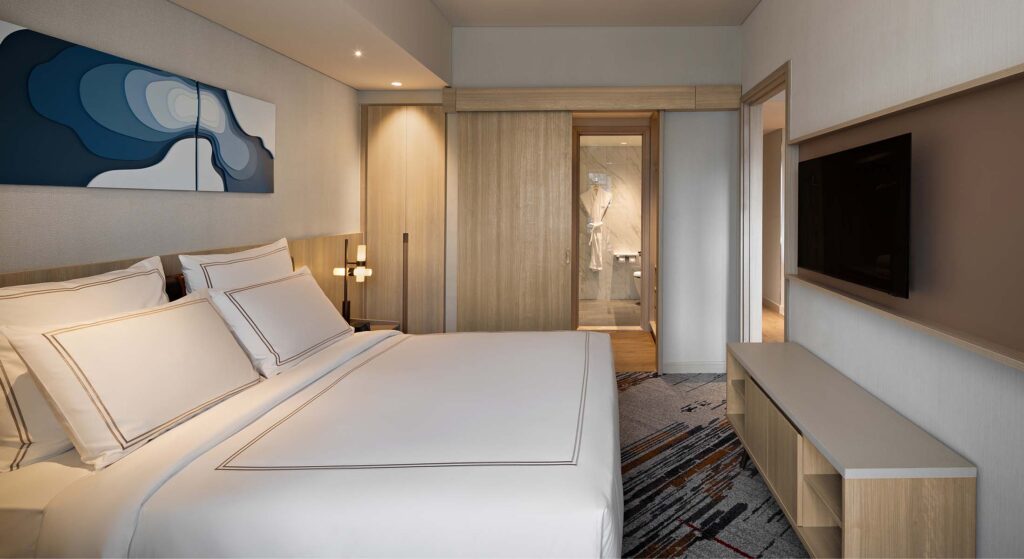
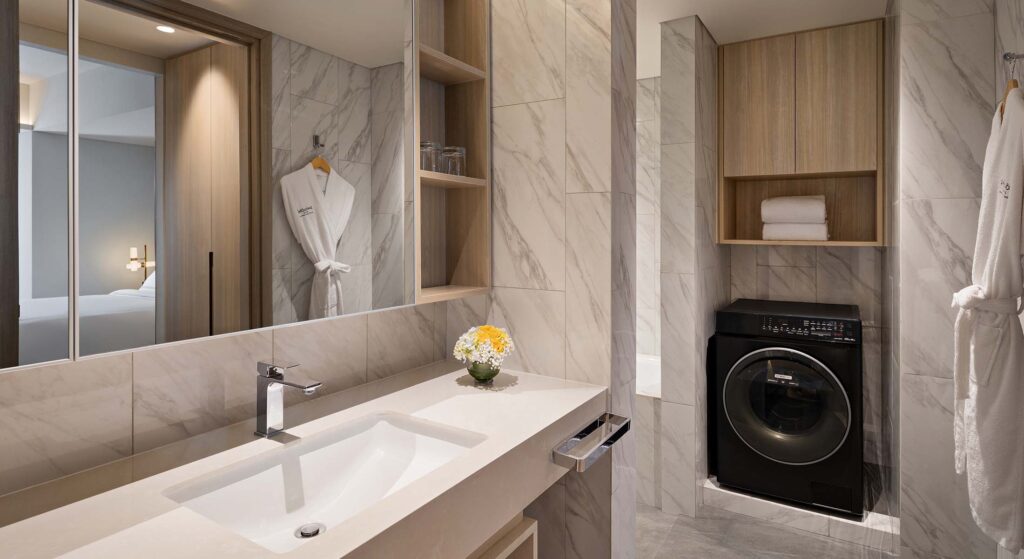
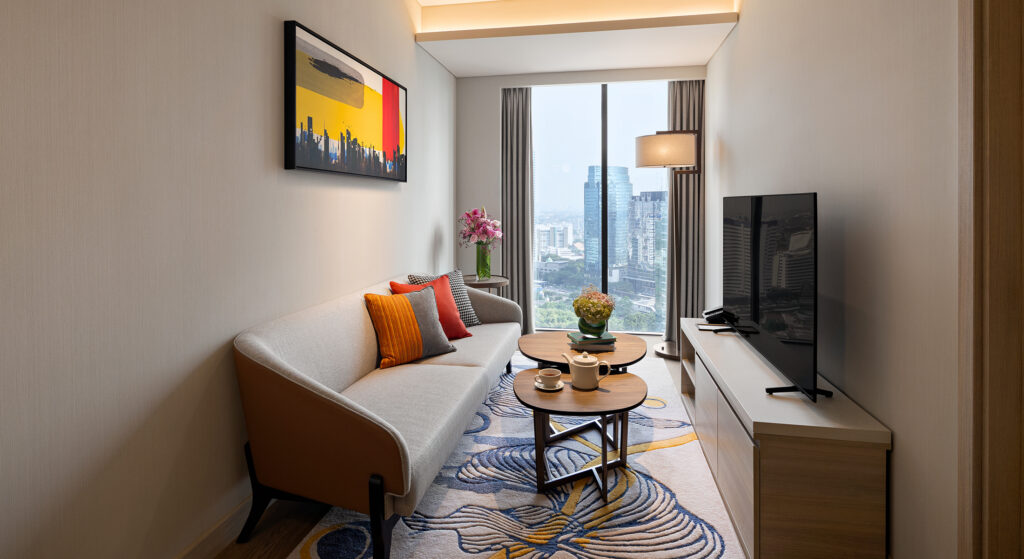
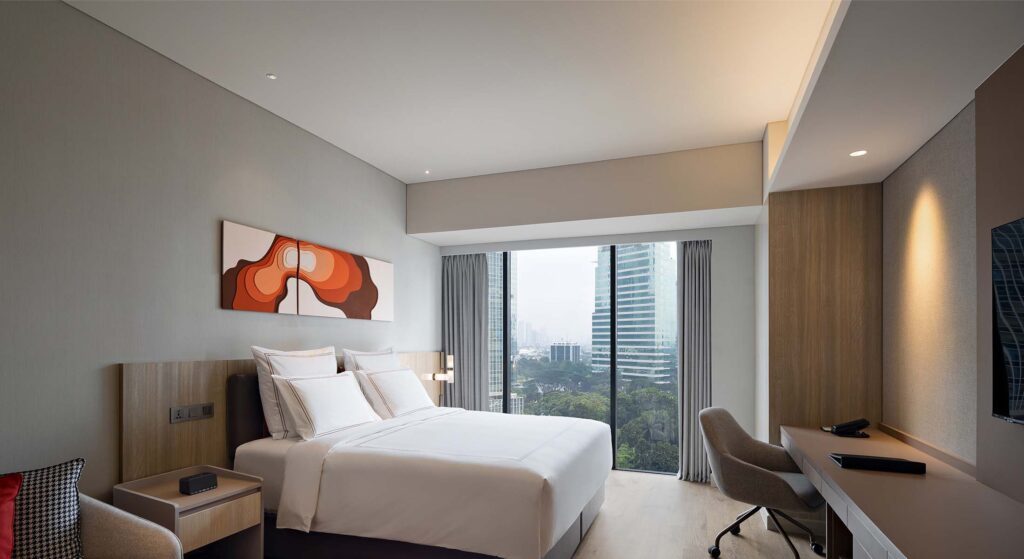
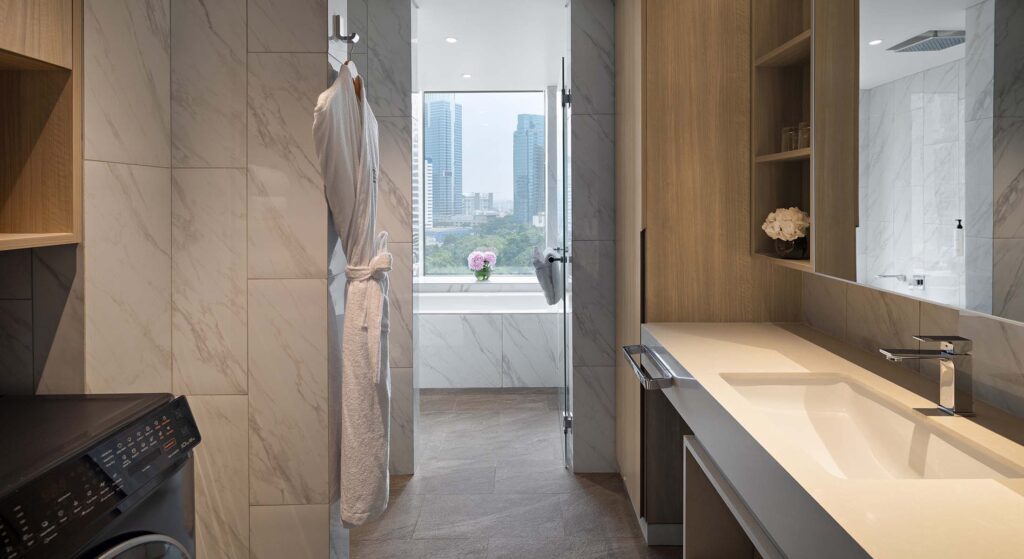
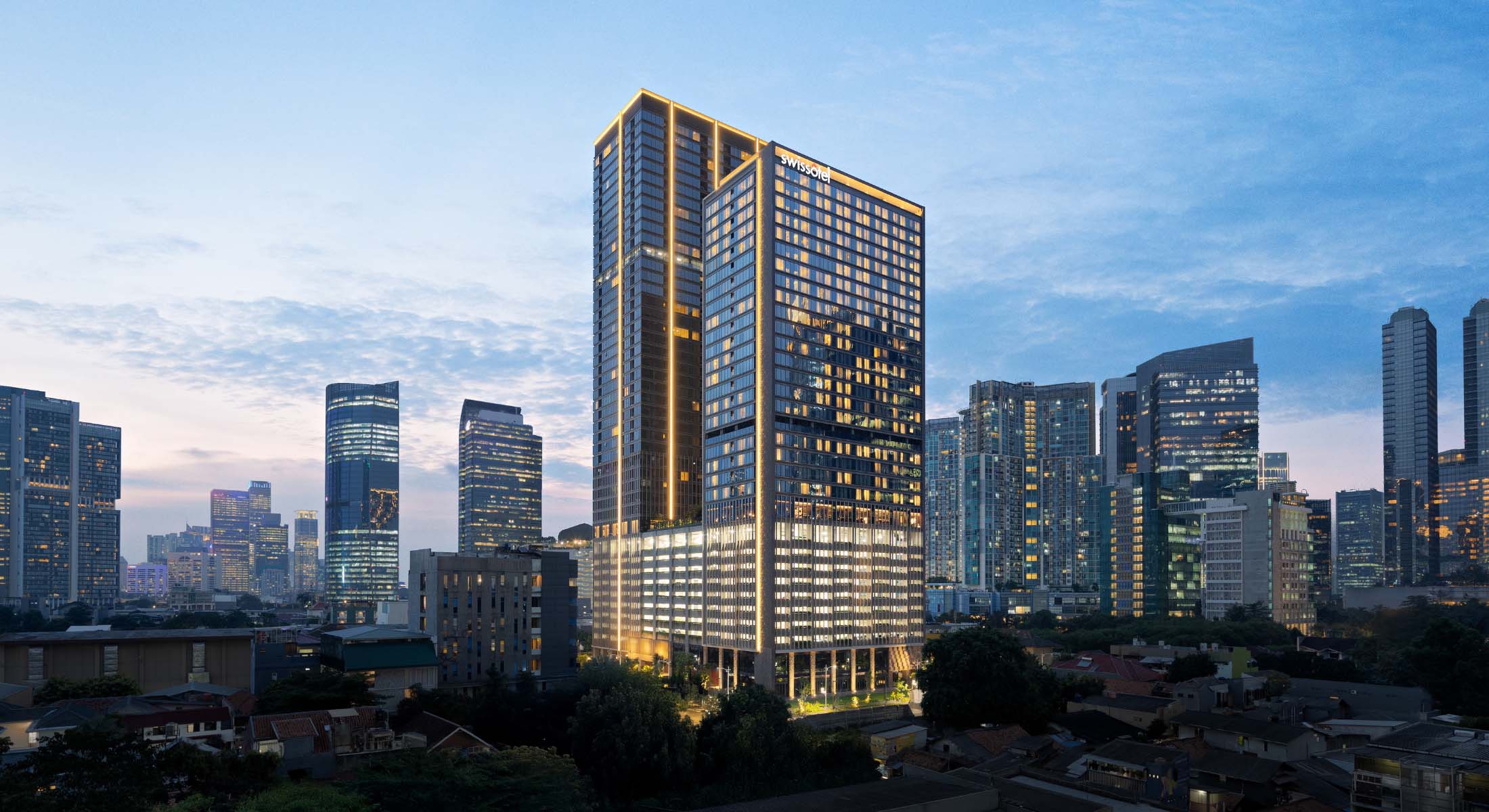
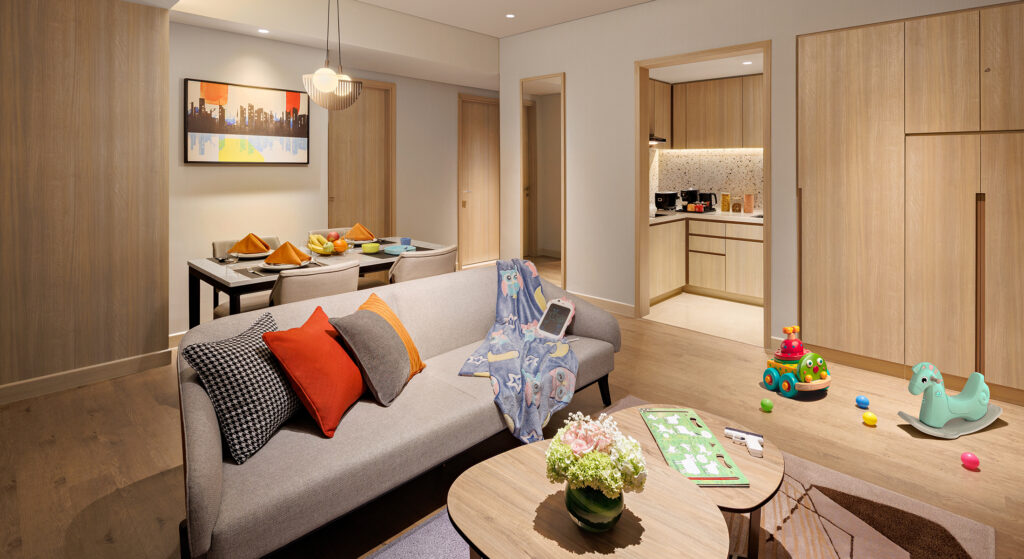
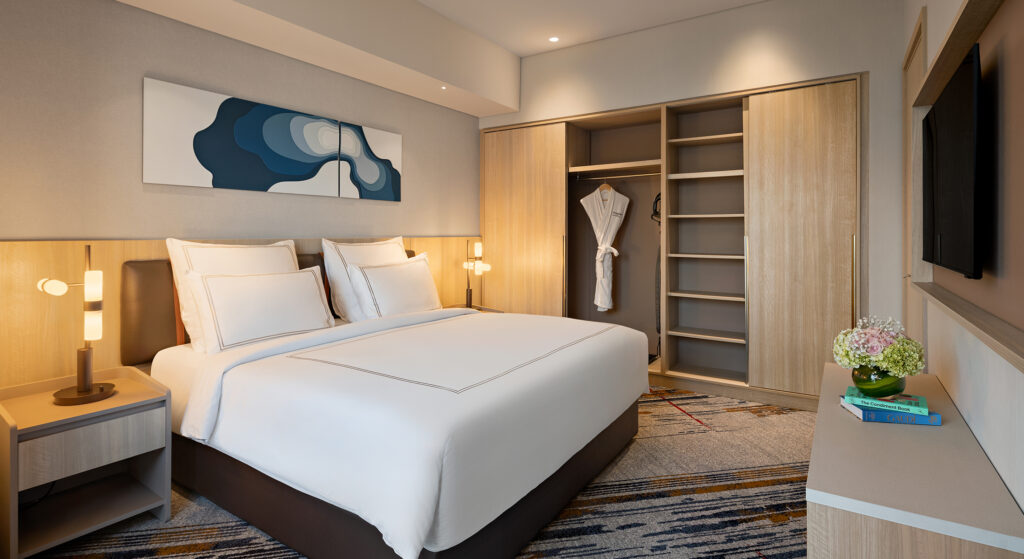
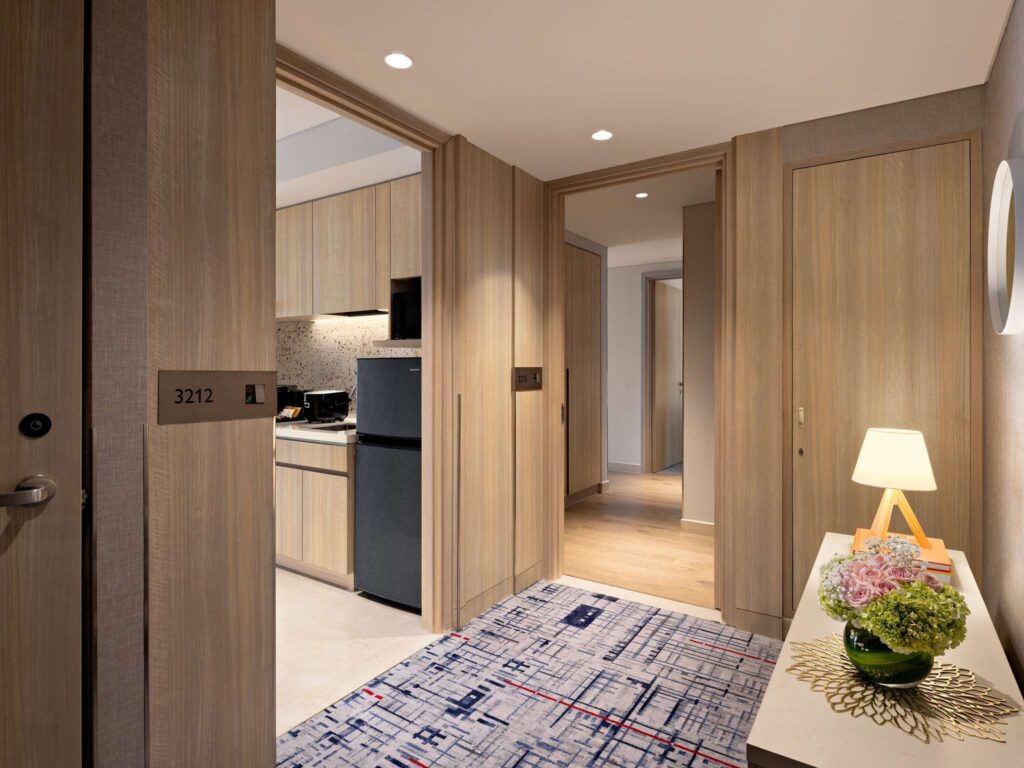
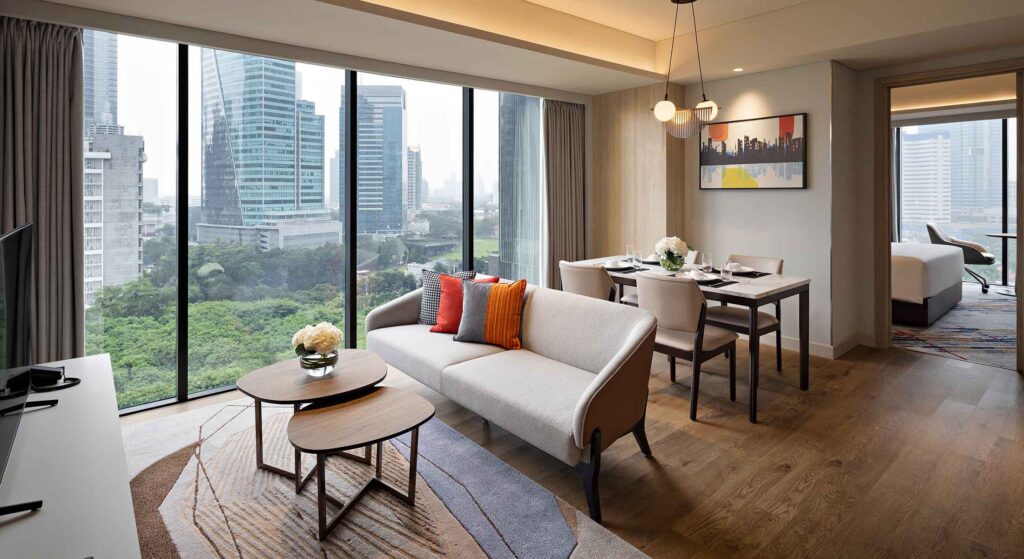
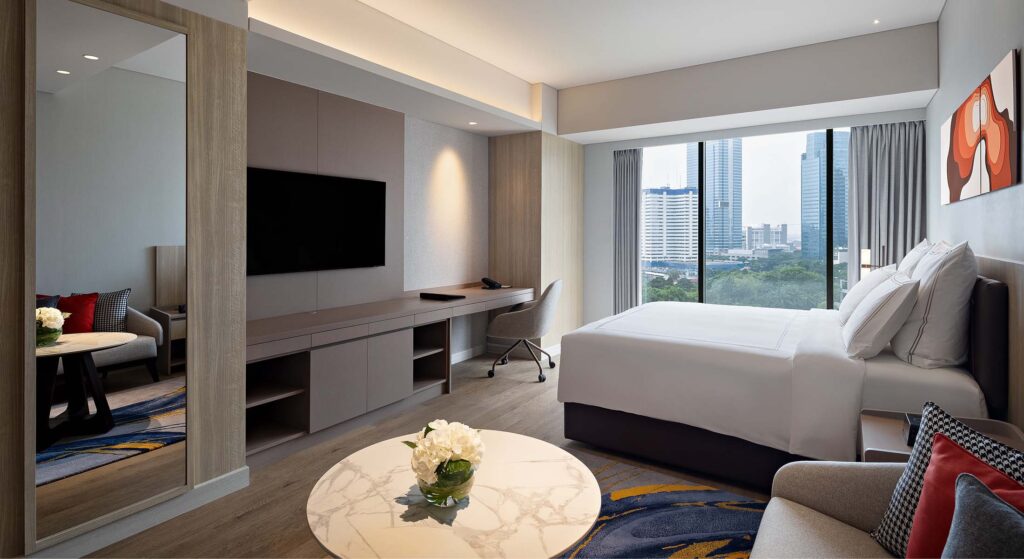
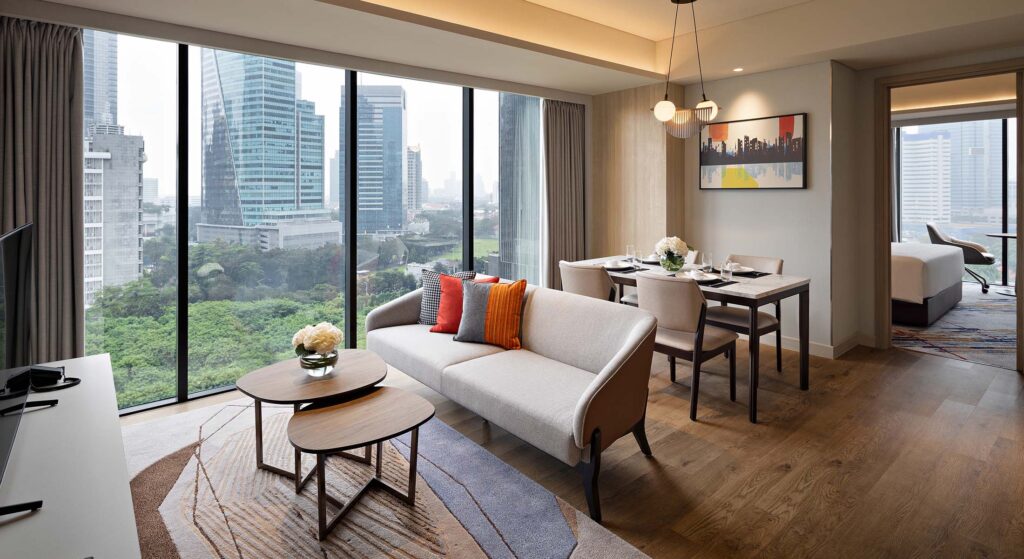
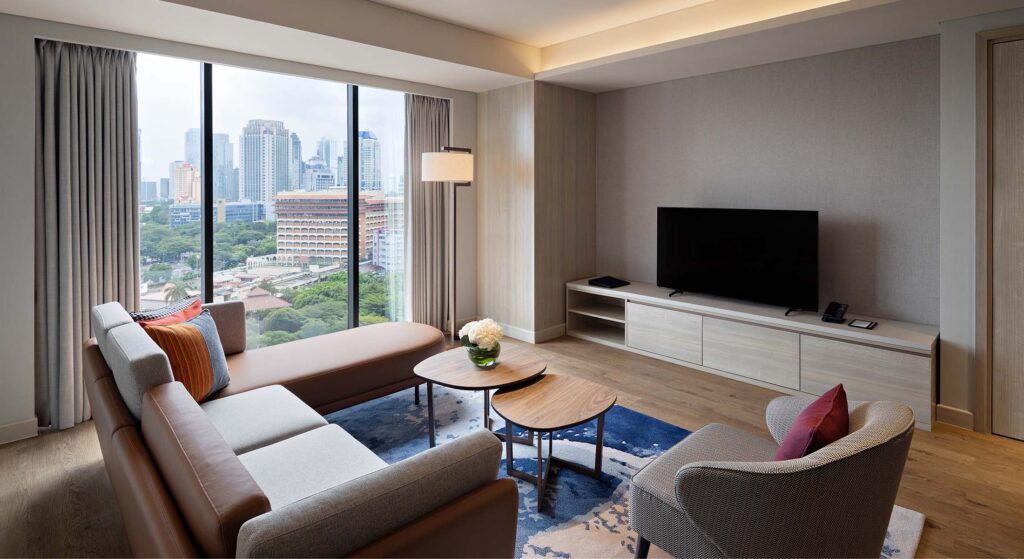
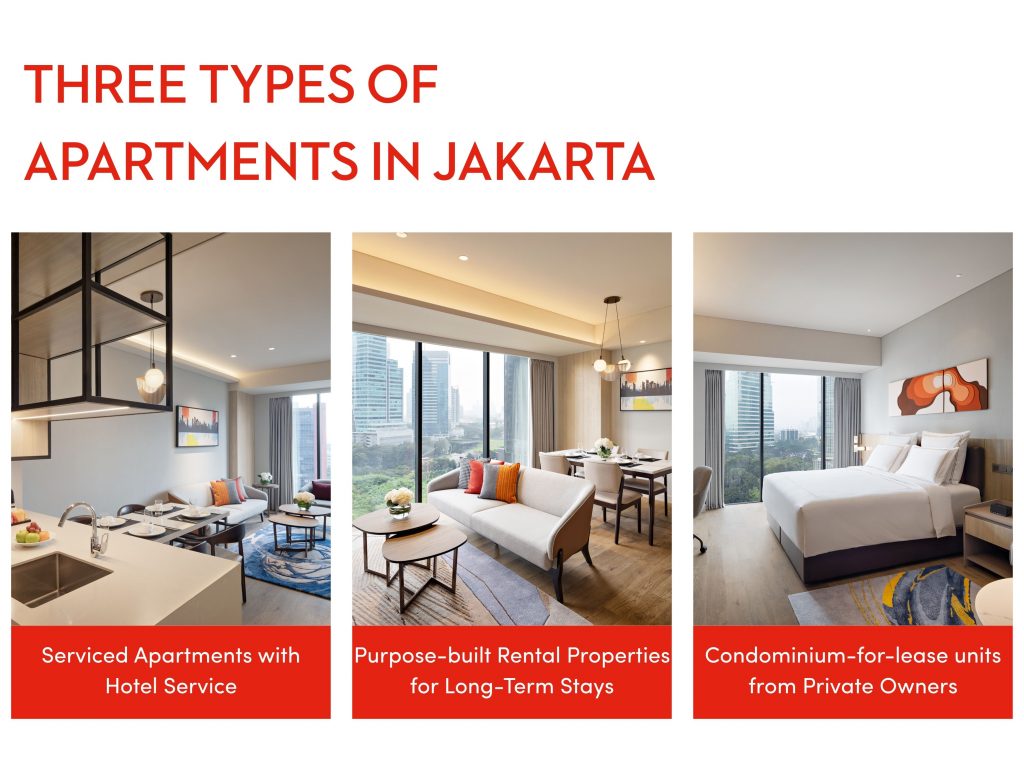
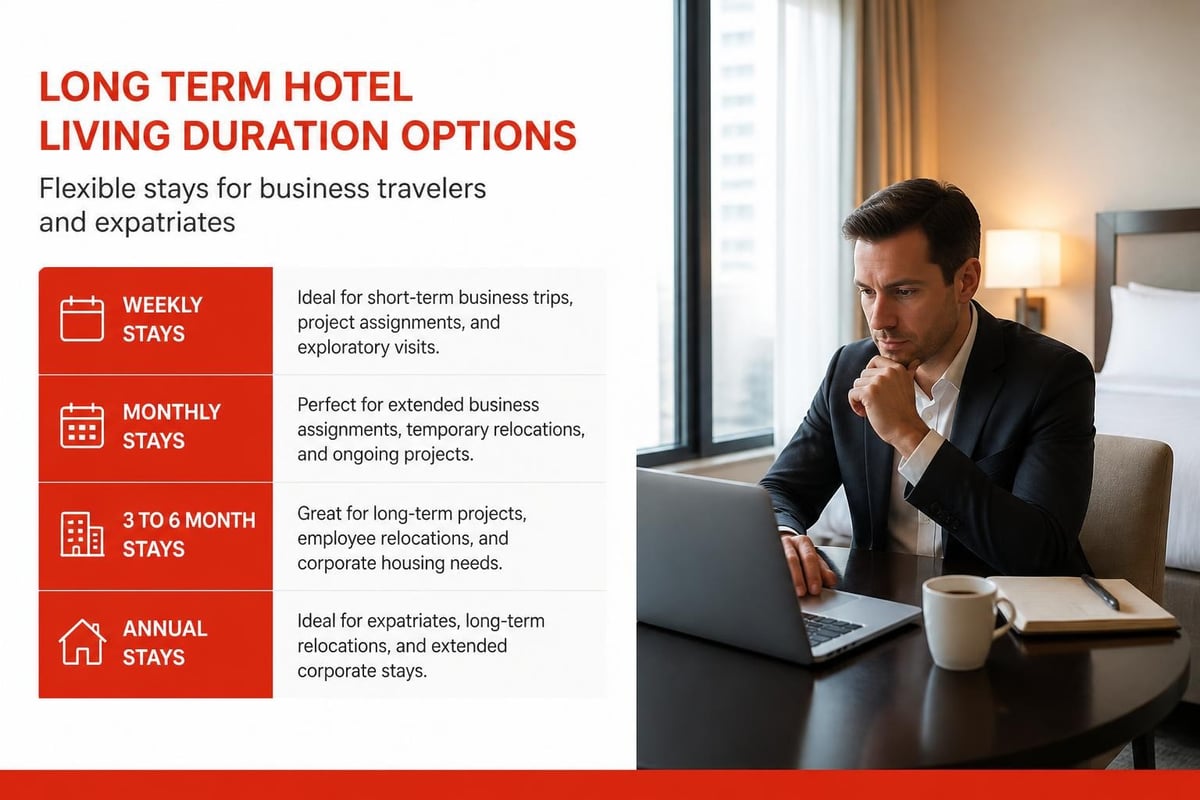
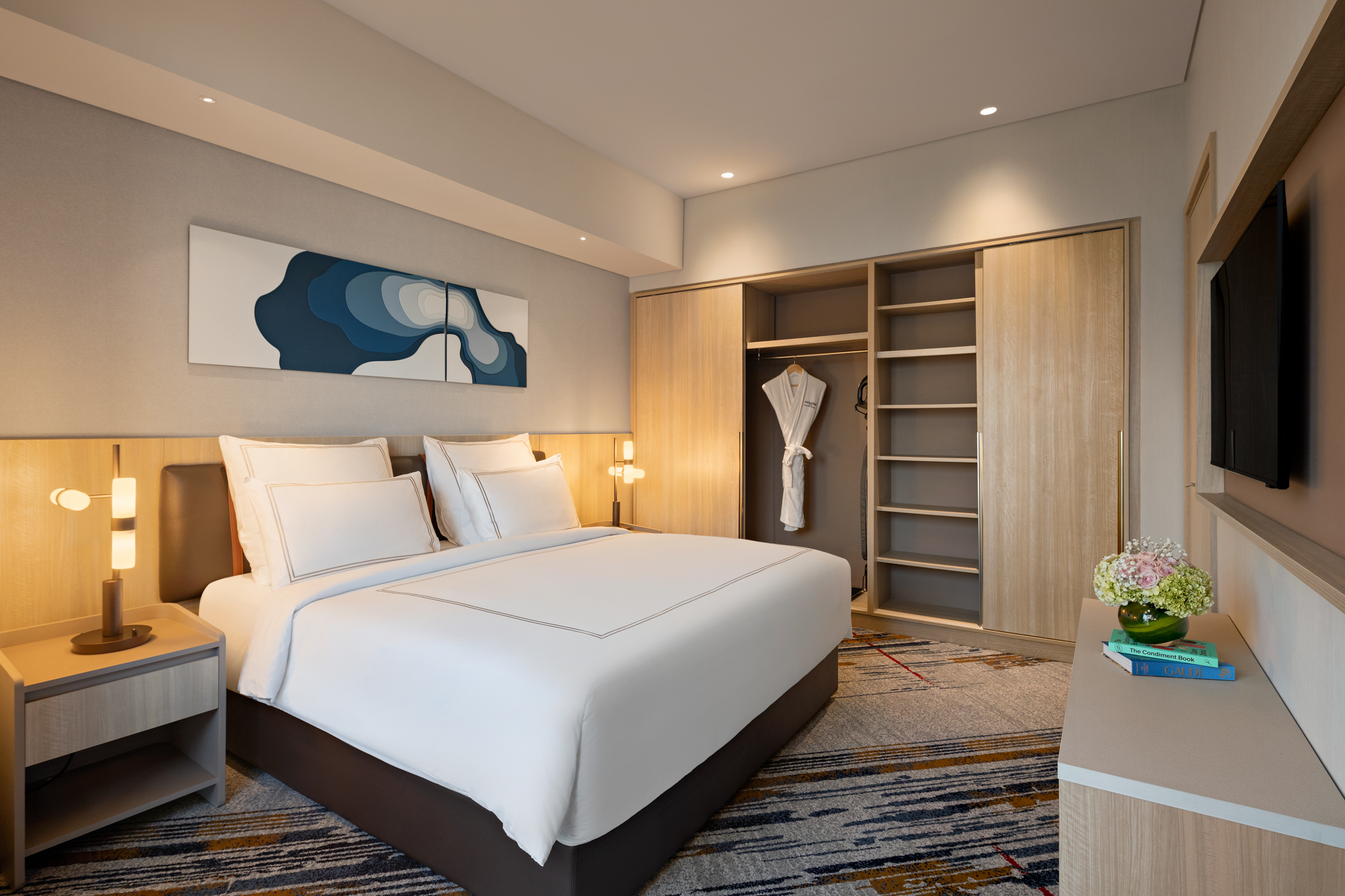
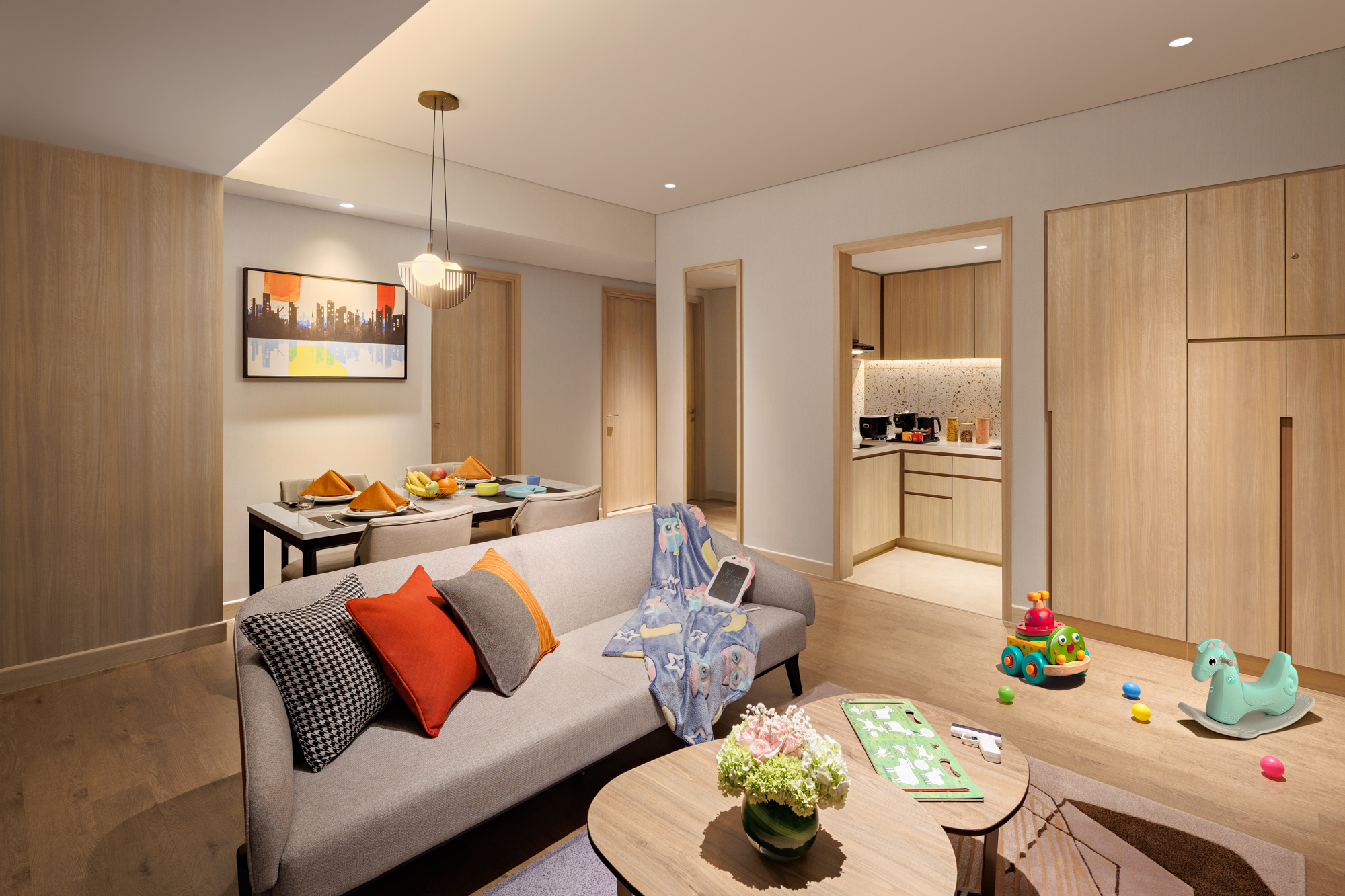
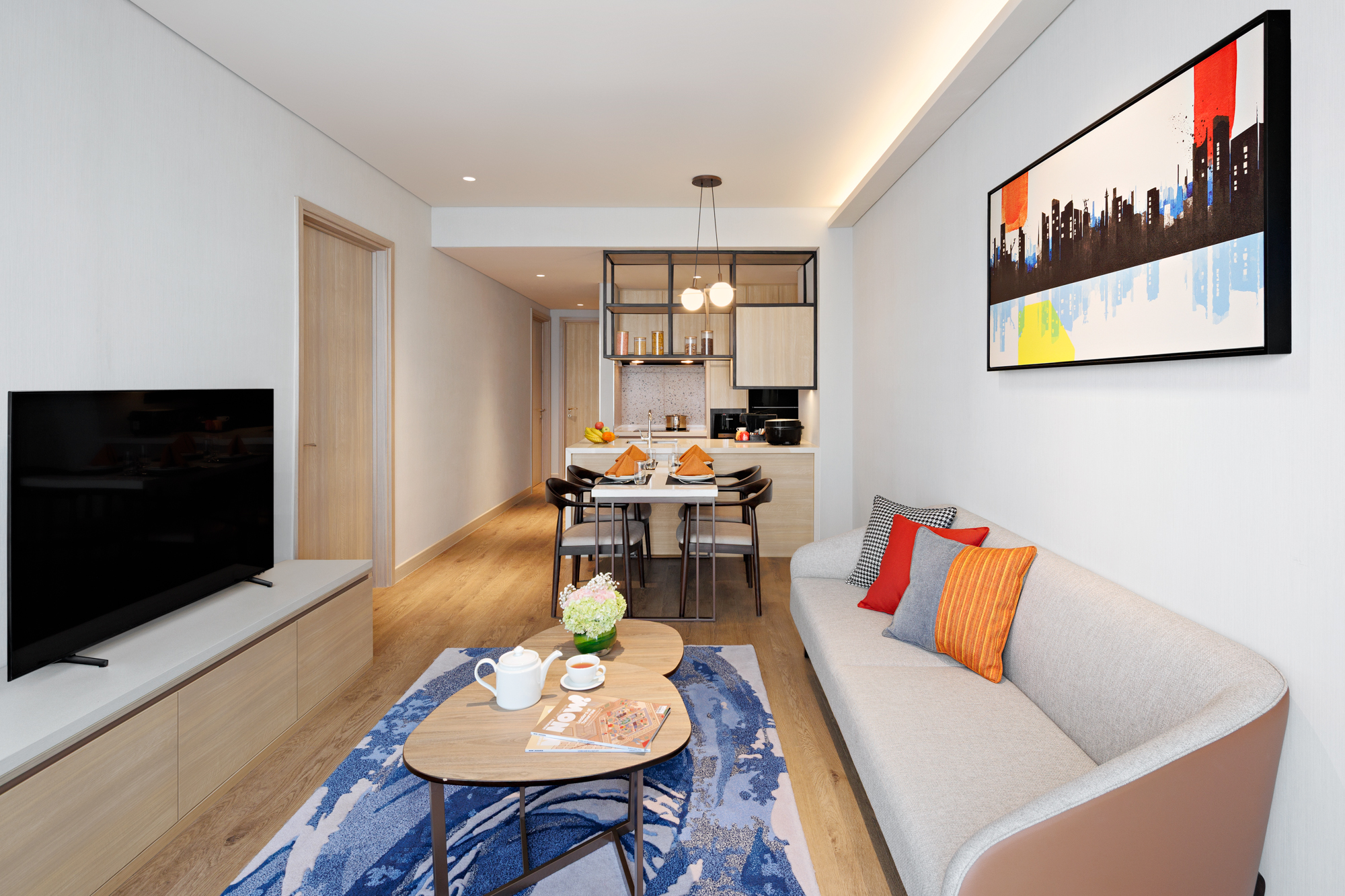
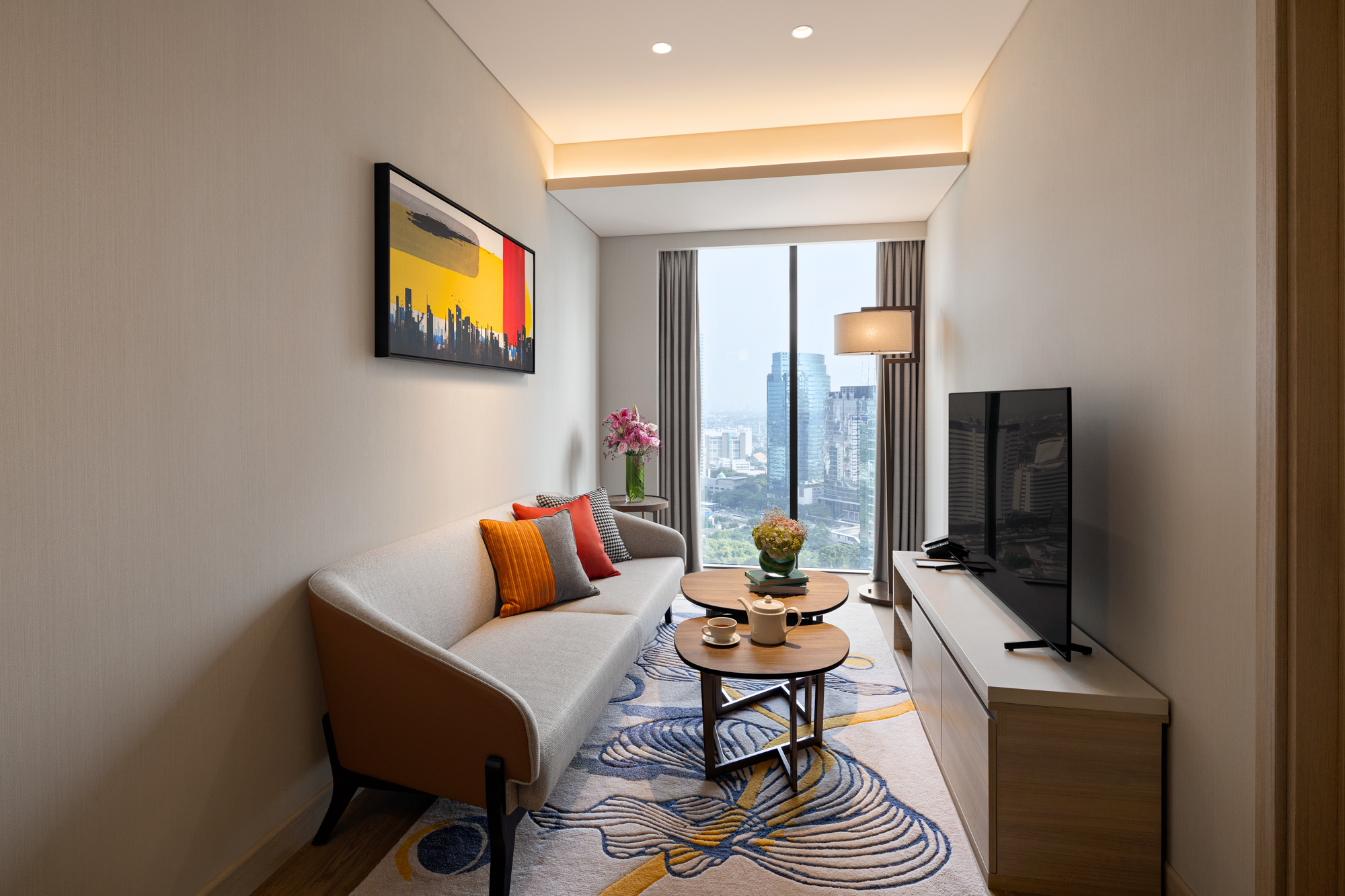
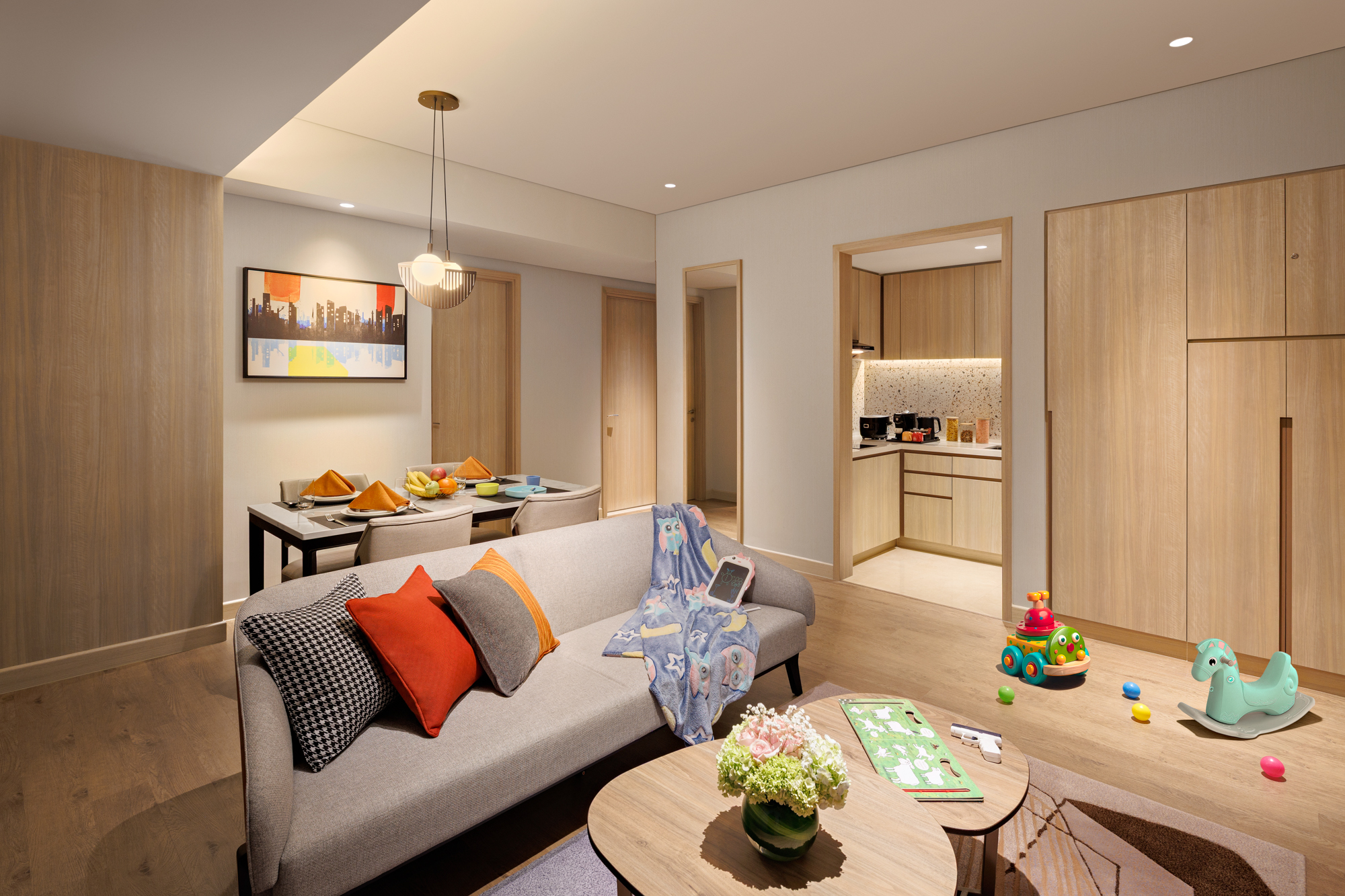
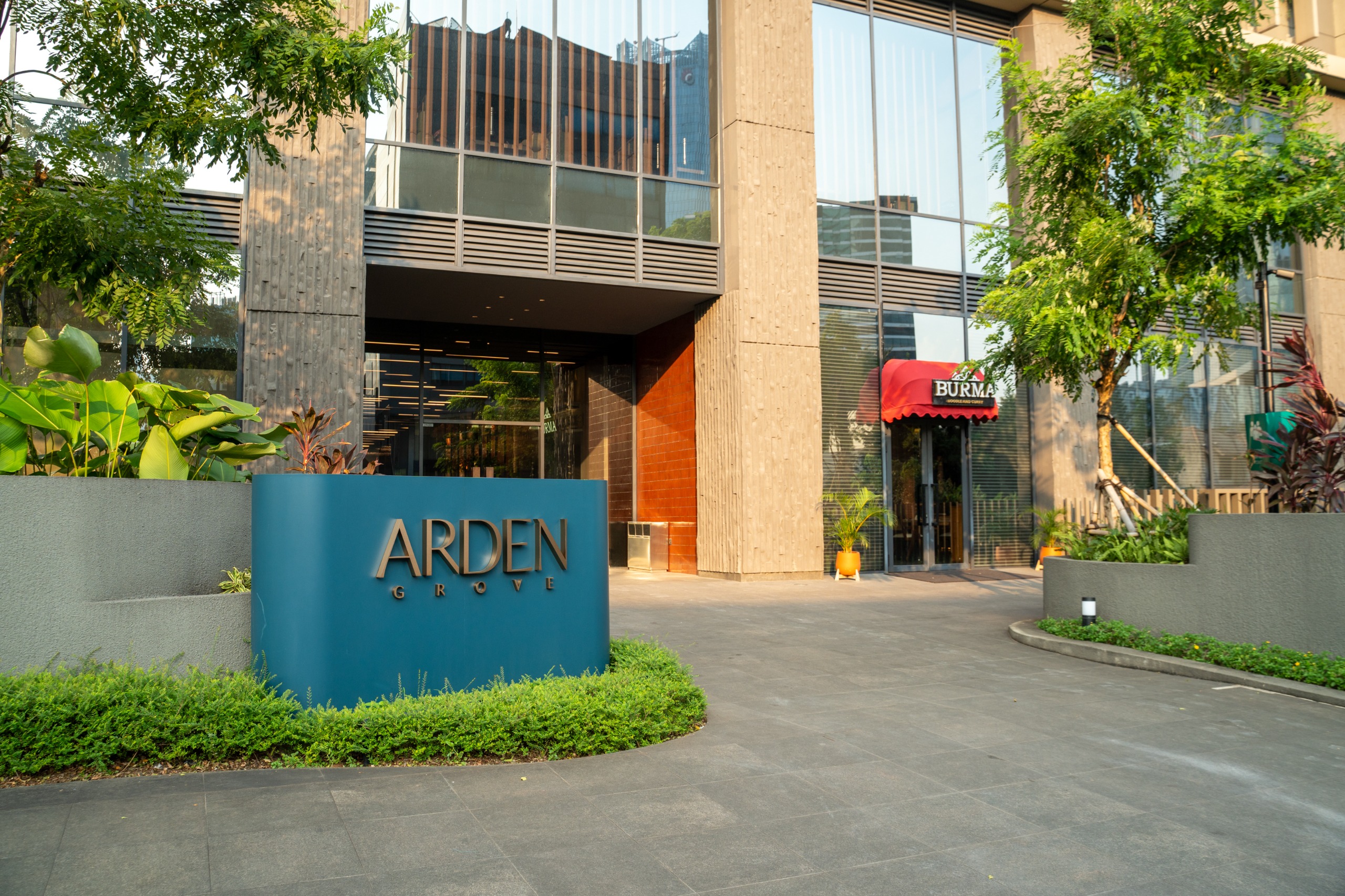
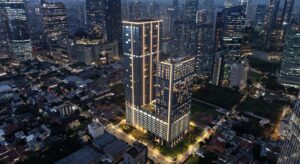
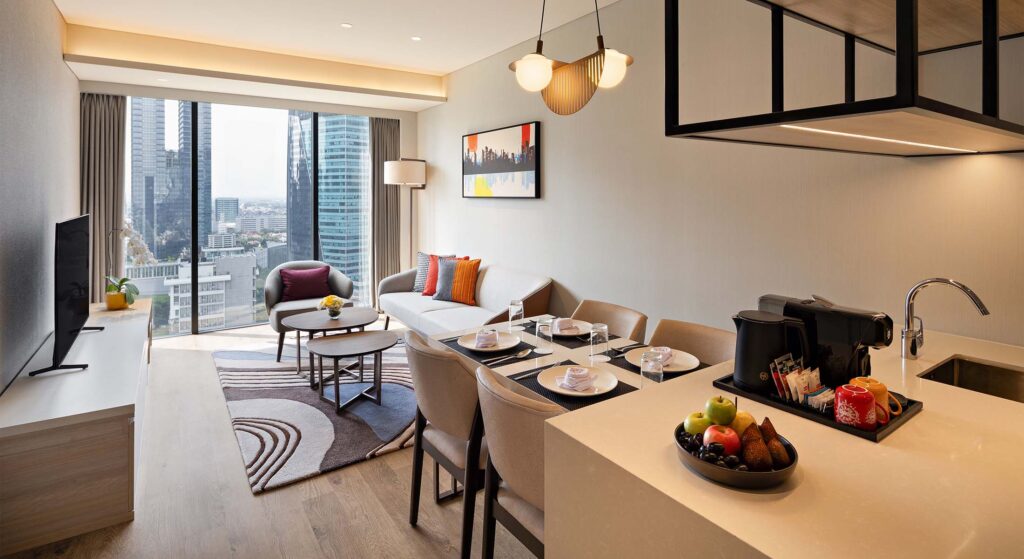
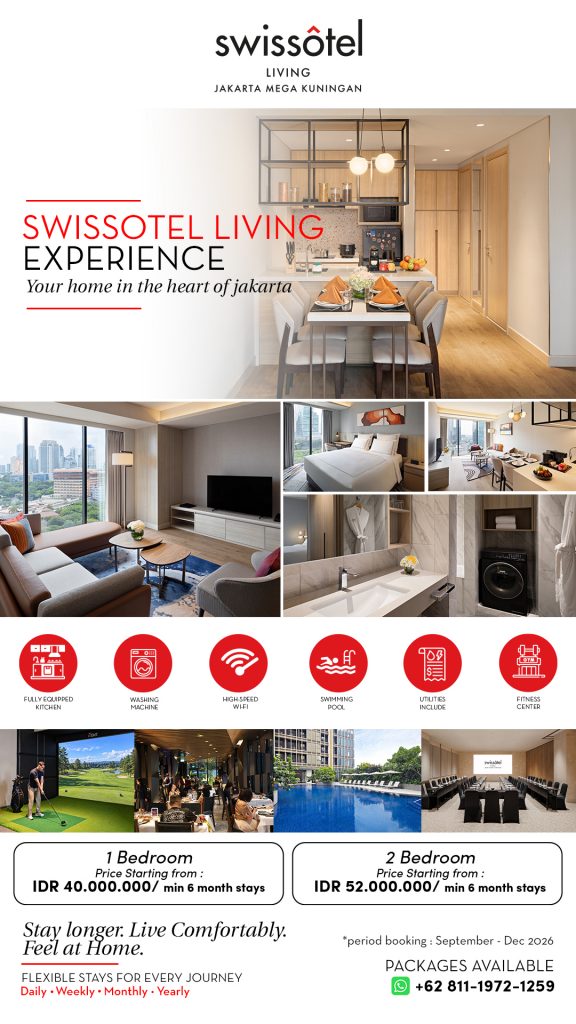
For expatriates settling in Jakarta, properties like Swissôtel Living Jakarta Mega Kuningan provide fully furnished serviced apartments with complete kitchen facilities, available for daily, weekly, monthly, or yearly stays in the heart of the business district.
Families and Extended Vacations
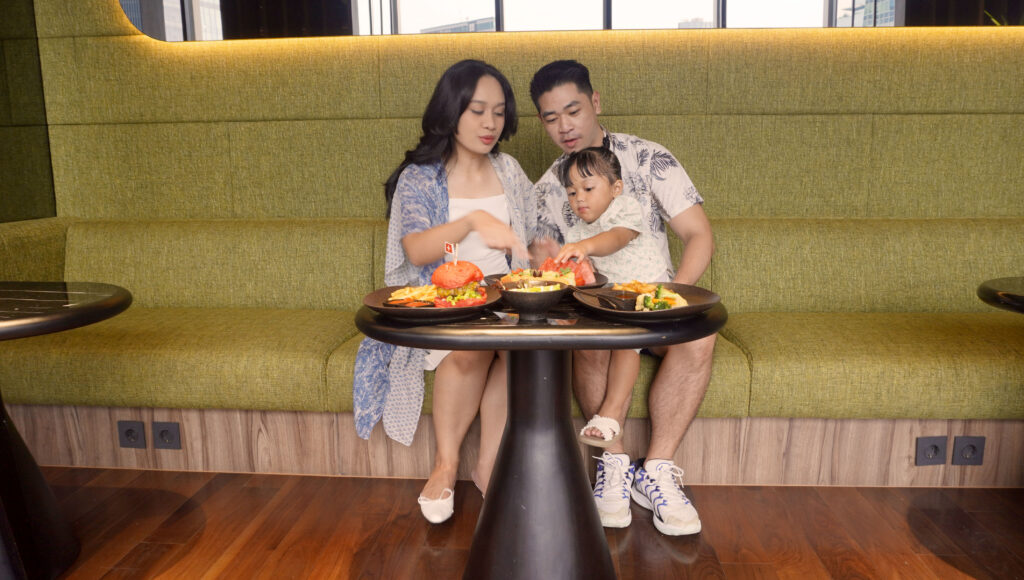
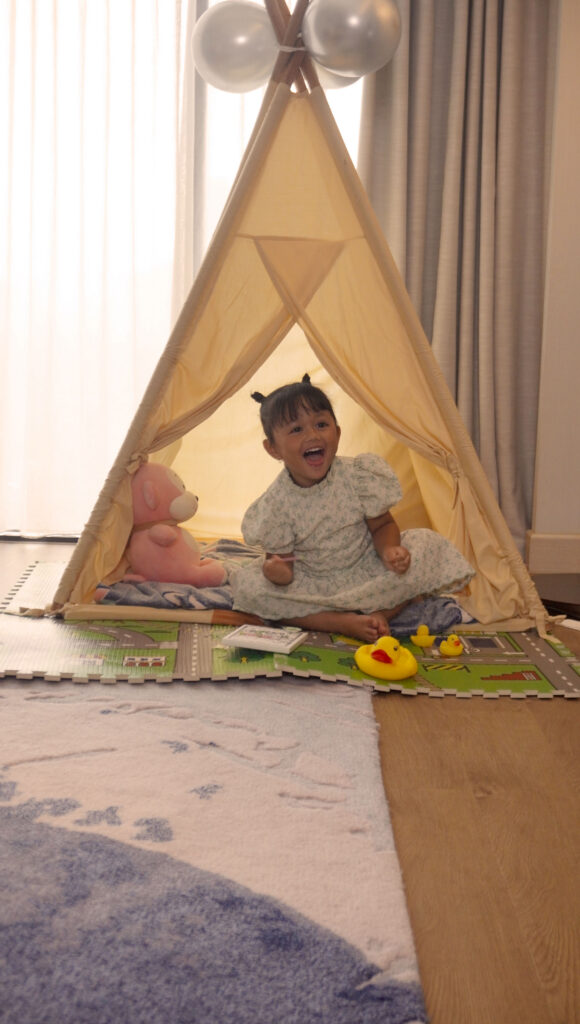
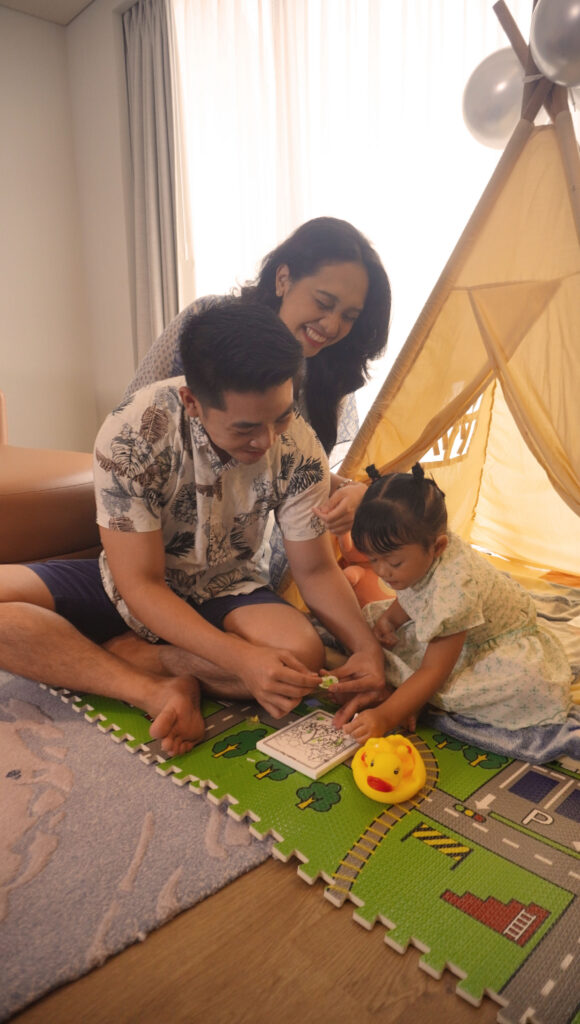
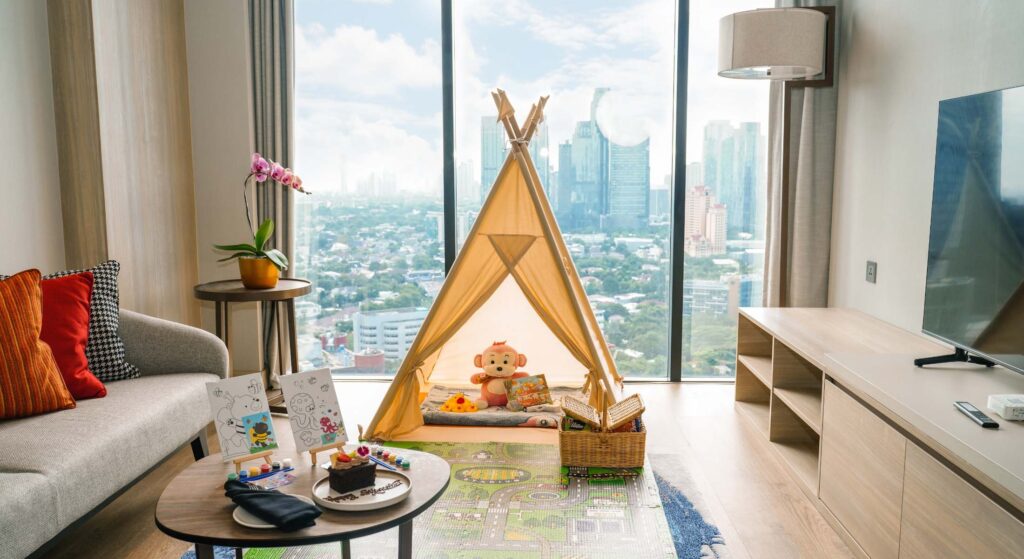
Families traveling for extended periods benefit substantially from kitchen access. Parents can prepare familiar meals for children, accommodate dietary restrictions, and reduce vacation costs by avoiding restaurant meals for every occasion.
The flexibility to stock groceries and prepare breakfast before daily activities or late-night snacks after returning from excursions enhances family travel comfort significantly.
| Guest Segment | Average Stay Duration | Primary Kitchen Use | Key Benefits |
|---|---|---|---|
| Corporate Relocations | 30-90 days | Daily meal preparation | Cost control, routine maintenance |
| Expatriates | 60-365 days | Full household cooking | Home comfort, cultural familiarity |
| Project Teams | 14-60 days | Breakfast and simple meals | Flexibility, team bonding |
| Families | 7-21 days | Most meals | Budget savings, dietary control |
Cost Comparison and Value Proposition
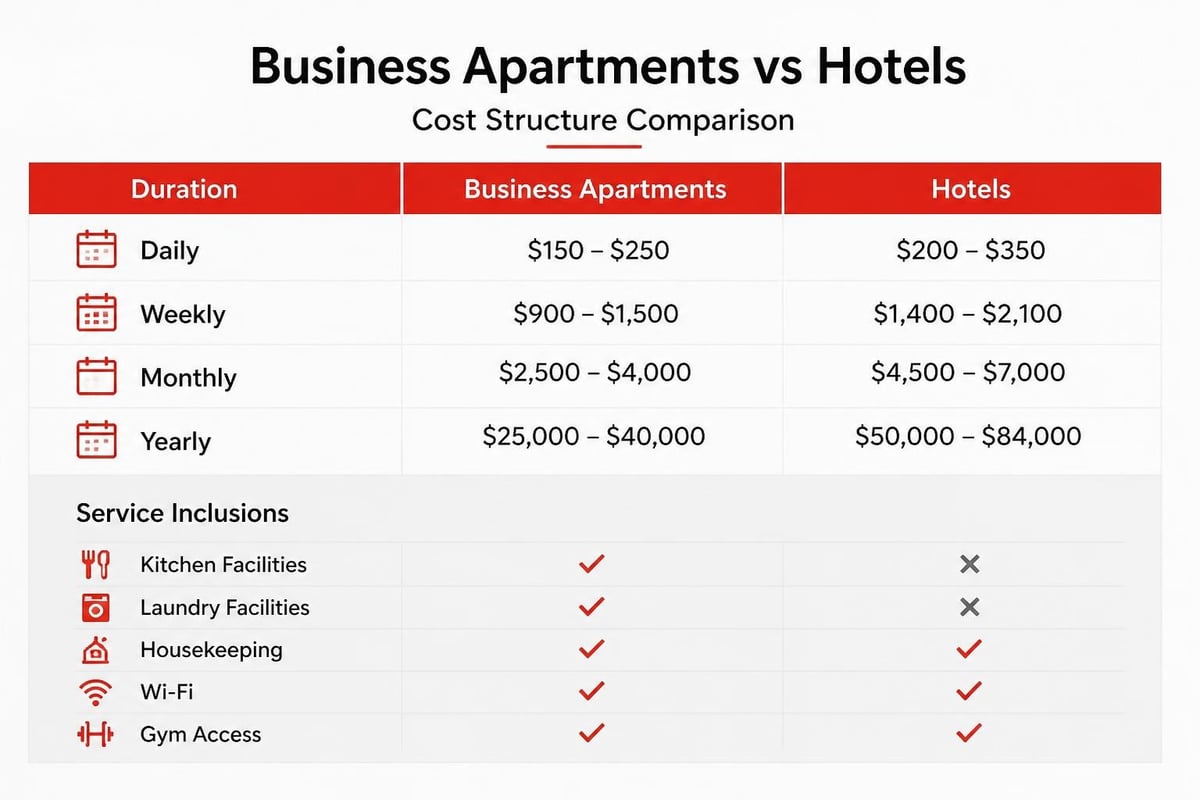
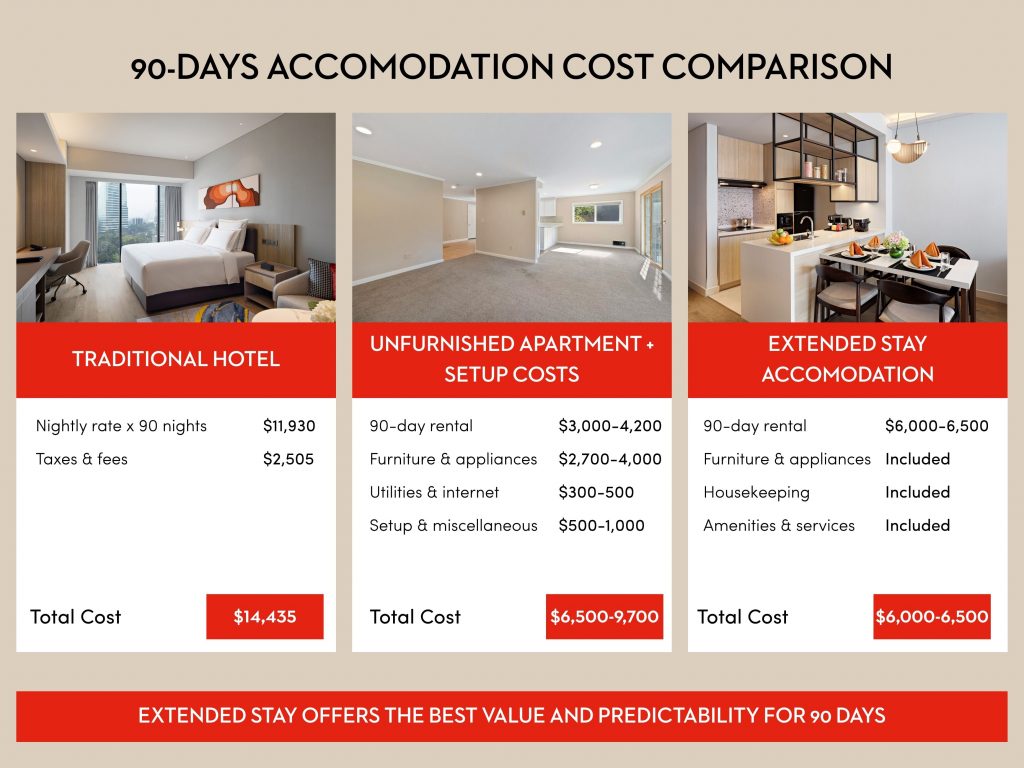
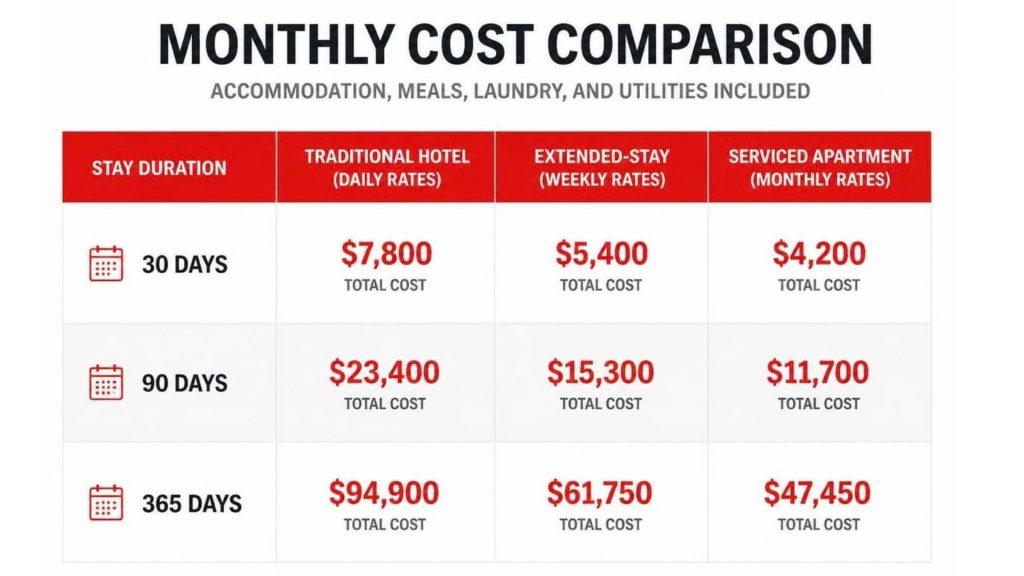
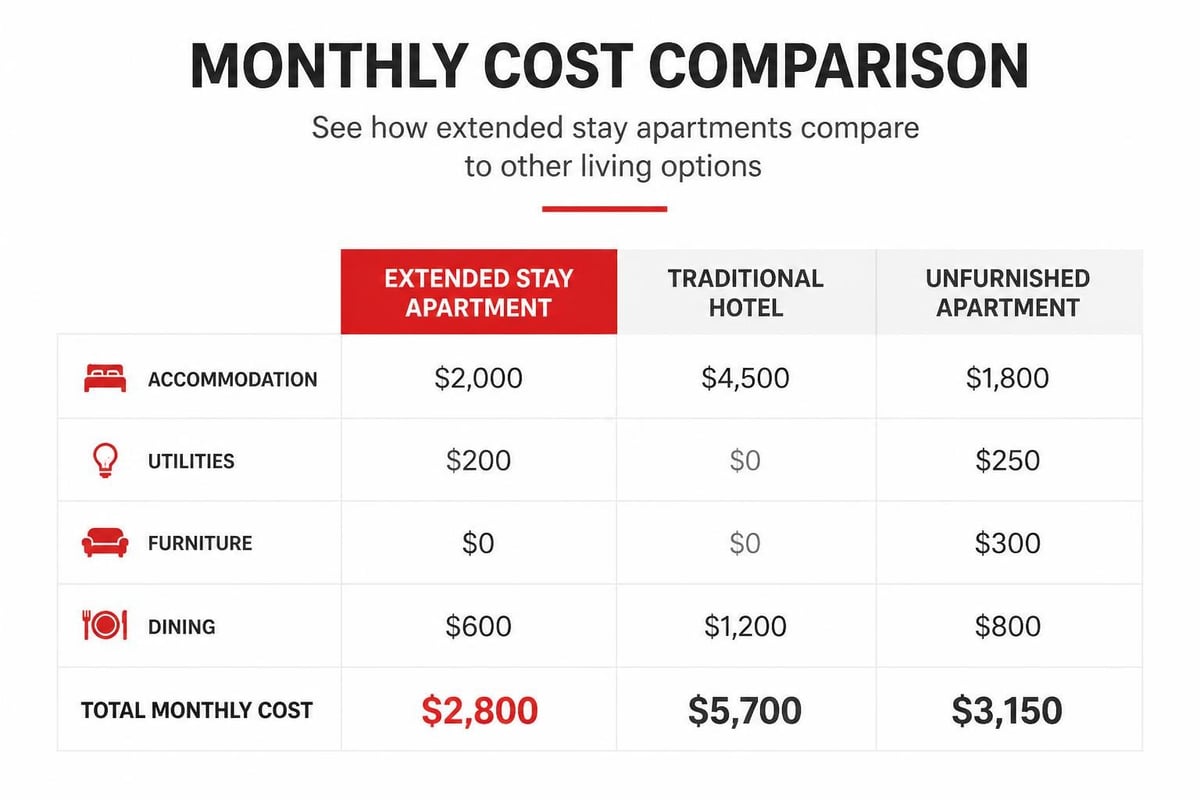
The financial advantages of extended stay hotels with kitchens become increasingly apparent over longer durations. While nightly rates may initially appear higher than standard hotels, the total cost equation shifts when factoring meal expenses.
Breaking Down the Economics
A typical business traveler spending 30 days in a destination faces substantial dining costs without kitchen access. Restaurant meals averaging $15 for breakfast, $20 for lunch, and $30 for dinner total $65 daily or $1,950 monthly. With kitchen facilities, grocery expenses for equivalent meals might range from $300-500 monthly, creating savings of $1,450-1,650.
These savings often exceed any premium charged for kitchen-equipped accommodations. Research from Skift indicates that kitchenette-equipped rooms are capturing greater market share precisely because travelers recognize this value equation.
Hidden Benefits Beyond Direct Costs
Kitchen access provides value beyond measurable food cost savings:
- Time efficiency from avoiding restaurant waits during busy periods
- Health management through portion control and ingredient selection
- Dietary compliance for guests with allergies, religious requirements, or medical restrictions
- Productivity gains from working through meals or hosting informal business discussions
Location Considerations for Extended Stay Properties
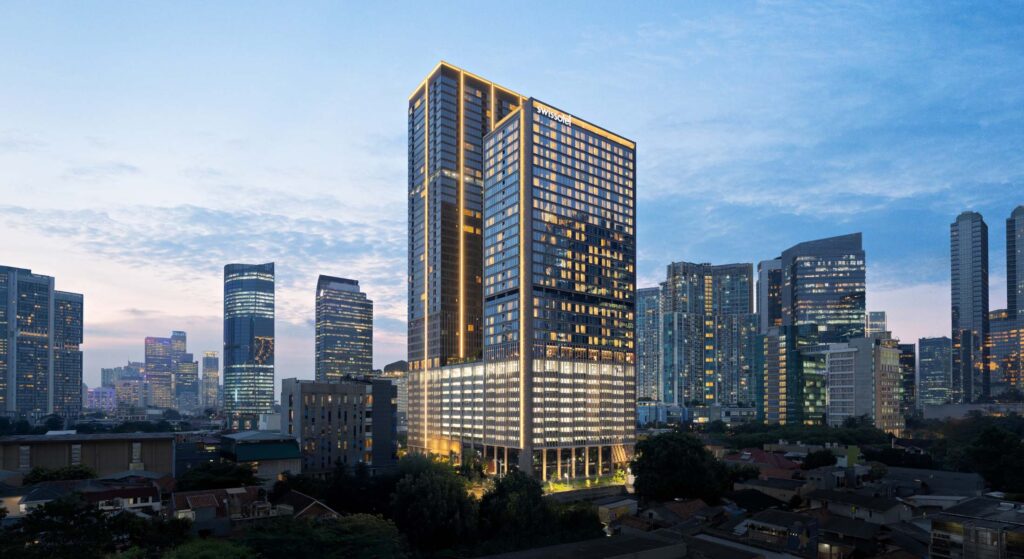
Strategic location significantly influences the success and guest satisfaction of extended stay hotels with kitchens. Properties positioned near employment centers, medical facilities, universities, and major transportation infrastructure attract consistent demand.
Business District Positioning
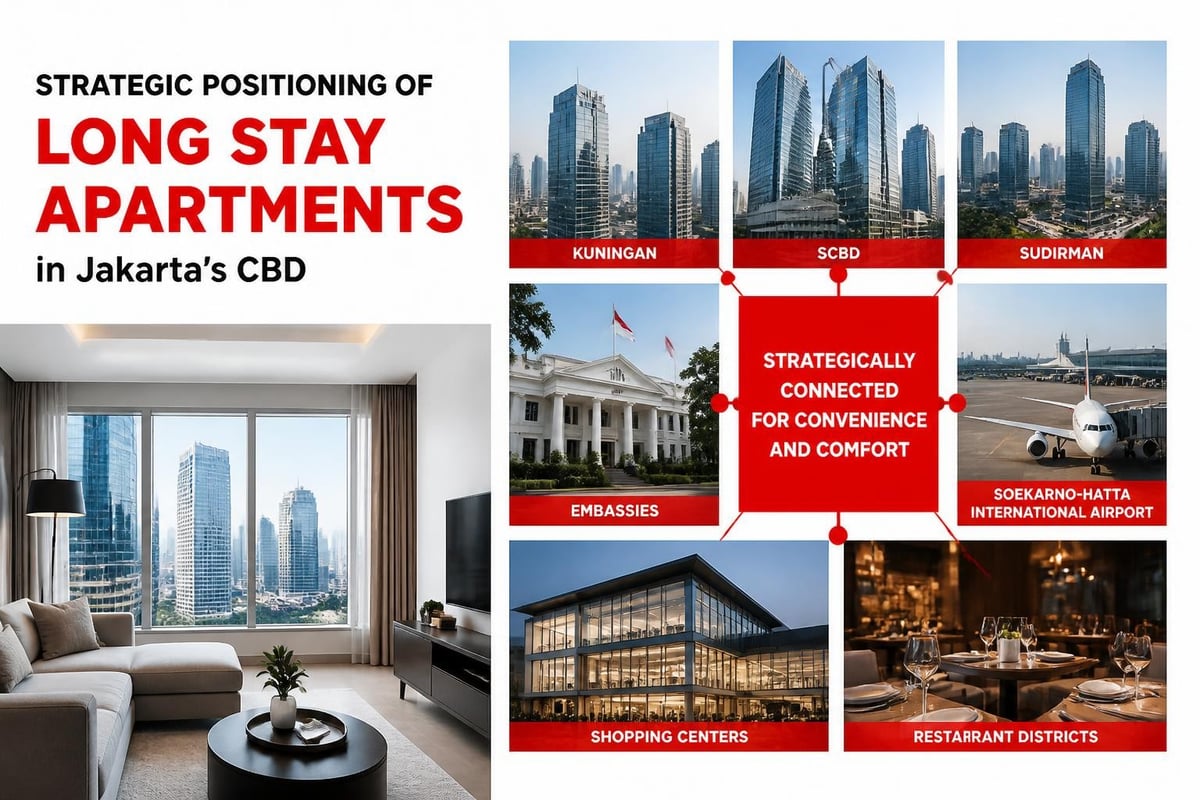
Extended stay properties in central business districts serve corporate travelers requiring proximity to offices, meeting venues, and professional services. Access to grocery stores, pharmacies, and essential retail within walking distance or short drives enhances the self-sufficient lifestyle that kitchen facilities enable.
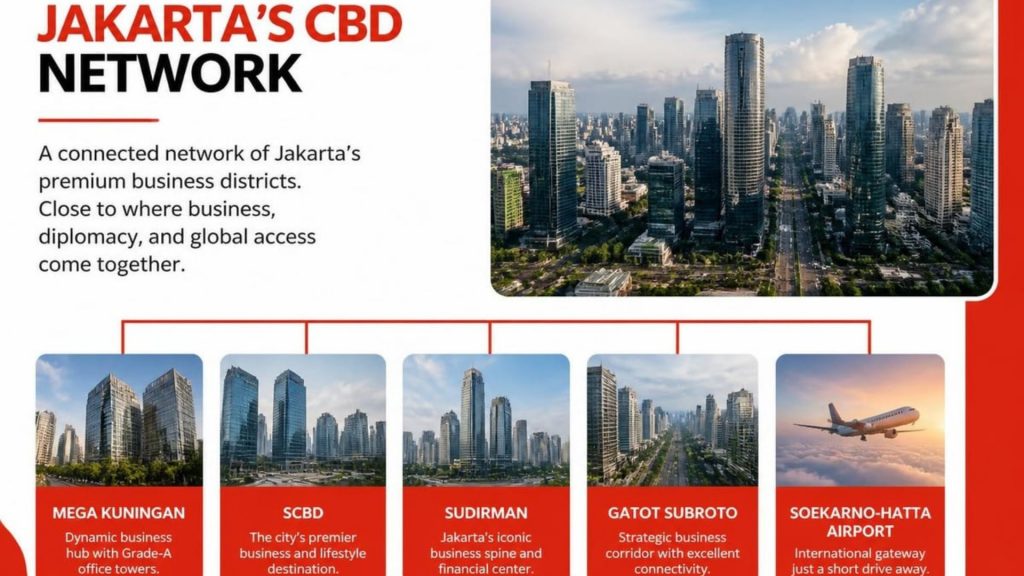
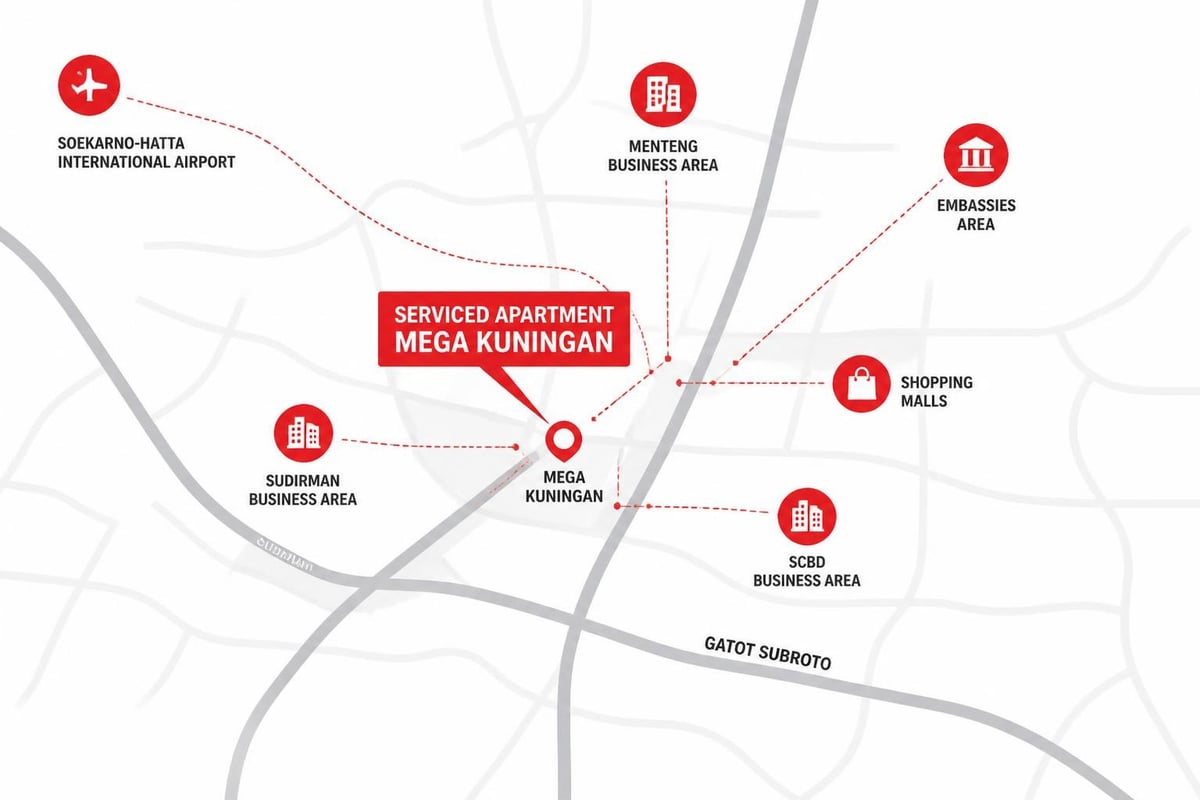
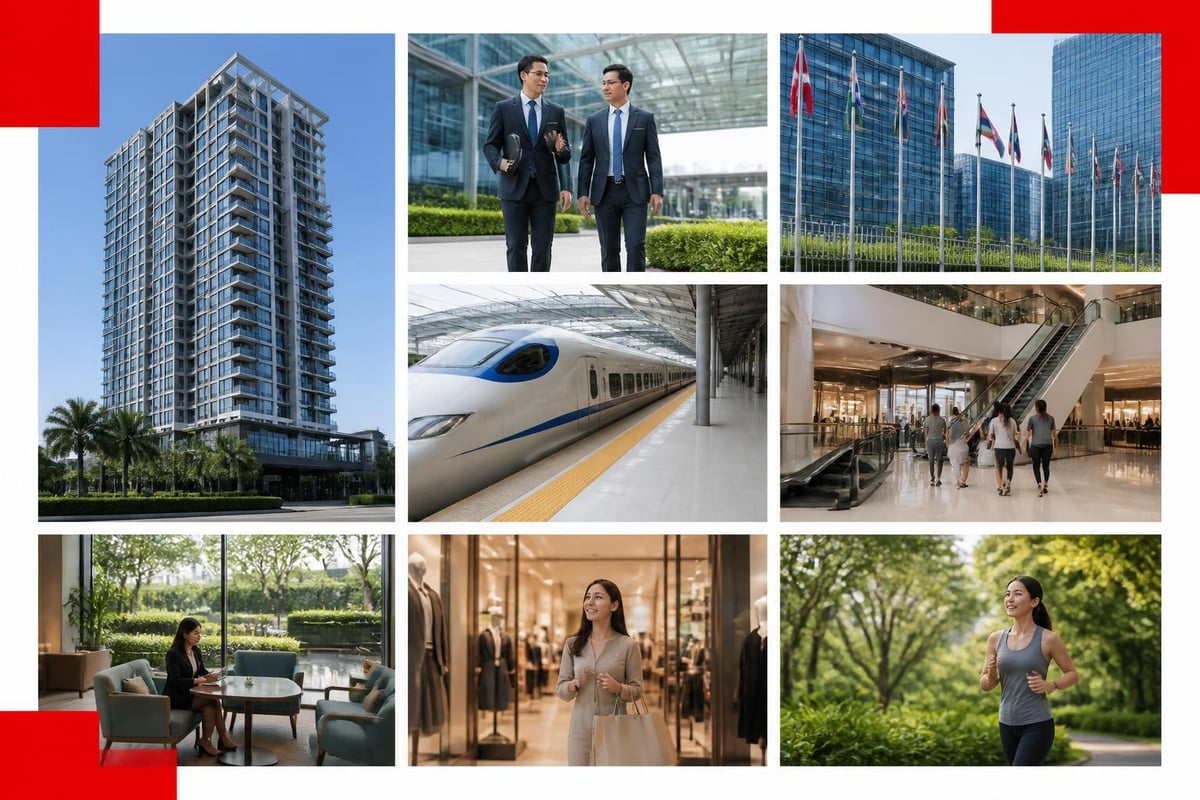
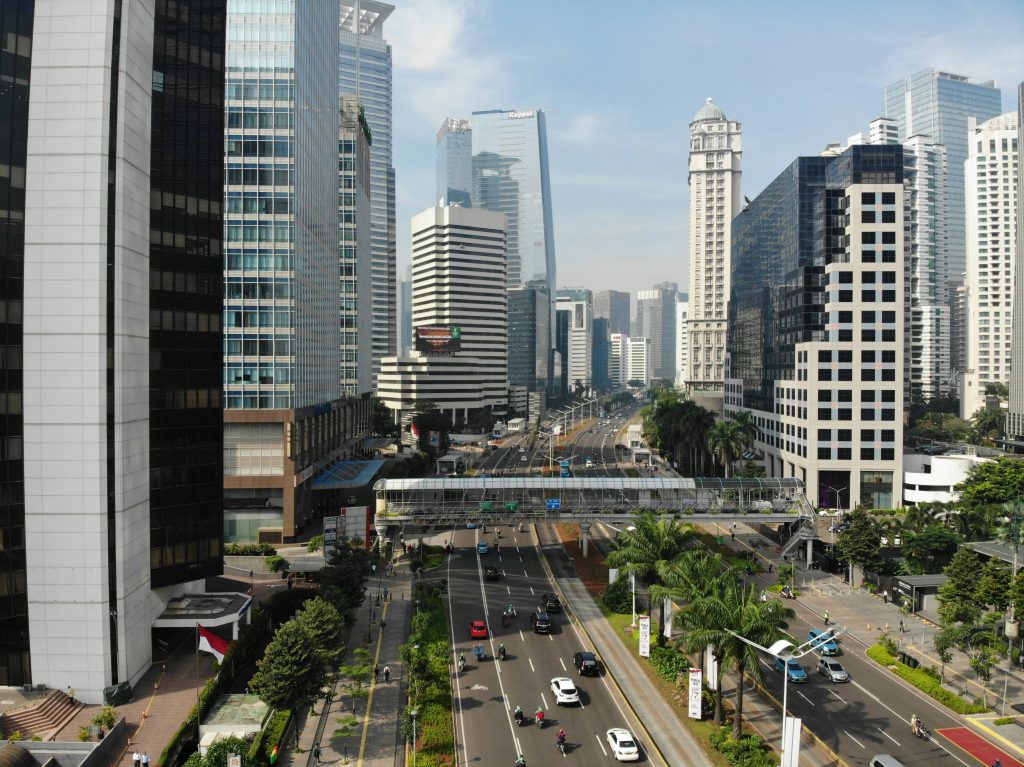
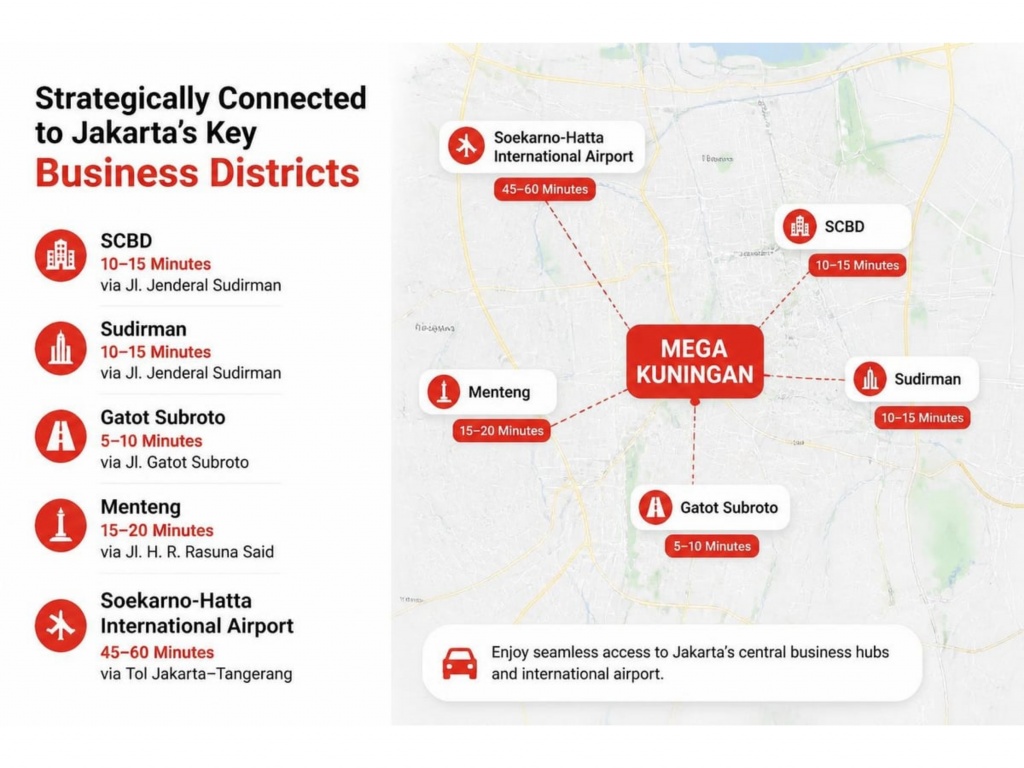
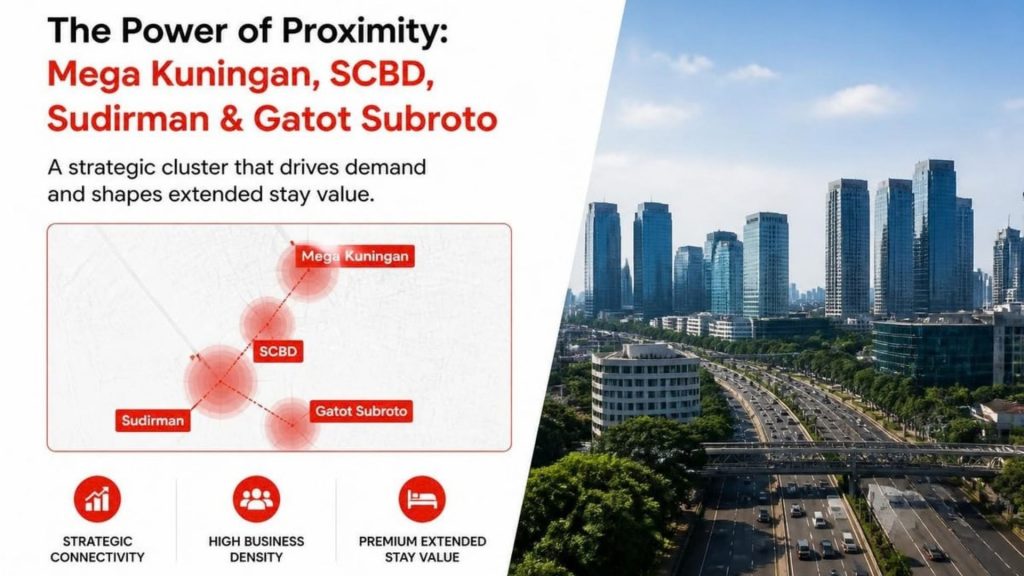
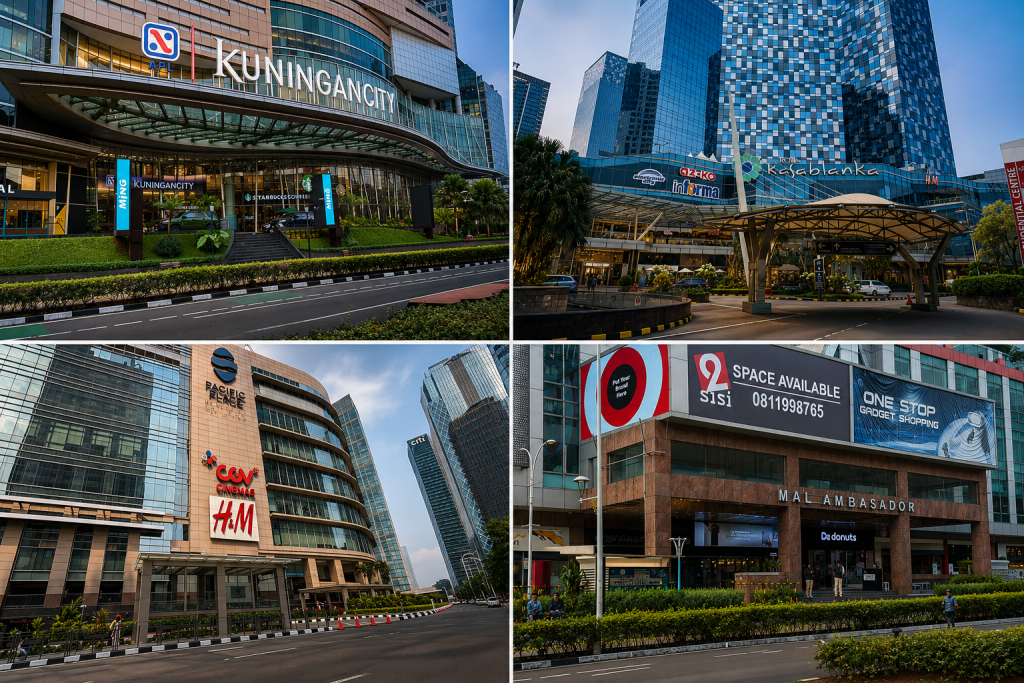
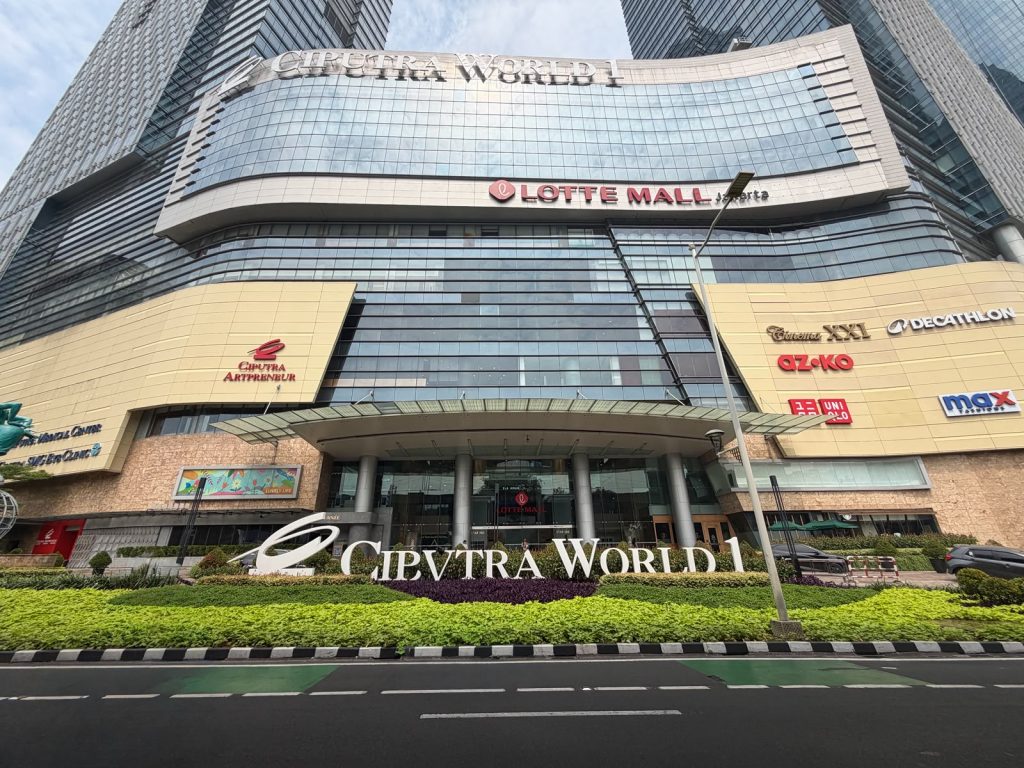
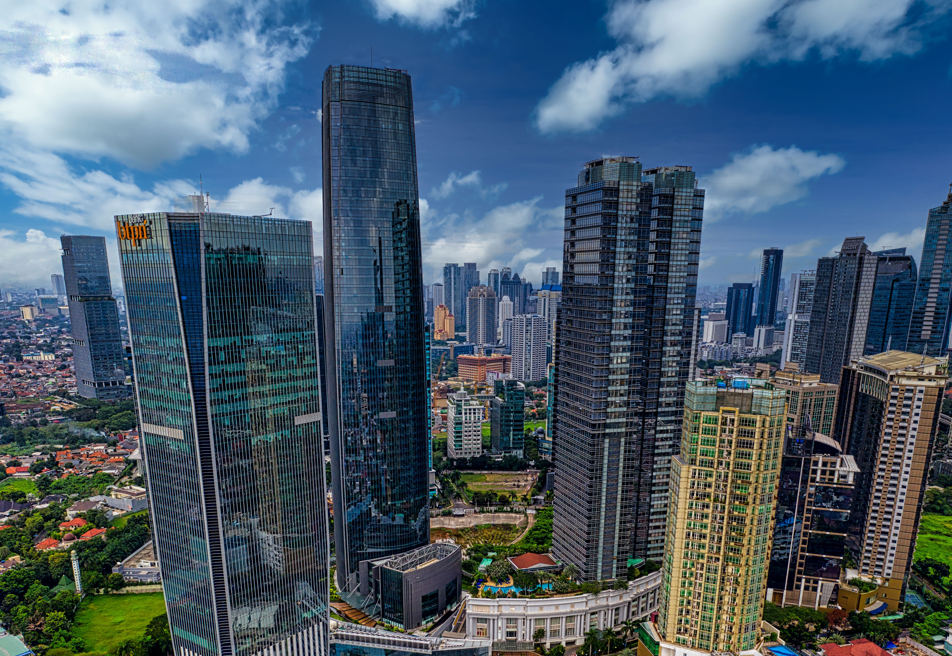
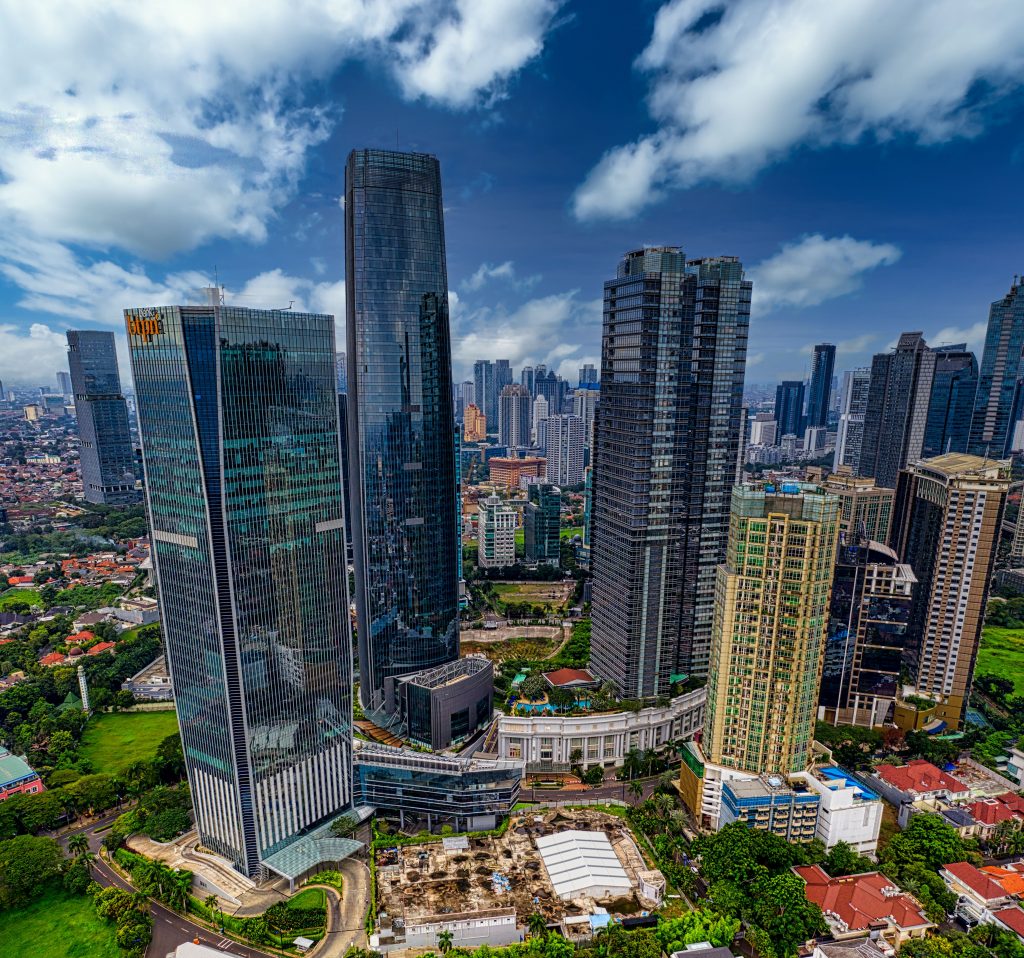
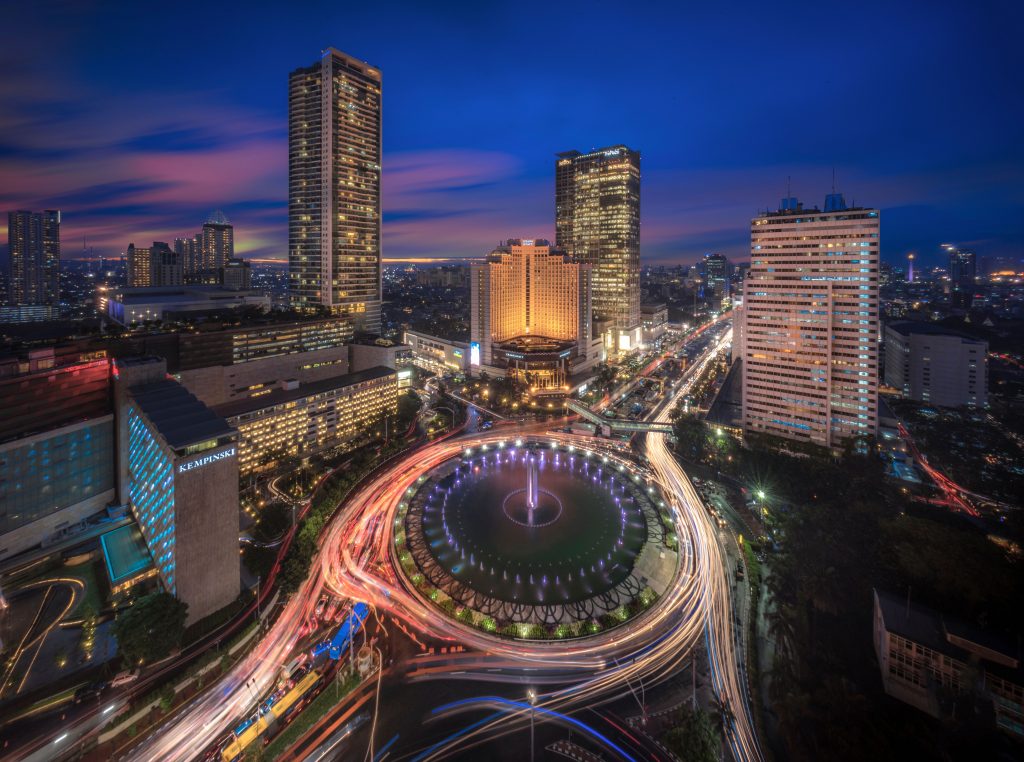
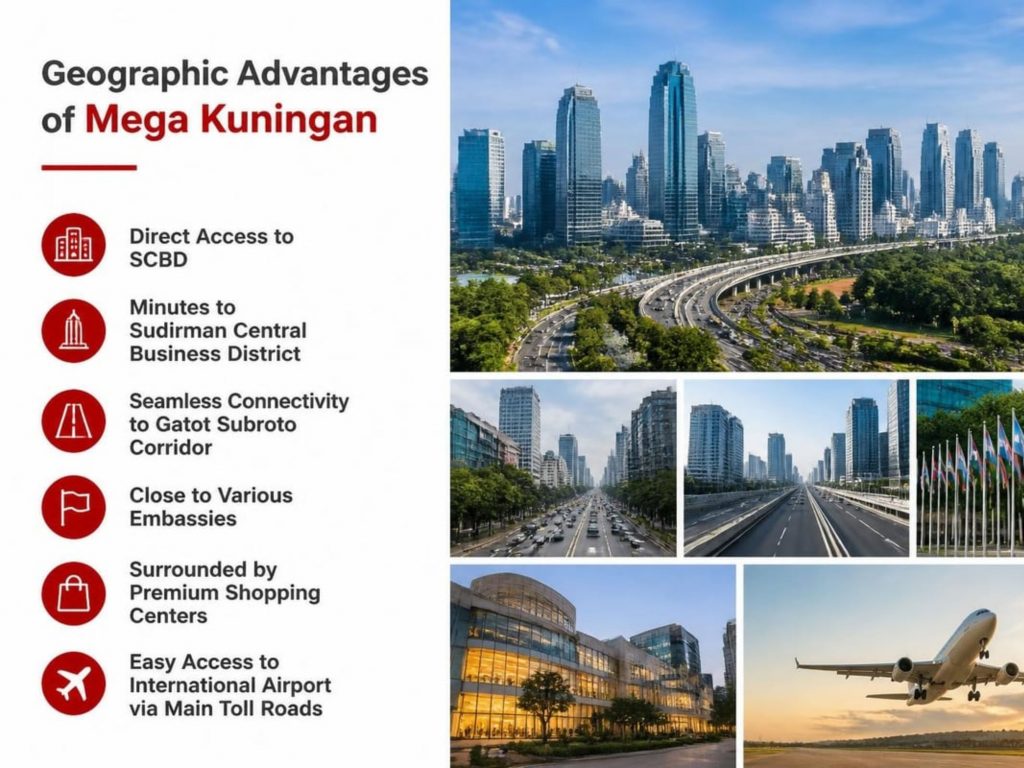
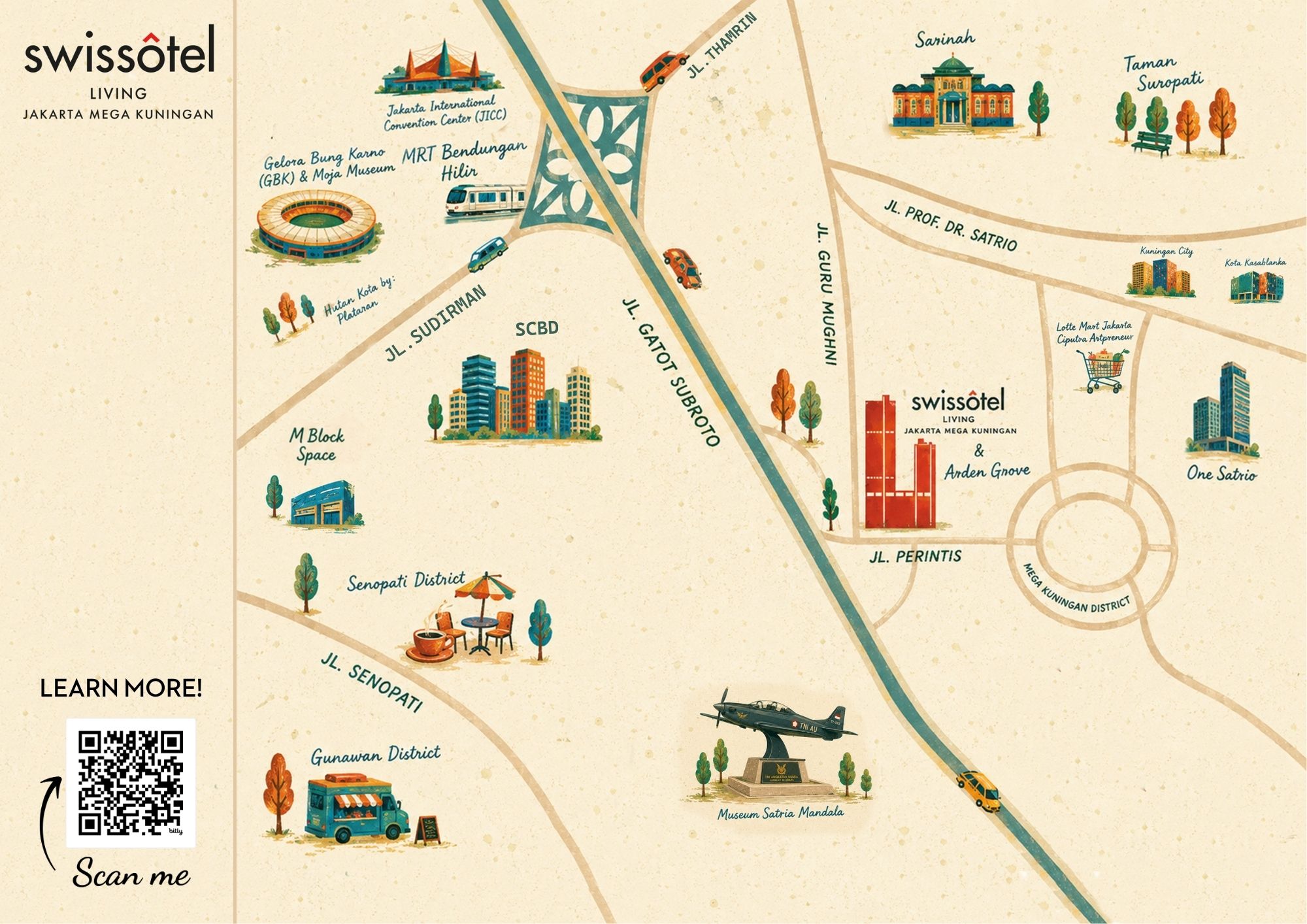
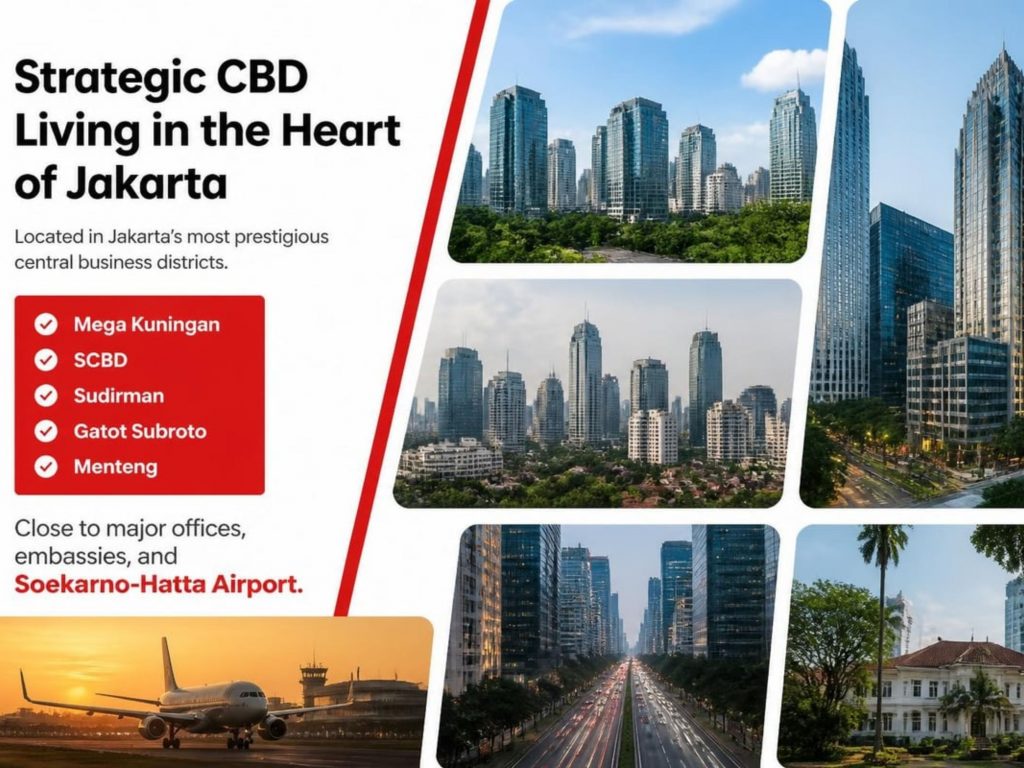
Properties located in Jakarta’s Mega Kuningan area, for example, provide immediate access to SCBD, Sudirman, and Gatot Subroto business corridors while maintaining proximity to shopping centers and international restaurants that complement in-unit cooking capabilities.
Transportation and Accessibility
Proximity to major airports, public transit, and highway networks reduces commute stress for guests managing work responsibilities alongside daily living tasks. Extended stay guests often prefer locations that minimize travel time to regular destinations, allowing more time for meal preparation and personal activities.
The American Hotel & Lodging Association’s guidance emphasizes that convenience factors, including location accessibility, rank alongside kitchen facilities in guest selection criteria for extended accommodations.
Operational Differences from Traditional Hotels
Extended stay hotels with kitchens operate under different service models compared to conventional hospitality properties. These operational distinctions affect both guest experience and property management.
Housekeeping and Maintenance Schedules
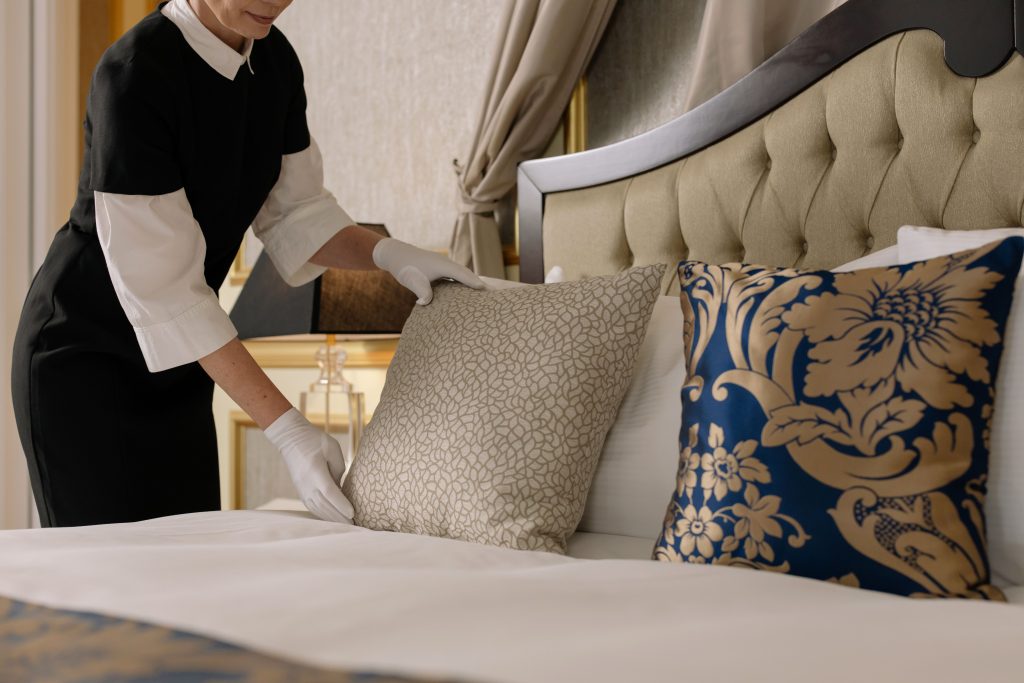
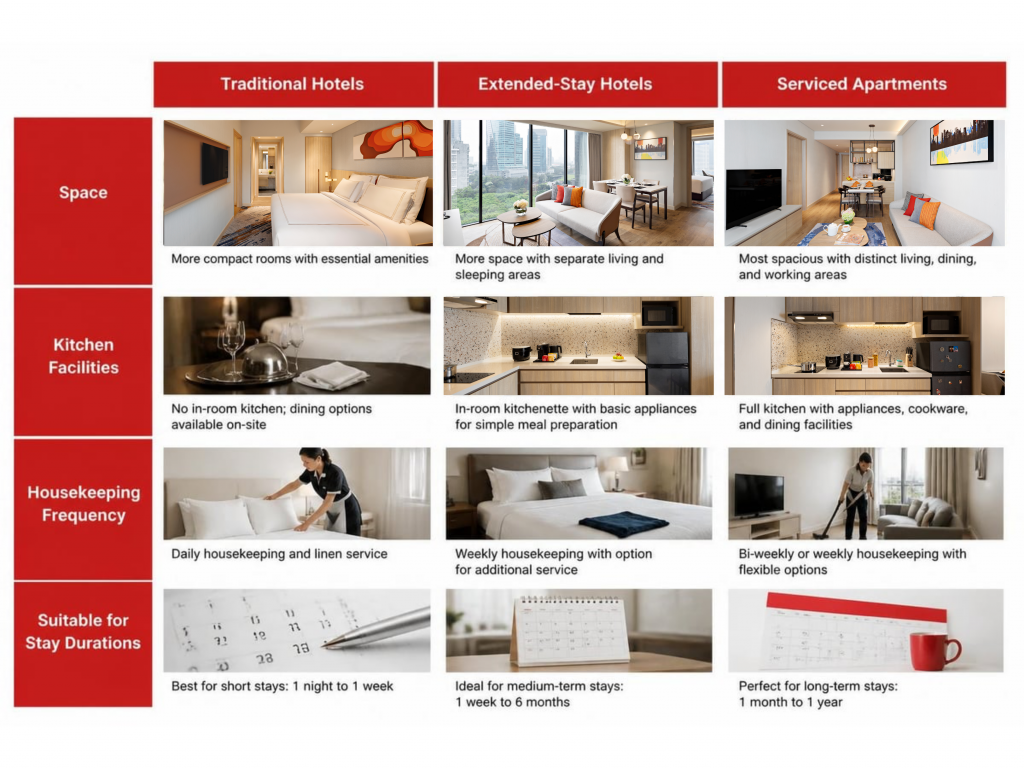
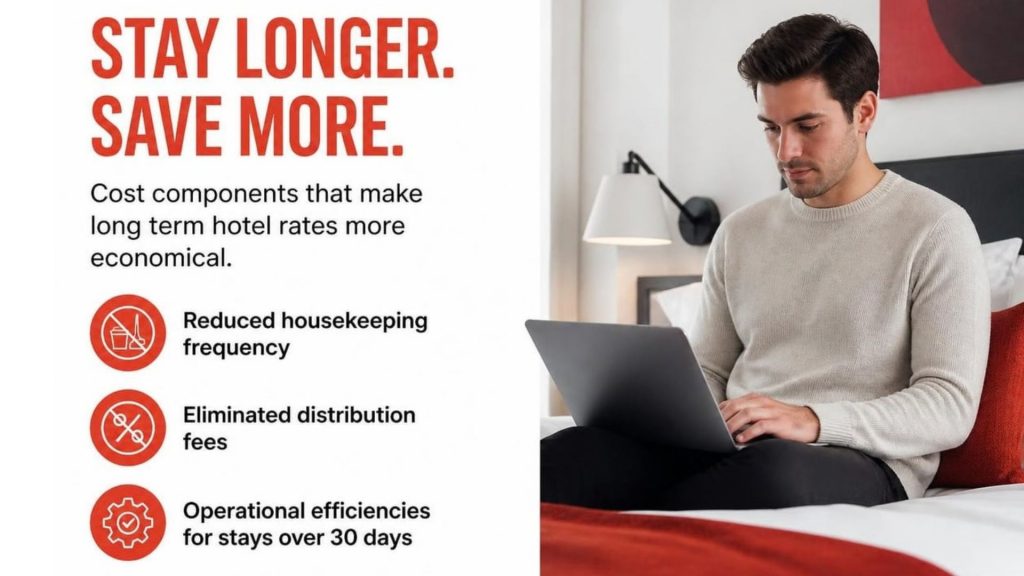
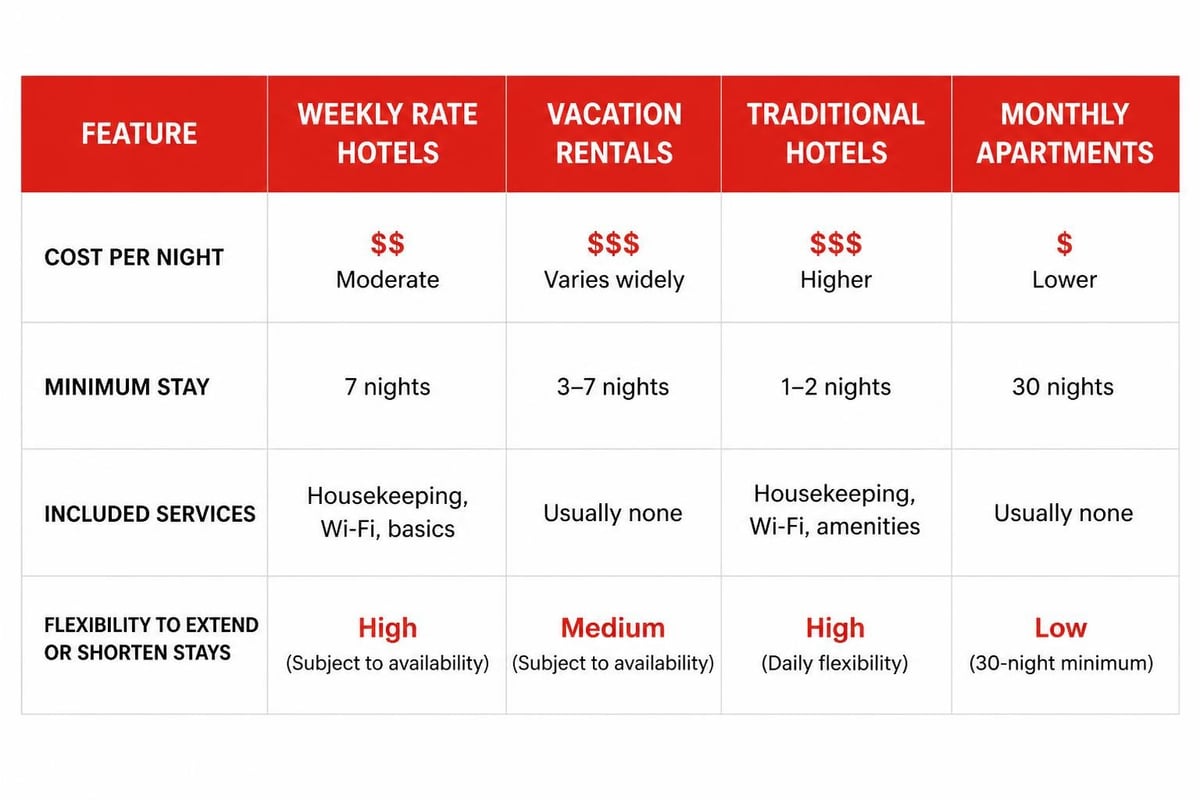
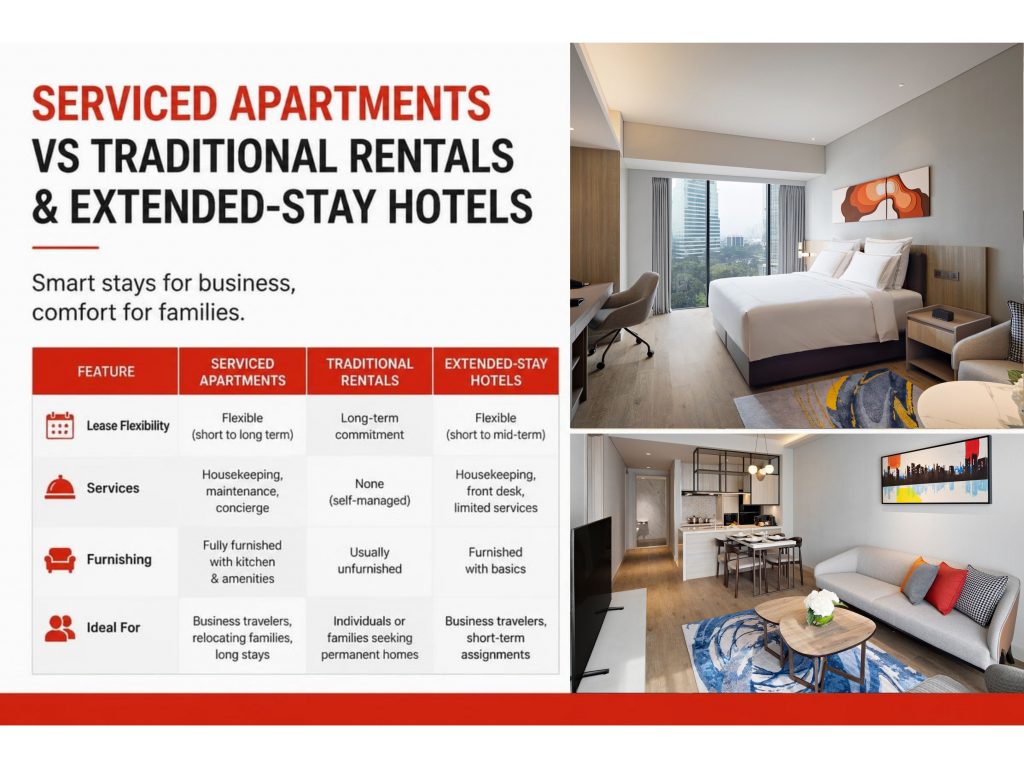
Unlike daily housekeeping in traditional hotels, extended stay properties typically offer weekly or bi-weekly cleaning services for longer-term guests. This approach respects guest privacy while reducing operational costs. Guests can request additional services, but the baseline frequency aligns with residential living patterns.
Kitchen maintenance requires specialized attention. Properties must ensure appliances function properly, provide replacement cookware as needed, and address cleaning requirements that differ from standard hotel rooms.
Lease Structures and Flexibility
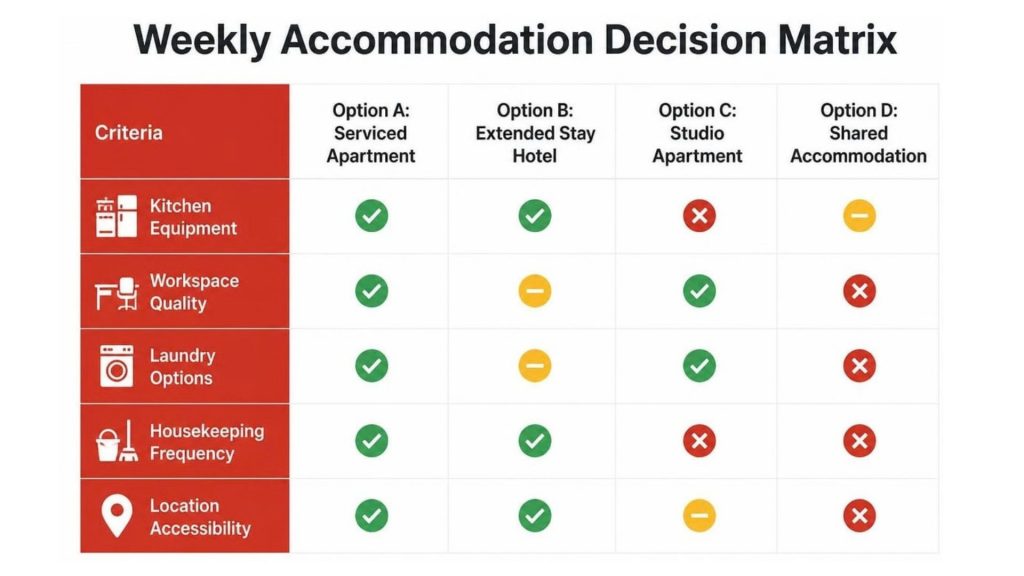
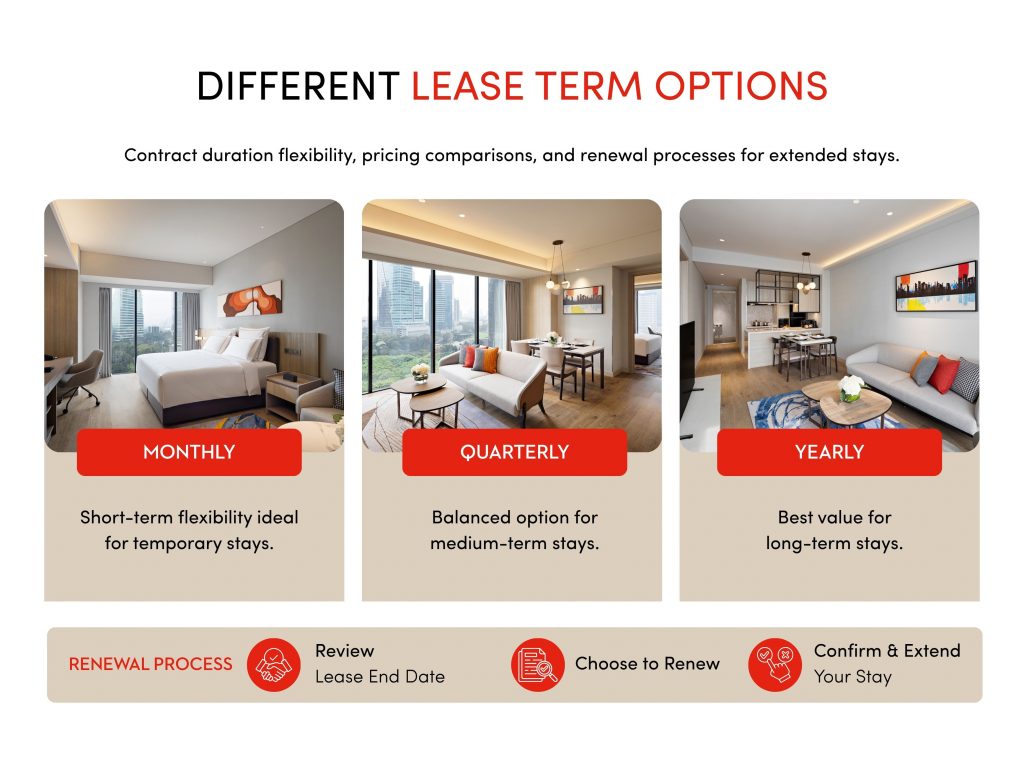
Extended stay hotels with kitchens often offer multiple booking options:
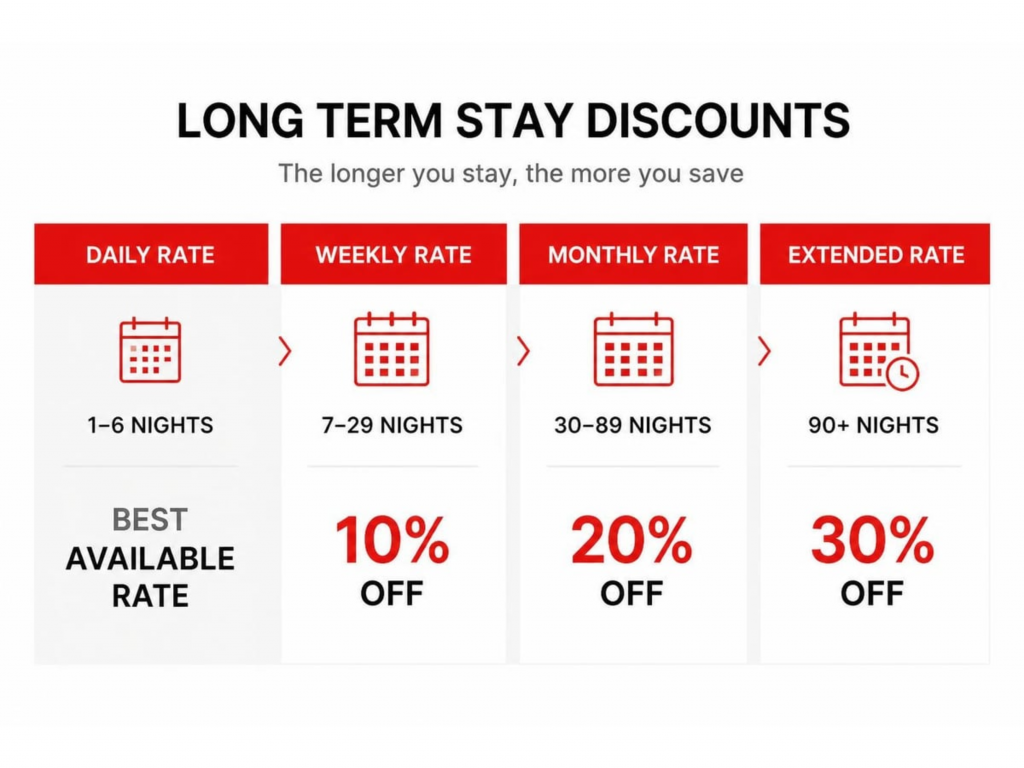
- Nightly rates for shorter stays (1-6 nights)
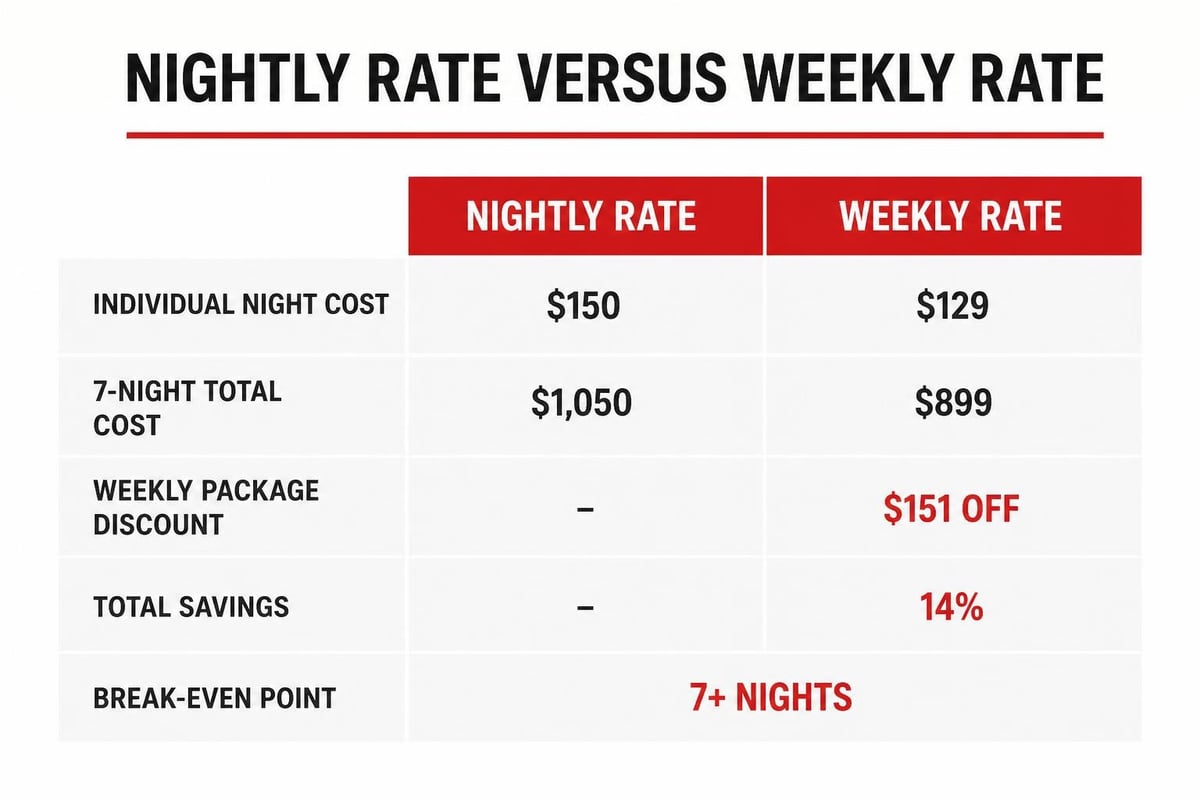
- Weekly packages with discounted rates (7-27 nights)
- Monthly agreements offering substantial savings (28+ nights)
- Extended contracts for stays exceeding 90 days with customized terms
This flexibility accommodates guests uncertain about exact duration needs, a common scenario for business projects or home searches.
Design and Space Planning
Successful extended stay hotels with kitchens maximize functionality within compact floor plans. Design considerations balance cooking facilities with living space, work areas, and storage.
Kitchen Layout Options
Three primary kitchen configurations appear in extended stay properties:
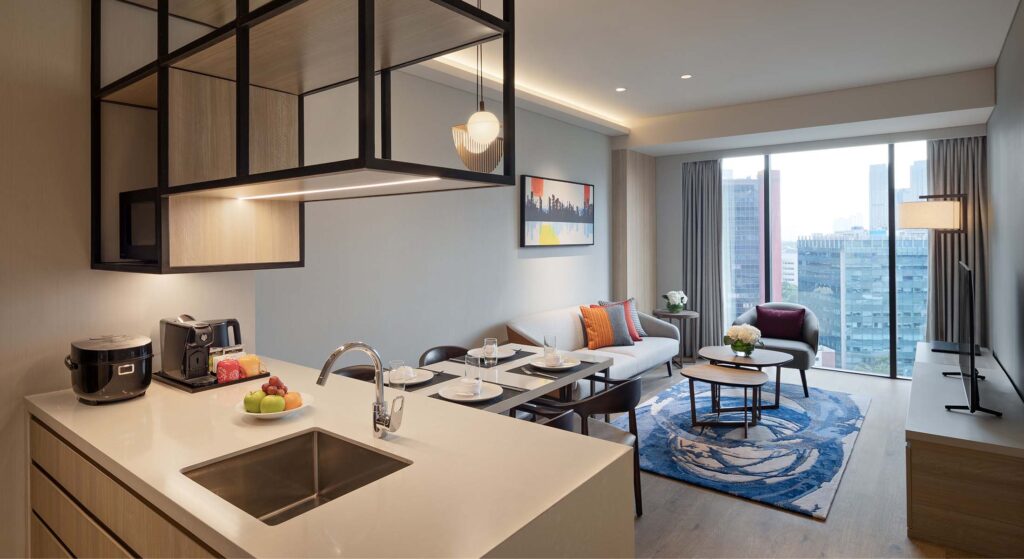
Full Kitchens include complete cooking ranges, full-size refrigerators, dishwashers, and separate counter space equivalent to apartment kitchens. These suit guests planning extended stays with significant meal preparation.
Kitchenettes feature smaller appliances such as two-burner cooktops, compact refrigerators, microwaves, and limited counter space. This configuration works for simple meal preparation while maintaining lower square footage.
Partial Kitchens occupy a middle ground with mid-size refrigerators, combination microwave-convection units, and adequate but not expansive counter areas.
| Kitchen Type | Typical Features | Best For | Square Footage |
|---|---|---|---|
| Full Kitchen | 4-burner range, full fridge, dishwasher | 30+ day stays, families | 80-120 sq ft |
| Kitchenette | 2-burner cooktop, mini fridge, microwave | 7-30 day stays, individuals | 40-60 sq ft |
| Partial Kitchen | 3-burner range, mid-size fridge, sink | 14-60 day stays, couples | 60-80 sq ft |
Living Space Integration
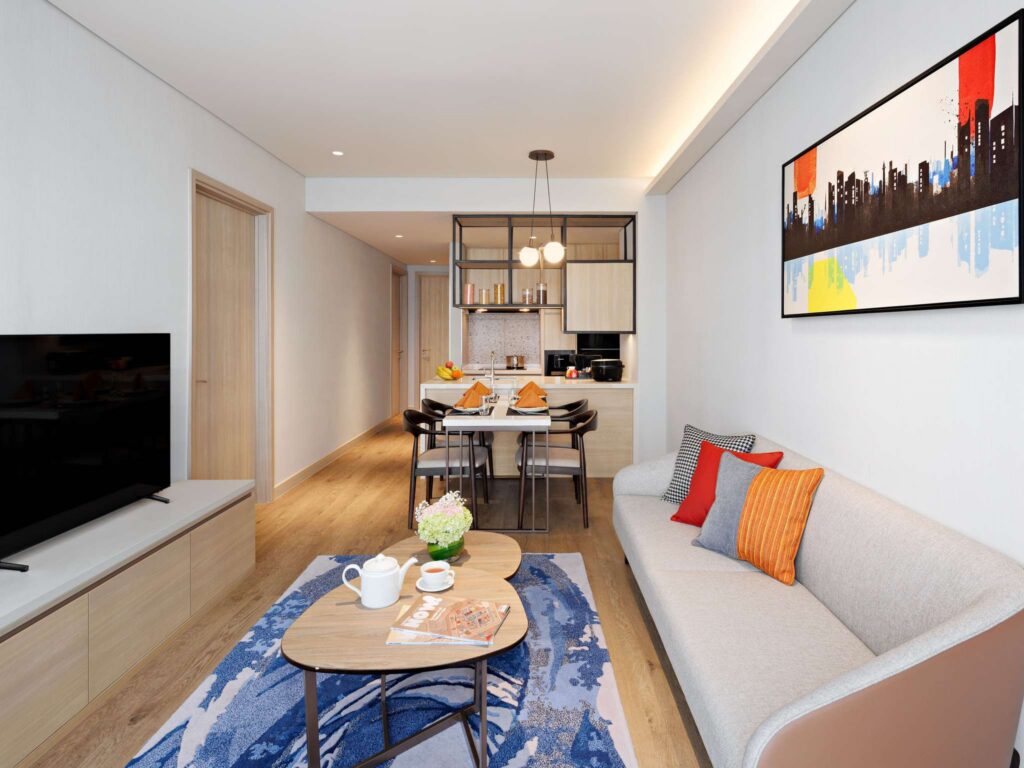
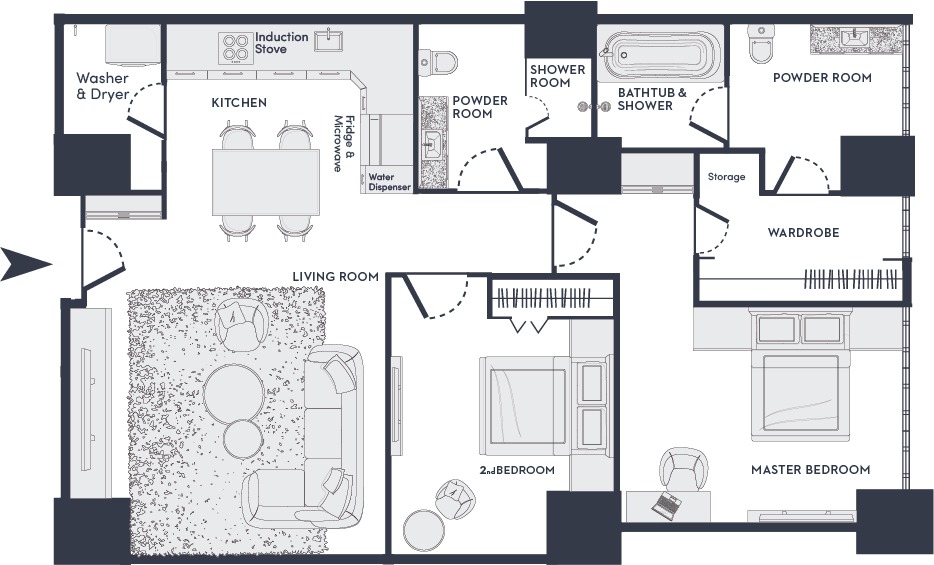
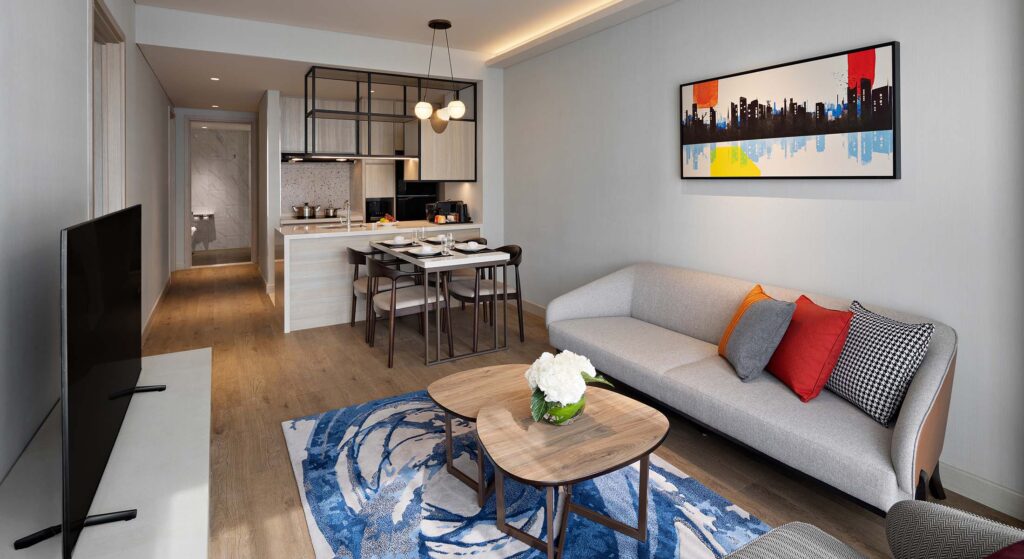
Open floor plans integrate kitchen areas with living spaces, creating residential ambiance while maintaining functional separation. Breakfast bars or dining counters provide meal service areas without requiring dedicated dining rooms in smaller units.
Studio configurations might allocate 35-40% of total square footage to kitchen and dining functions, while one-bedroom layouts dedicate 25-30% to these purposes, with remaining space for sleeping and living areas.
Technology and Modern Conveniences
Contemporary extended stay hotels with kitchens incorporate technology that enhances both cooking capabilities and overall guest experience.
Smart Kitchen Appliances
Modern properties increasingly feature induction cooktops for energy efficiency and safety, smart refrigerators with temperature controls, and app-connected appliances that simplify cooking processes. These technologies appeal to younger guests accustomed to connected home environments.
Energy-efficient appliances reduce operational costs while supporting sustainability initiatives. LED lighting, low-flow faucets, and Energy Star-rated refrigerators demonstrate environmental responsibility increasingly valued by corporate travel programs.
Digital Services and Connectivity
High-speed internet connectivity throughout units enables remote work, video conferences, and entertainment streaming. Smart TVs, wireless charging stations, and multiple power outlets accommodate digital lifestyles that extend into kitchen spaces where guests might reference recipes or stream content while cooking.
Brand Segmentation and Market Tiers
The extended stay hotels with kitchens category spans multiple price tiers and service levels, each targeting specific guest segments.
Economy Extended Stay
Budget-focused properties offer basic kitchenettes with essential appliances at accessible price points. These properties minimize amenities beyond cooking facilities, targeting cost-conscious travelers and construction workers on long-term assignments.
Midscale Extended Stay
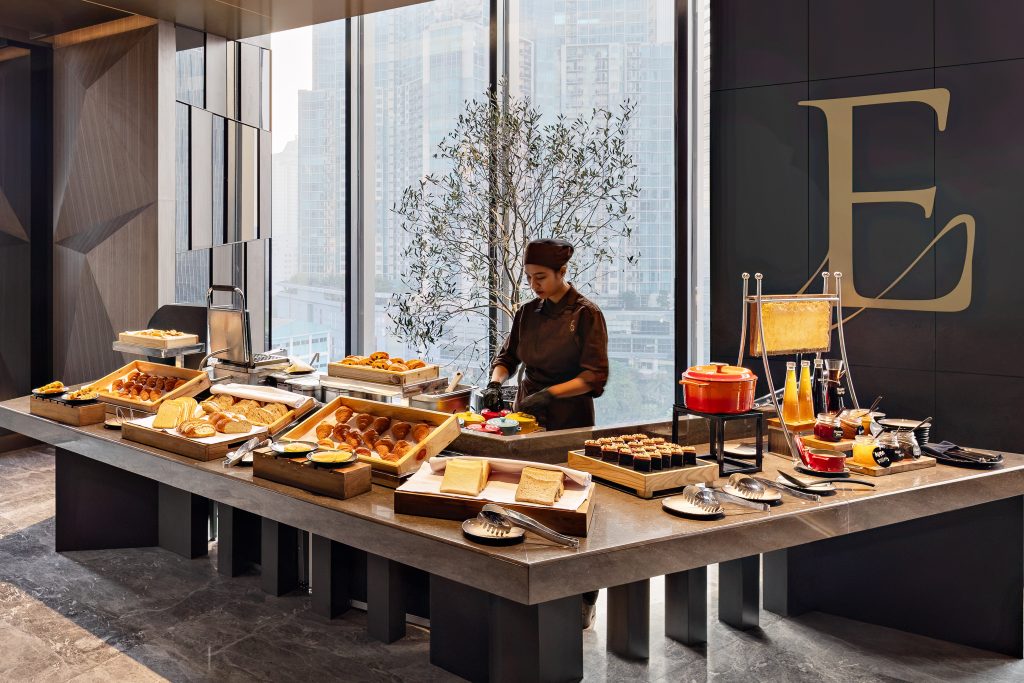
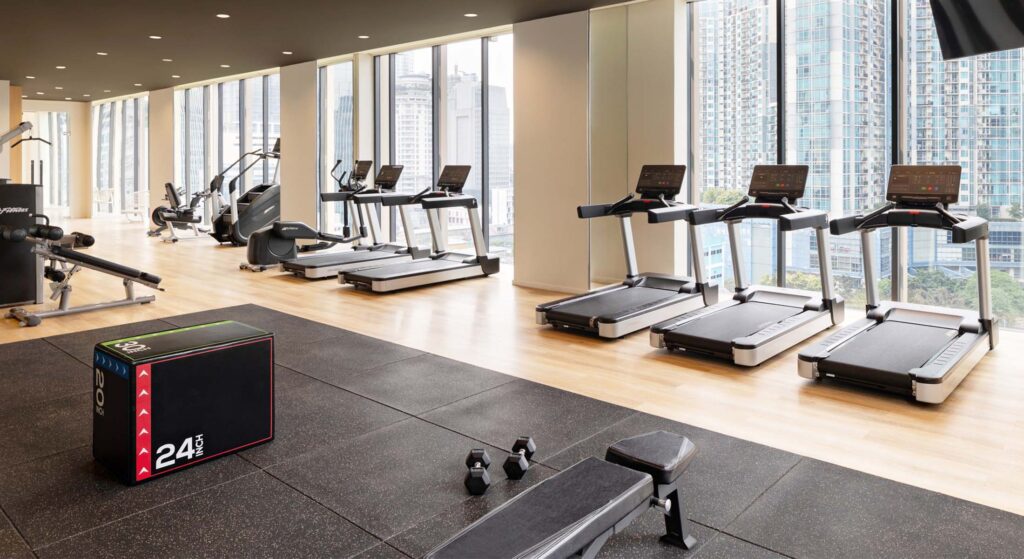
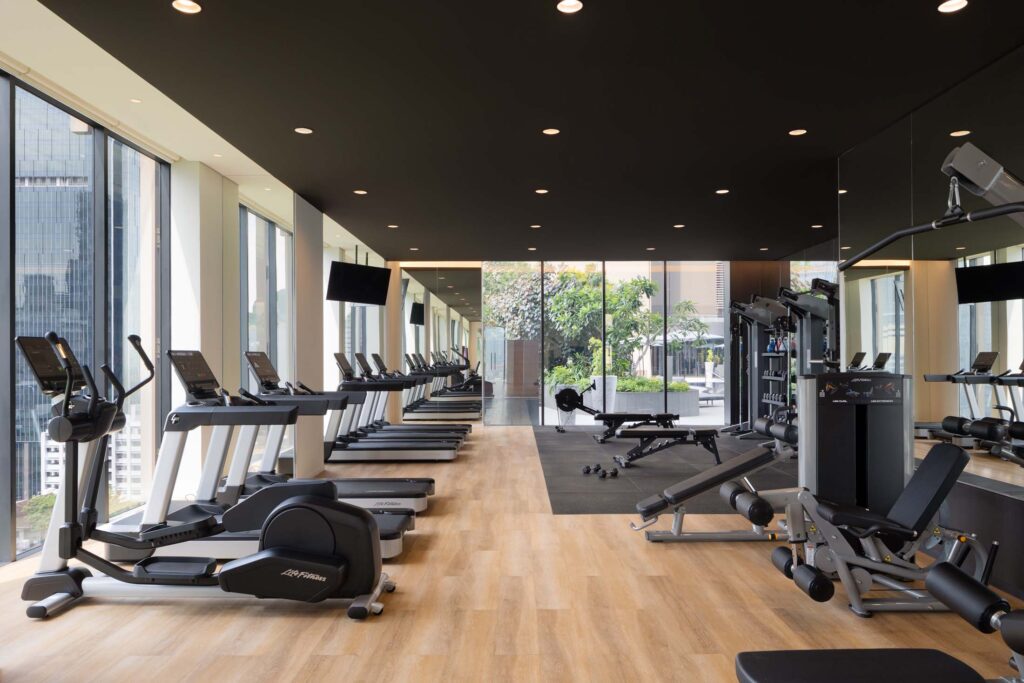
The largest segment balances kitchen functionality with comfort amenities such as fitness centers, business centers, and complimentary breakfast options. These properties attract corporate travelers seeking value without sacrificing quality.
Upscale Serviced Apartments
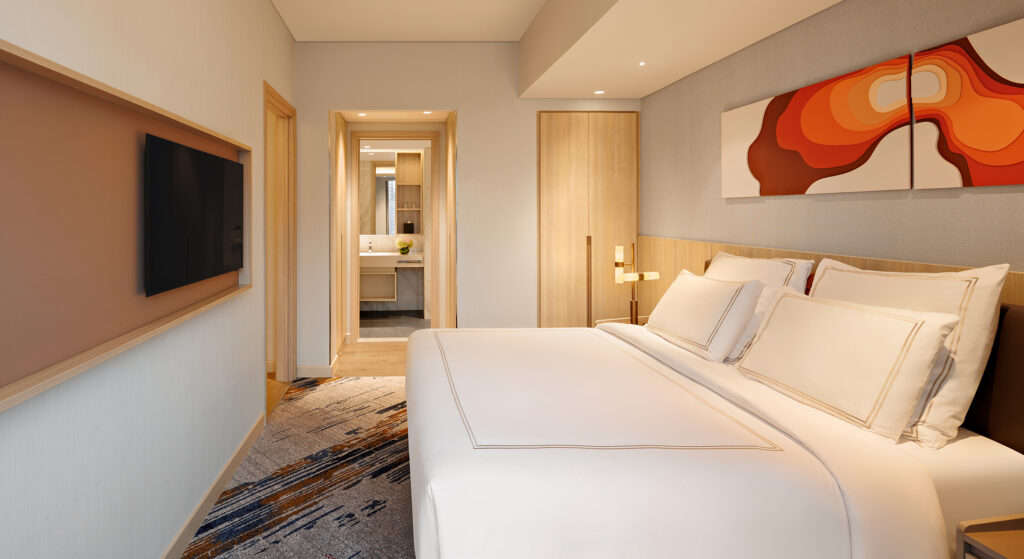
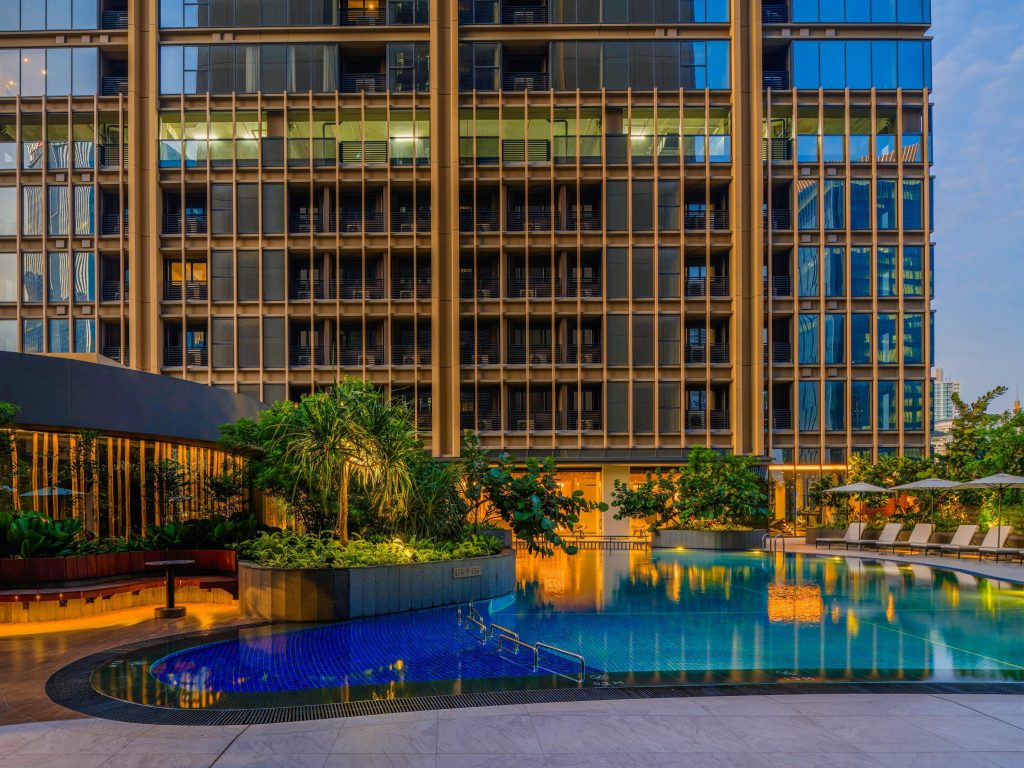
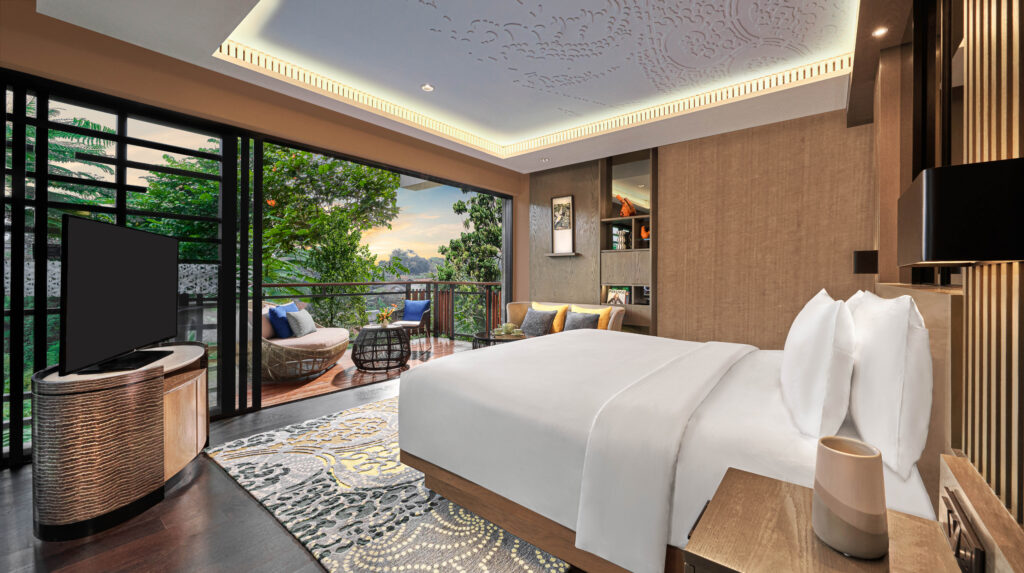
Premium extended stay accommodations combine residential luxury with hotel services. Full kitchens feature high-end appliances, granite counters, and designer finishes. Properties in this tier often include concierge services, housekeeping options, and resort-style amenities.
Serviced apartments in major business centers exemplify this category, offering fully furnished residences with complete kitchen facilities suitable for both short-term and long-term accommodation needs.
Selecting the Right Extended Stay Property
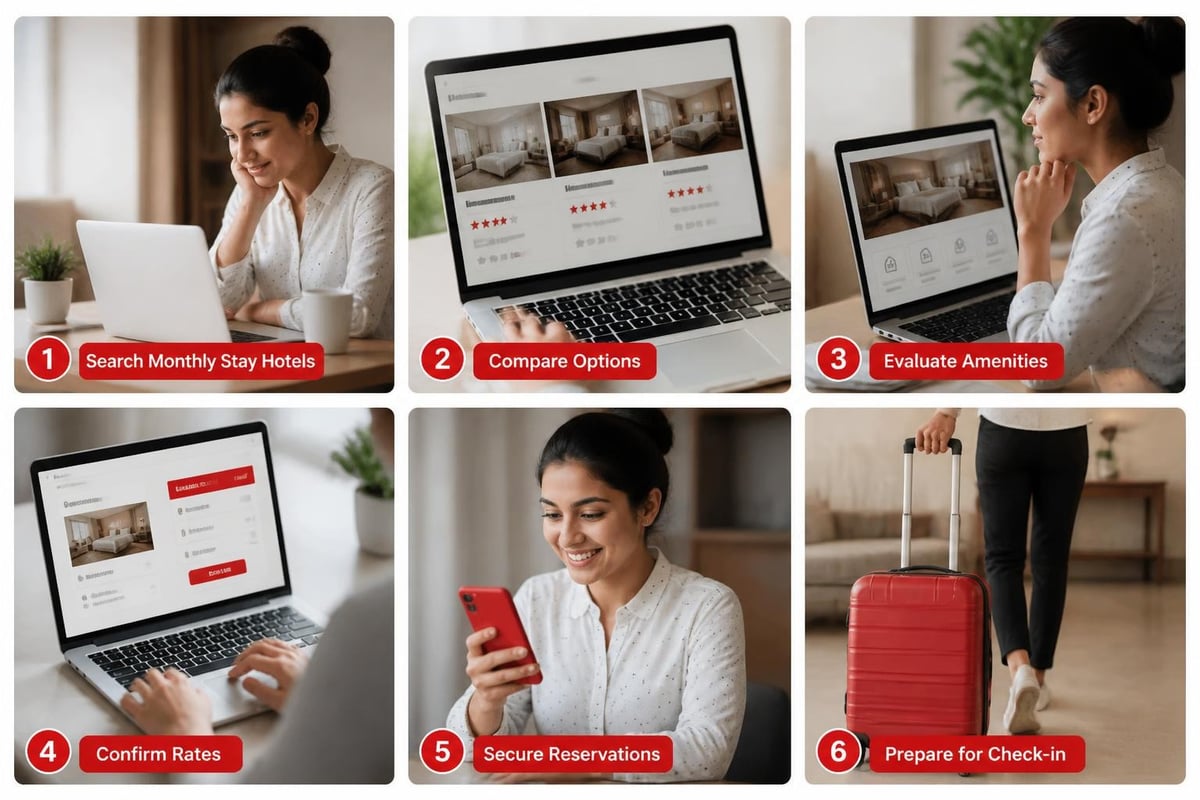
Guests evaluating extended stay hotels with kitchens should consider multiple factors beyond kitchen presence alone.
Essential Selection Criteria
- Kitchen equipment inventory – Verify specific appliances and cookware included
- Grocery access – Confirm proximity to supermarkets and food retailers
- Lease flexibility – Understand cancellation policies and extension options
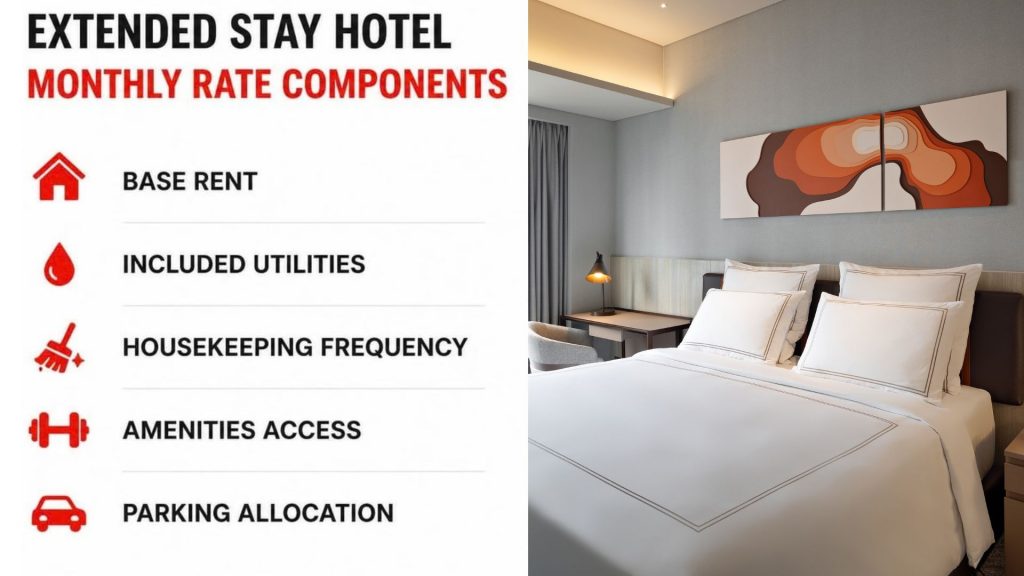
- Service inclusions – Clarify housekeeping frequency, utilities, and parking
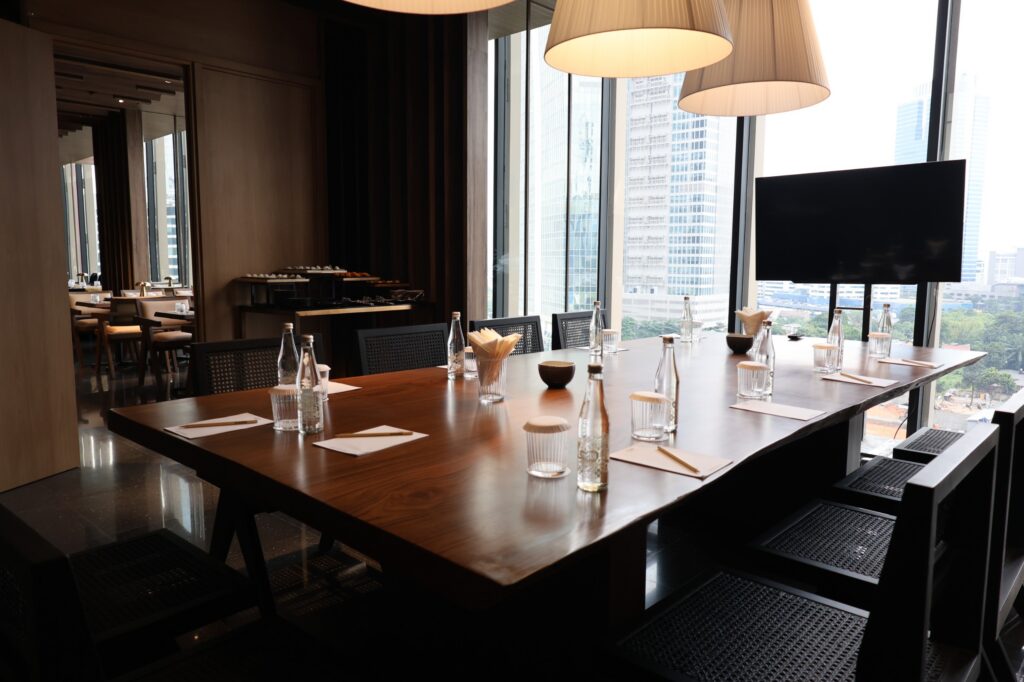
- Business amenities – Assess workspace, printing, and meeting facilities
Reading property descriptions carefully reveals important distinctions. Some properties advertise kitchens but provide only microwaves and mini-refrigerators, while others offer restaurant-quality cooking facilities.
Questions to Ask Before Booking
Prospective guests should inquire about:
- Exact kitchen appliances and their sizes
- Cookware, utensils, and dish inventory
- Grocery delivery services or partnerships
- Additional fees for utilities or services
- Minimum stay requirements for discounted rates
These questions prevent surprises and ensure the property matches specific needs.
Industry Trends and Future Outlook
The extended stay hotels with kitchens segment continues evolving in response to changing work patterns and lifestyle preferences.
Remote Work Impact
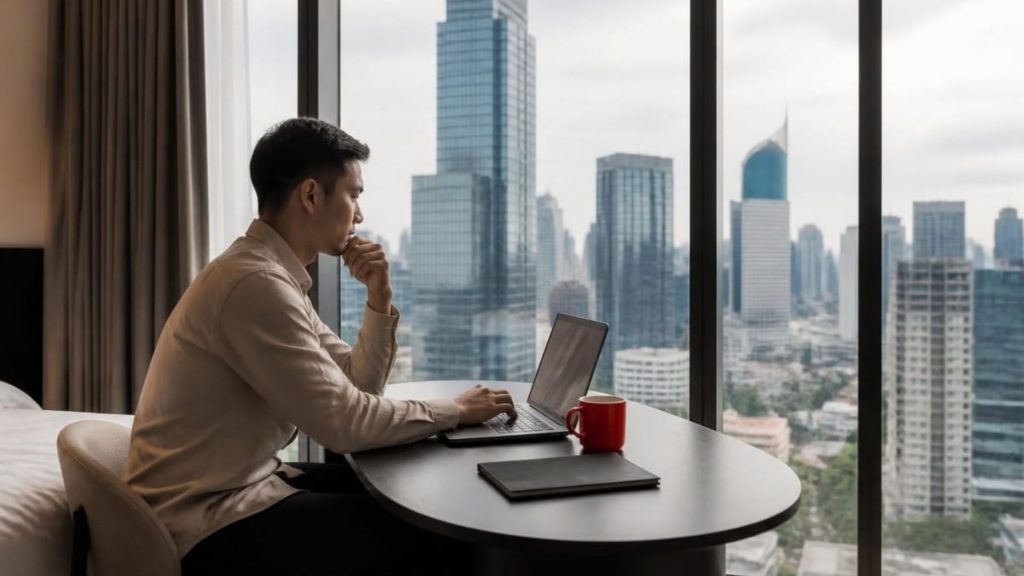
The normalization of remote work has expanded the potential guest base for extended stay properties. Digital nomads, distributed team members, and professionals working from temporary locations seek accommodations that function as both living space and office environments. Kitchen facilities enable these guests to maintain work-life balance during extended periods away from permanent residences.
Development Pipeline
Industry data from The Highland Group shows continued investment in extended stay development, with kitchens remaining a non-negotiable feature in new projects. Developers recognize that kitchen-equipped units command premium rates and maintain higher occupancy compared to traditional hotel rooms.
Sustainability Initiatives
Environmental considerations increasingly influence extended stay property operations. Kitchen facilities enable guests to reduce packaging waste from takeout meals, support local food systems through farmers’ market shopping, and minimize food waste through refrigeration and controlled portioning.
Properties implementing composting programs, providing reusable shopping bags, and partnering with organic grocery delivery services appeal to environmentally conscious travelers.
Practical Living in Extended Stay Accommodations
Daily life in extended stay hotels with kitchens requires adjustment for guests accustomed to traditional hotel services or established home routines.
Grocery Shopping Strategies
Successful extended stay guests develop efficient shopping patterns. Initial pantry stocking includes basics like cooking oil, spices, coffee, and staples, followed by weekly fresh food purchases. Many guests balance home cooking with occasional restaurant meals to sample local cuisine without exhausting themselves with constant meal preparation.
Understanding local grocery options, delivery services, and specialty food stores helps guests settle into comfortable routines quickly.
Meal Planning and Time Management
Business travelers often batch-cook on weekends, preparing portions for weekday lunches and dinners. This approach maximizes kitchen value while minimizing time spent on daily cooking during busy work periods.
Simple meal strategies like overnight oats for breakfast, salad assembly for lunches, and slow-cooker dinners allow guests to eat well without extensive cooking time.
Community and Social Aspects
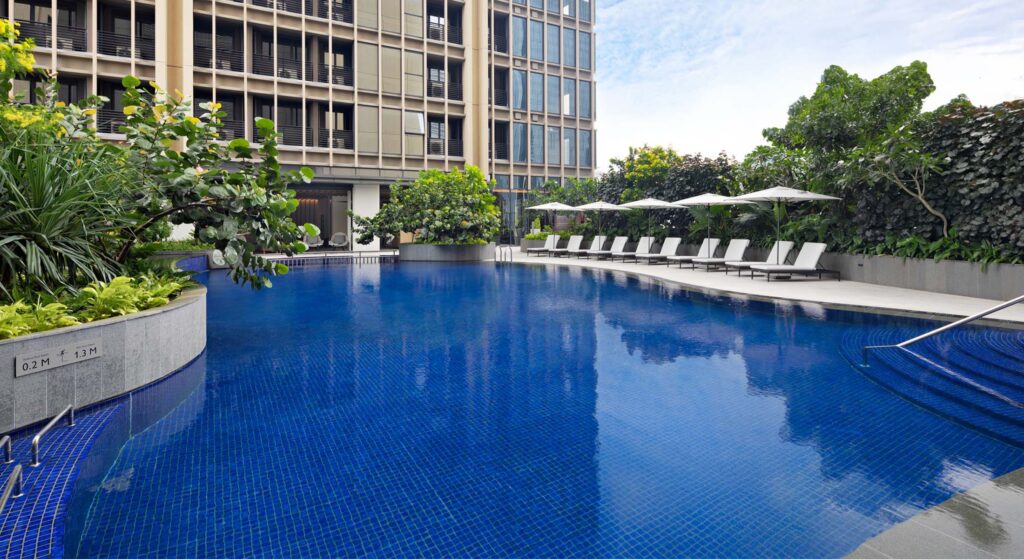
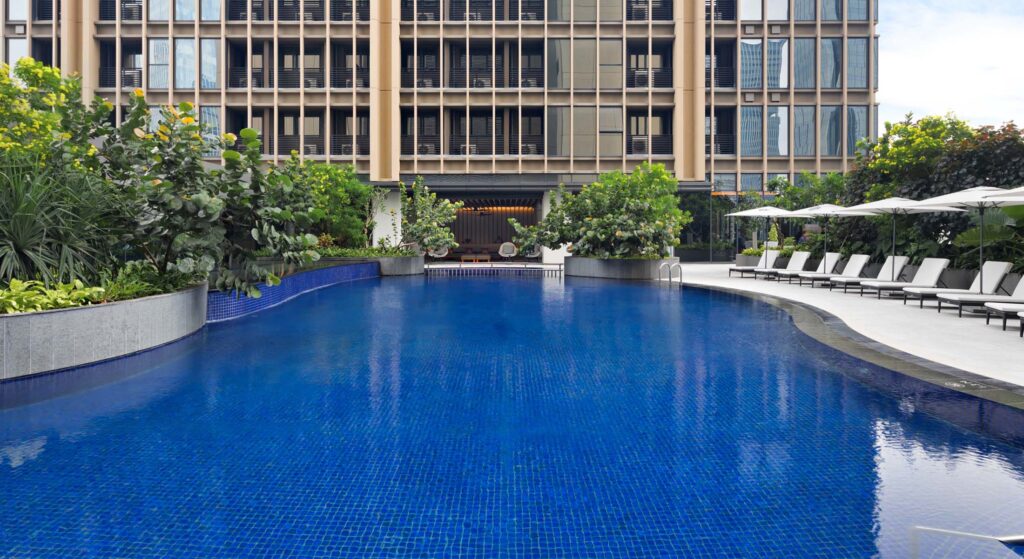
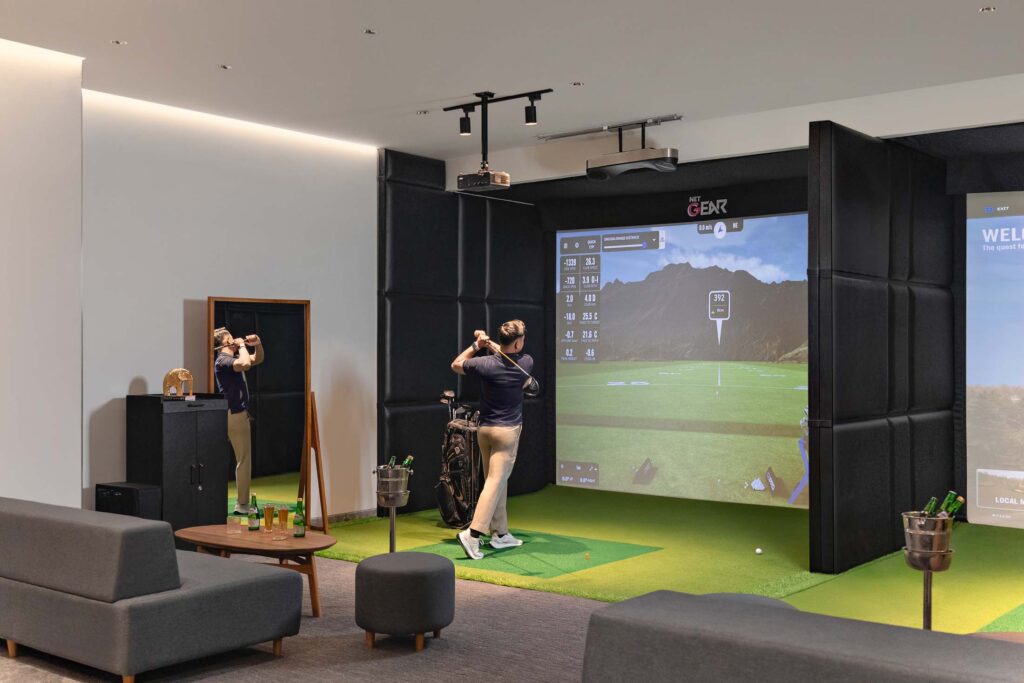
Extended stay properties often develop informal guest communities. Shared amenity spaces like fitness centers, lounges, and pool areas facilitate connections among residents facing similar circumstances. Some properties organize social events that strengthen community feeling during extended stays.
Regional Variations and International Considerations
Extended stay hotels with kitchens adapt to local markets, regulations, and cultural preferences worldwide.
Asian Market Characteristics
In Asian markets, extended stay properties frequently incorporate rice cookers as essential kitchen equipment, recognizing regional dietary preferences. Properties catering to international business travelers balance Western kitchen expectations with local cooking traditions.
Jakarta’s extended stay market, for instance, serves both expatriate communities and domestic business travelers, requiring kitchen configurations that accommodate diverse culinary practices. Properties near major business districts like Kuningan attract consistent demand from corporate travelers requiring weekly or monthly accommodation with full kitchen facilities.
Regulatory Environments
Different jurisdictions classify extended stay properties variously as hotels, serviced apartments, or residential facilities. These classifications affect tax treatment, zoning permissions, and operational requirements. Some markets restrict kitchen facilities in hotels, while others mandate specific safety features in residential-style accommodations.
Understanding local regulations helps explain why extended stay products vary significantly across markets despite serving similar guest needs.
Extended stay hotels with kitchens provide essential solutions for business travelers, relocating families, and anyone requiring temporary housing beyond standard hotel stays. The combination of residential functionality and hospitality services creates value that transcends simple accommodation, supporting productive, comfortable living during transition periods. Whether you’re relocating to Jakarta for a corporate assignment, exploring long-term opportunities in Southeast Asia, or seeking comfortable family accommodation with the flexibility of home cooking, Swissôtel Living Jakarta Mega Kuningan offers 240 fully furnished serviced apartments with complete kitchen facilities, flexible stay durations, and strategic access to Jakarta’s business districts, creating an ideal extended stay solution in the heart of Mega Kuningan.