
Hotels You Can Live In: Extended-Stay Options in 2026
The boundary between temporary lodging and permanent residence has evolved significantly in 2026. Hotels you can live in represent a growing segment of the hospitality industry, offering flexible accommodation solutions for business travelers, expatriates, families, and anyone seeking the comfort of home combined with professional hotel services. This shift reflects changing work patterns, global mobility, and the increasing demand for furnished, service-ready living spaces that eliminate the complexity of traditional apartment leases.
Understanding the Extended-Stay Hotel Market
The extended-stay sector has experienced remarkable growth over recent years. According to research on extended-stay hotel trends, the demand for longer-duration accommodations continues to outpace traditional hotel segments, driven by corporate relocations, project-based assignments, and lifestyle preferences.
Hotels you can live in typically offer residential-style accommodations with flexible booking terms. Unlike conventional hotels designed for overnight stays, these properties feature full kitchens, separate living areas, and amenities that support daily life over weeks, months, or even years.
Key Characteristics of Long-Stay Hotels
Properties designed for extended residence share several common features:
- Fully furnished apartments with complete kitchen facilities
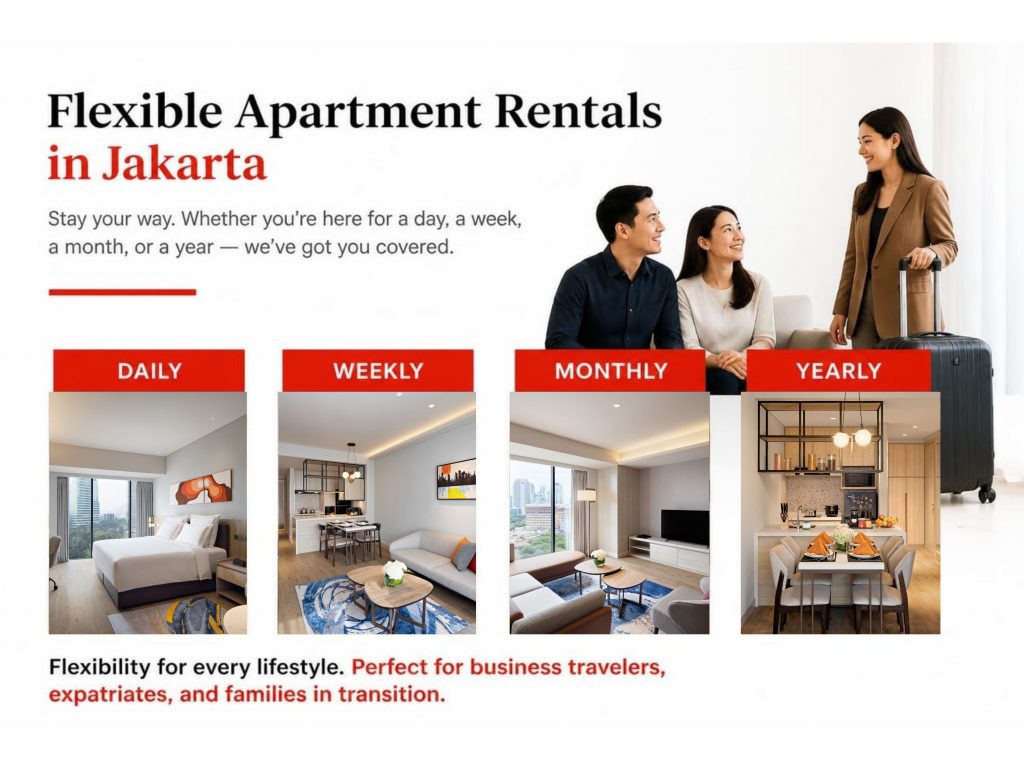
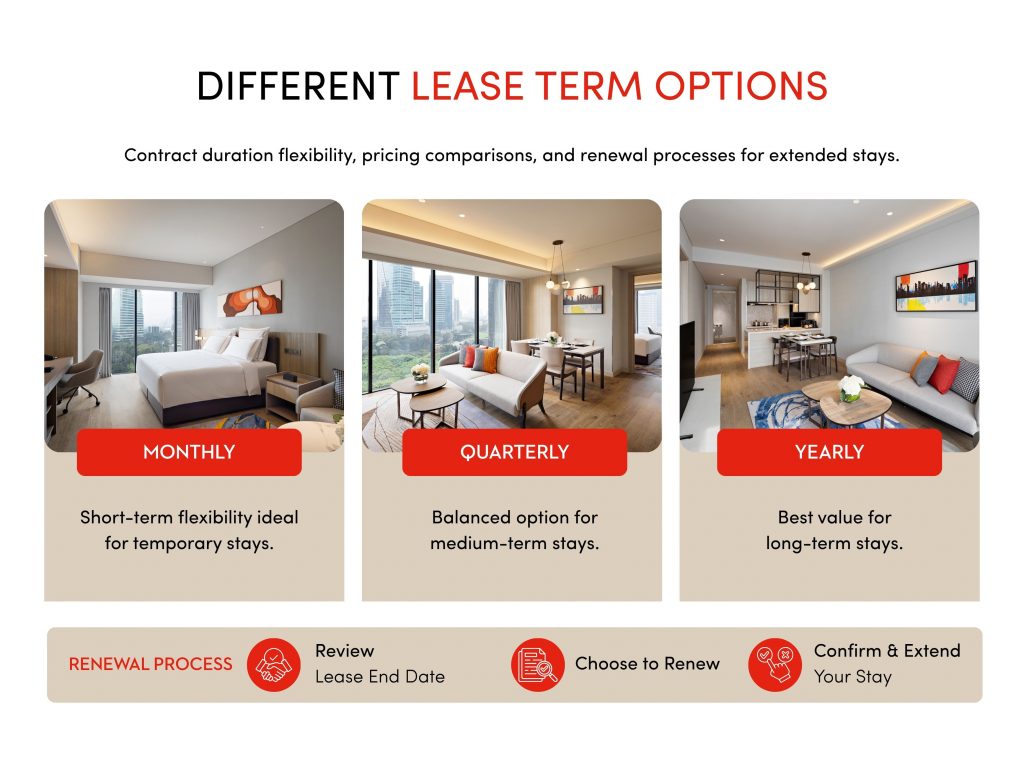
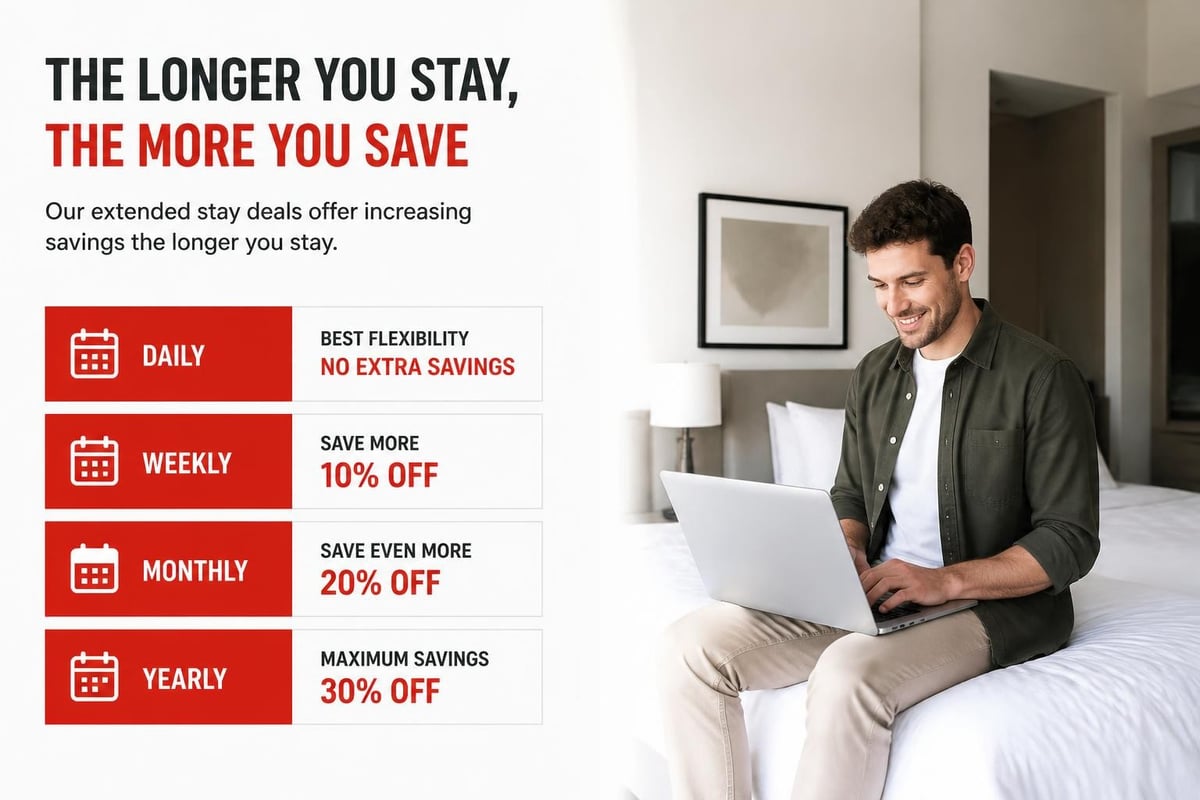
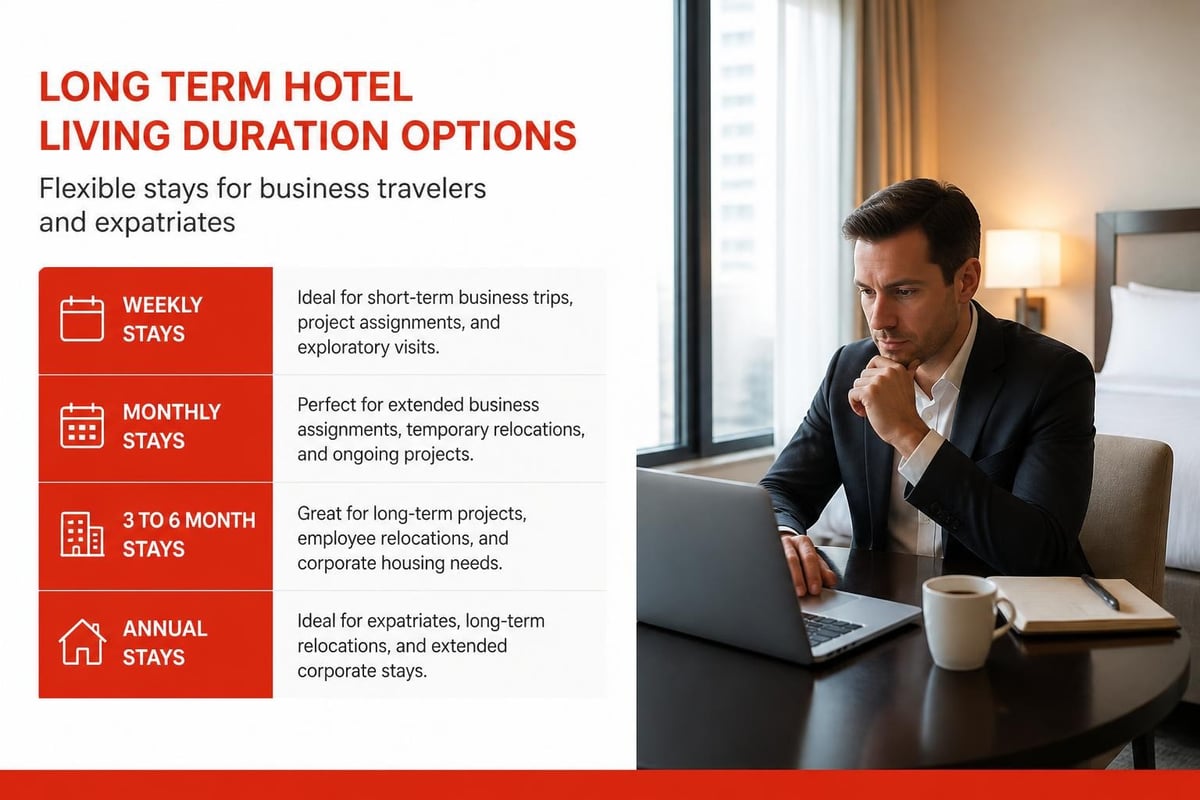
- Flexible lease terms ranging from daily to yearly contracts
- Housekeeping services on a scheduled or on-demand basis
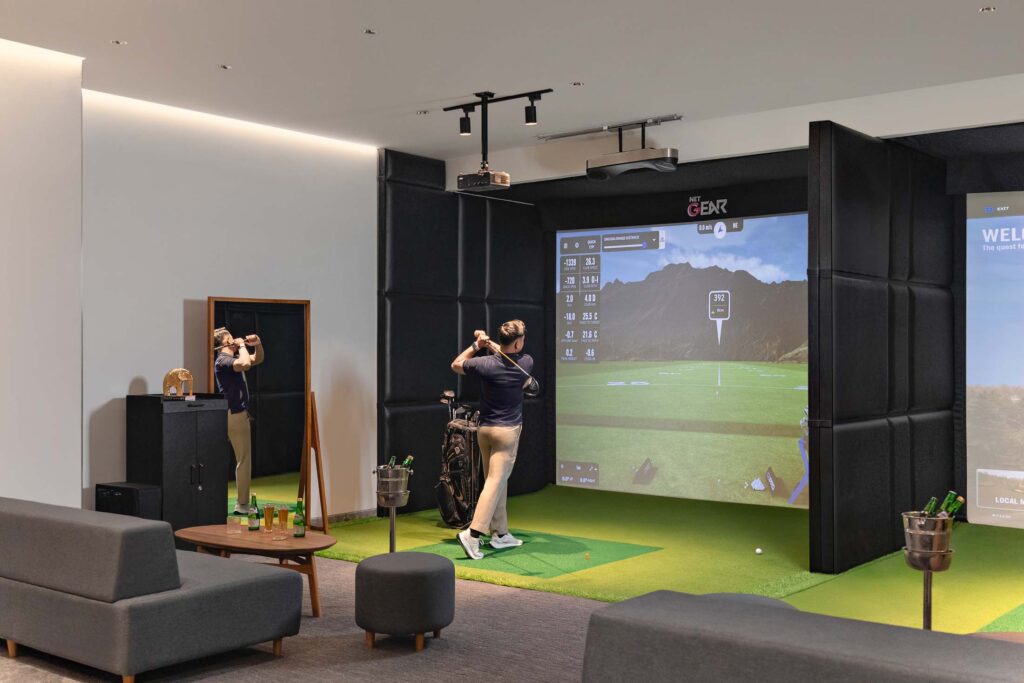
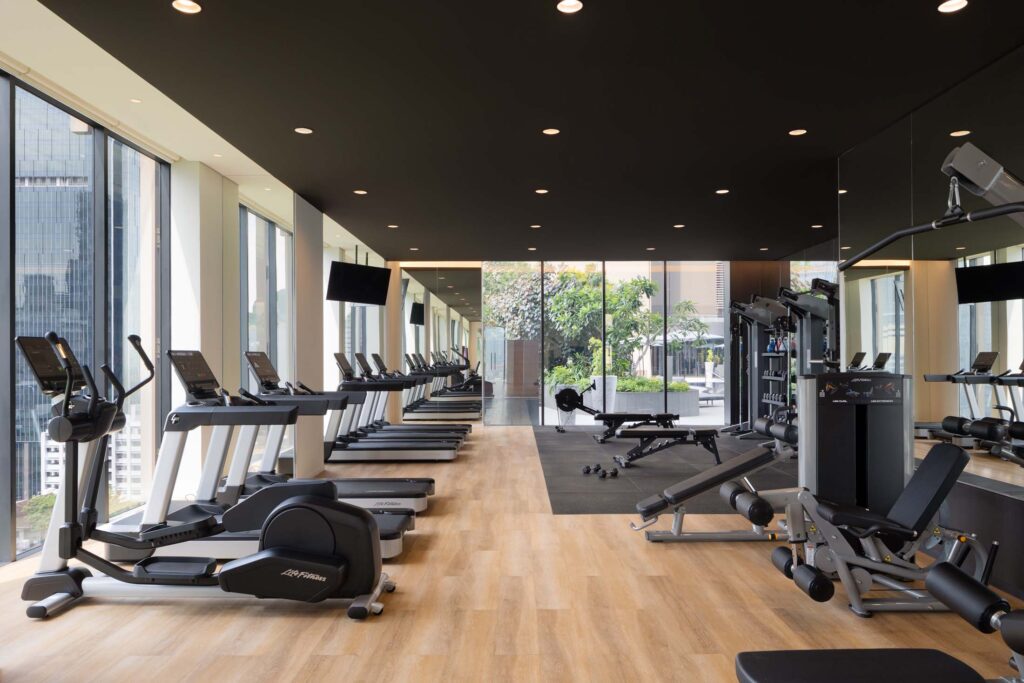
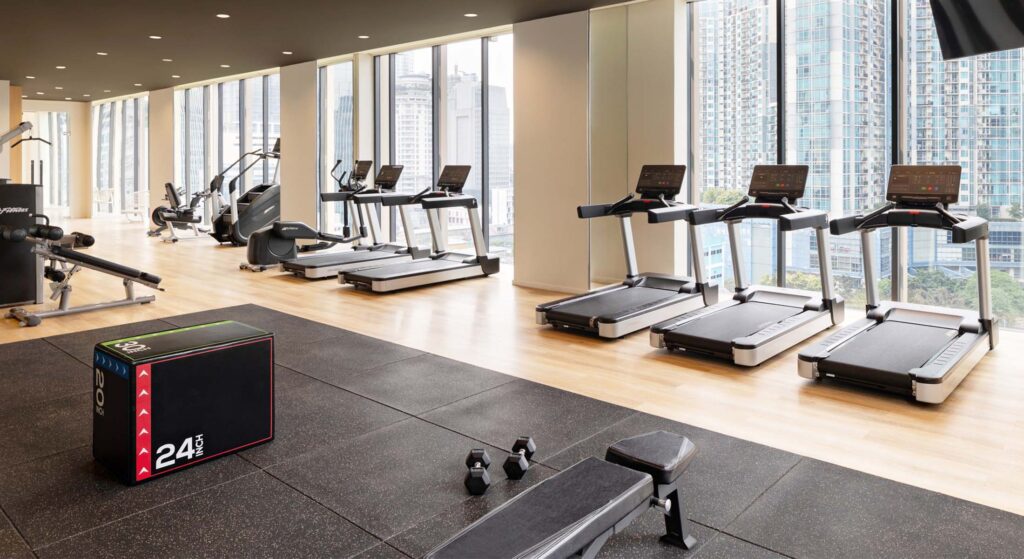
- Integrated amenities including fitness centers, business facilities, and social spaces
- Utility inclusion with no separate bills for electricity, water, or internet
- Professional management providing 24-hour support and maintenance
The operational model differs significantly from traditional hospitality. Extended-stay properties balance hotel service standards with residential privacy needs, creating environments where guests can establish routines and genuinely settle in.
Types of Hotels You Can Live In
The market offers several distinct categories, each serving specific needs and preferences. Understanding these options helps match accommodation to lifestyle requirements.
Serviced Apartments
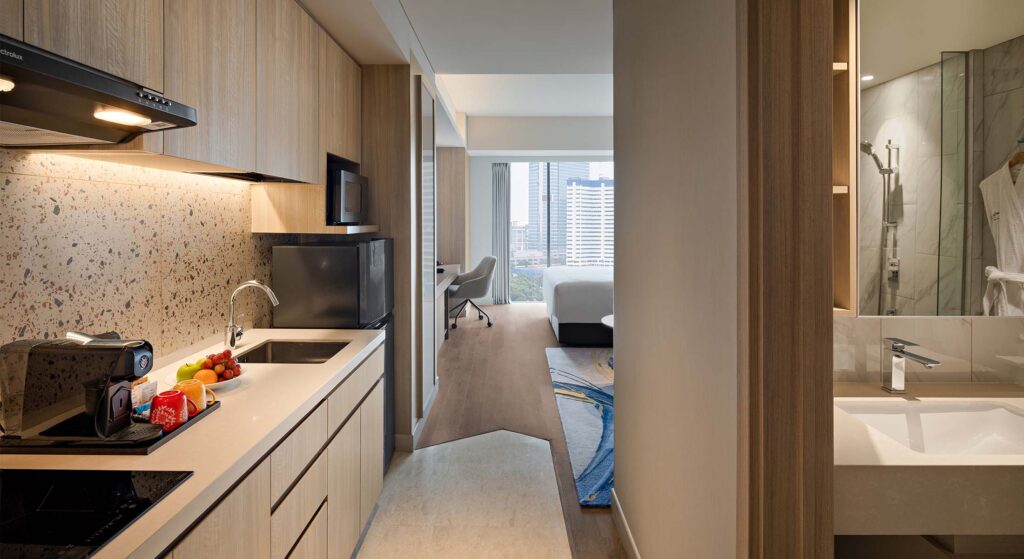
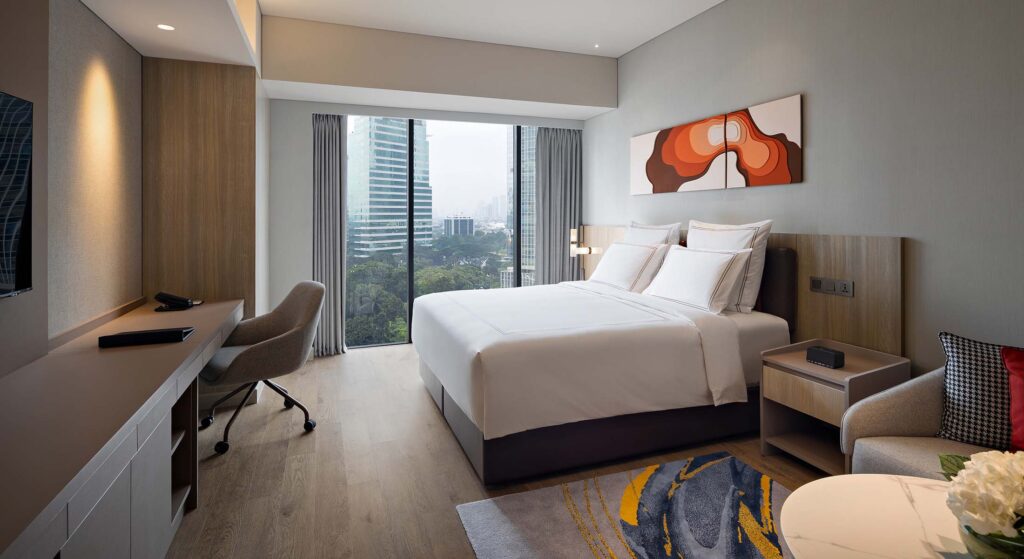
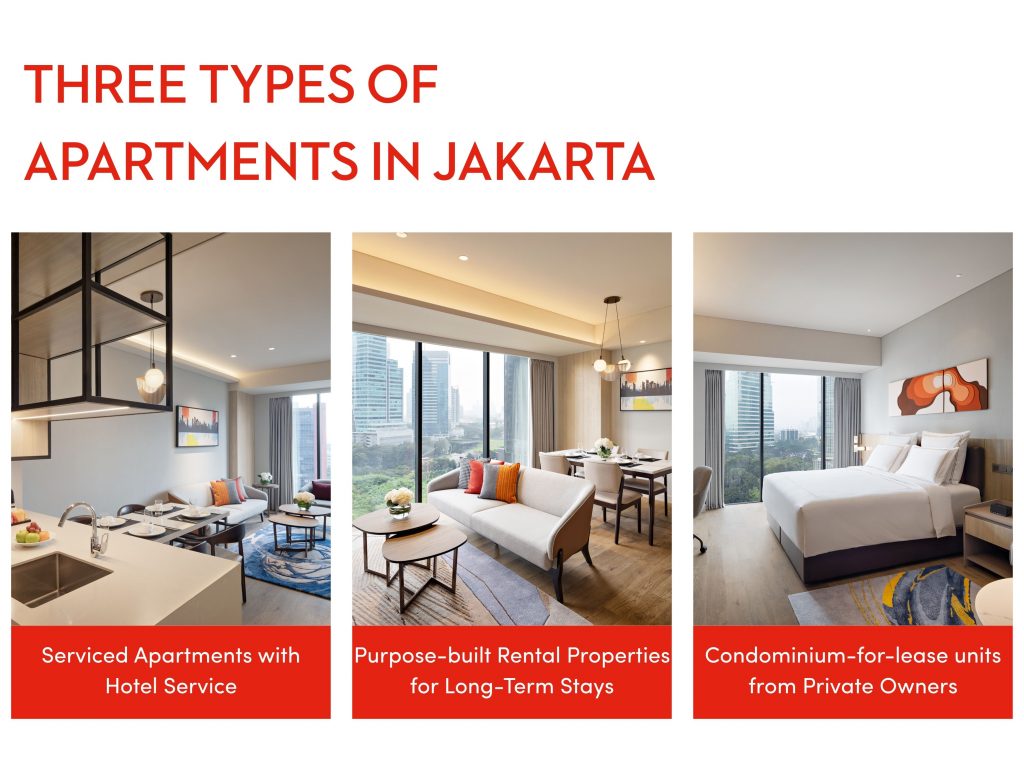
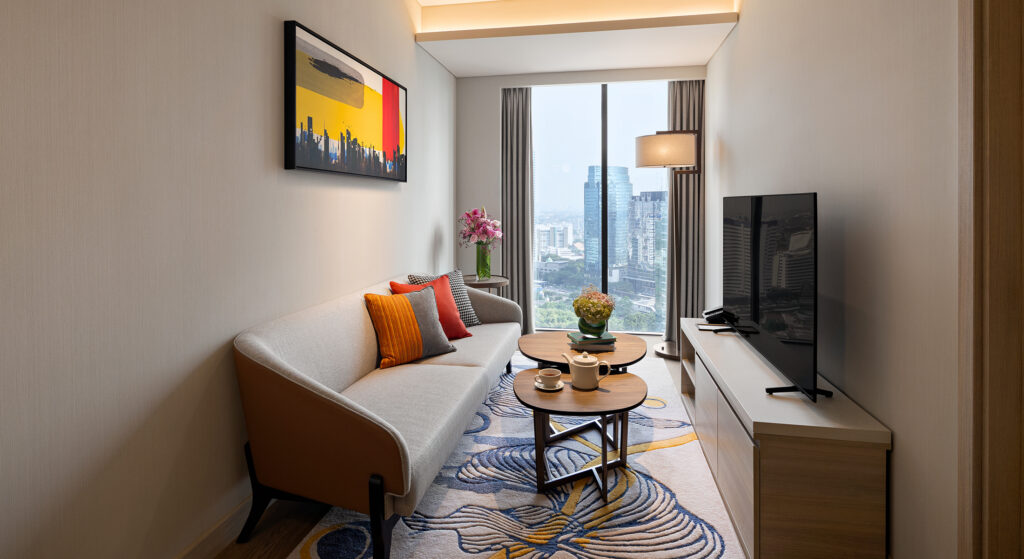
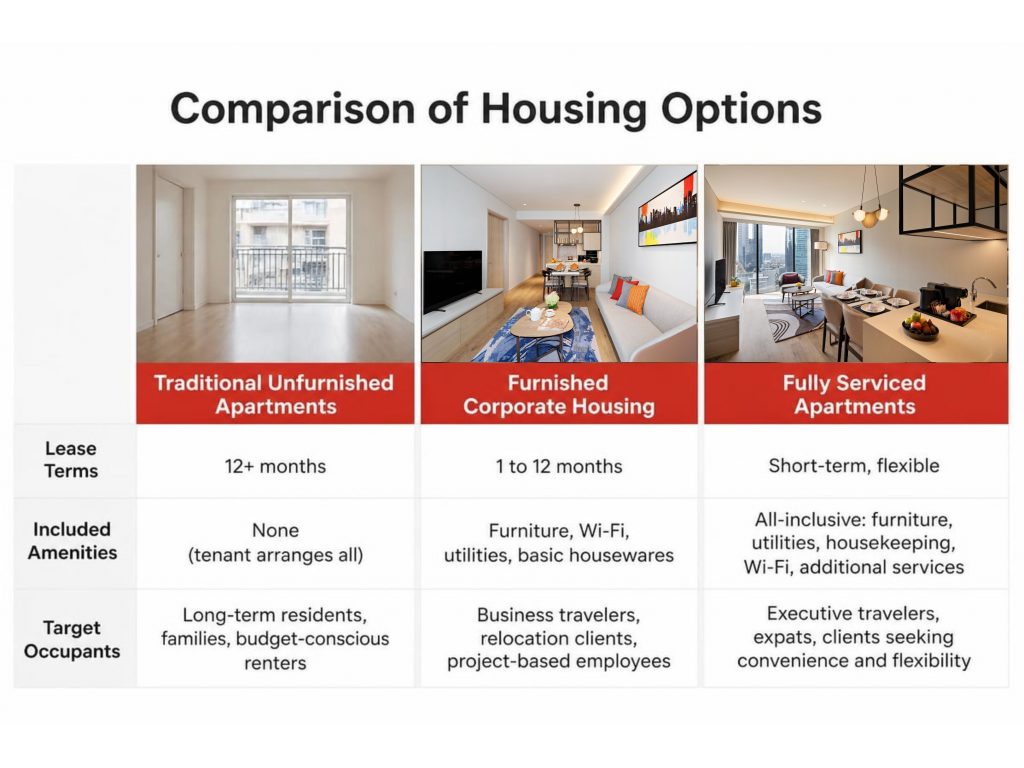
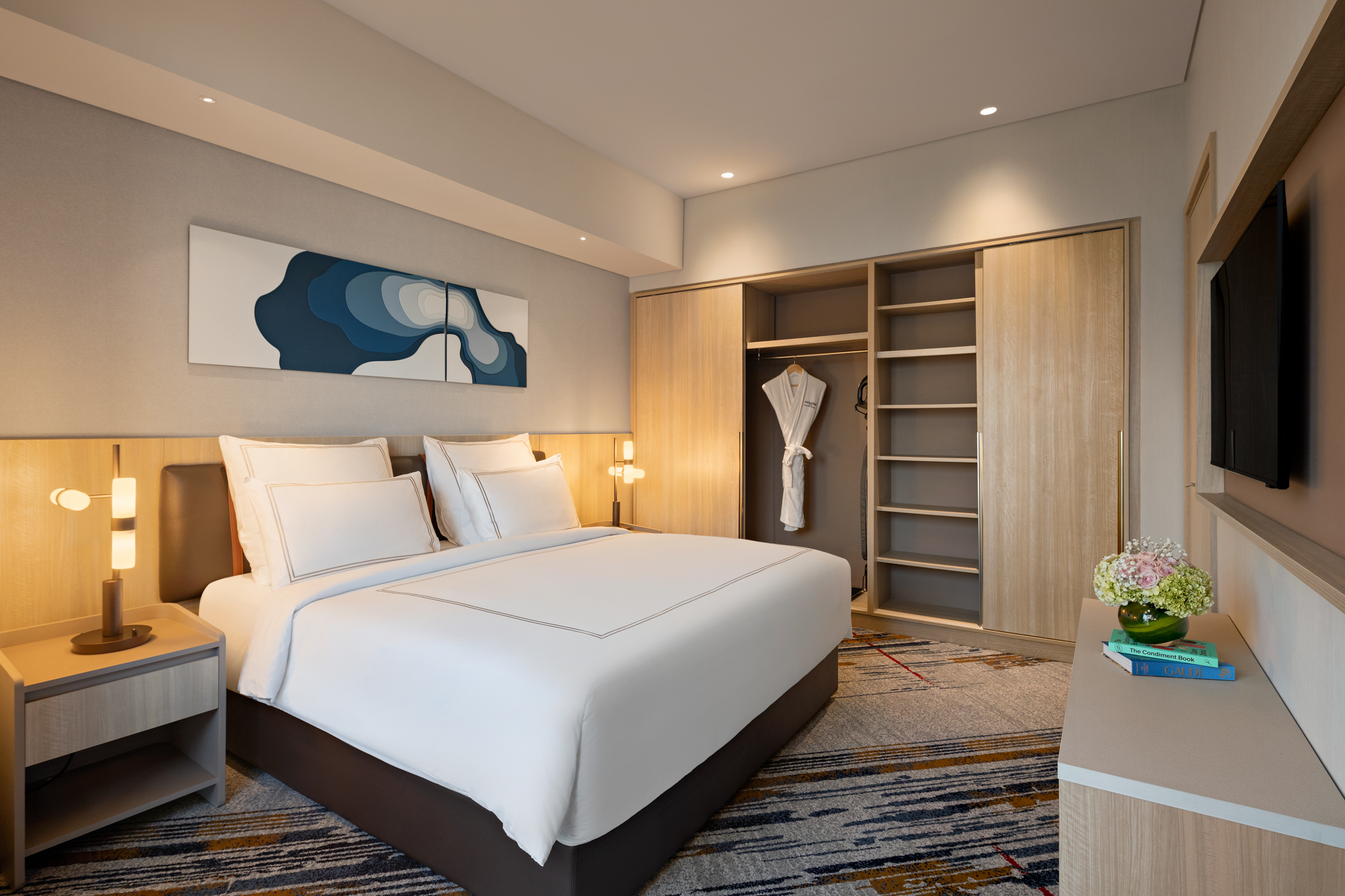
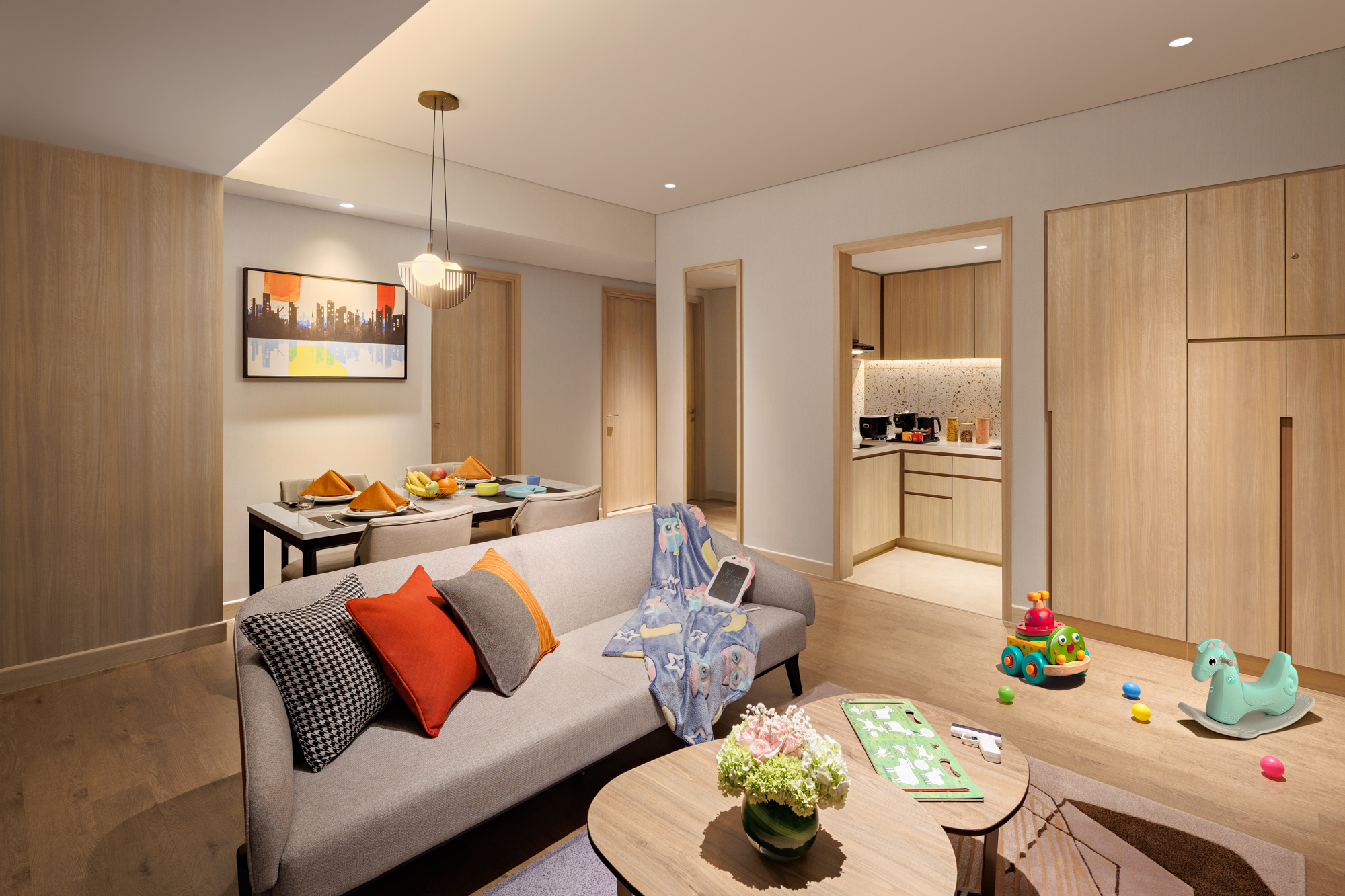
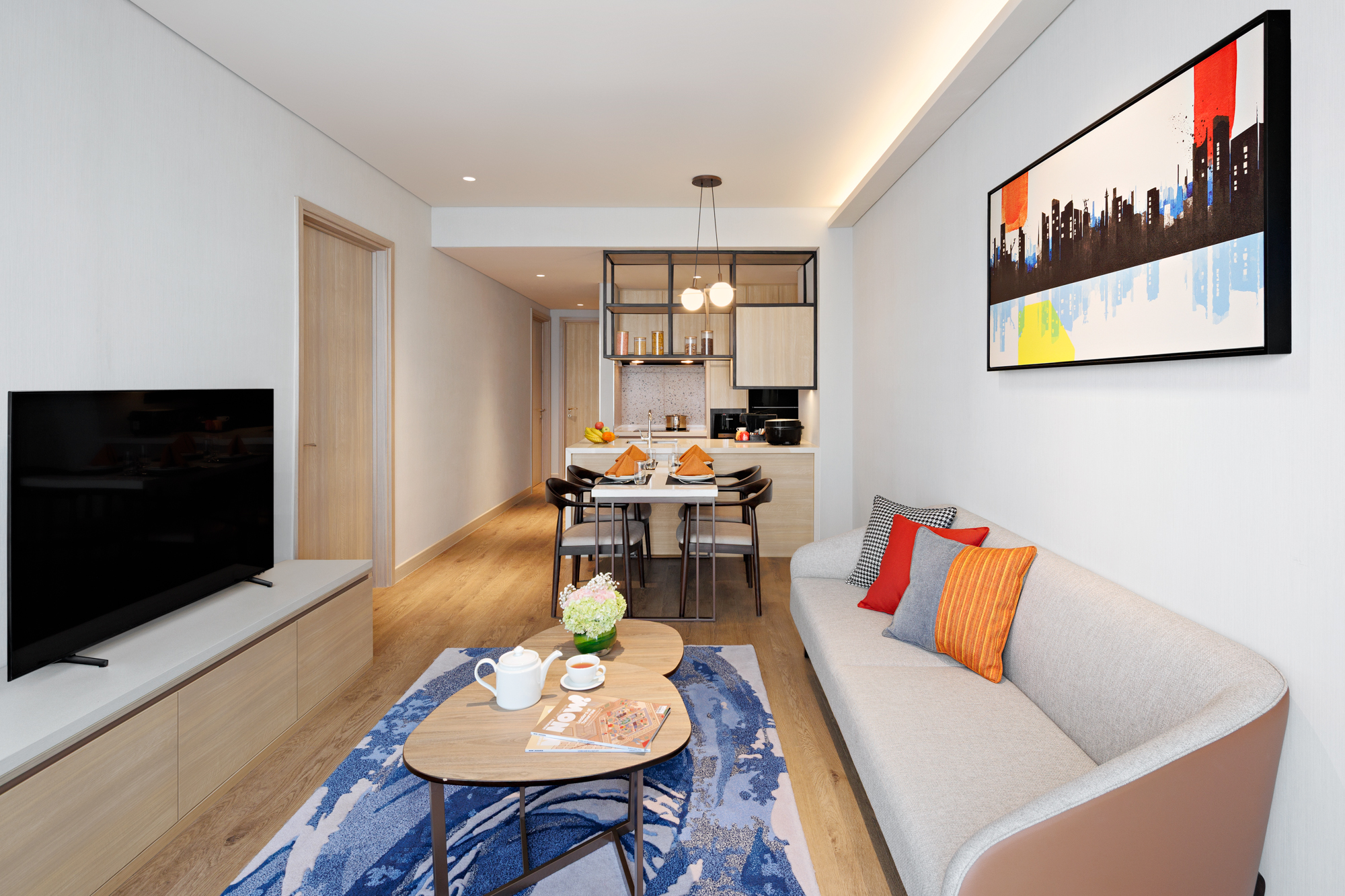
Serviced apartments represent the premium tier of hotels you can live in. These properties provide apartment-sized units with complete household facilities while maintaining hotel-grade service delivery.
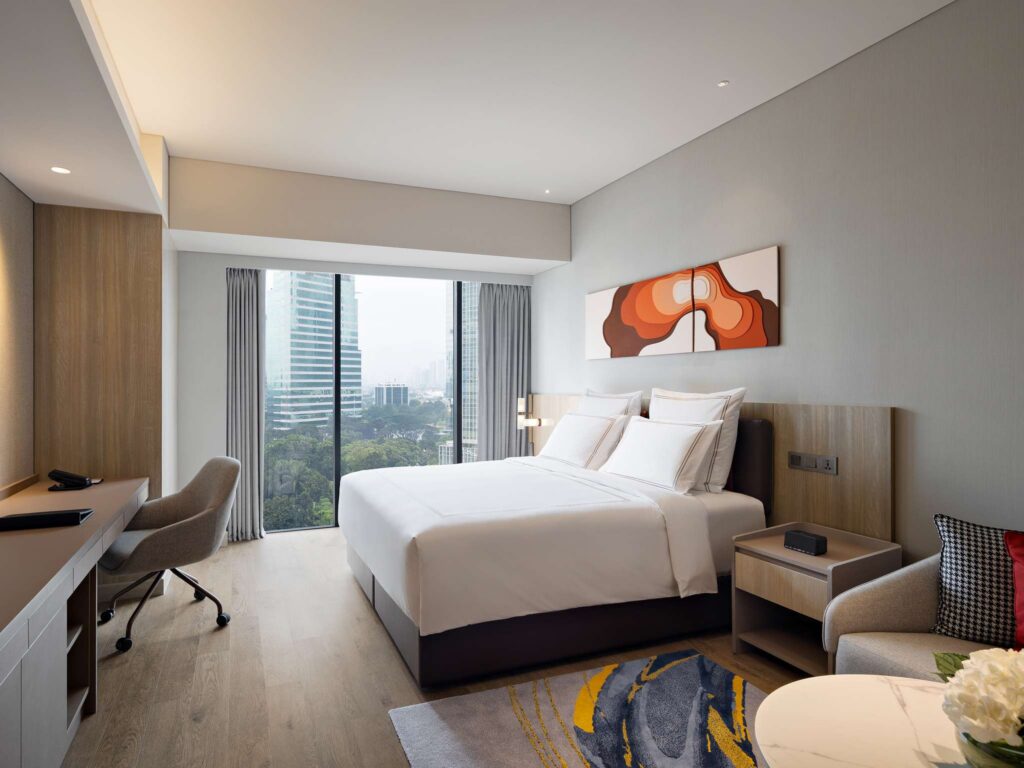
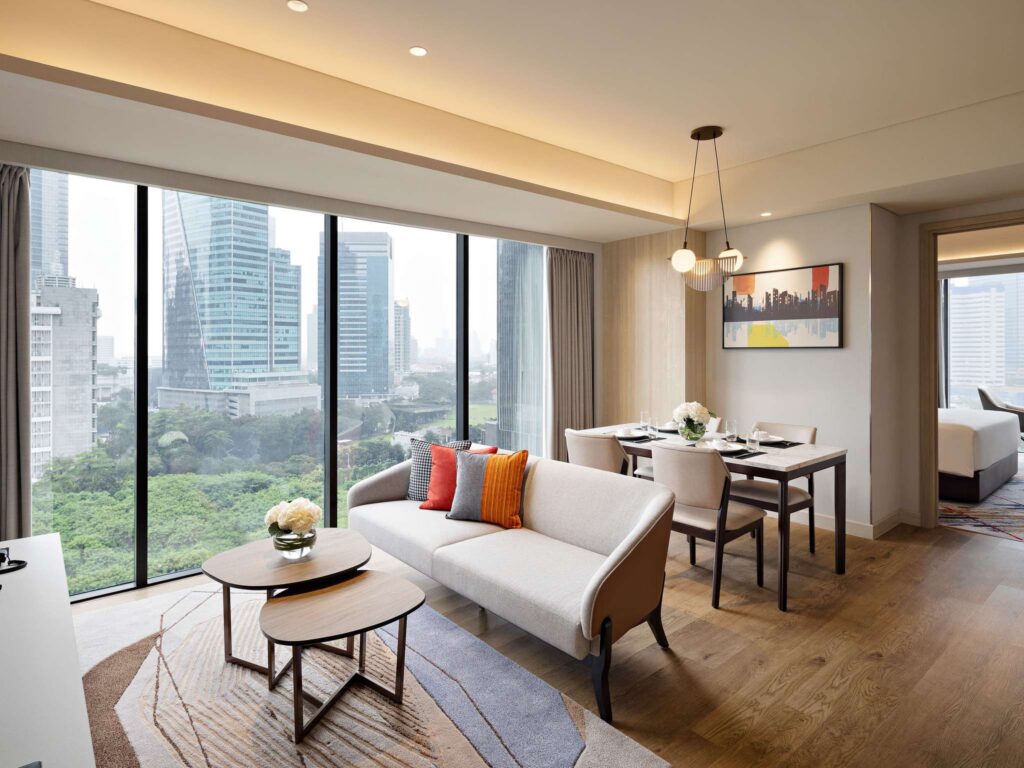
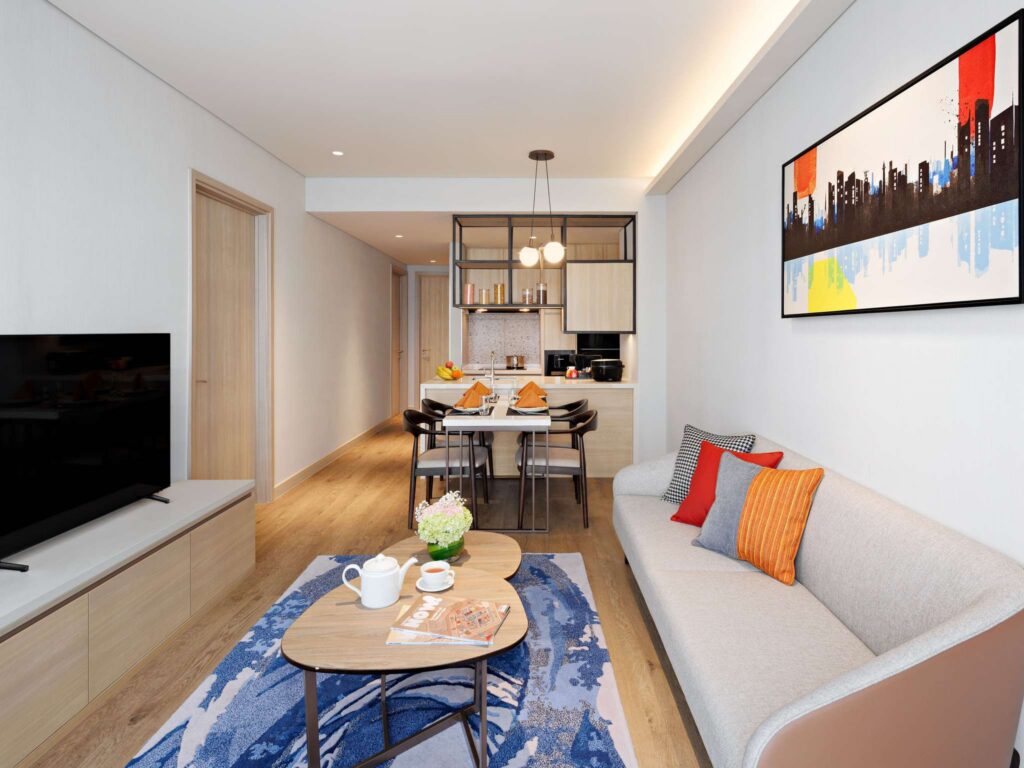
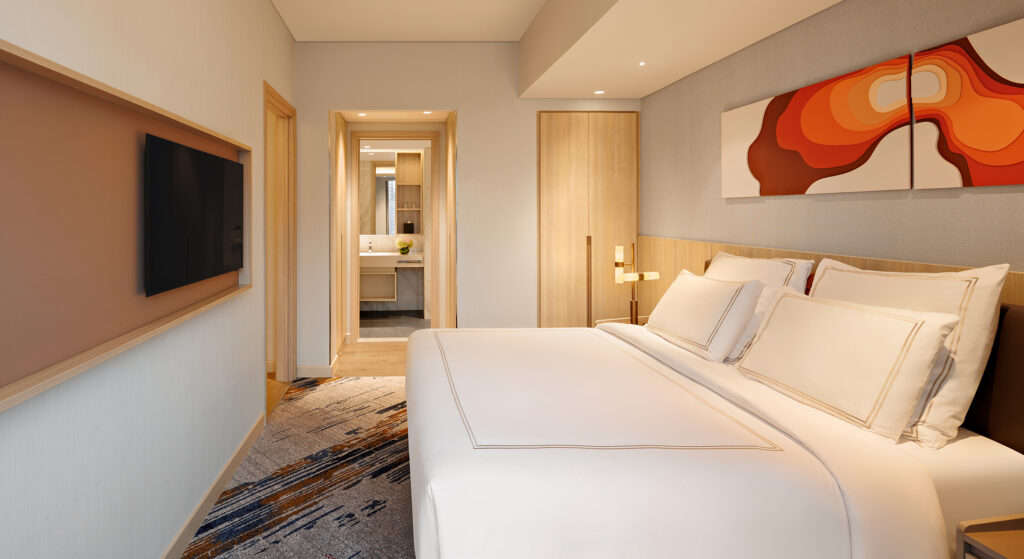
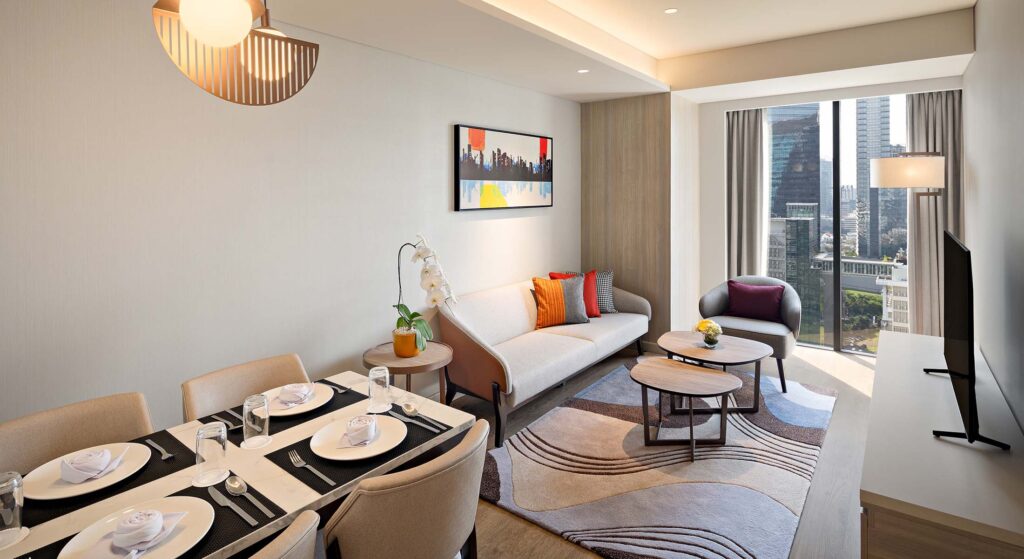
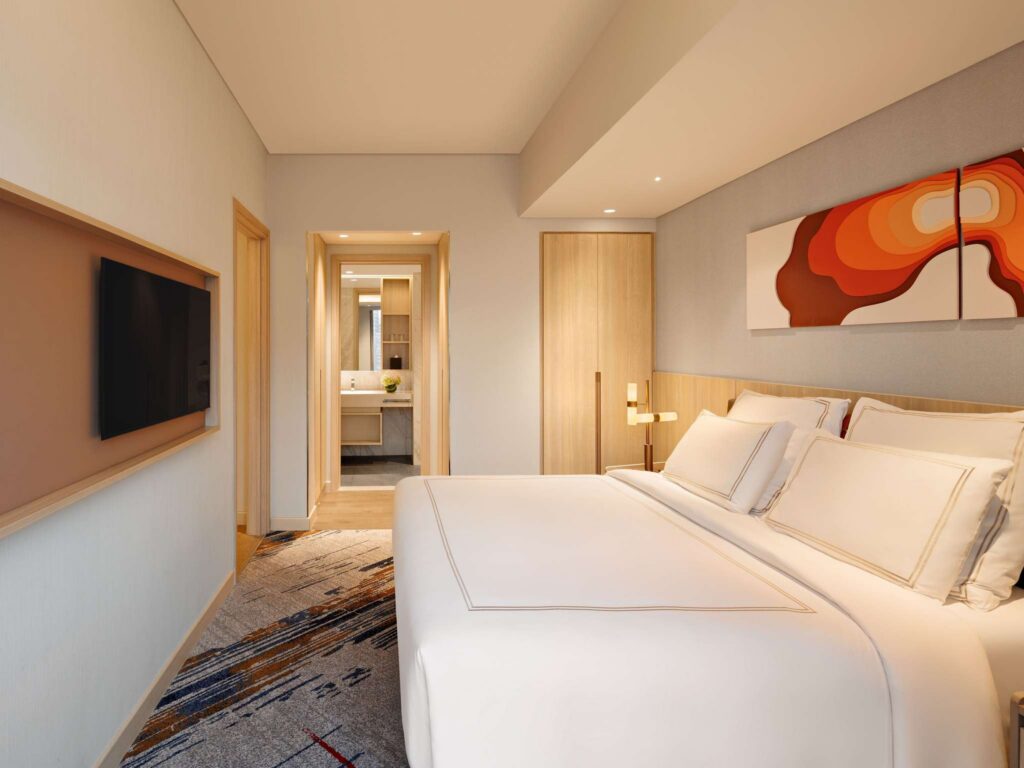
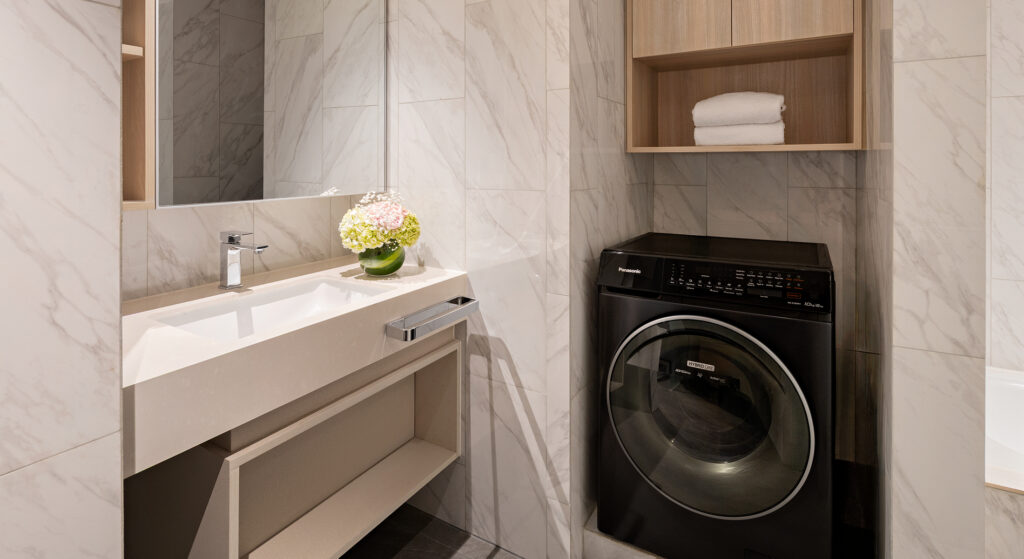
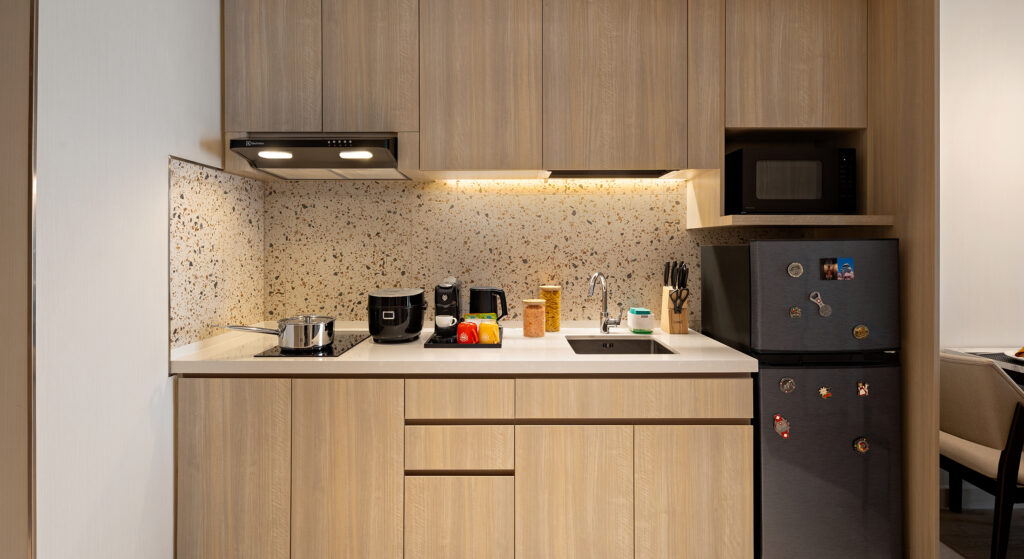
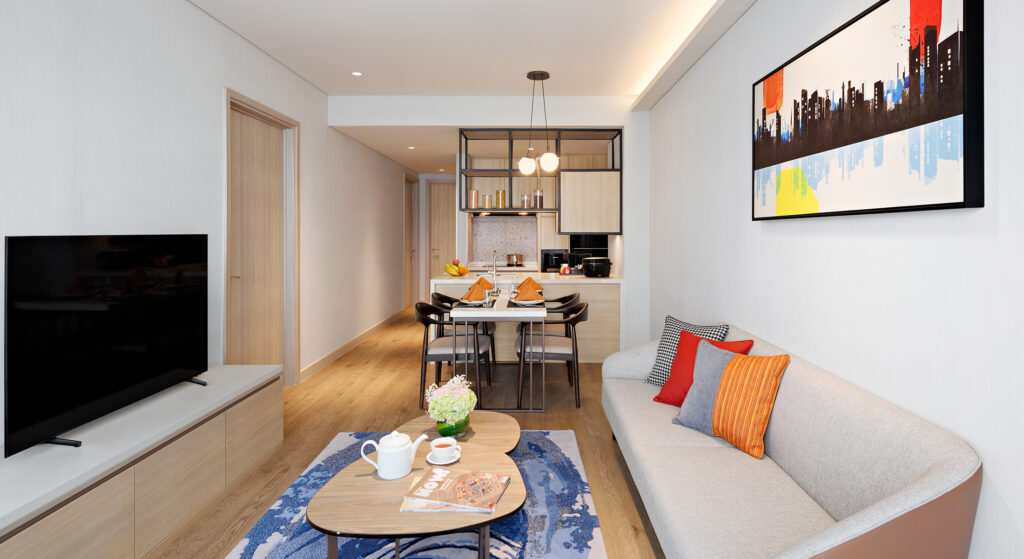
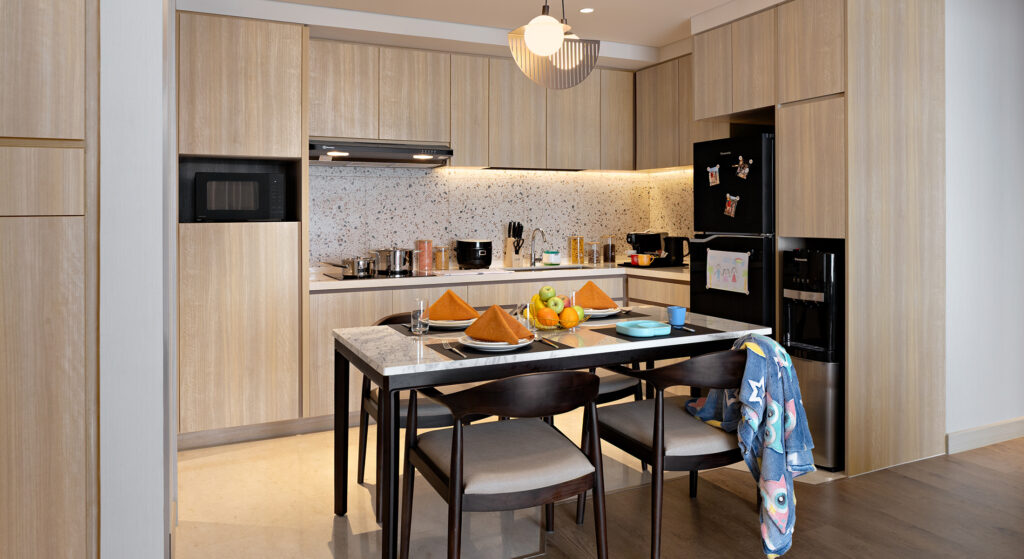
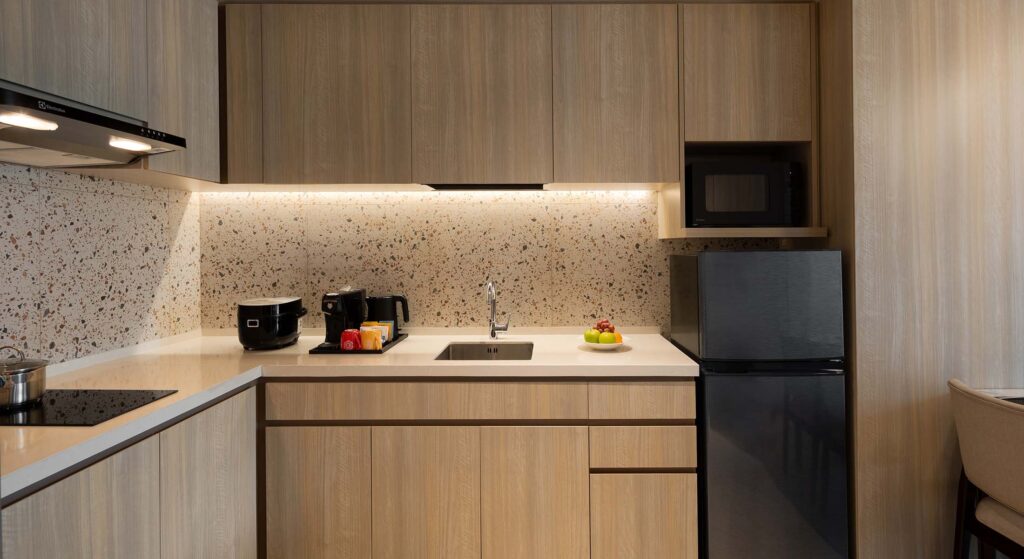
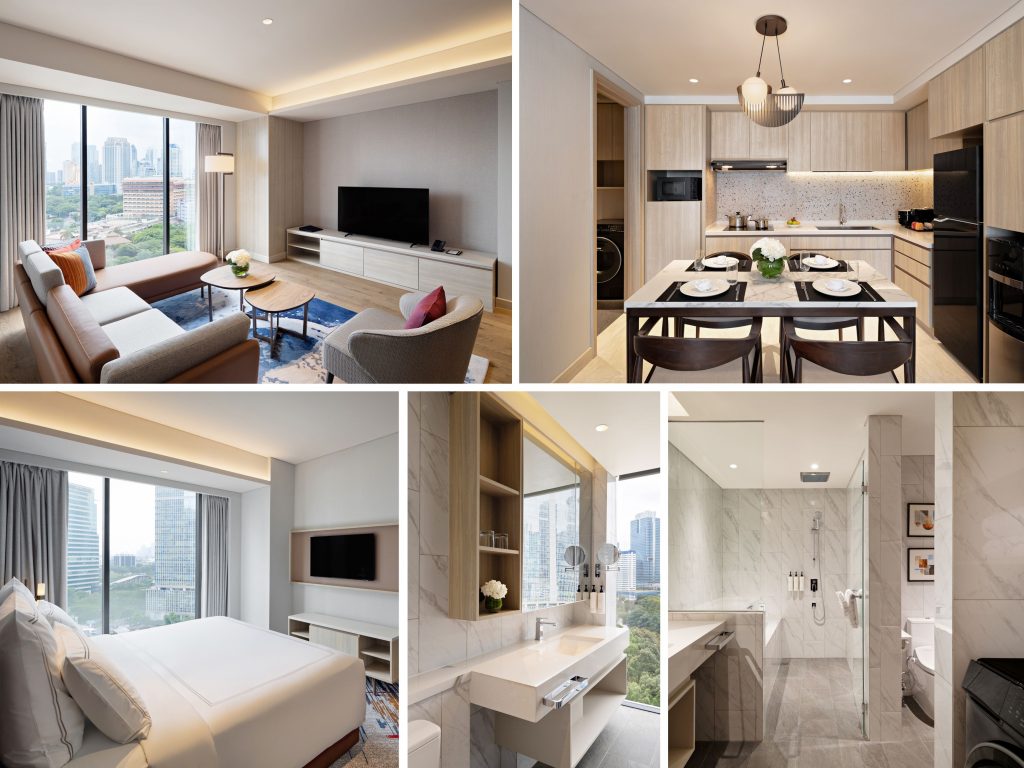
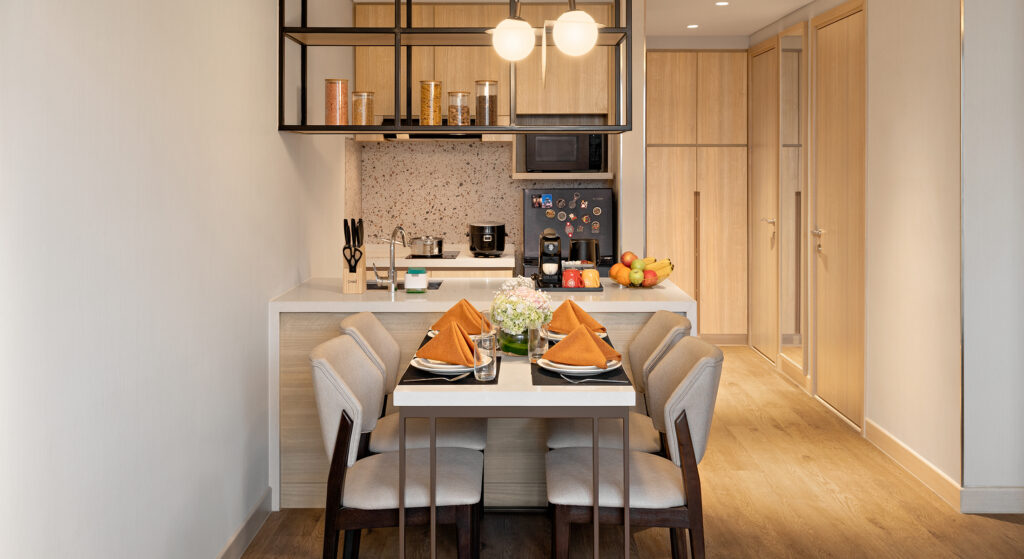
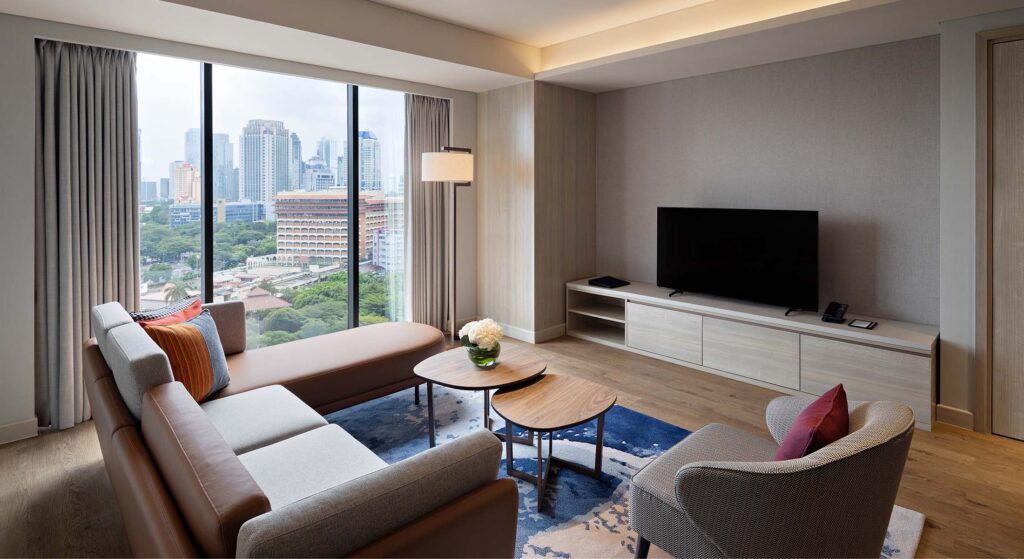
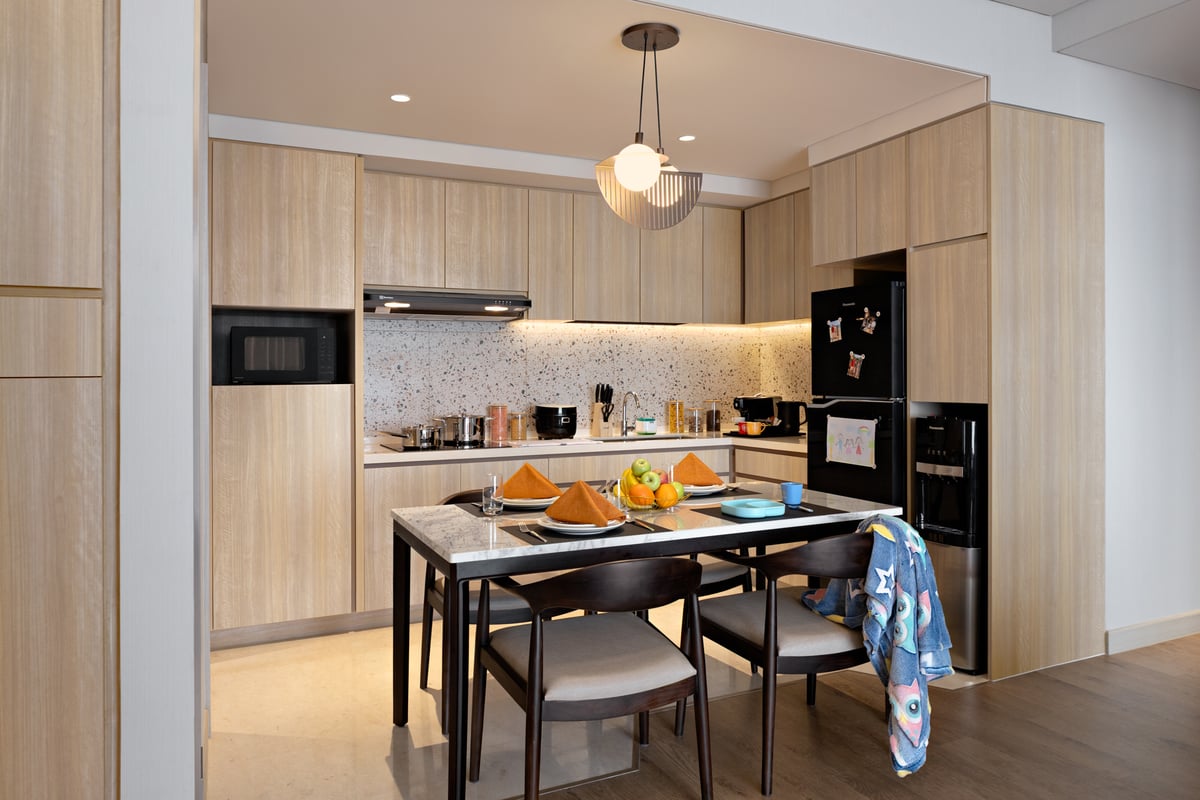
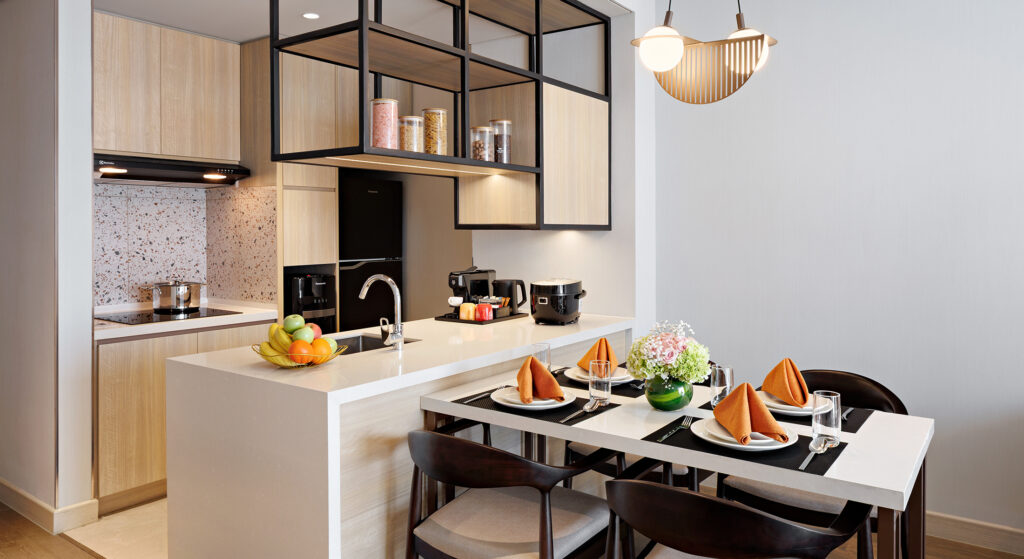
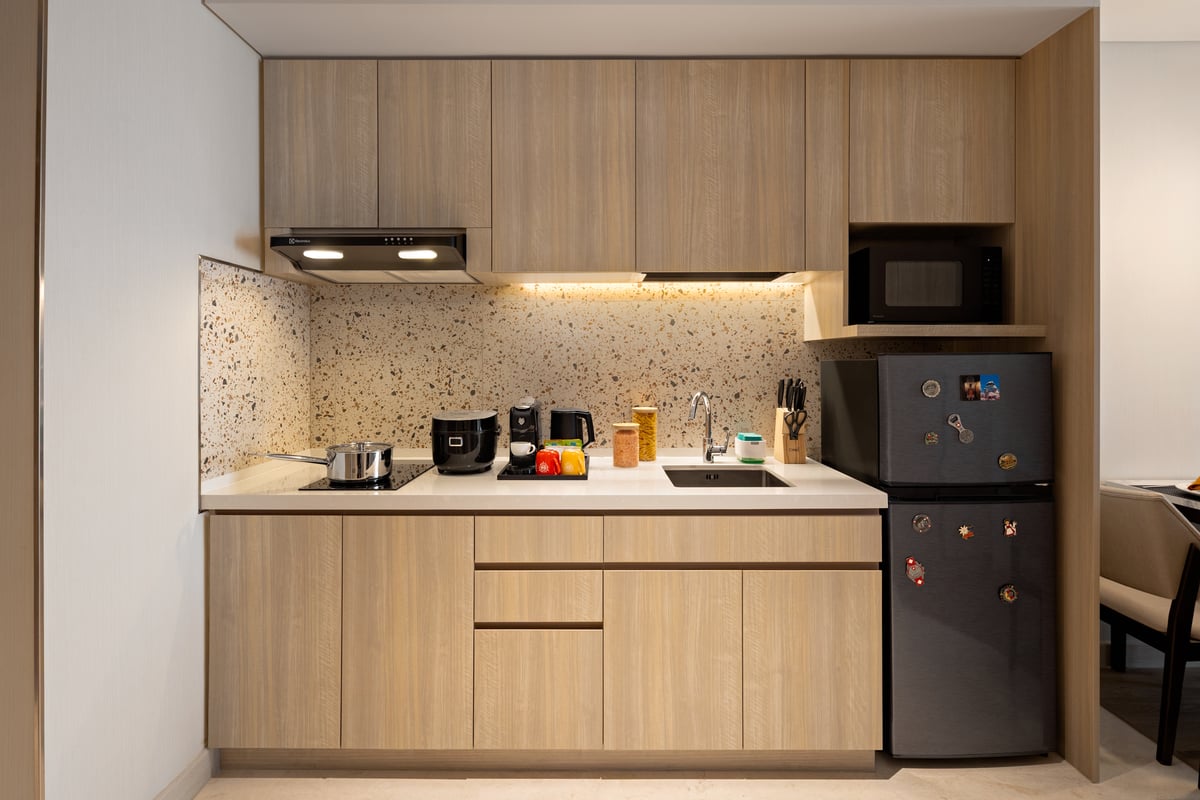
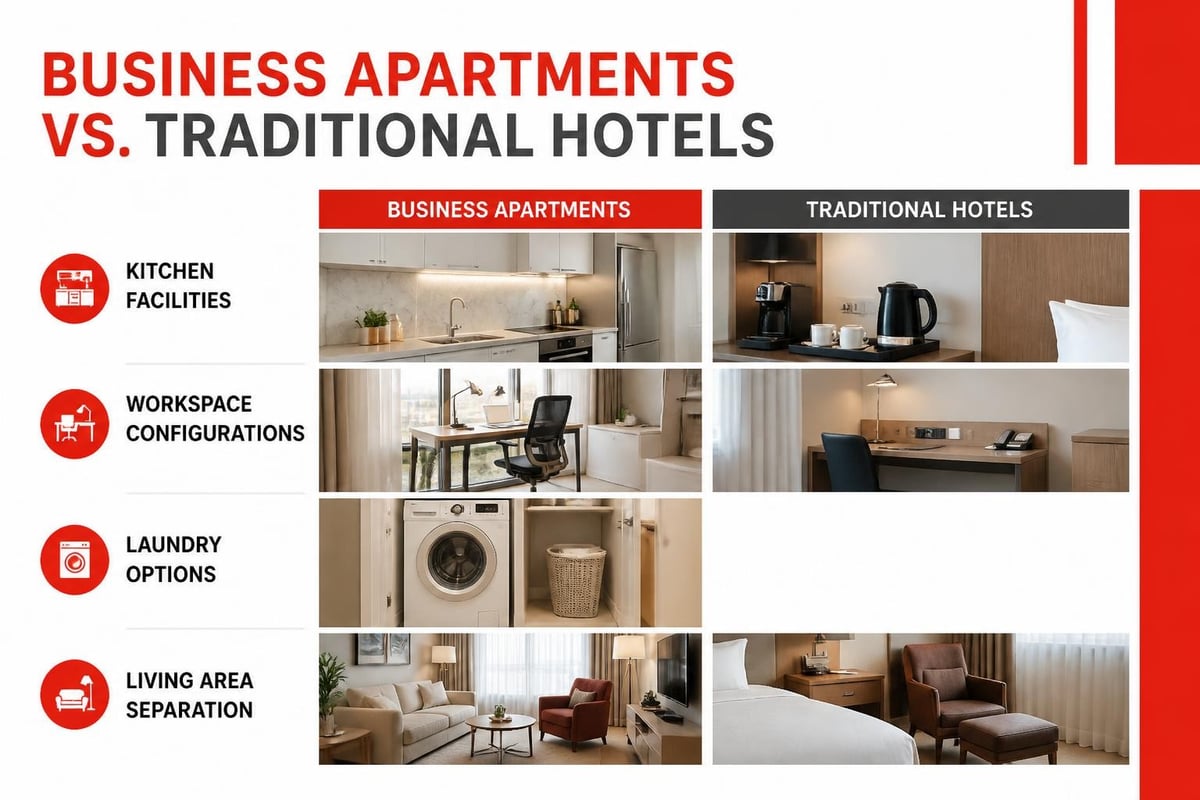
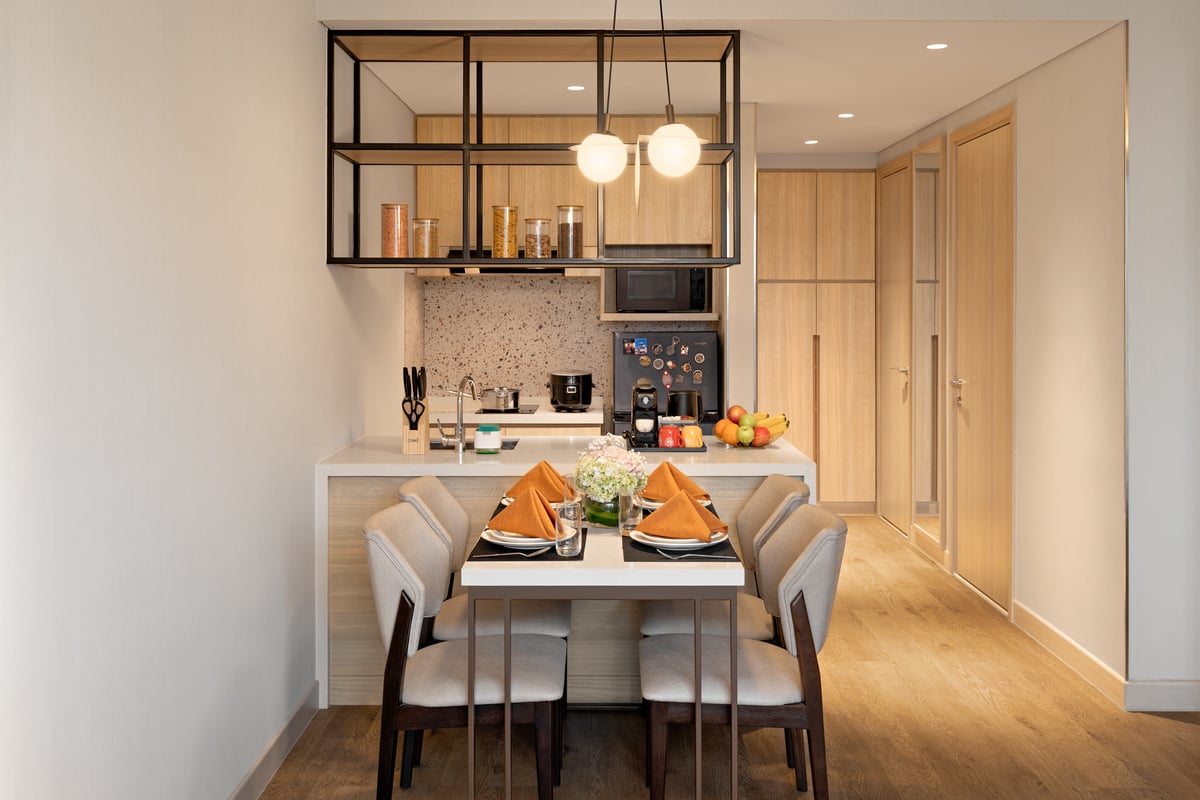
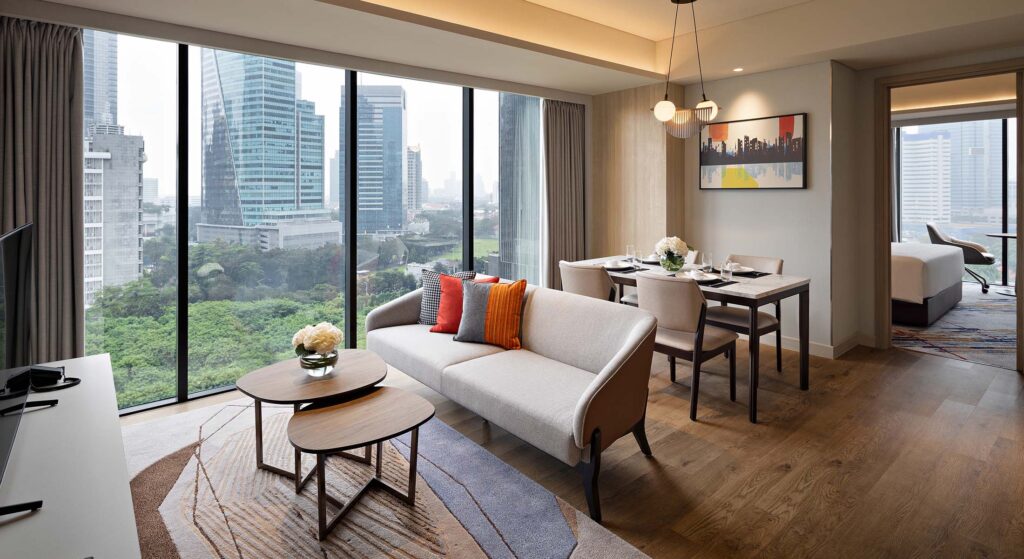
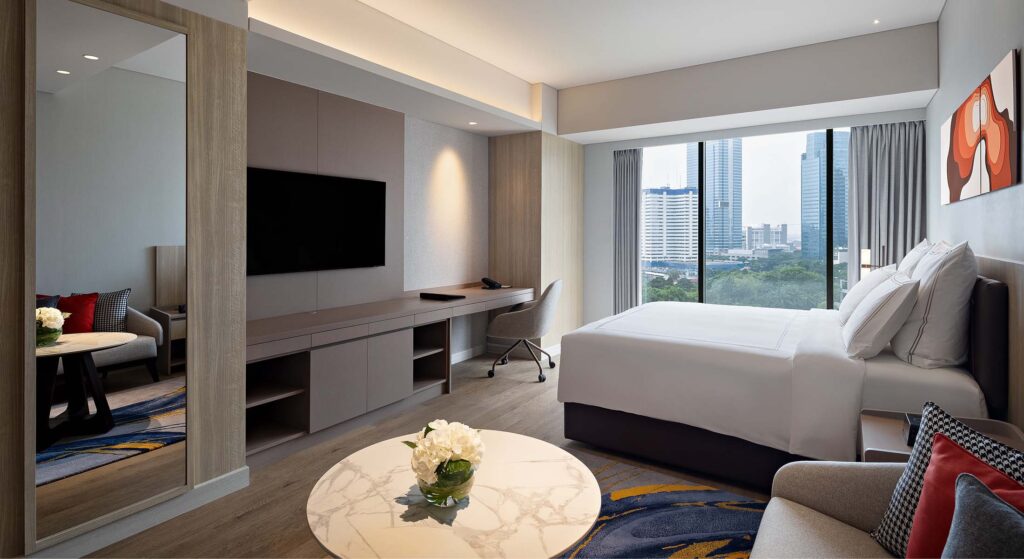
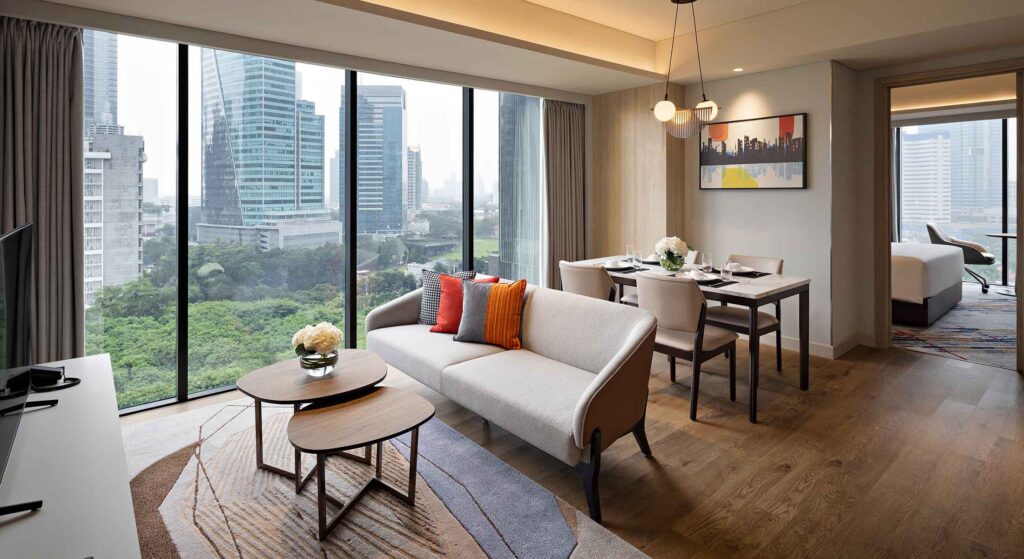
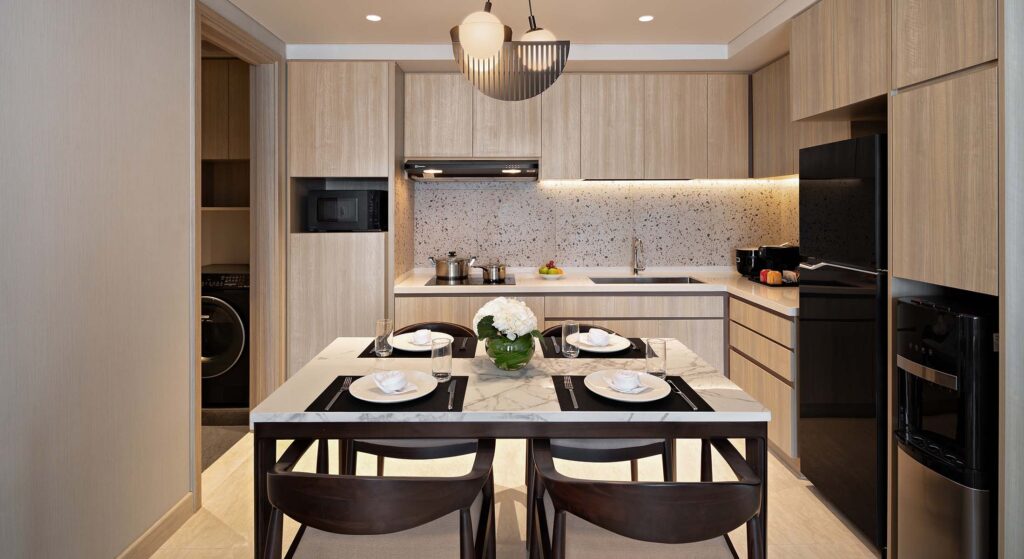
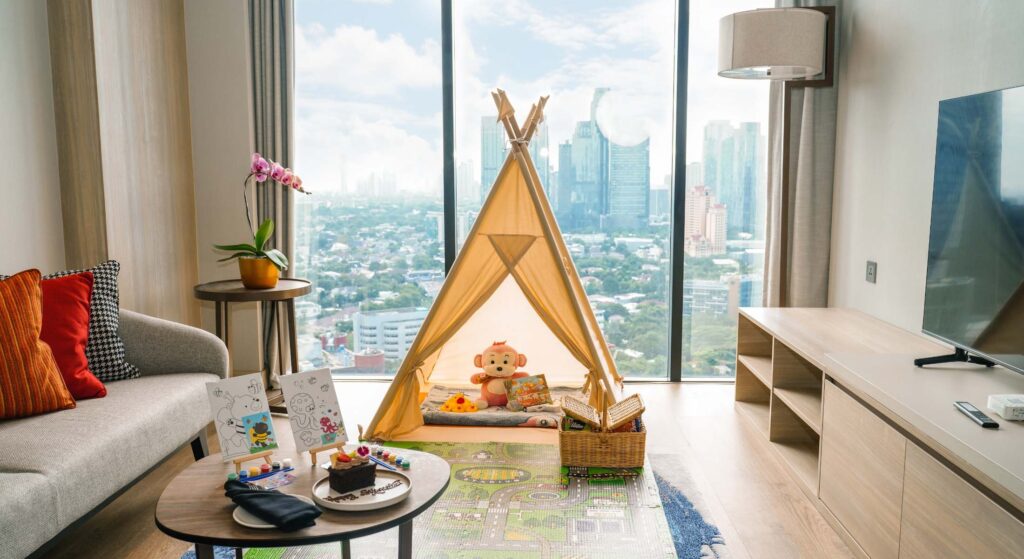
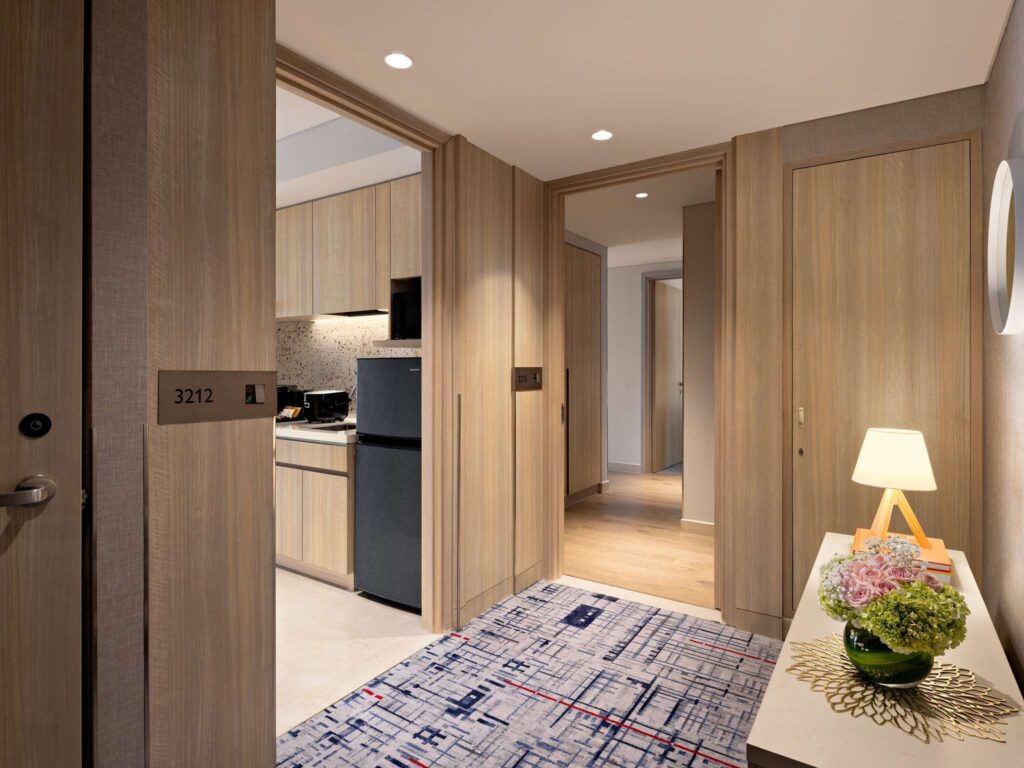
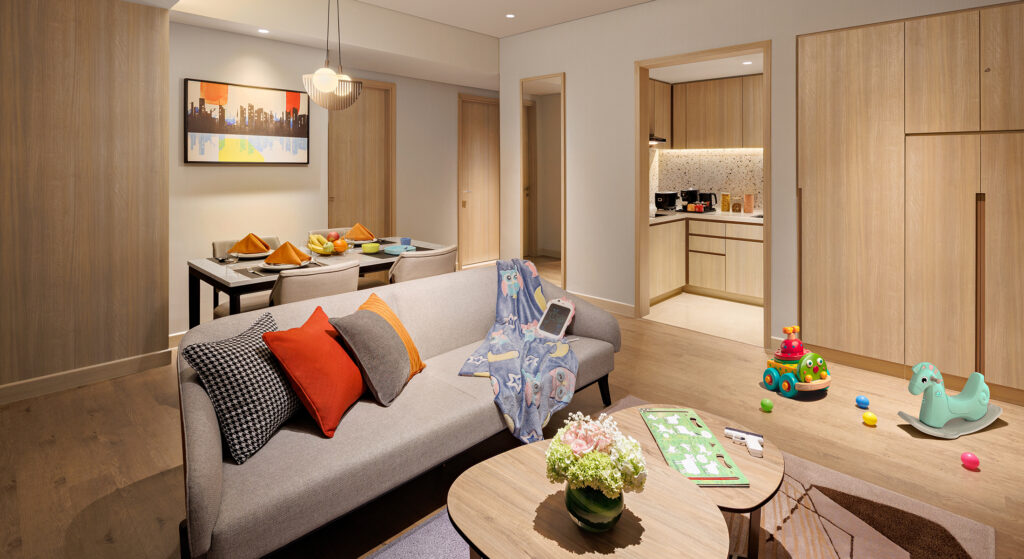
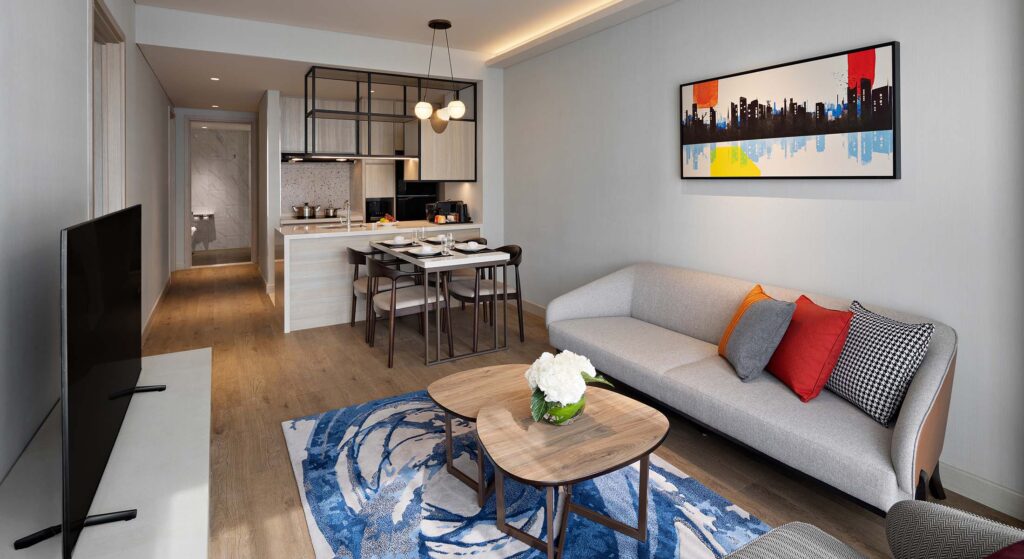
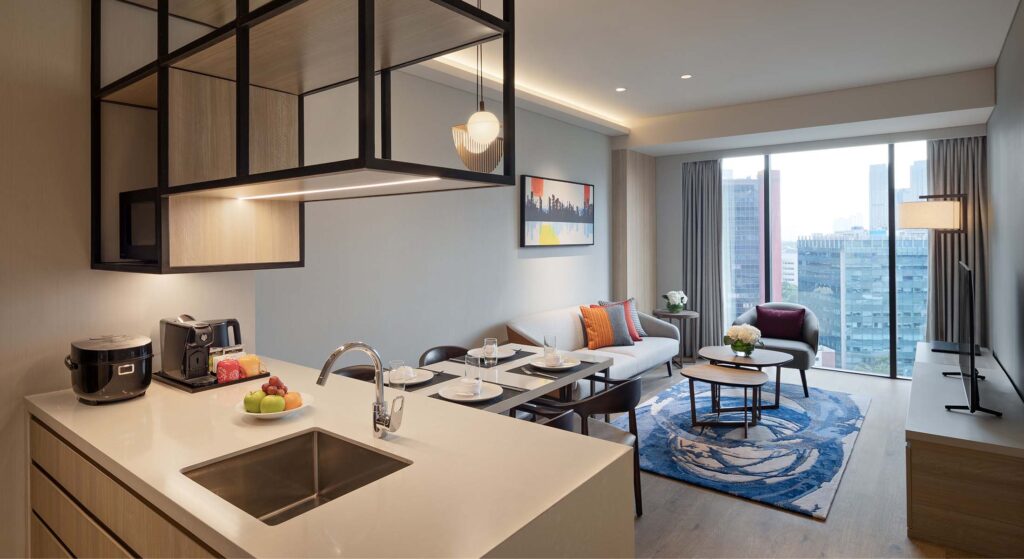
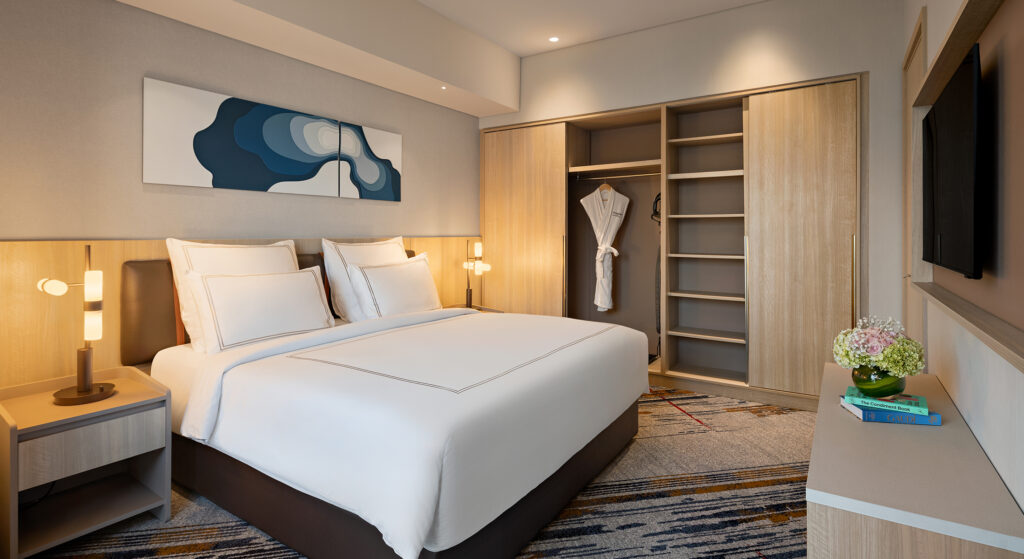
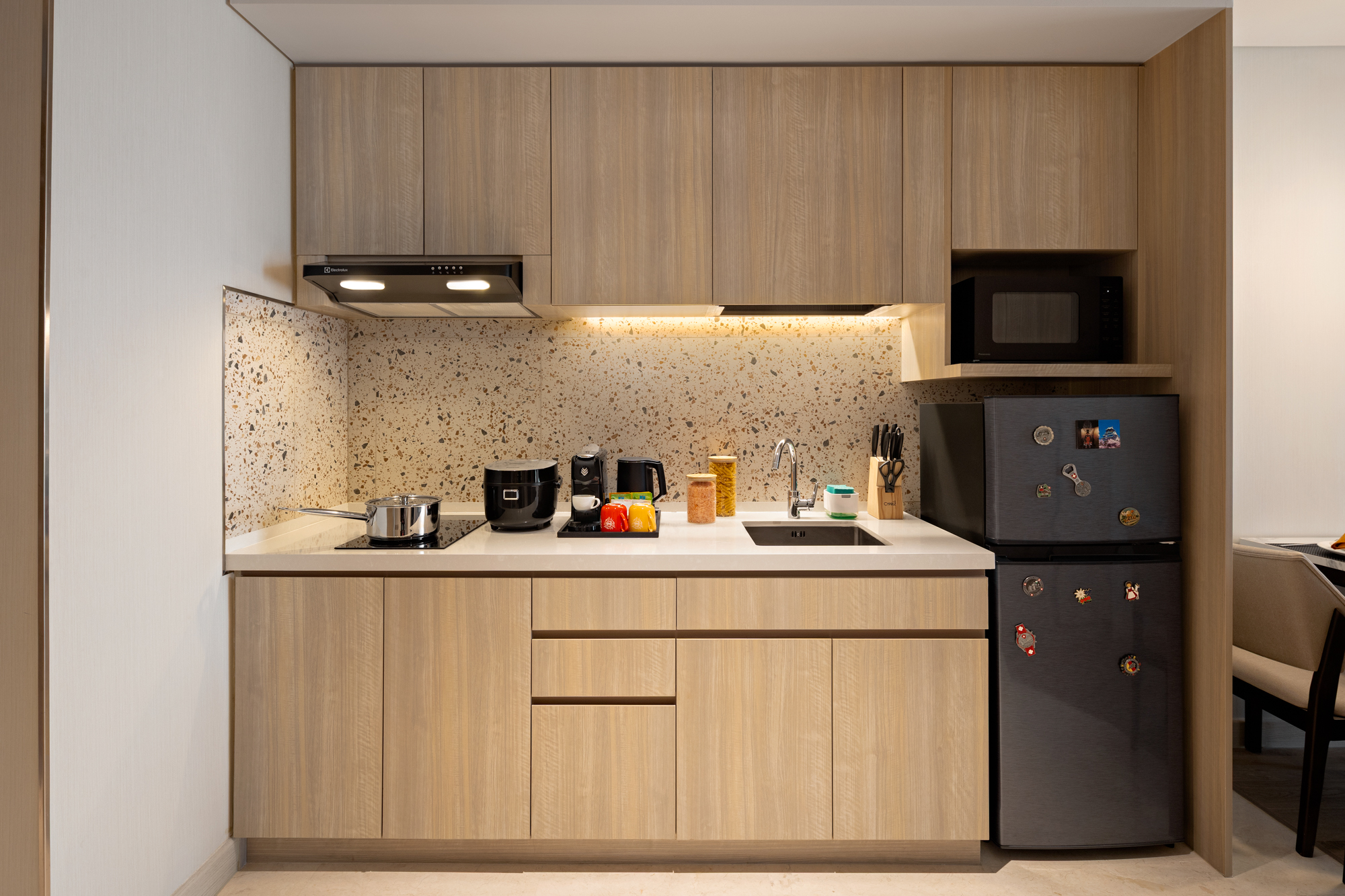
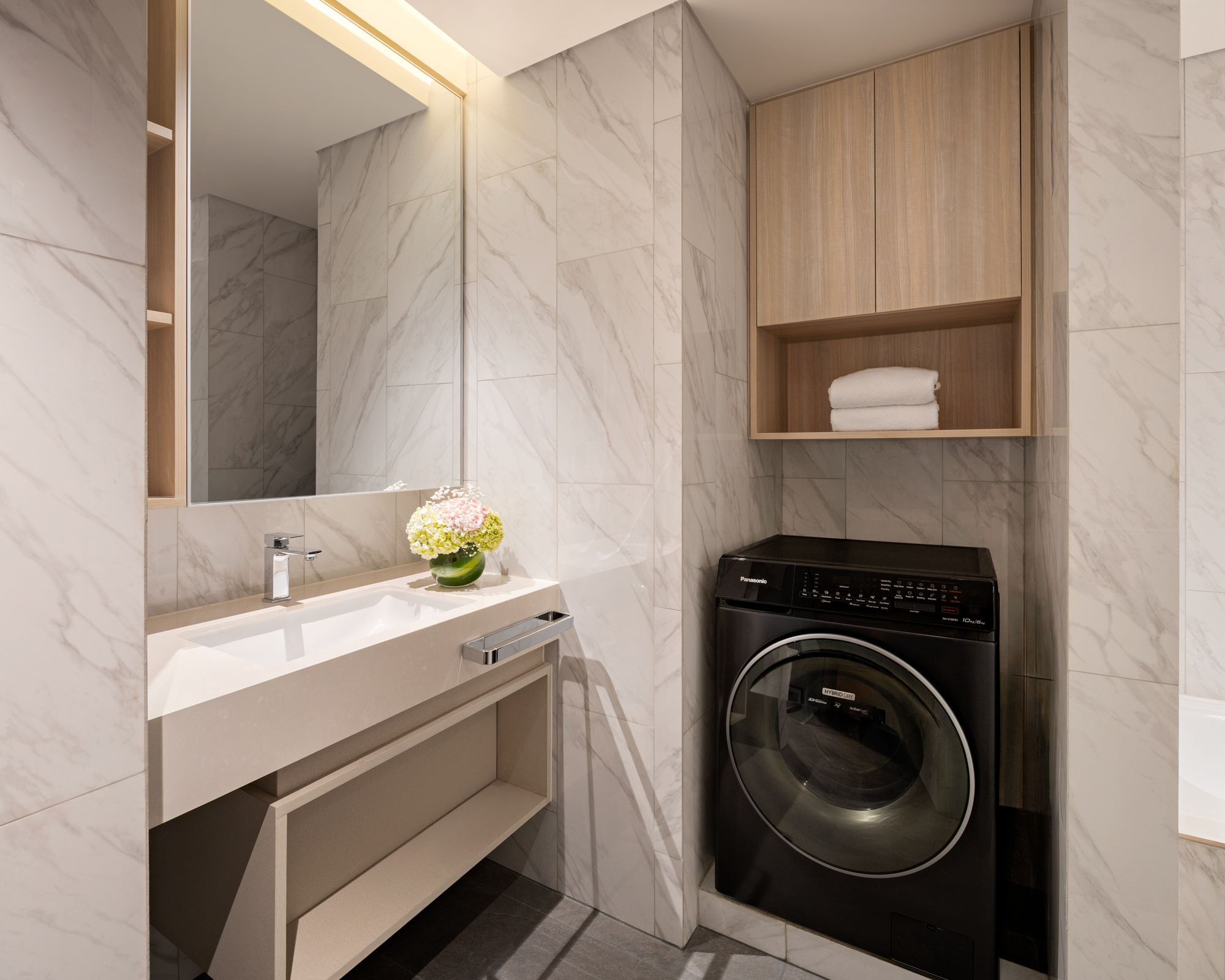
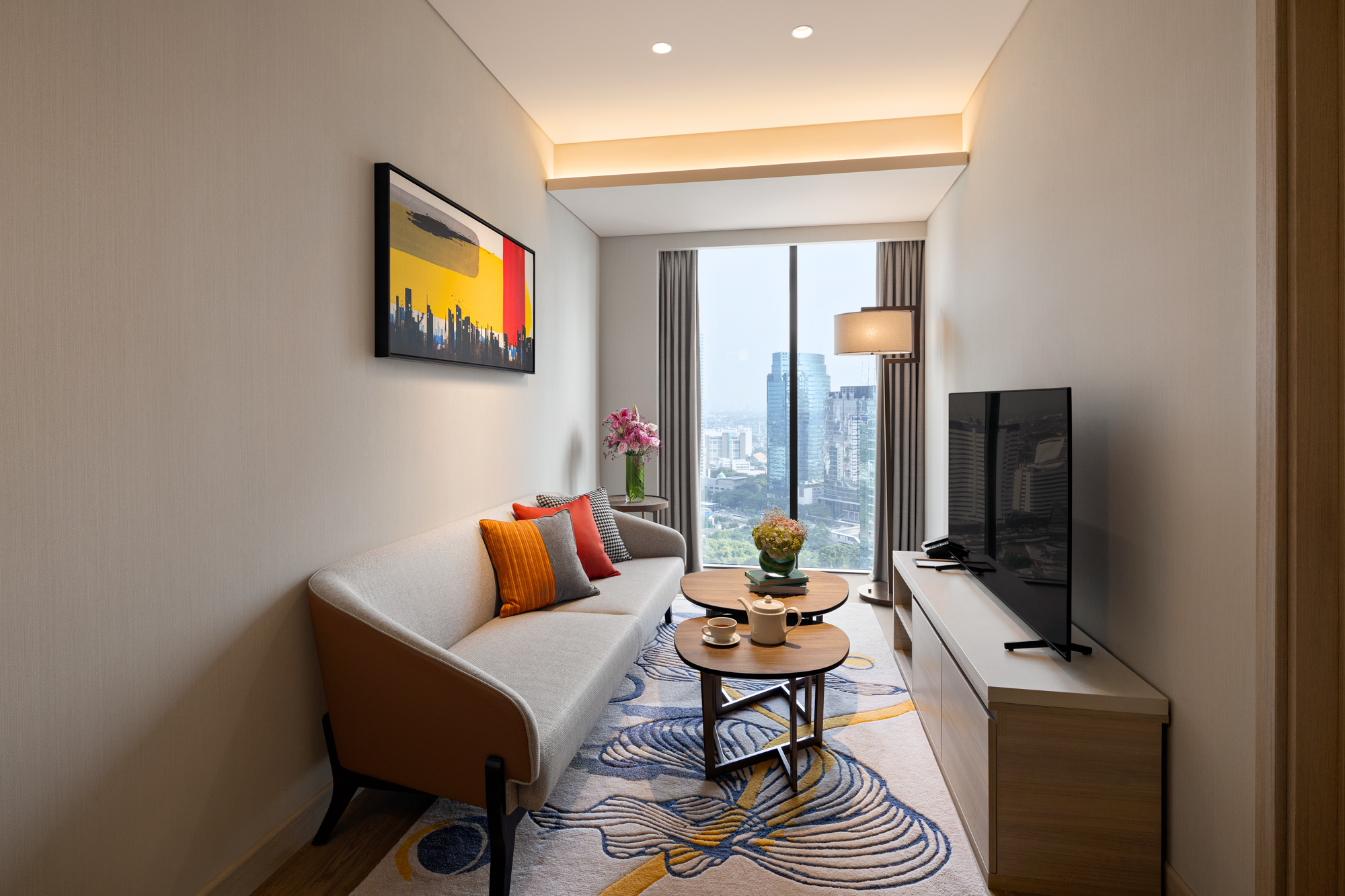
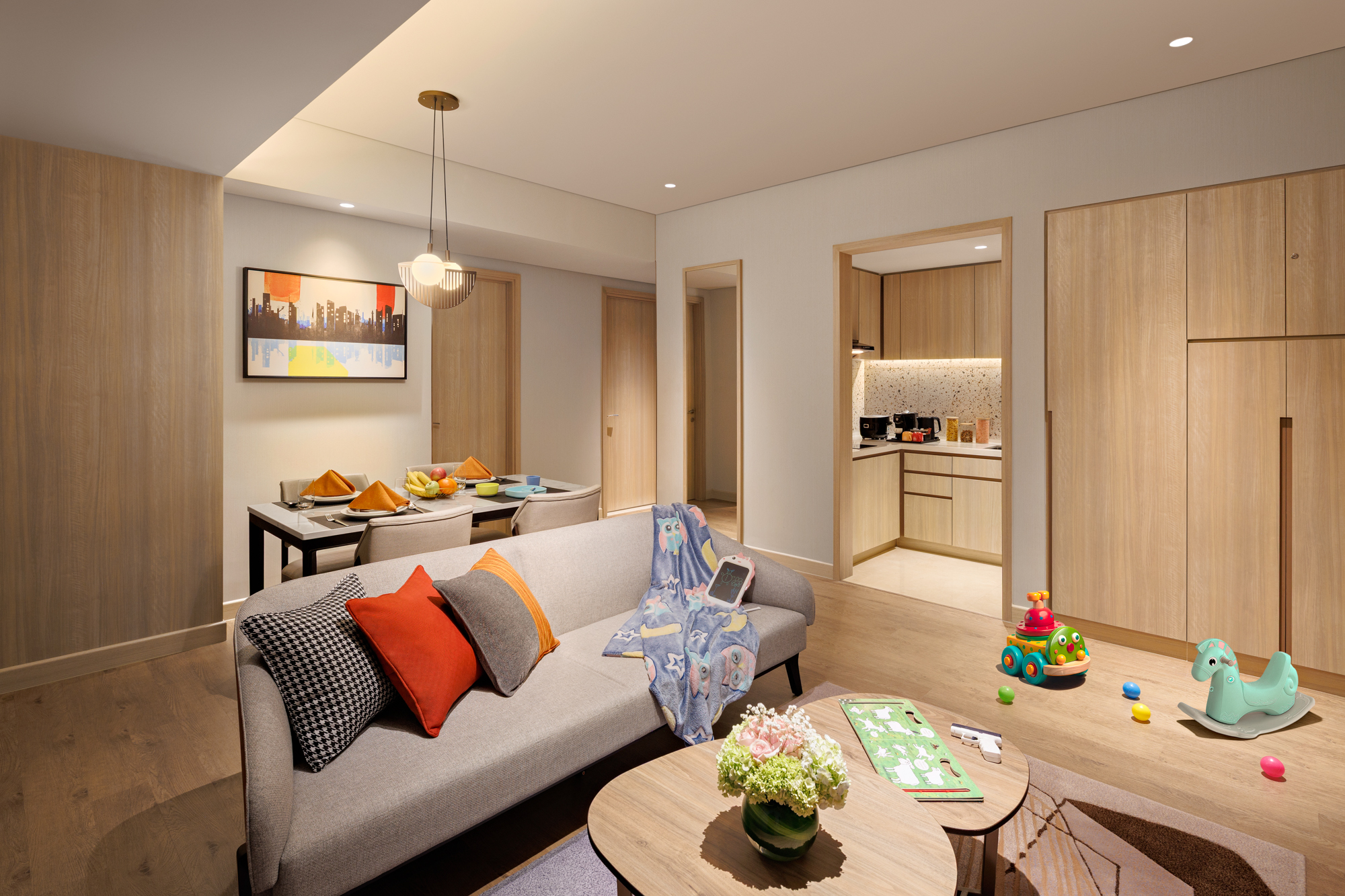
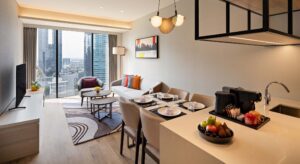
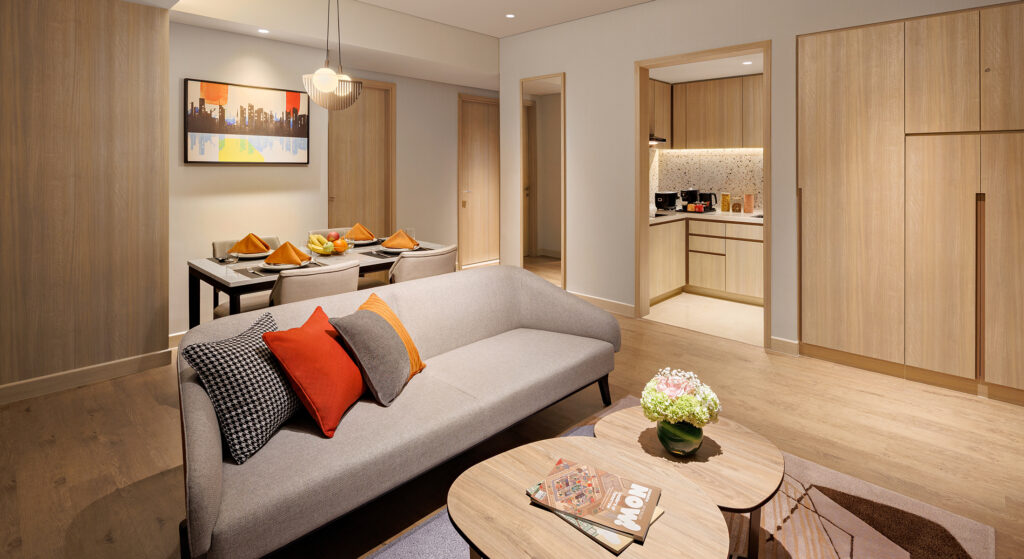
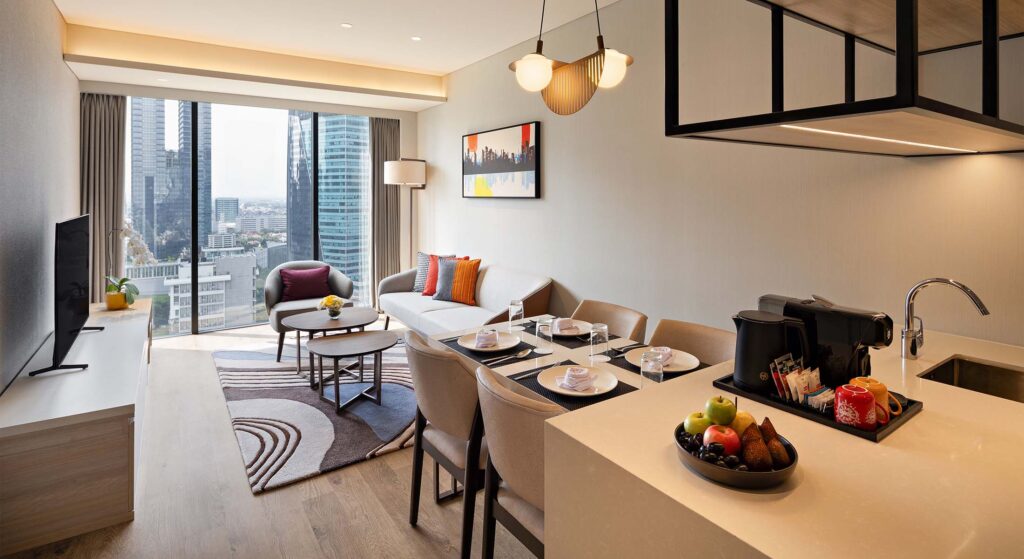
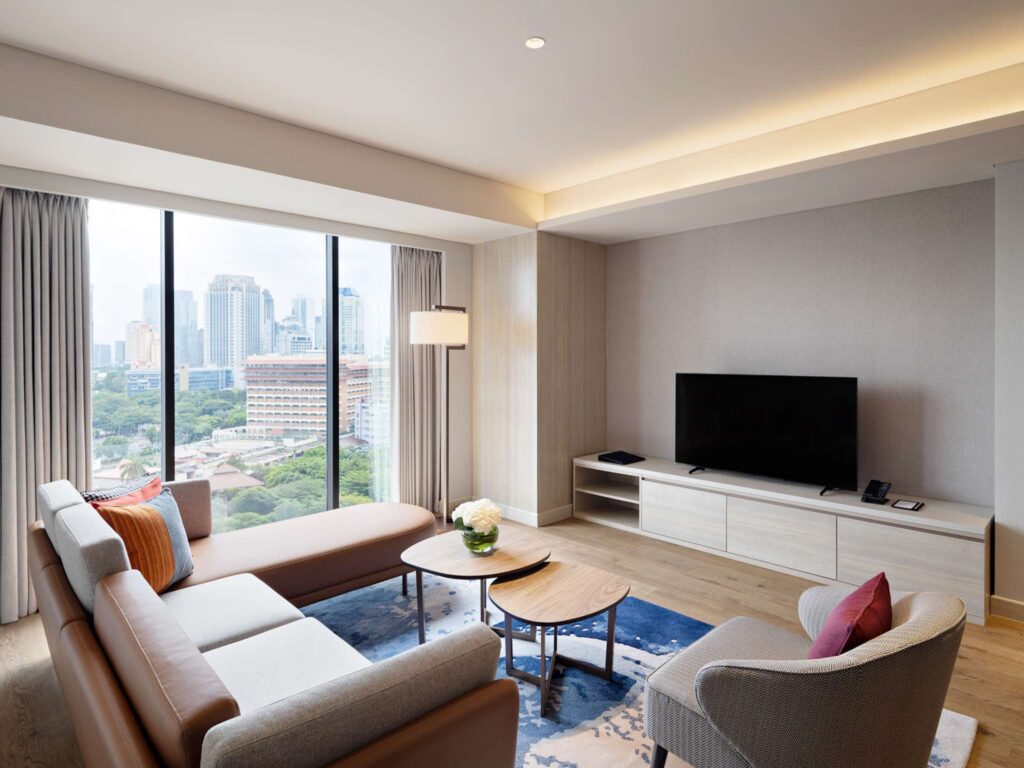
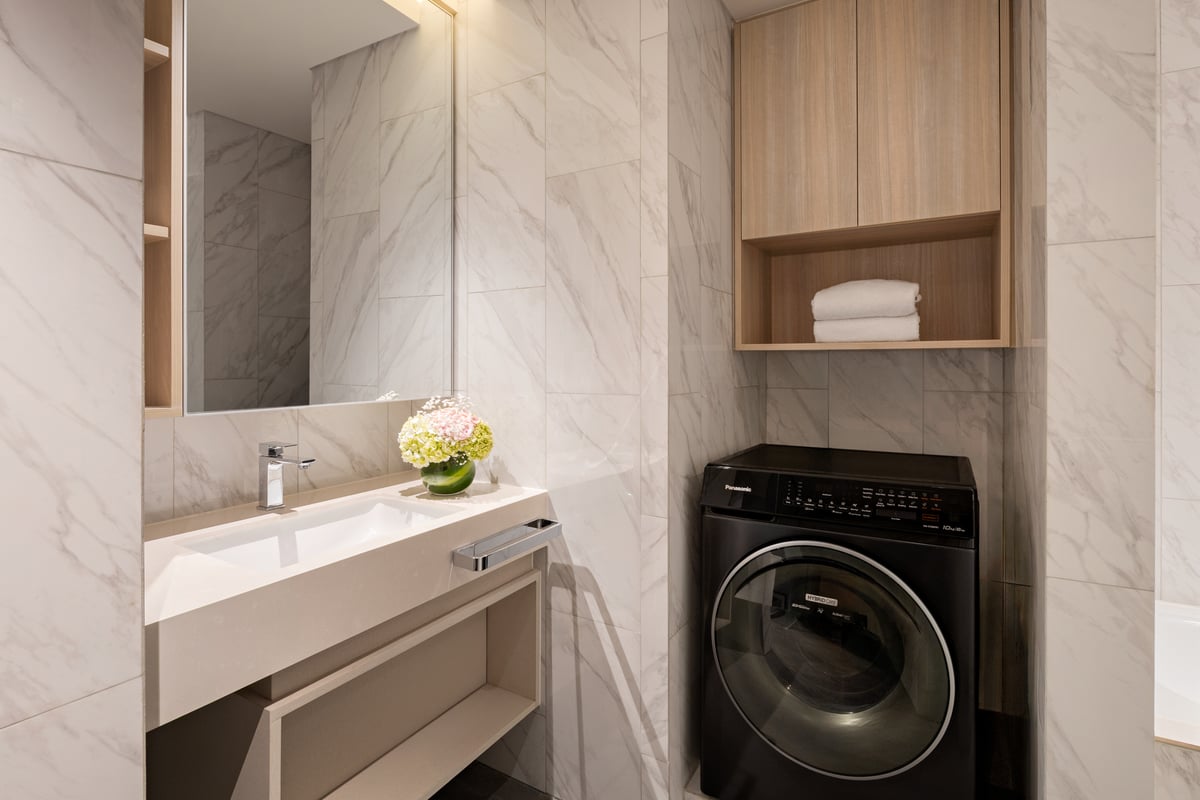
Each unit typically includes a full kitchen with cooking equipment, refrigerator, and dining area. Bedrooms feature quality furnishings, while living rooms offer comfortable spaces for work and relaxation. Many serviced apartments include washing machines, eliminating the need for external laundry services.
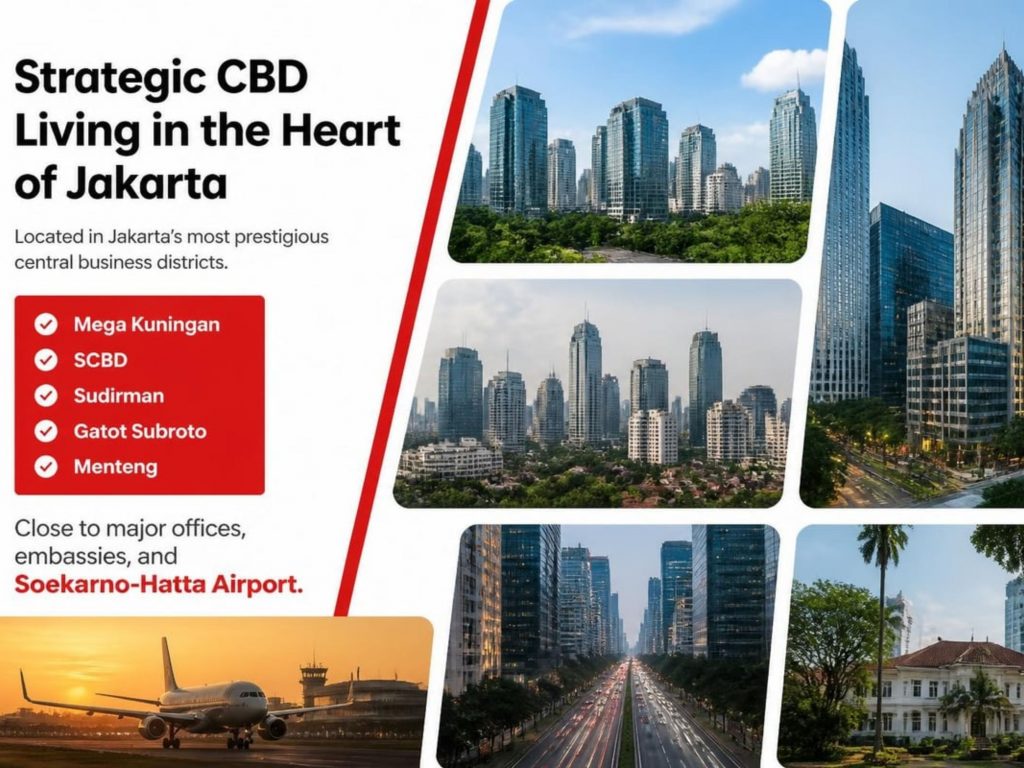
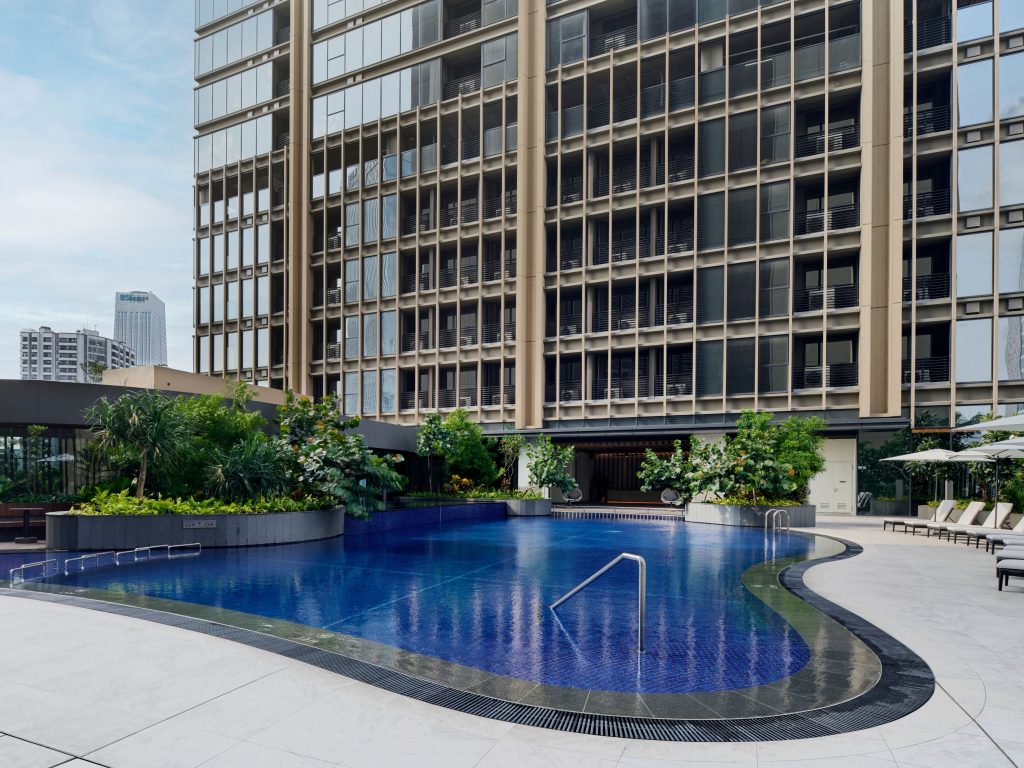
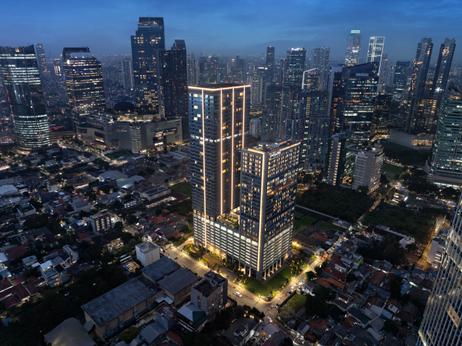
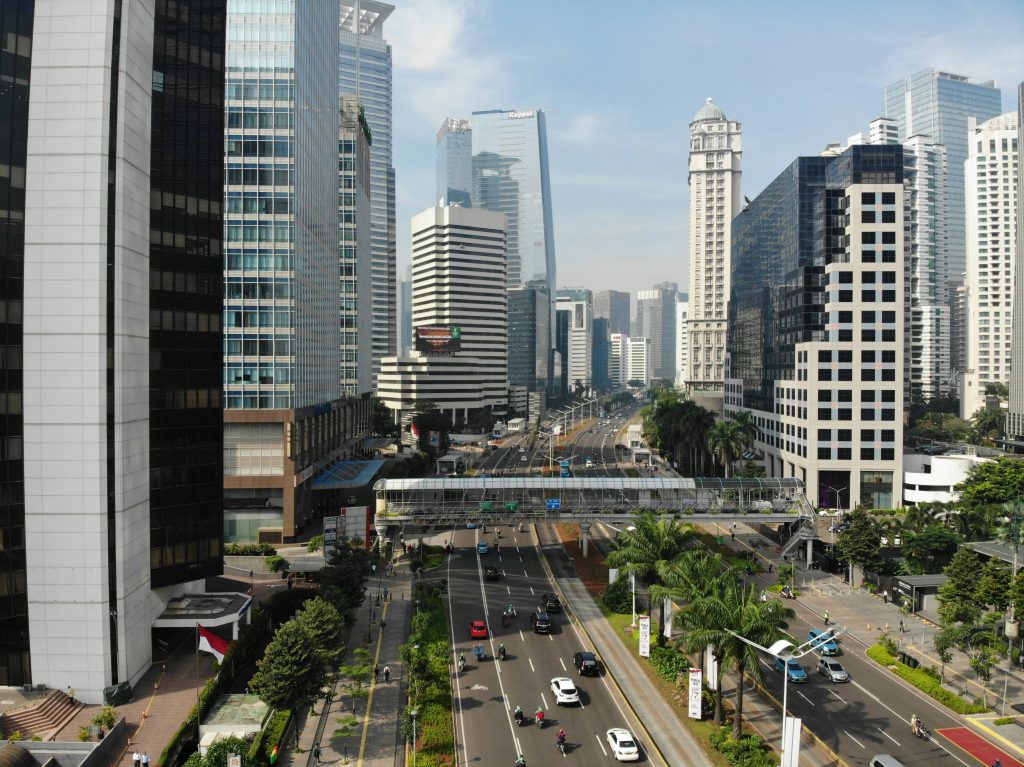
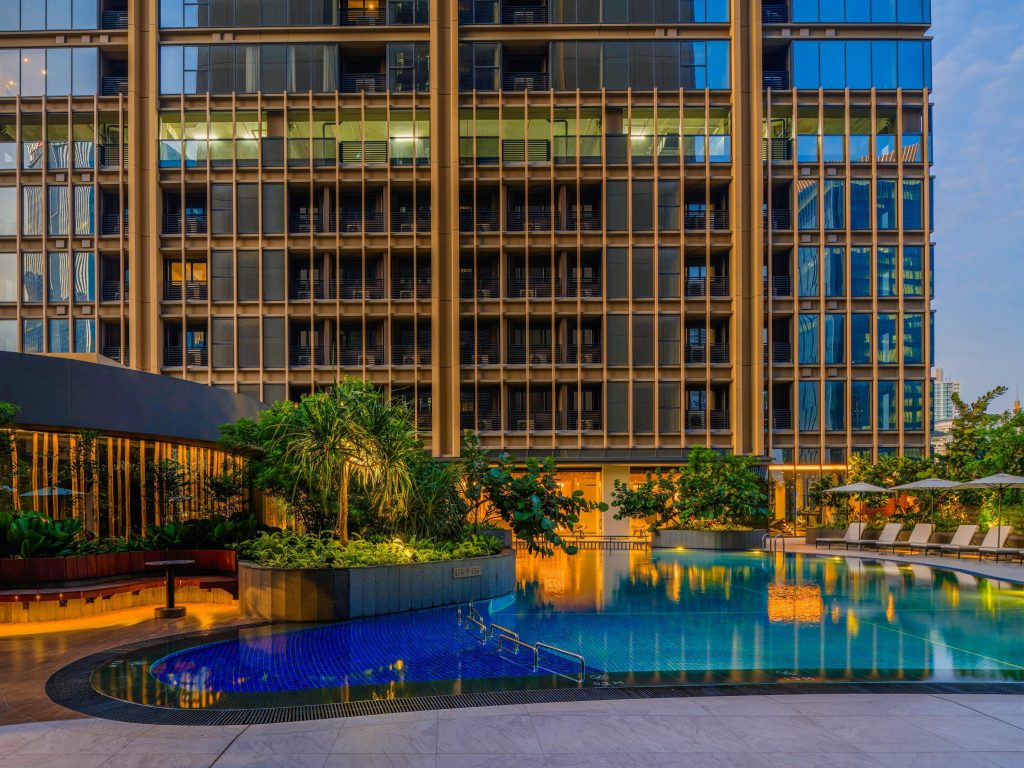
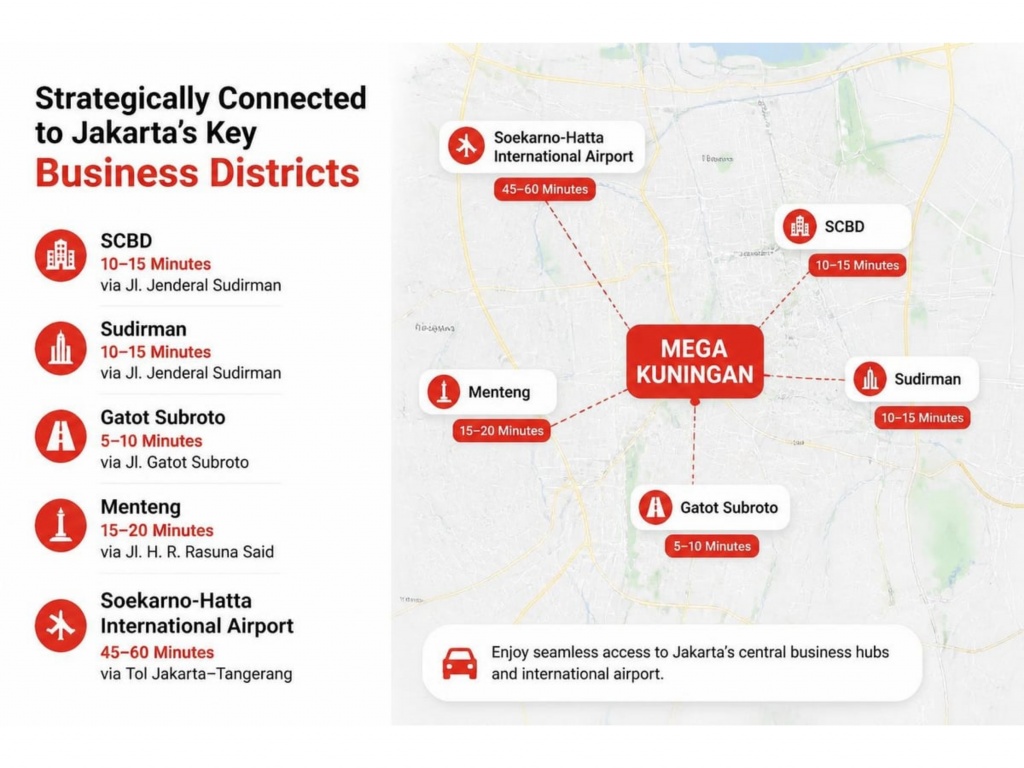
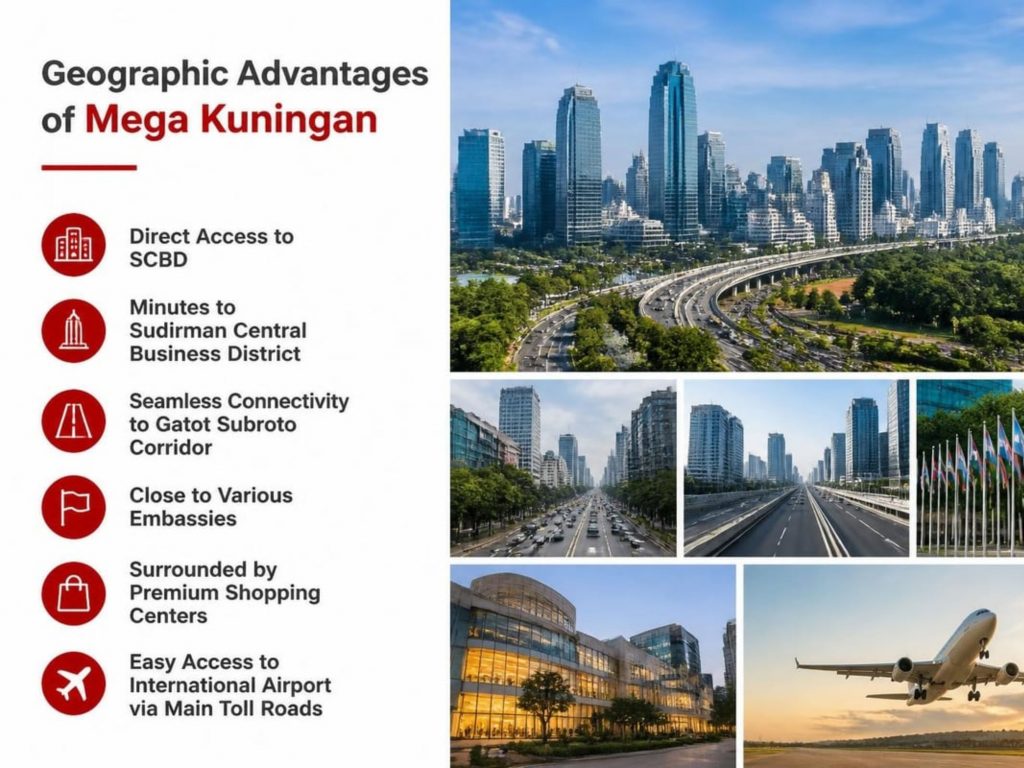
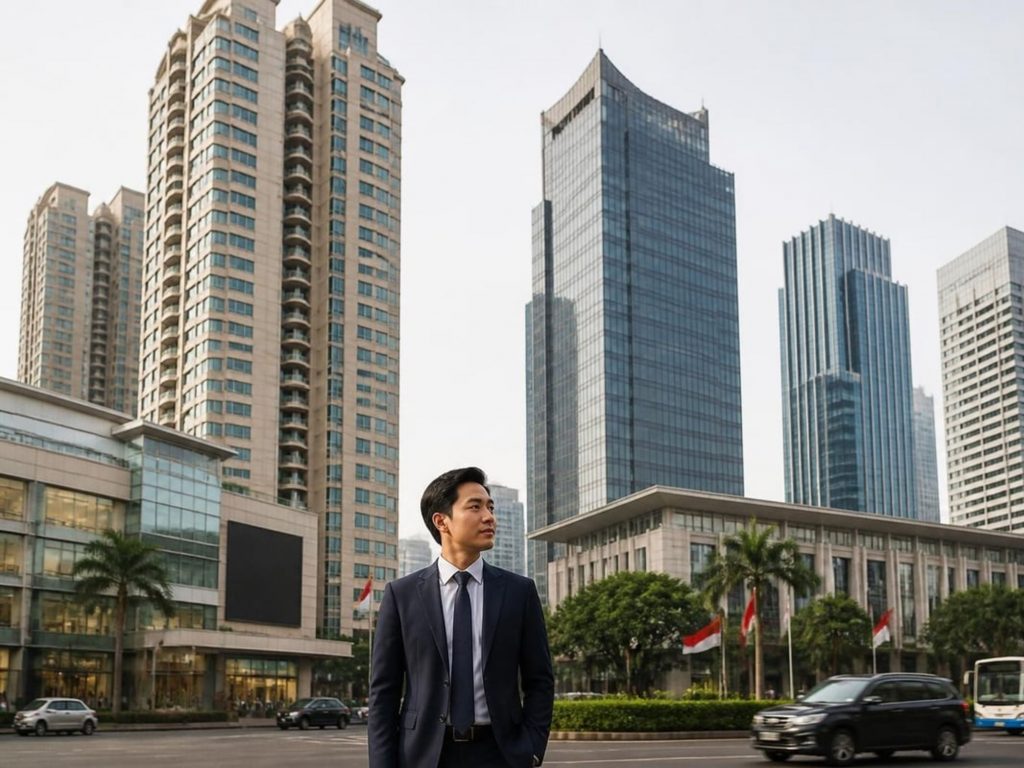
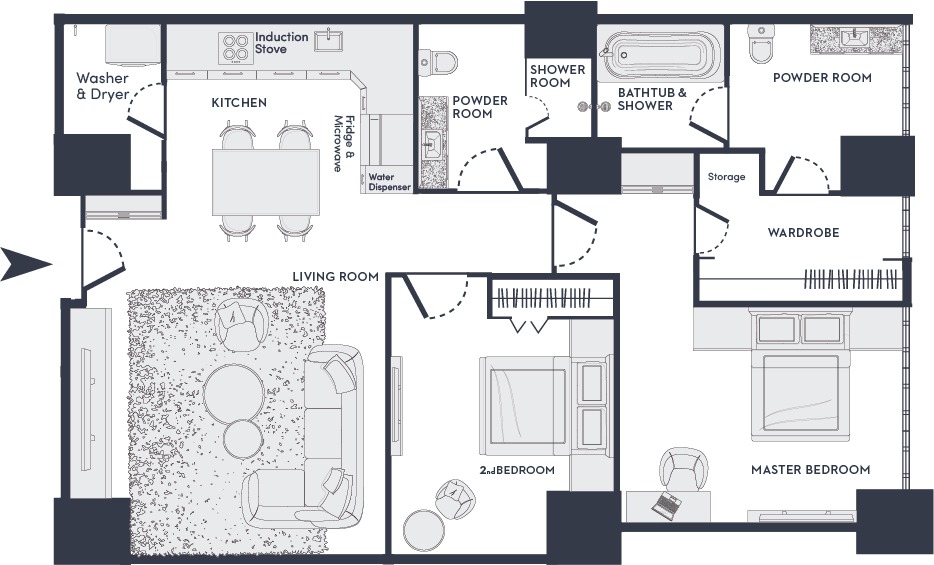
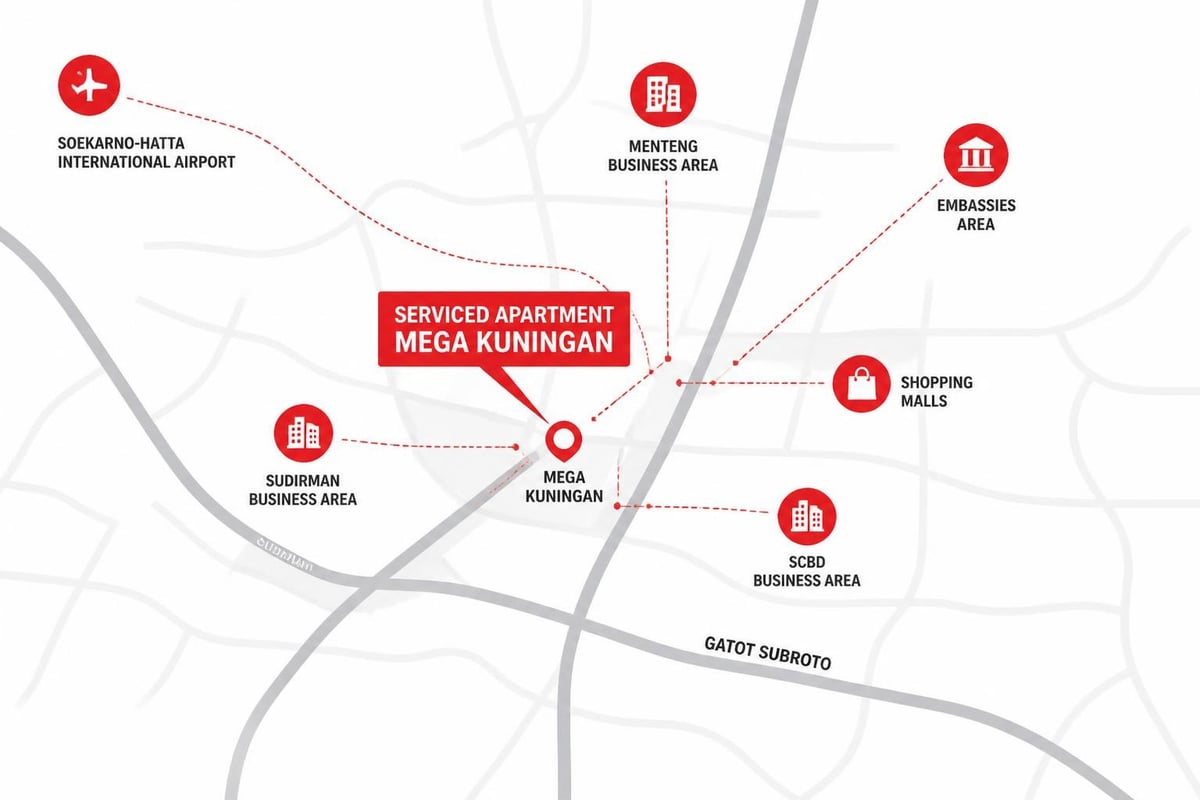
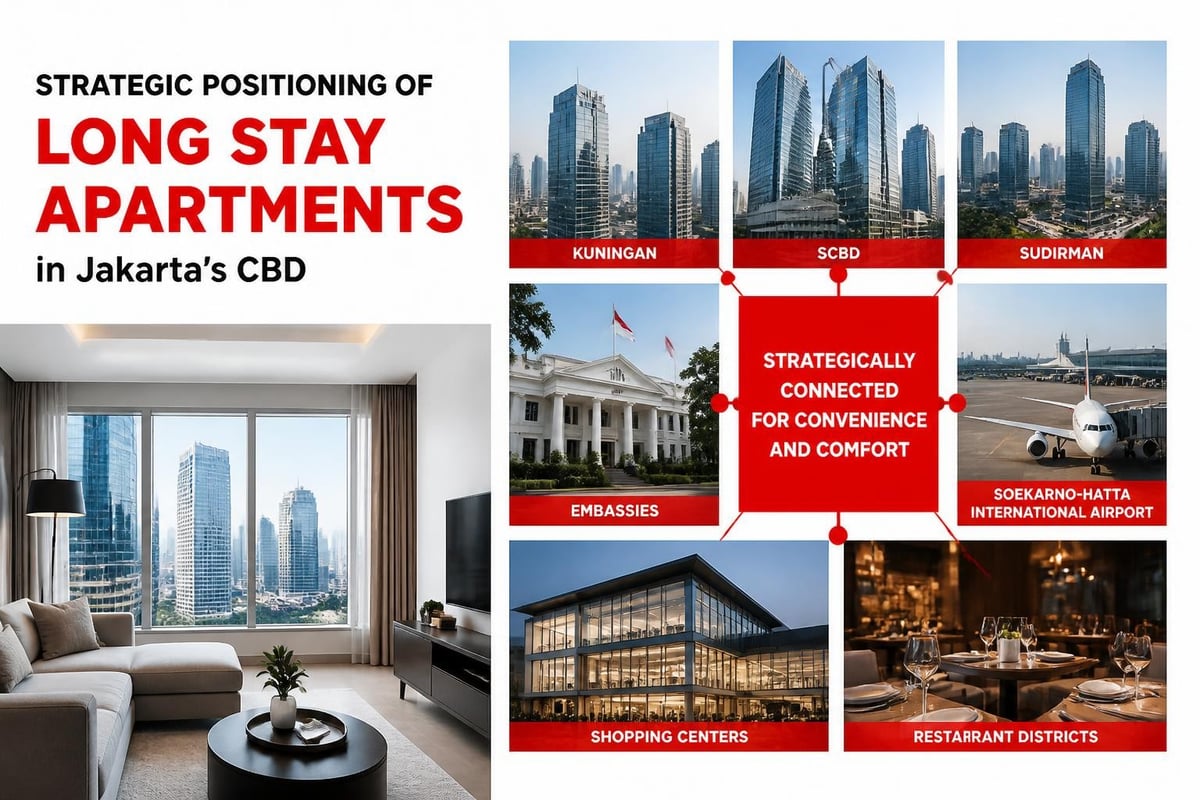
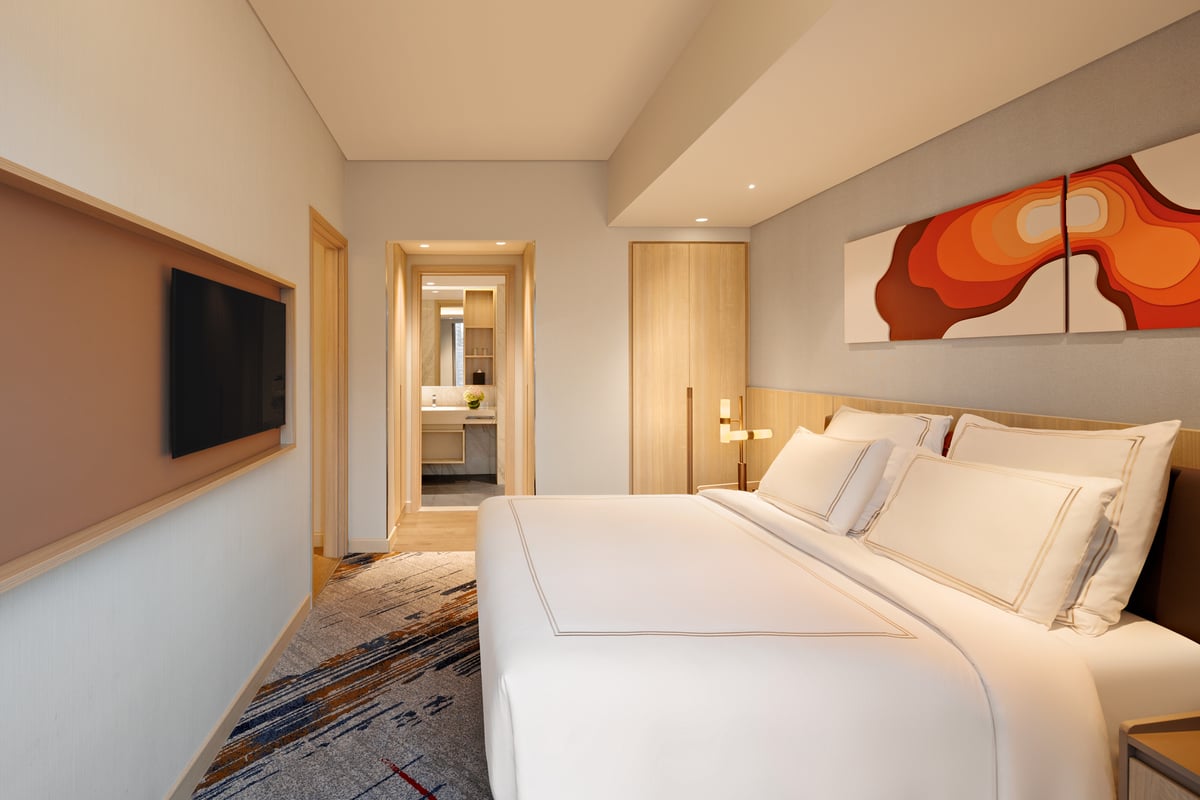
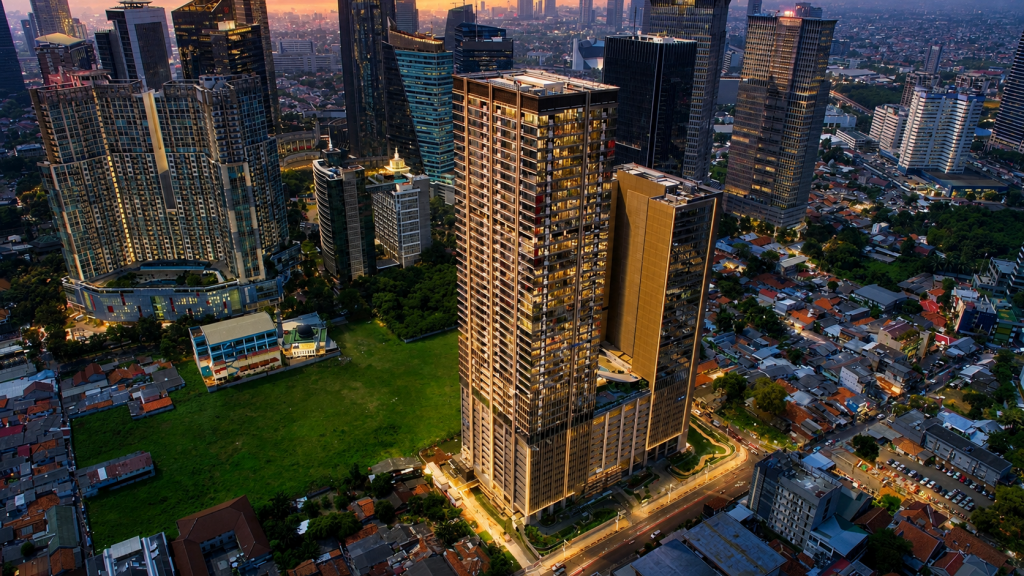
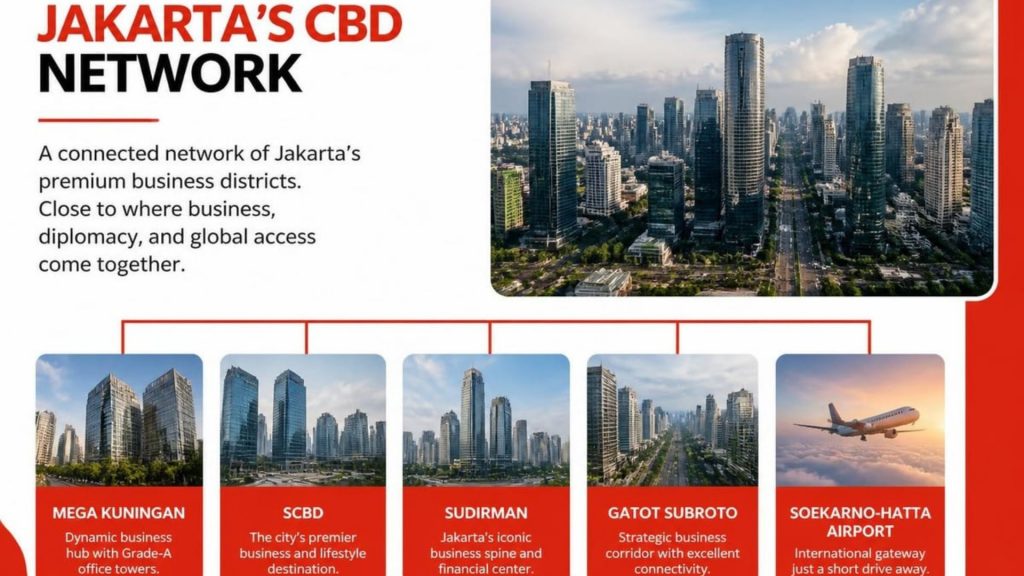
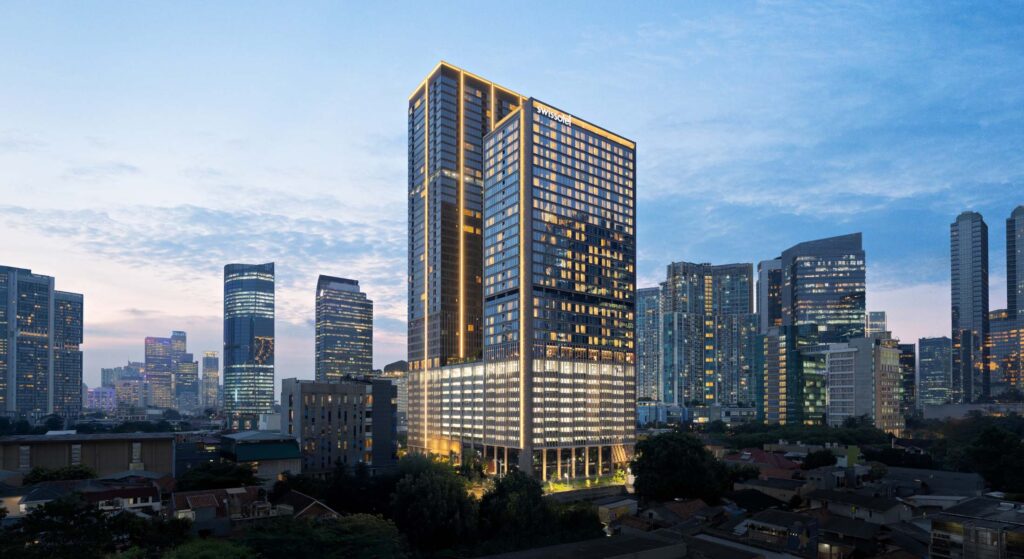
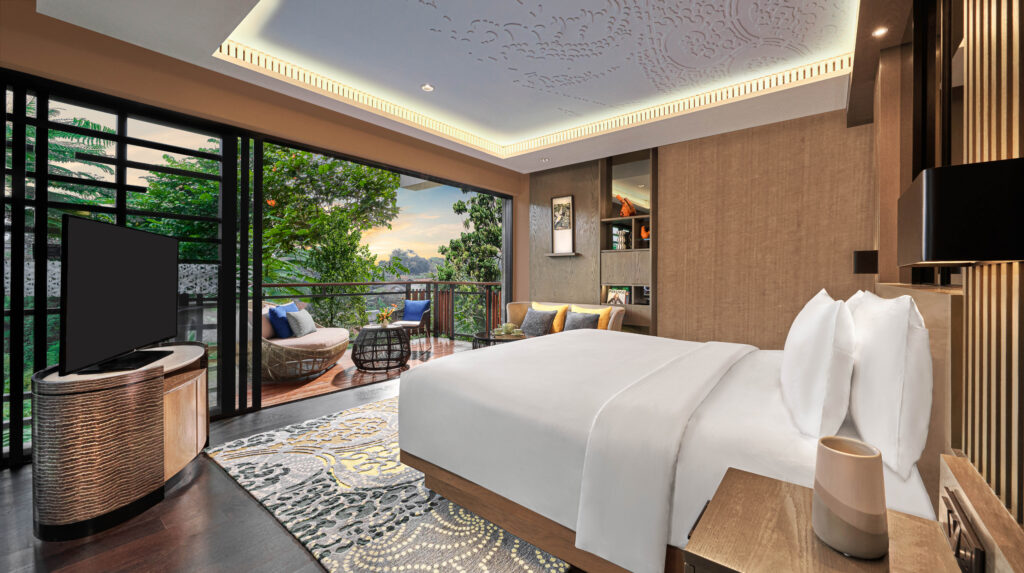
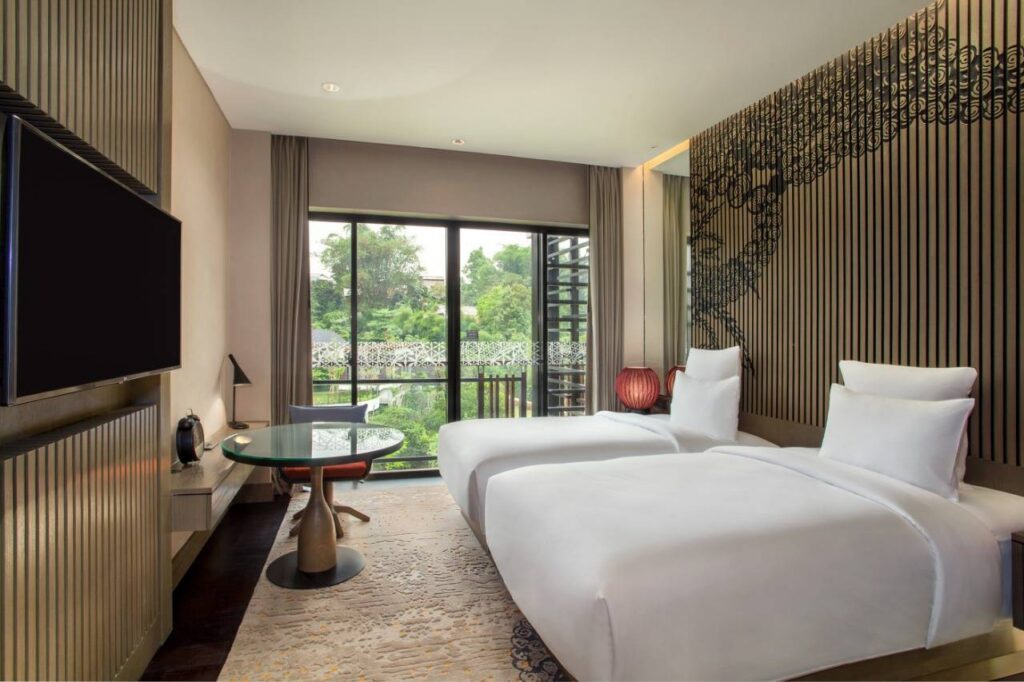
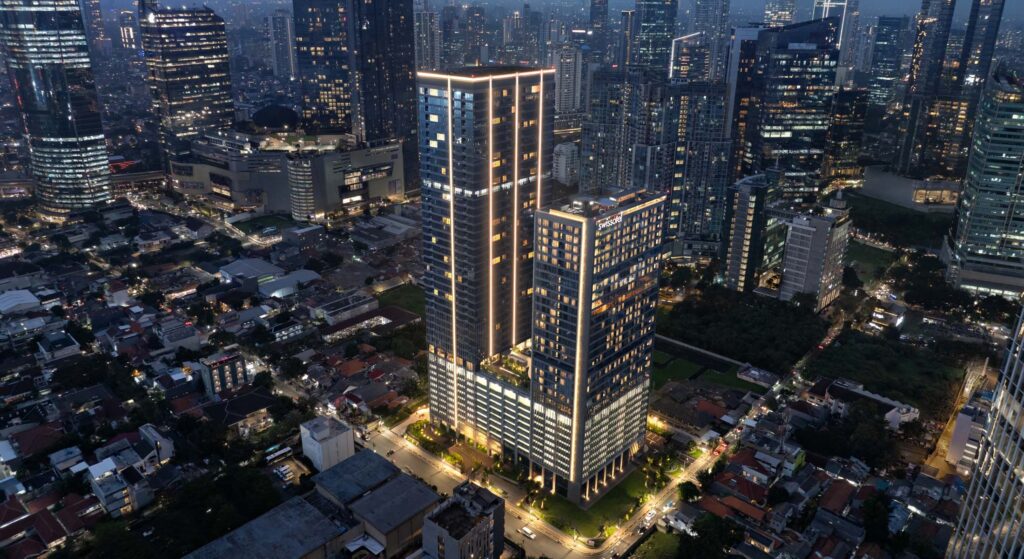
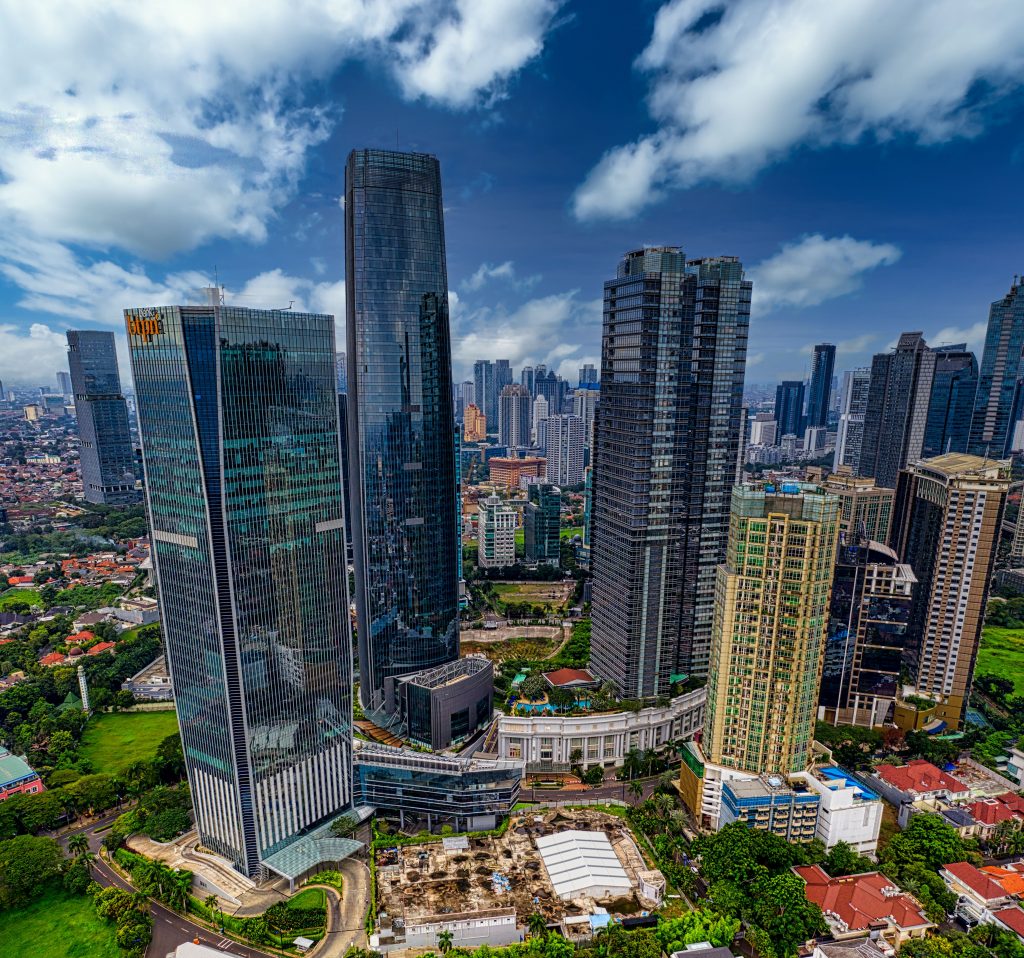
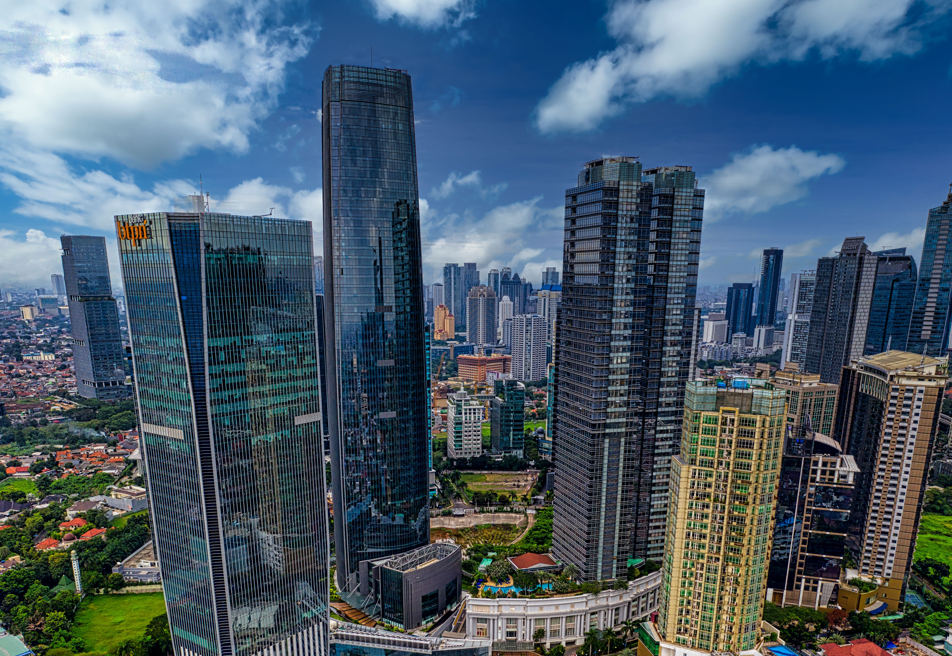
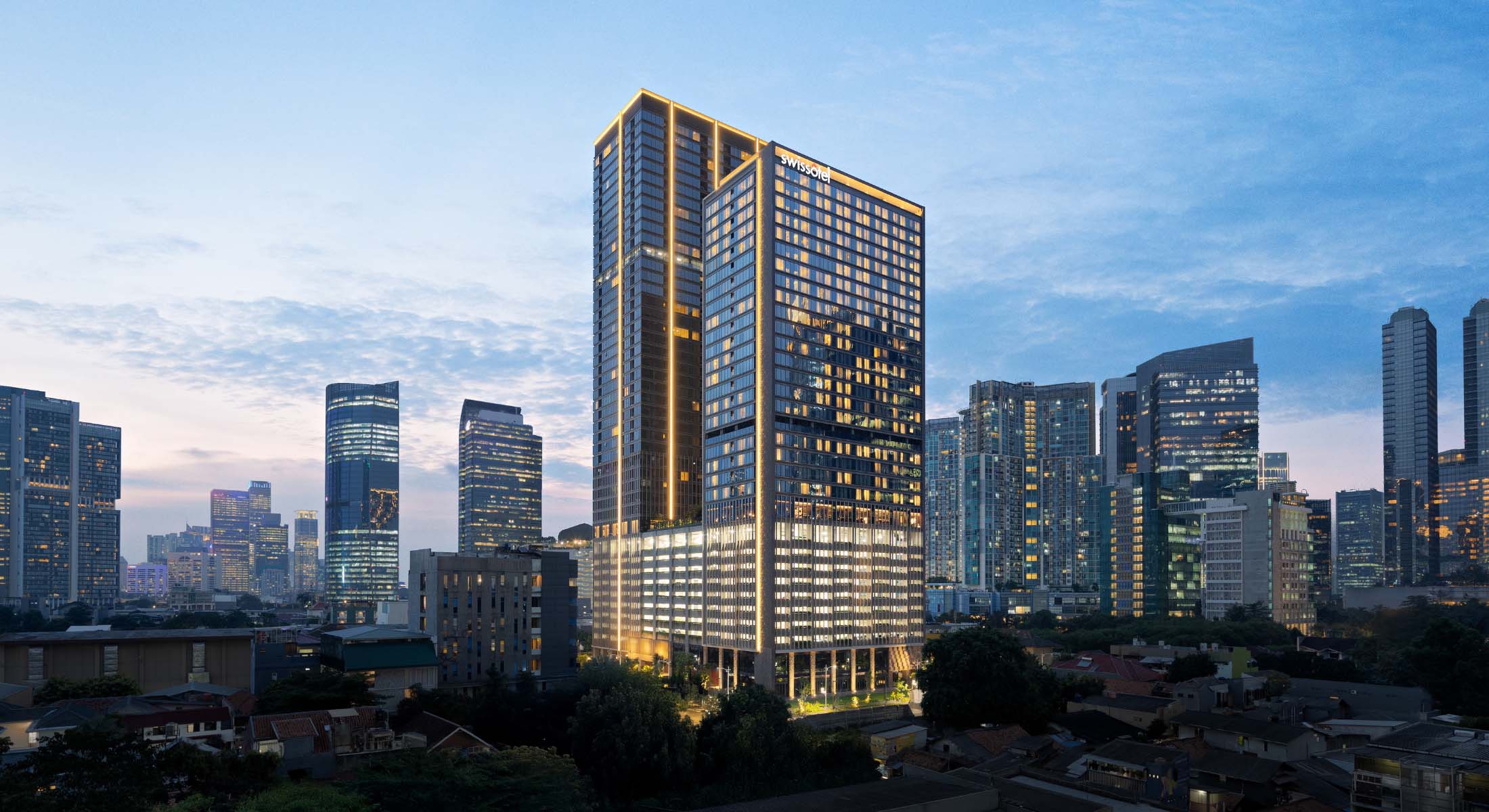
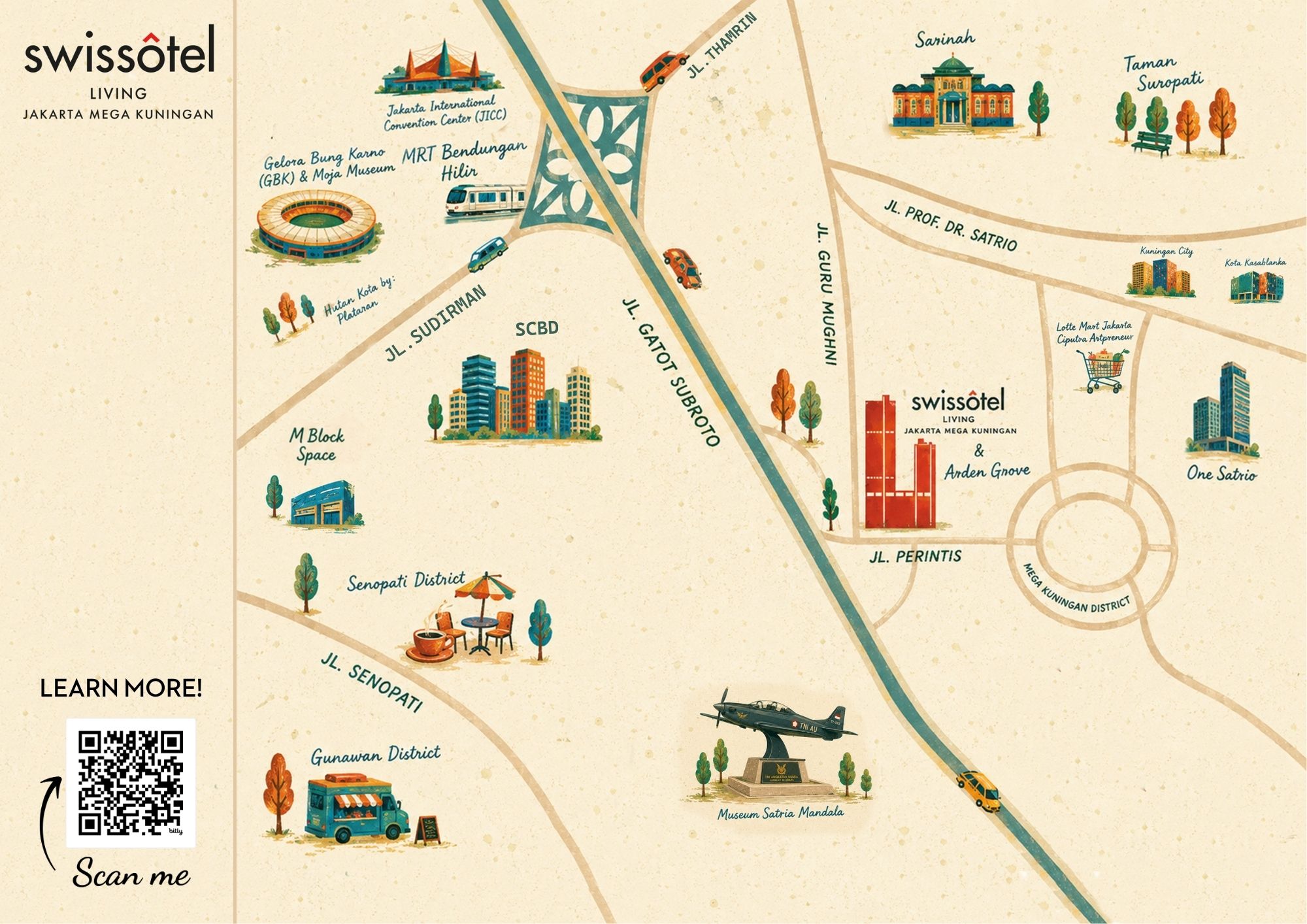
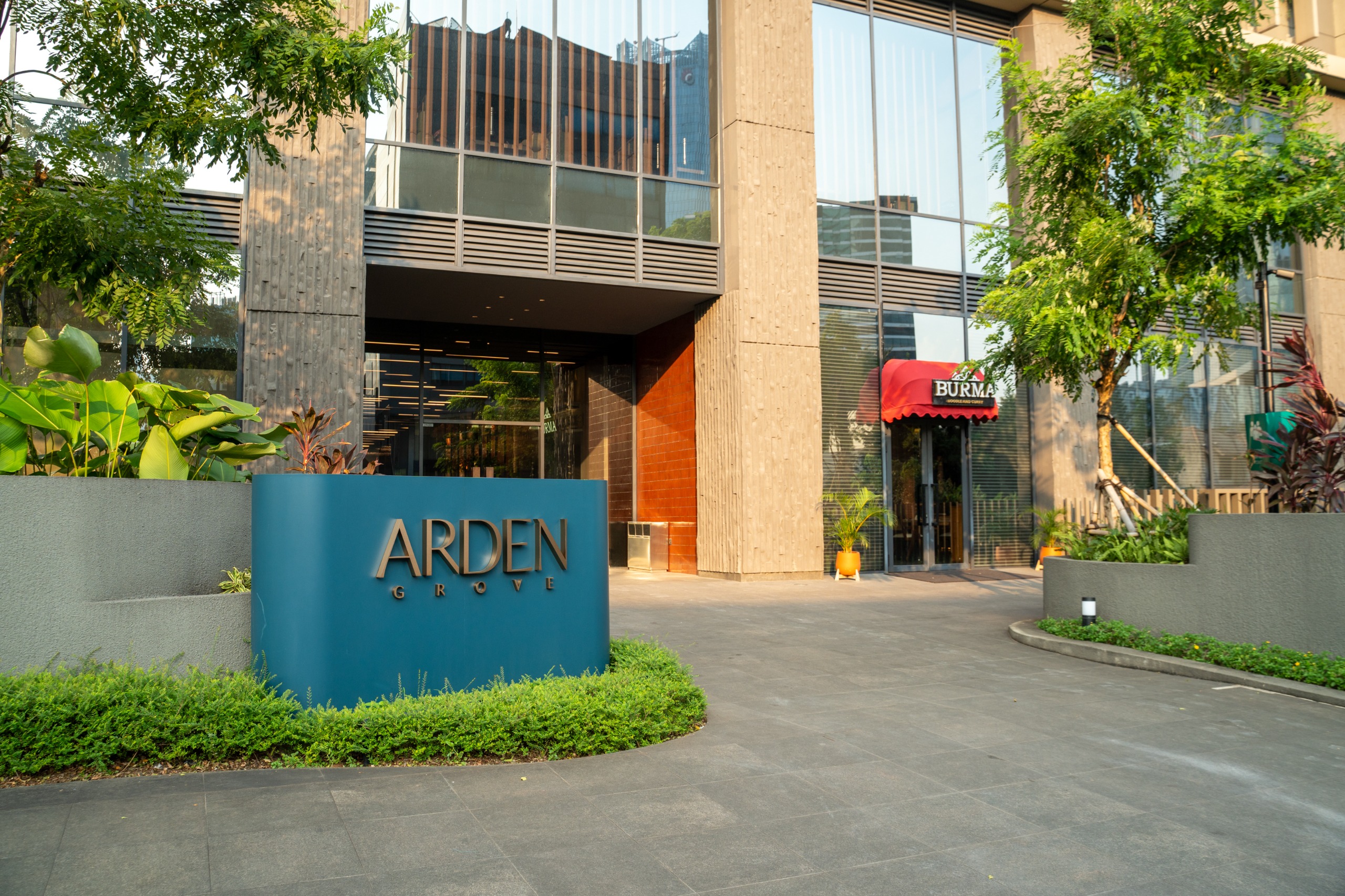
Properties like Swissôtel Living Jakarta Mega Kuningan exemplify this category, offering 240 fully furnished residences ranging from studios to three-bedroom units. Located in Jakarta’s central business district with access to Kuningan, SCBD, Sudirman, and Gatot Subroto areas, these apartments serve business professionals, families, and expatriates seeking accommodation near major offices, embassies, and international schools.
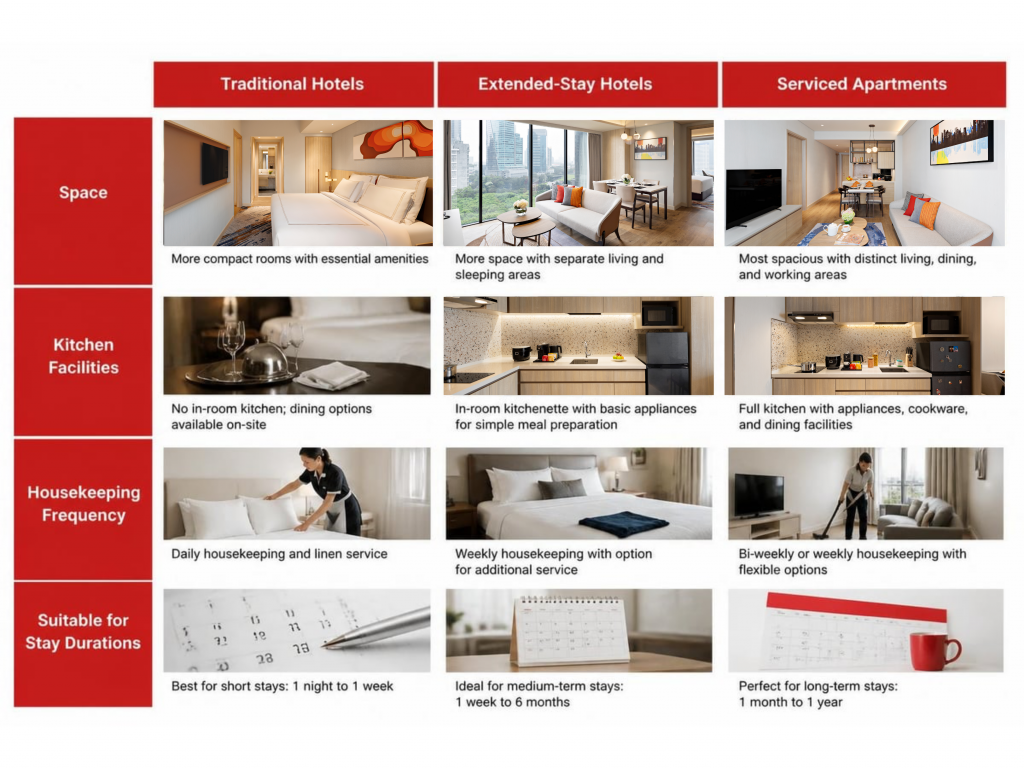
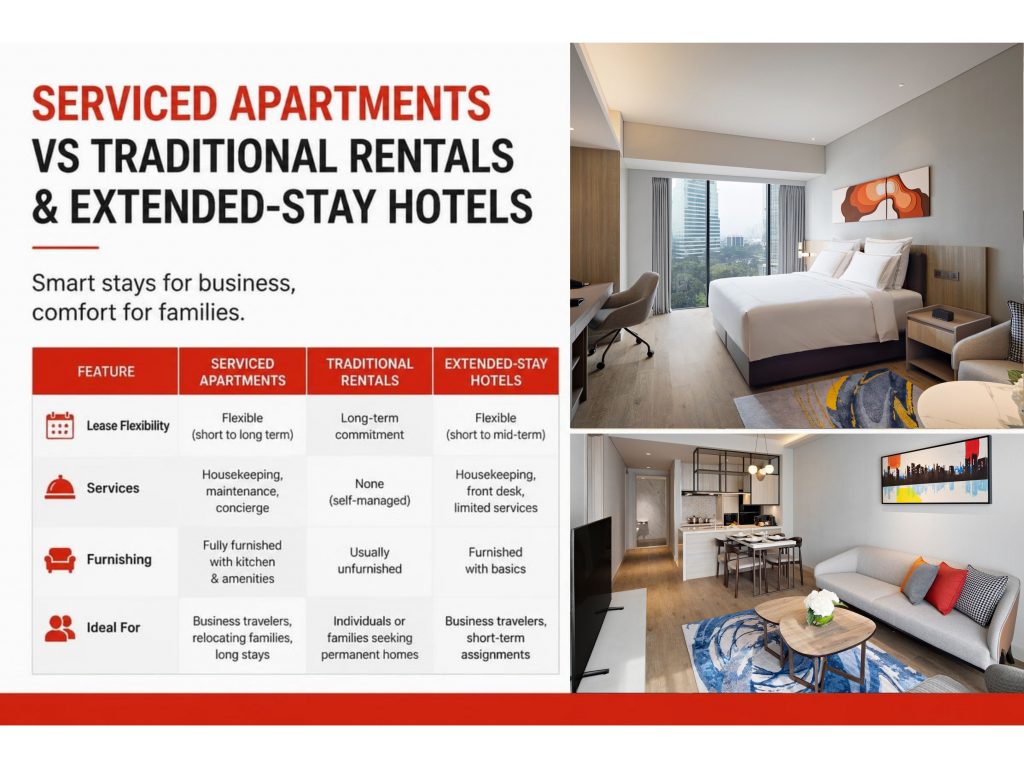
| Feature | Serviced Apartment | Extended-Stay Hotel | Traditional Hotel |
|---|---|---|---|
| Kitchen facilities | Full kitchen with appliances | Kitchenette or limited cooking | None or minibar only |
| Living space | Separate rooms | Studio or limited separation | Single room |
| Minimum stay | Daily to yearly | Weekly minimum typical | No minimum |
| Housekeeping | Weekly or scheduled | 2-3 times weekly | Daily |
| Service level | Premium with concierge | Standard with front desk | Full daily service |
Corporate Housing
Corporate housing caters specifically to business travelers on extended assignments. Companies lease these units for employees relocating temporarily, working on projects, or awaiting permanent housing.
These properties emphasize proximity to business districts, reliable internet connectivity, and workspace functionality. Corporate housing providers often handle billing directly with employers, simplifying expense management and tax reporting requirements for temporary work assignments.
Residential Hotels
Residential hotels blur the line between hospitality and real estate. These buildings may offer both short-term hotel rooms and long-term residential units under one roof, providing flexibility as needs change.
Some residential hotels require longer initial commitments but offer more favorable monthly rates. Others operate on purely flexible terms, allowing guests to extend or reduce their stay with minimal notice.
Who Lives in Hotels Long-Term
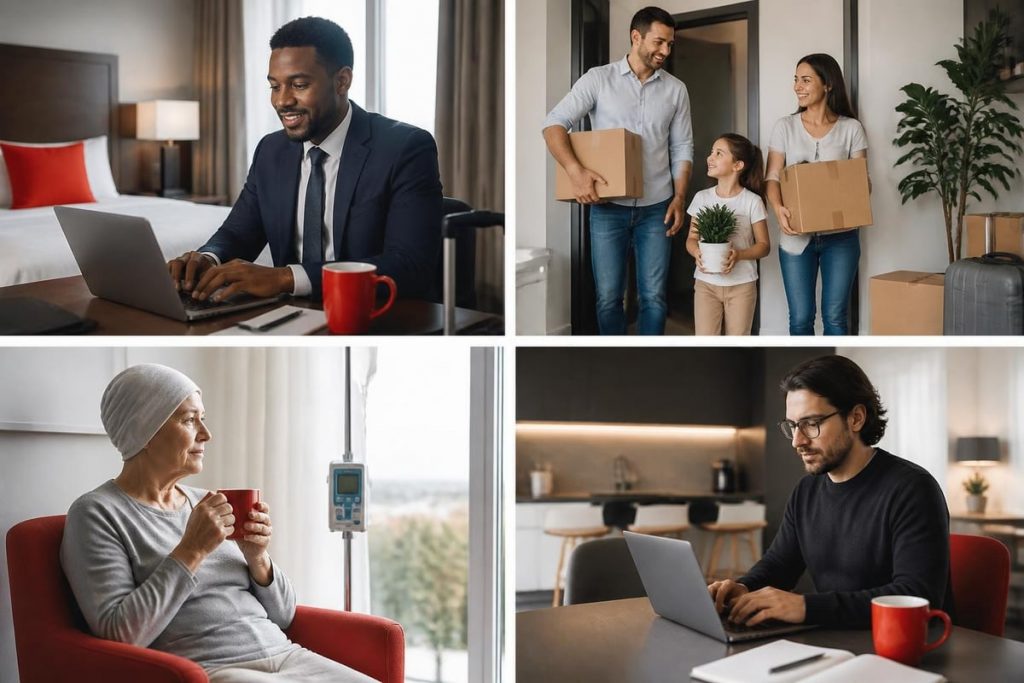
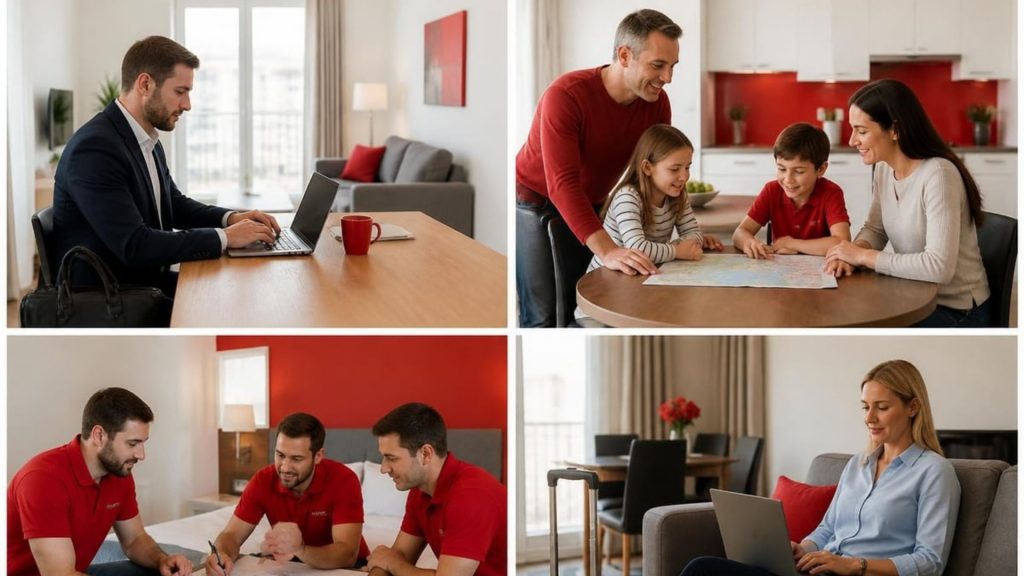
The demographic spectrum of extended-stay guests has broadened considerably. While business travelers remain a core market, several other segments now regularly choose hotels you can live in.
Business Professionals and Expatriates
International assignees form a substantial portion of long-stay hotel residents. Executives relocating to new cities, consultants on multi-month projects, and expatriates awaiting permanent housing all benefit from furnished, service-ready accommodations.
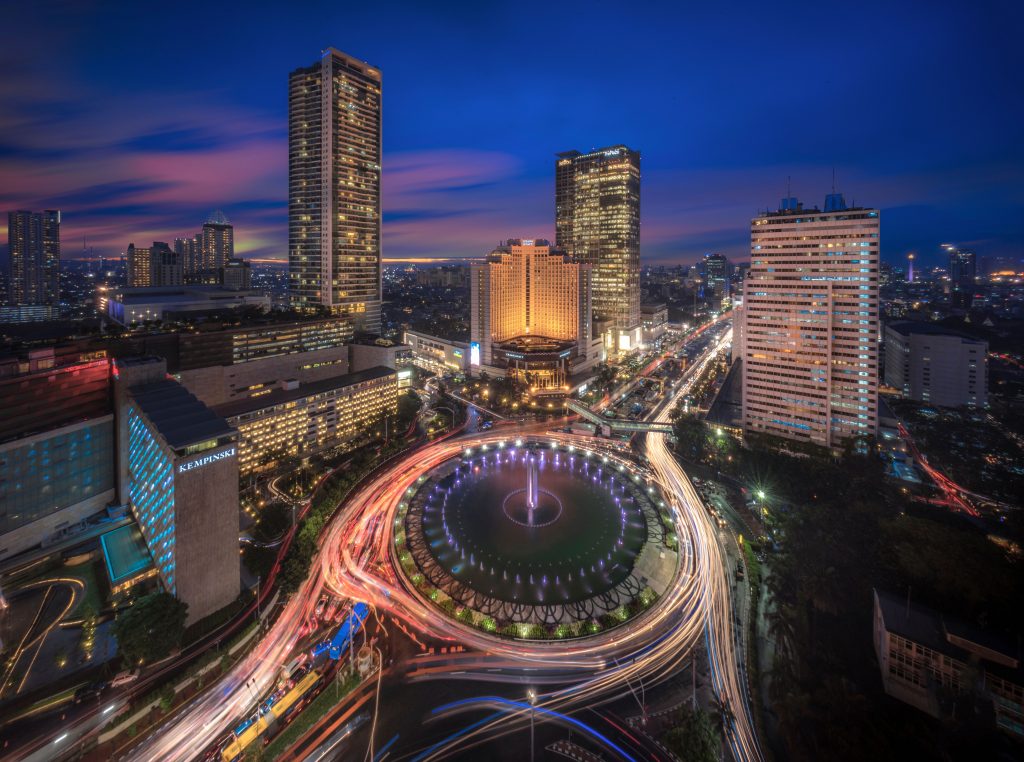
The Jakarta market particularly attracts this segment, with properties near major business hubs in Mega Kuningan, SCBD, and Sudirman offering immediate access to corporate offices, embassies, and professional services. Business districts and diplomatic zones concentrate demand for quality serviced apartments.
Families in Transition
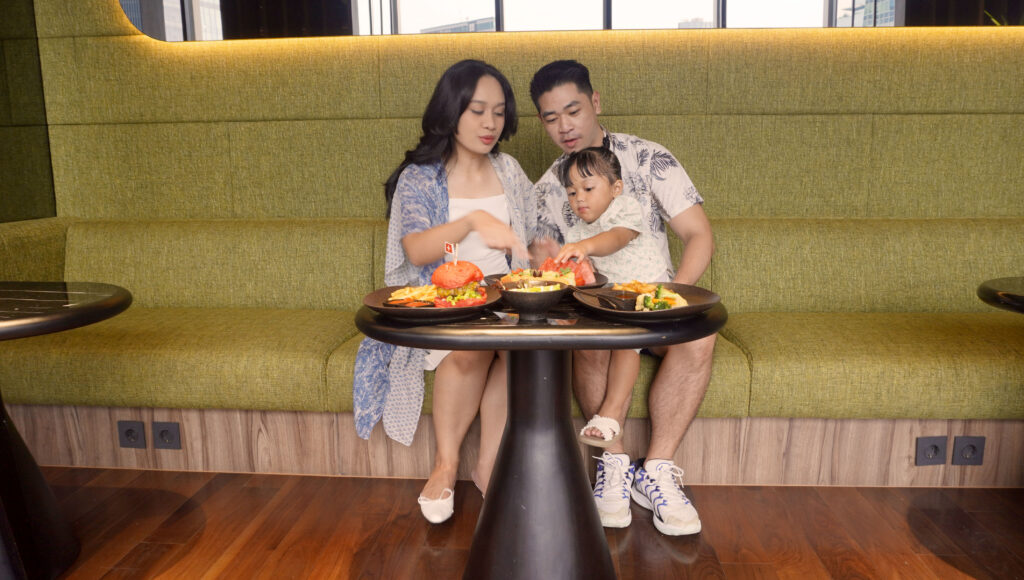
Families relocating between cities or countries often require temporary housing while searching for permanent residences. Hotels you can live in provide stability during transitions, offering multiple bedrooms, kitchen facilities for preparing familiar meals, and proximity to international schools.
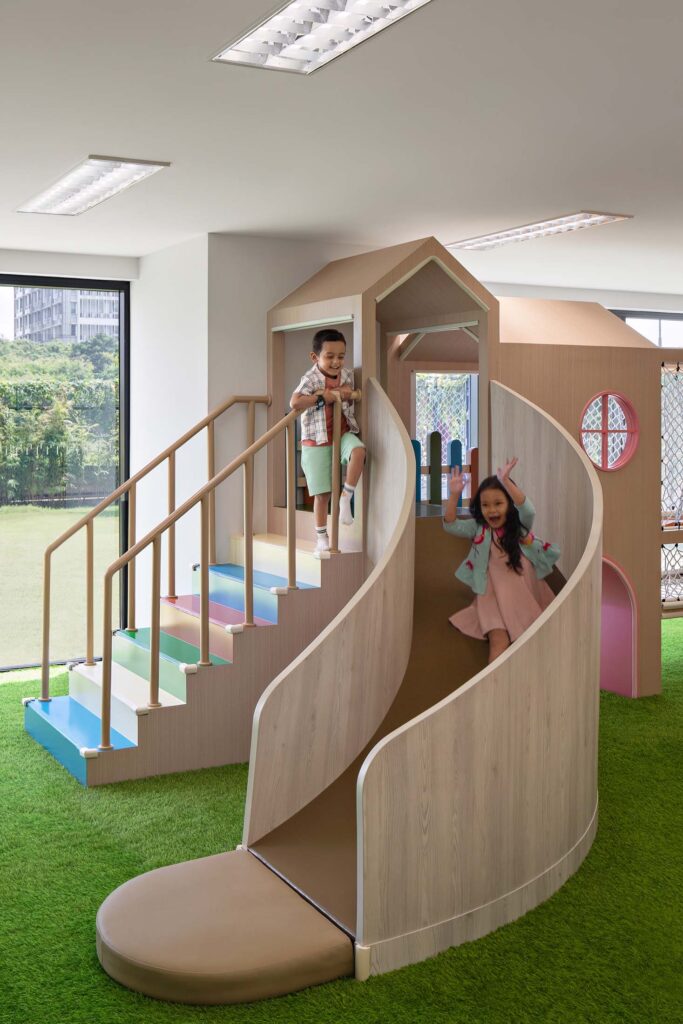
Two-bedroom and three-bedroom configurations accommodate family needs while maintaining access to amenities like swimming pools and recreational facilities. This setup reduces stress during already challenging transition periods.
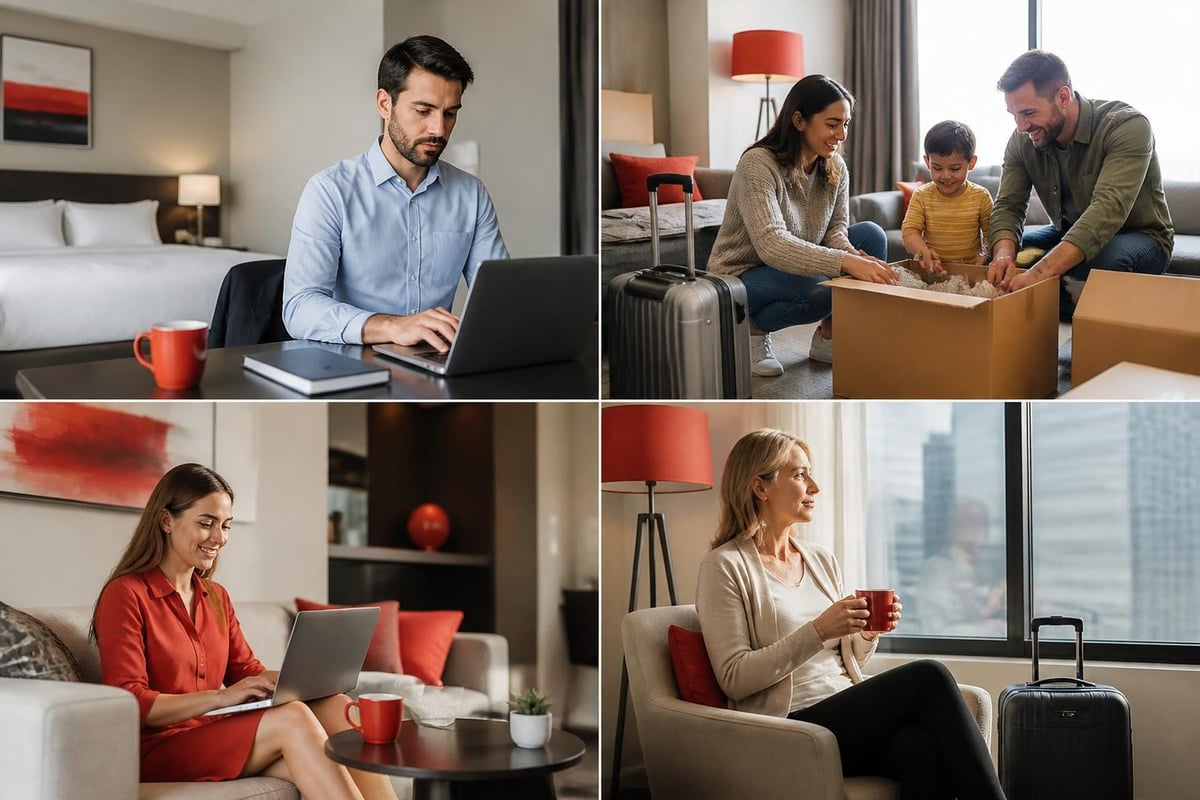
Digital Nomads and Remote Workers
The rise of remote work has created a new category of long-stay guests. Digital nomads and location-independent professionals increasingly choose serviced apartments in vibrant cities, staying weeks or months before moving to their next destination.
These guests prioritize reliable internet, comfortable workspaces, and access to cafes, coworking spaces, and cultural attractions. Flexible booking terms allow them to extend stays in locations they enjoy without long-term commitment.
Individuals Between Homes
Life transitions-selling a home before purchasing another, renovating a primary residence, or going through personal changes-create temporary housing needs. Hotels you can live in offer immediate solutions without the complications of short-term apartment leases.
This segment values move-in readiness and all-inclusive pricing that eliminates utility setup, furniture purchases, and homeowner responsibilities.
Financial Considerations and Pricing
Understanding the economics of long-stay hotels helps evaluate whether this accommodation type makes financial sense for specific situations.
Daily vs. Monthly Rates
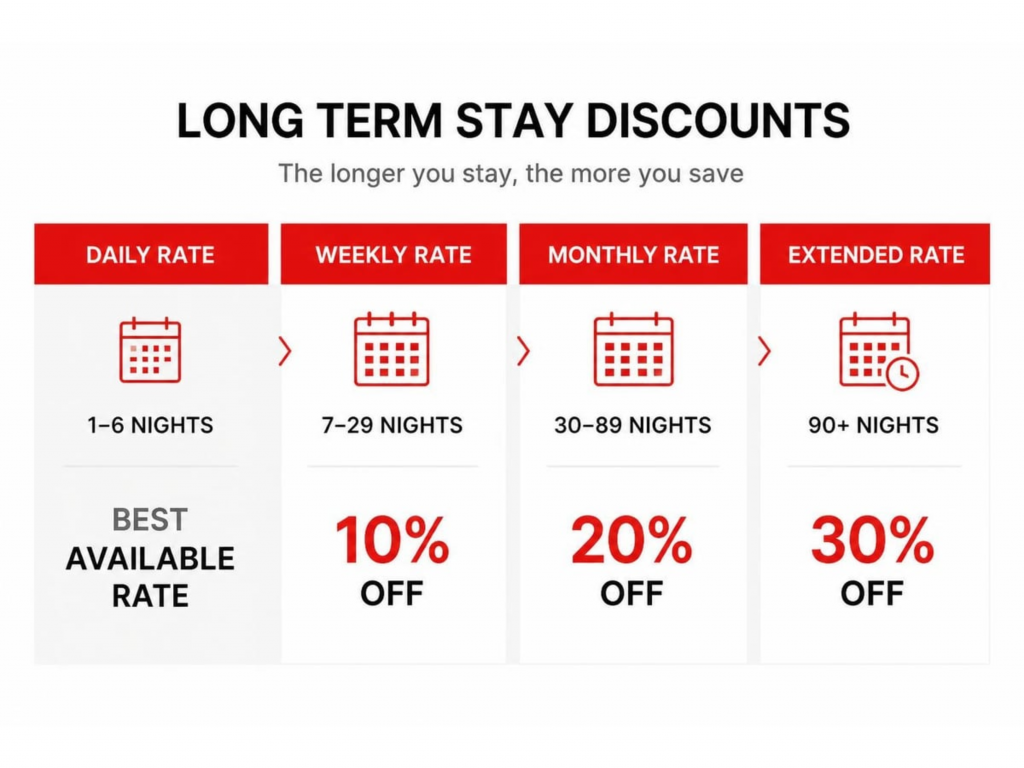
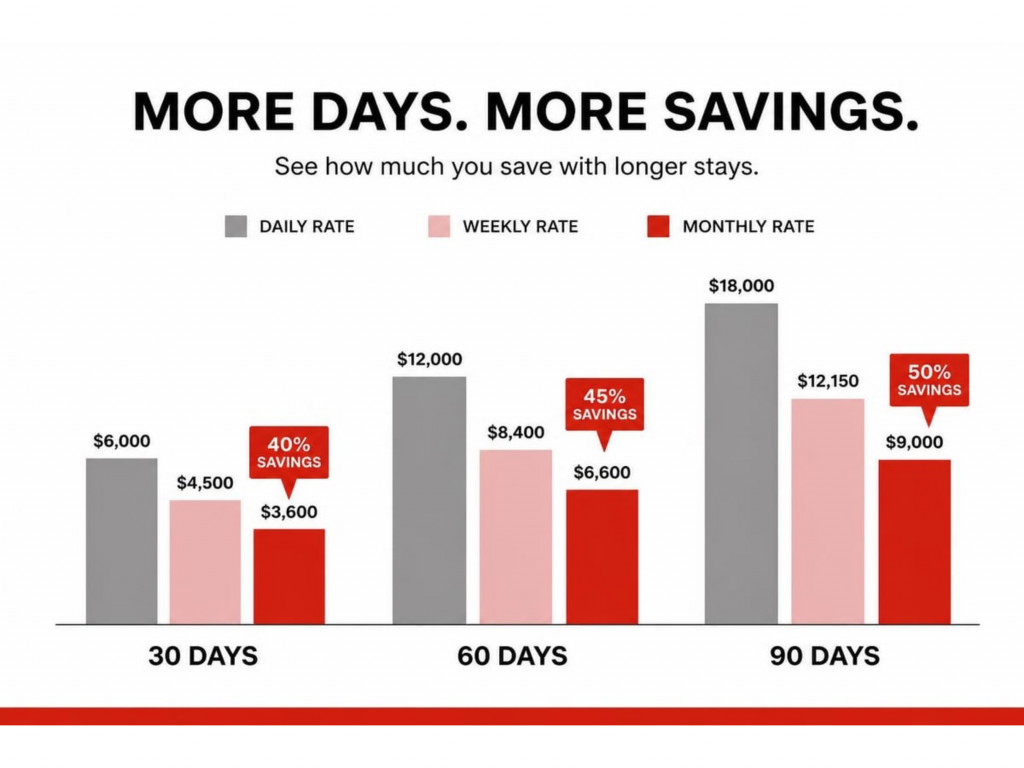
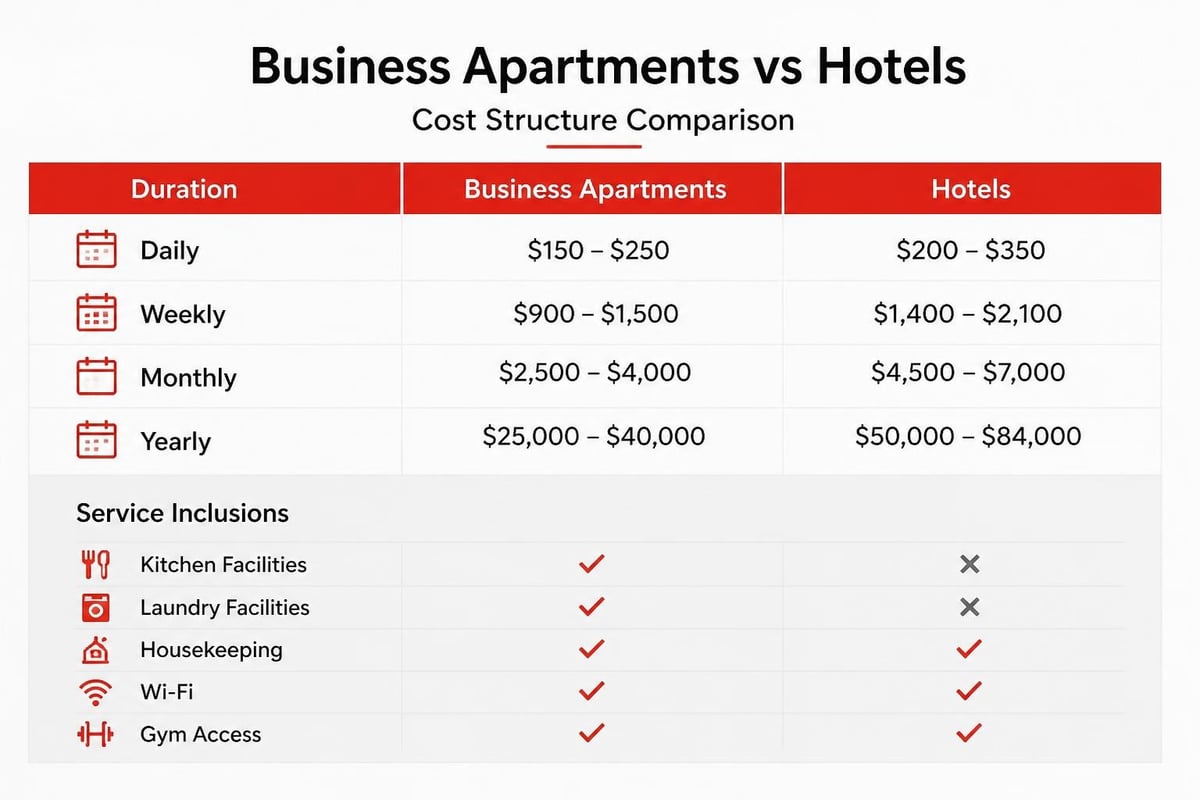
Hotels you can live in typically offer tiered pricing that decreases with commitment length. Daily rates provide maximum flexibility but cost more per night. Weekly rates offer moderate savings, while monthly contracts deliver the best value for extended stays.
Sample rate structure comparison:
| Stay Duration | Daily Rate Equivalent | Total Monthly Cost | Savings vs. Daily |
|---|---|---|---|
| Nightly | $150 | $4,500 | Baseline |
| Weekly contract | $130 | $3,900 | 13% |
| Monthly contract | $100 | $3,000 | 33% |
| Yearly contract | $85 | $2,550 | 43% |
These illustrative figures demonstrate typical discount patterns. Actual rates vary by property, location, apartment size, and seasonal demand.
What’s Included in the Price
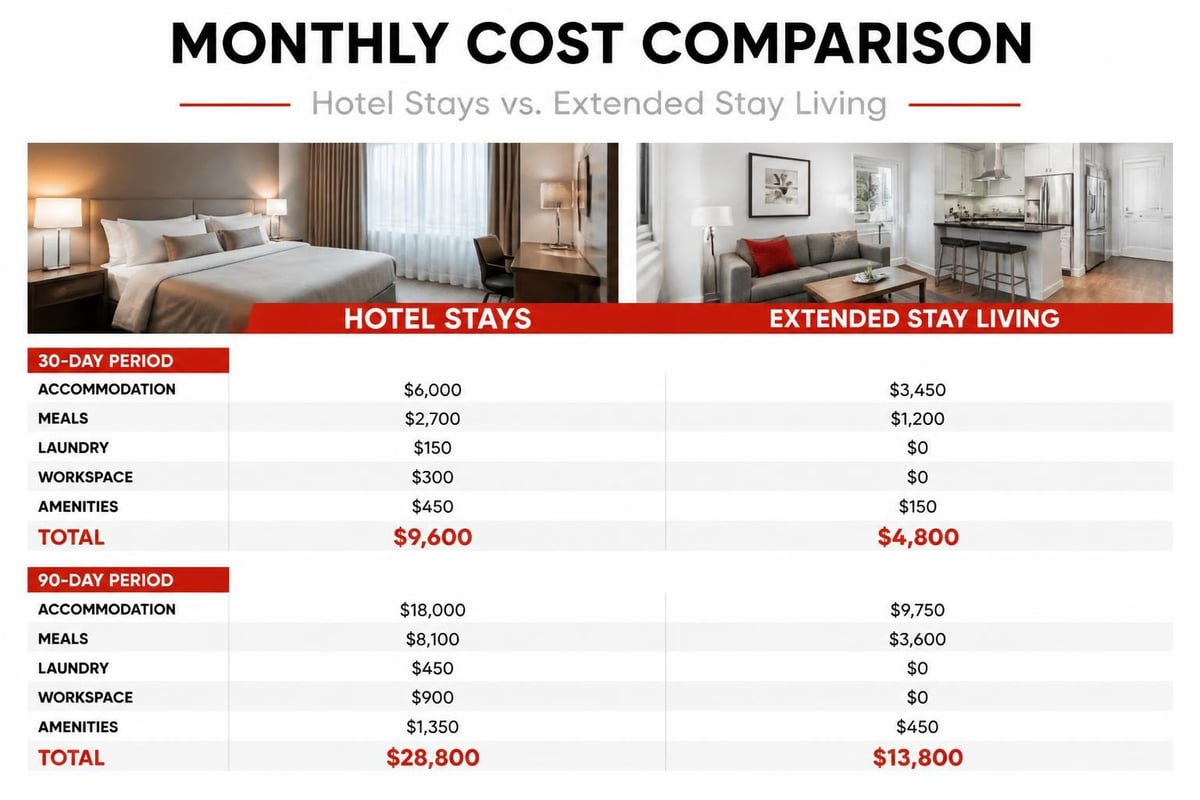
The all-inclusive nature of extended-stay hotels often reveals hidden value compared to traditional apartments. Monthly rates typically include:
- All utilities (electricity, water, gas)
- High-speed internet and cable television
- Housekeeping and linen service
- Access to fitness facilities and pools
- Maintenance and repair services
- Security and reception services
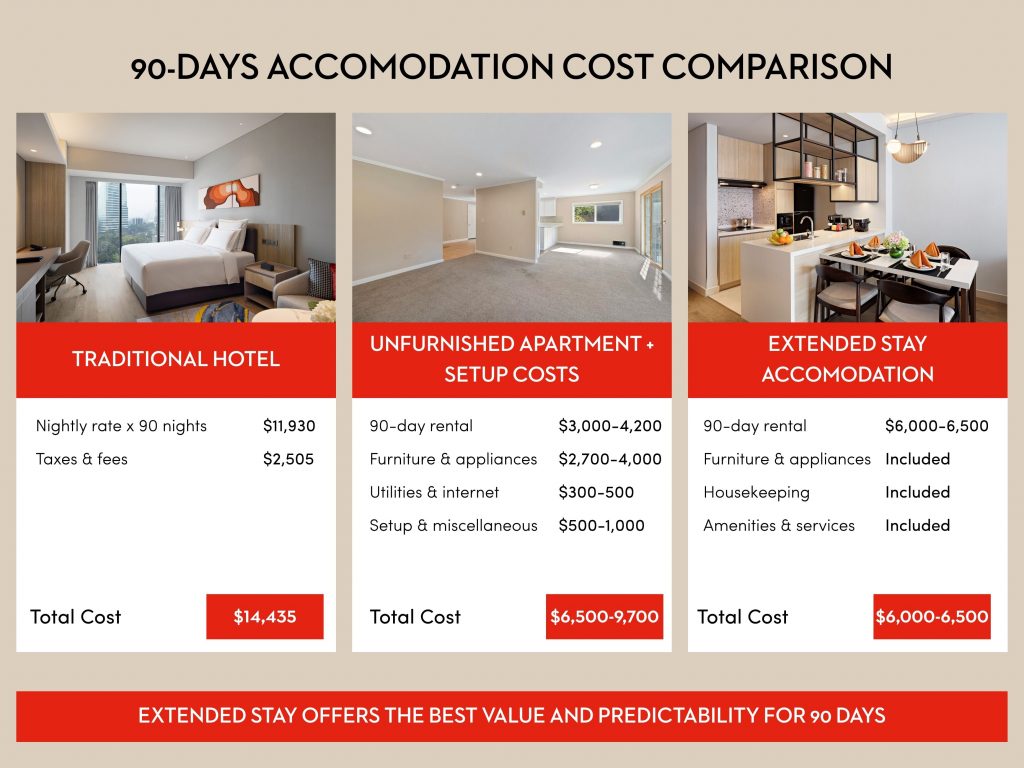
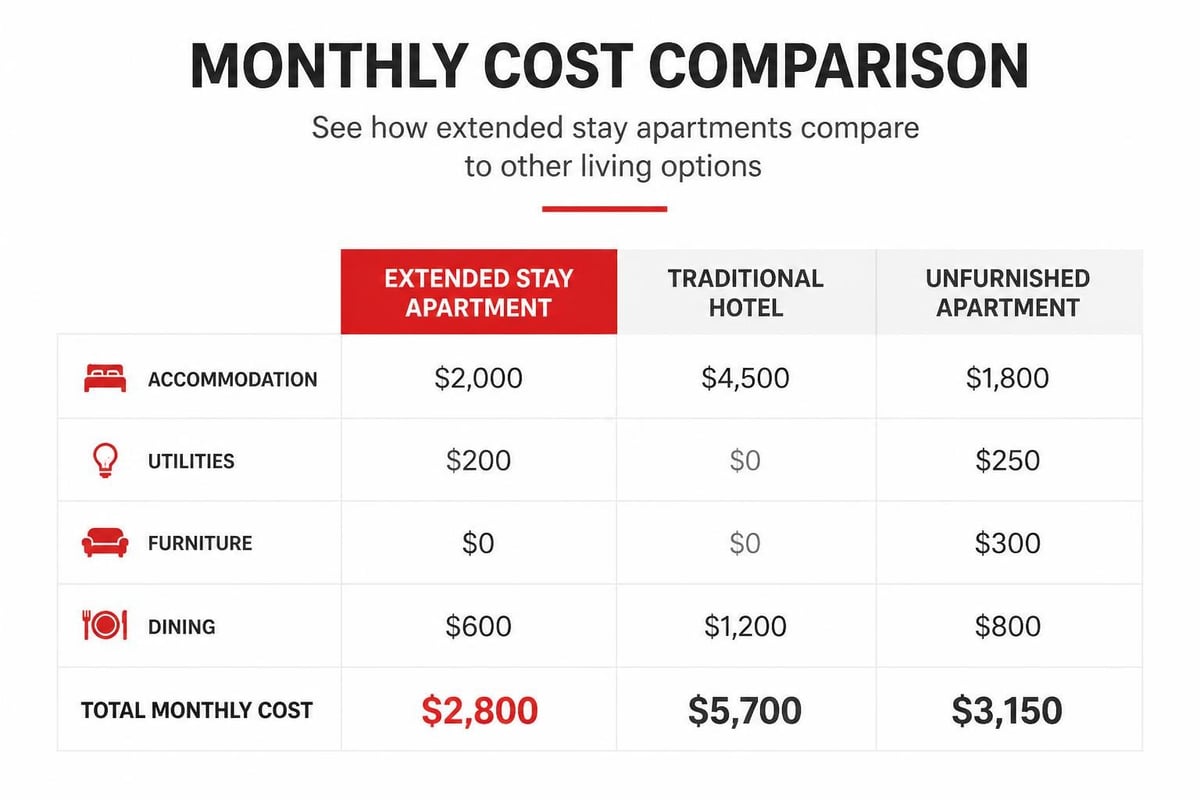
Traditional apartment leases require separate payments for most of these services, plus security deposits, furniture purchases, and setup fees. The convenience factor alone justifies premium pricing for many guests.
Tax Implications and Deductions
Business travelers may deduct temporary lodging expenses when working away from their tax home. IRS Publication 463 provides detailed guidance on deductible travel expenses, including extended hotel stays for work assignments.
Corporate clients should maintain detailed documentation of business purposes, assignment durations, and expense receipts. Extended-stay hotels typically provide monthly invoices suitable for expense reporting and reimbursement.
Choosing the Right Long-Stay Property
Selecting hotels you can live in requires evaluating factors beyond those considered for overnight accommodations. Location, unit configuration, service level, and contract flexibility all impact satisfaction during extended residence.
Location and Accessibility
Proximity to work, schools, shopping, and transportation determines daily convenience. Business travelers prioritize access to office districts and airports. Families need nearby grocery stores, healthcare facilities, and educational institutions.
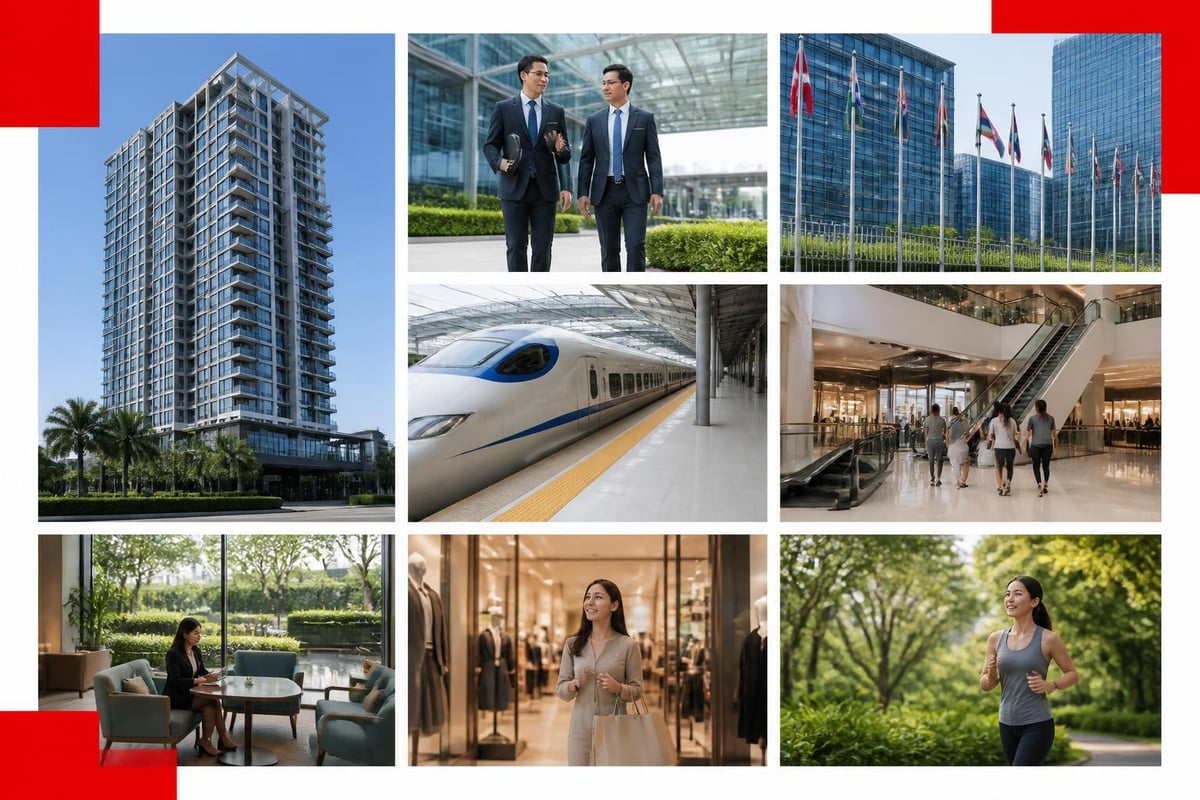
Properties in central business districts like Mega Kuningan offer walking distance to corporate offices, embassies, banking centers, and dining options. Transit connections to Soekarno-Hatta International Airport facilitate business travel and personal trips.
Unit Size and Layout
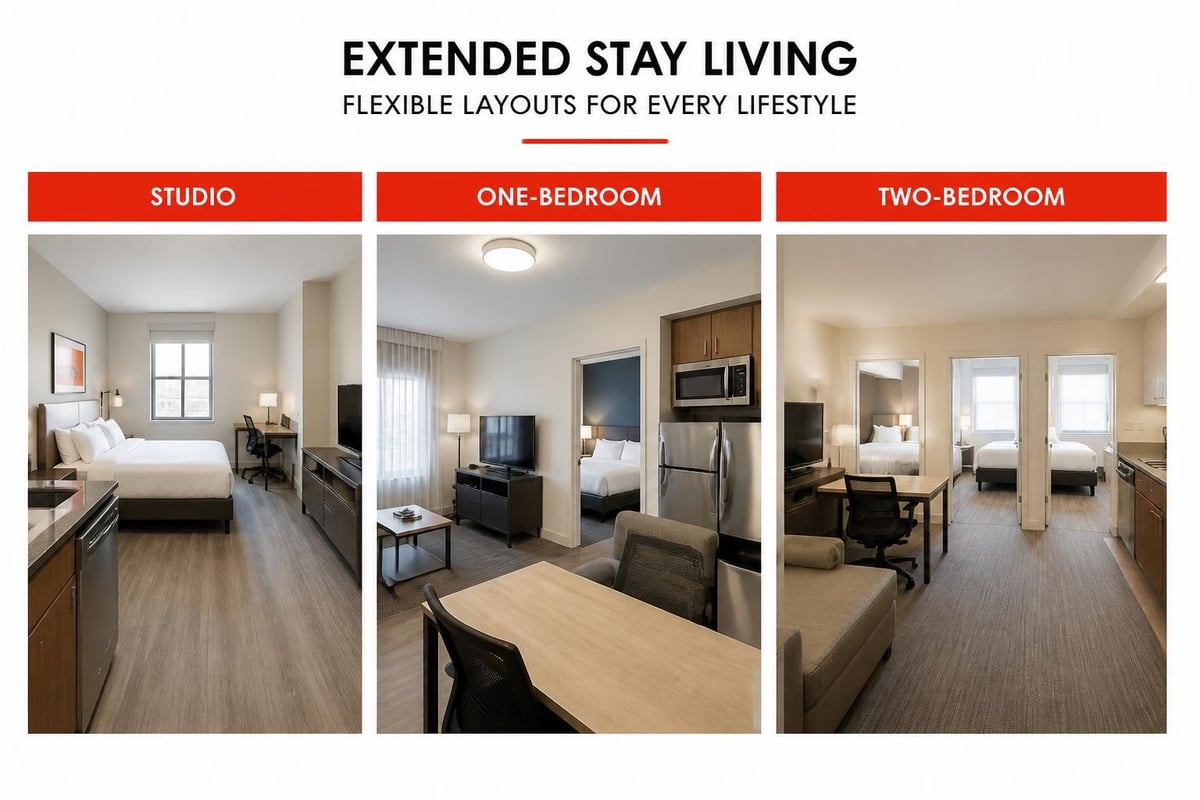
Space requirements grow with stay duration. A studio adequate for business travel becomes cramped for family residence. Consider:
- Number of bedrooms needed for privacy and accommodation capacity
- Kitchen size and equipment for meal preparation frequency
- Living area functionality for work, relaxation, and entertainment
- Storage capacity for clothing, personal items, and equipment
- Bathroom count for convenience with multiple residents
Three-bedroom units serve large families or groups sharing costs. Two-bedroom configurations provide home offices for remote workers. Studios and one-bedroom apartments suit individuals and couples.
Service Level and Amenities
Evaluate which services matter most for your lifestyle. Daily housekeeping suits those prioritizing convenience, while weekly service reduces costs and intrusion. On-site amenities like fitness centers, pools, and business centers add value if regularly used.
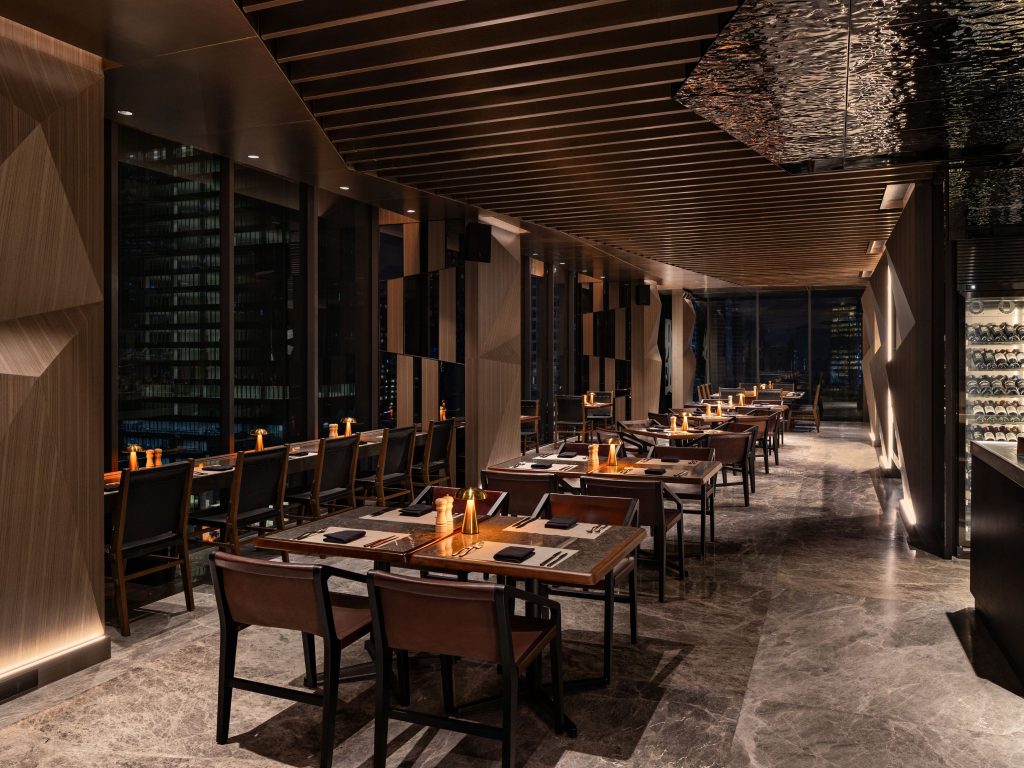
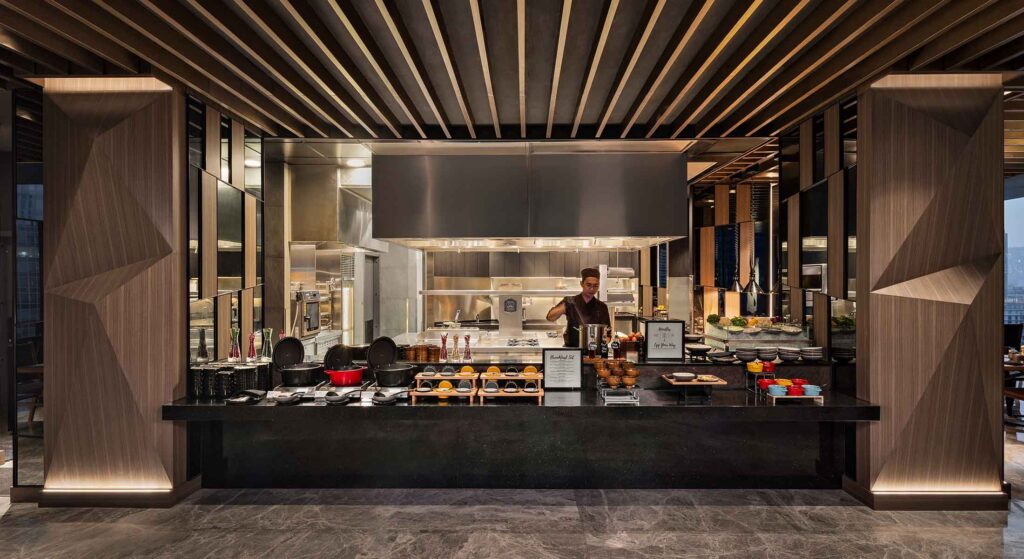
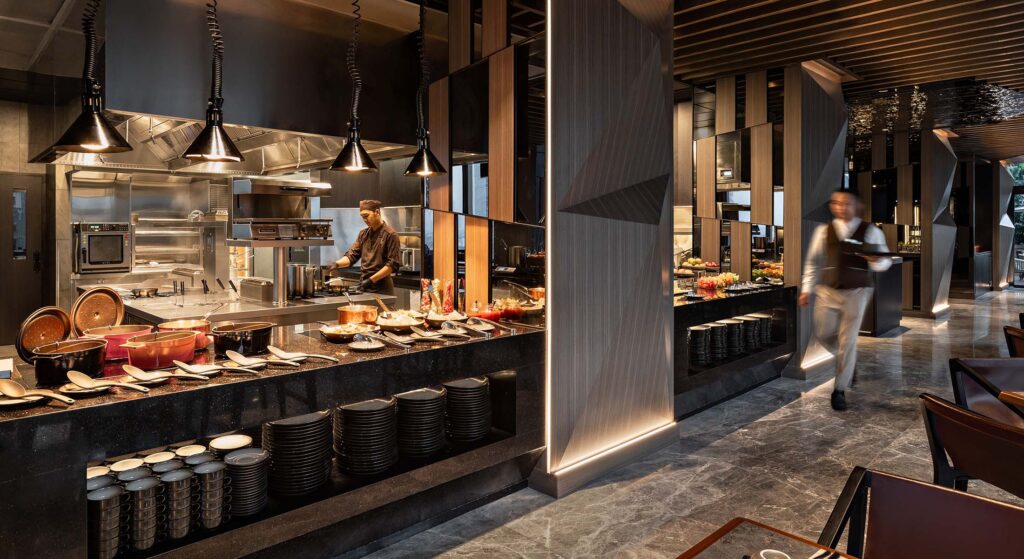
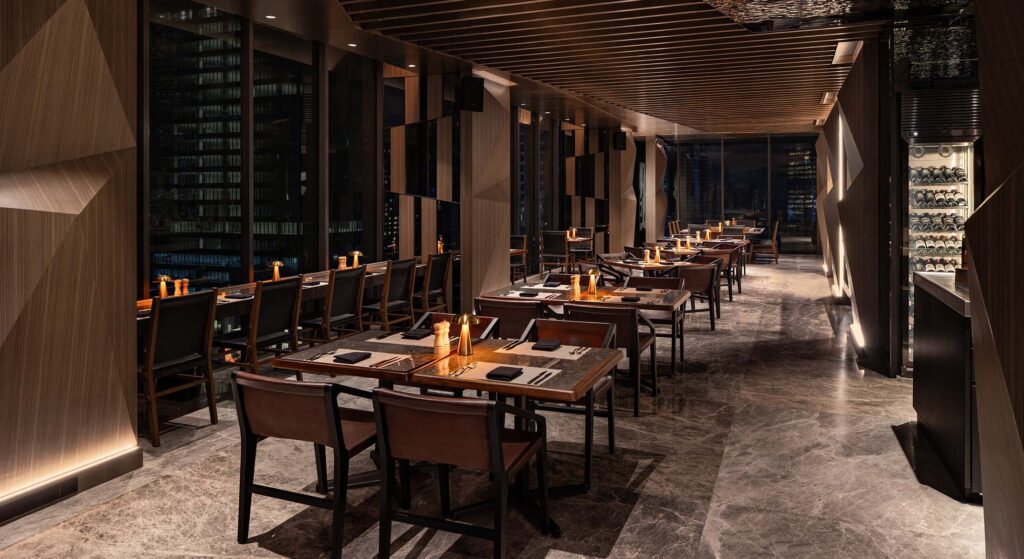
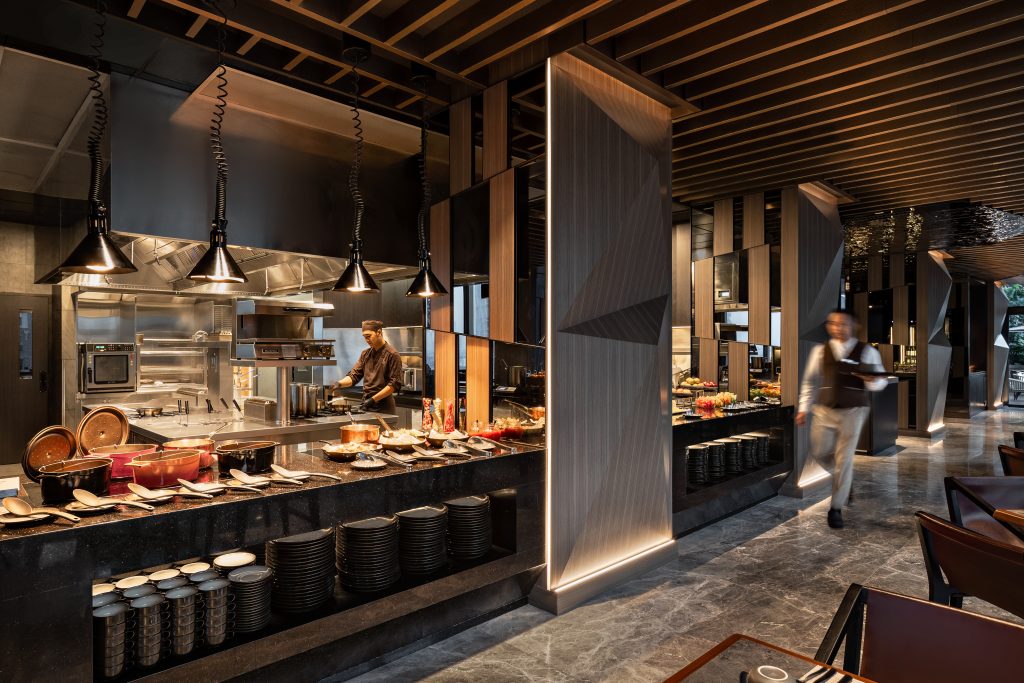
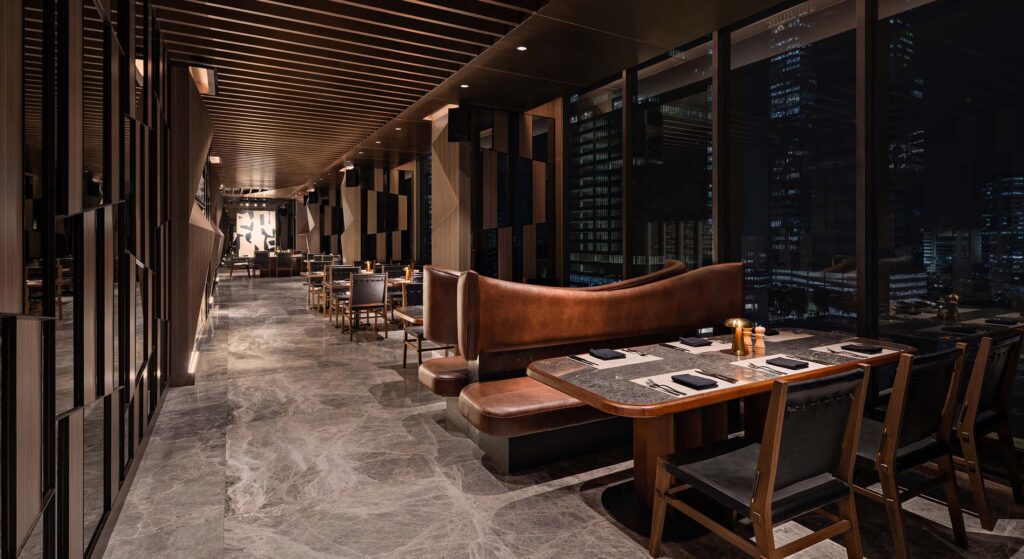
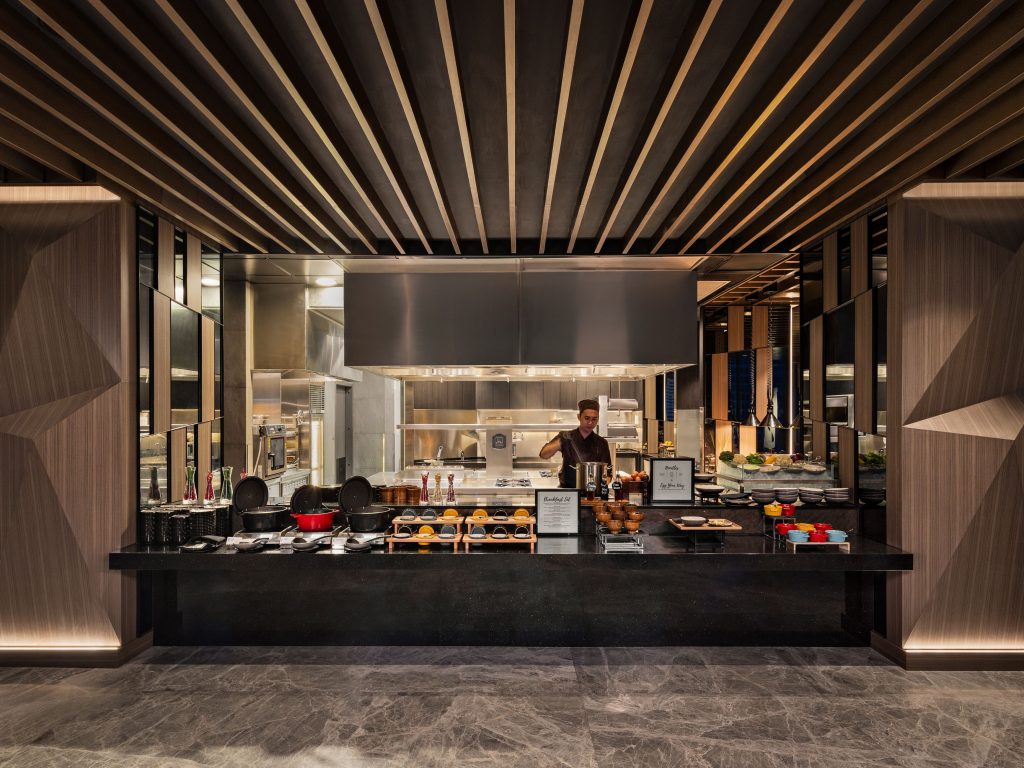
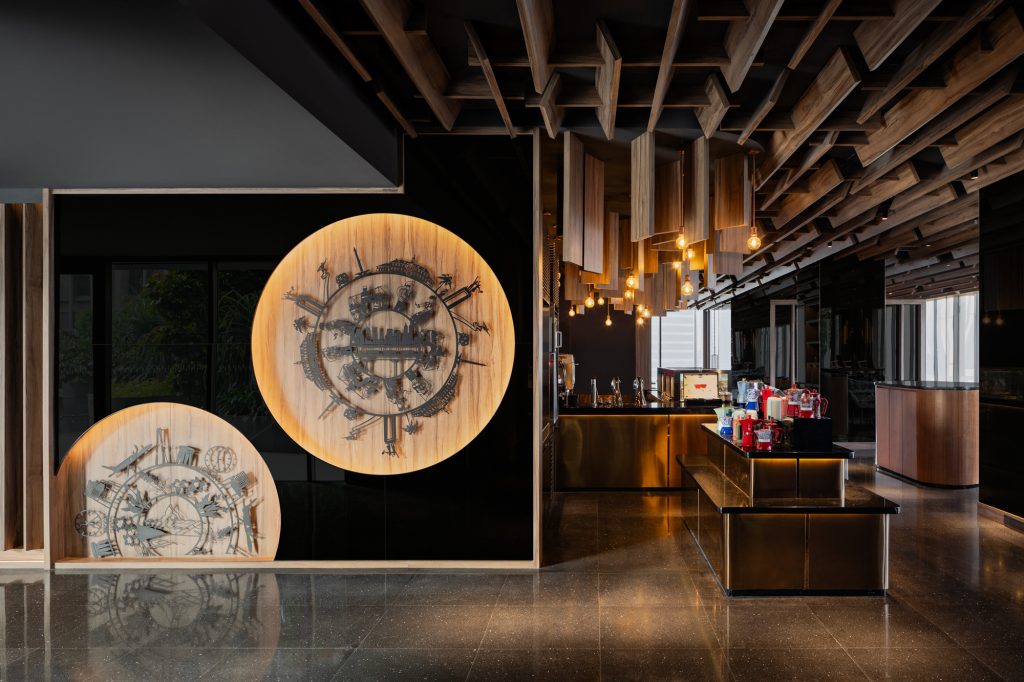
Dining options within the property enhance convenience. Restaurants serving breakfast, lunch, and dinner reduce meal planning burden. Properties with facilities like Embers Open-Fire Grill offer quality dining without leaving the building, particularly valuable after long workdays.
Contract Flexibility
Understanding cancellation policies, extension options, and rate guarantees prevents unexpected complications. Questions to clarify include:
- Minimum commitment period and early termination penalties
- Extension procedures when needing to prolong your stay
- Rate adjustment policies for contract renewals
- Deposit requirements and refund conditions
- Guest policies for hosting visitors
Flexible contracts command premium rates but provide peace of mind when future plans remain uncertain.
The Future of Extended-Stay Hospitality
The hotels-you-can-live-in segment continues evolving in response to changing work patterns, demographics, and guest expectations. Several trends are shaping the industry’s trajectory in 2026 and beyond.
Adaptive Reuse and Conversion Projects
Traditional hotels are increasingly converting to extended-stay formats, responding to market demand studies showing stronger performance in the long-stay sector. These conversions adapt existing infrastructure to residential configurations.
Design considerations for hotel-to-housing conversions focus on adding full kitchens, improving natural light, creating separation between sleeping and living areas, and enhancing soundproofing. Successful conversions balance residential functionality with hospitality service standards.
Technology Integration
Smart-home technology, mobile check-in, digital concierge services, and integrated communication platforms enhance the extended-stay experience. Guests control lighting, temperature, and entertainment through unified systems. Maintenance requests, housekeeping scheduling, and service communication occur via mobile apps.
Properties differentiate through technology that simplifies daily living while maintaining the personal touch that defines hospitality excellence.
Sustainability and Wellness Focus
Extended-stay guests increasingly prioritize environmental responsibility and health-conscious amenities. Properties respond with:
- Energy-efficient appliances and systems
- Water conservation measures
- Waste reduction and recycling programs
- Air quality monitoring and filtration
- Natural lighting and biophilic design
- Wellness facilities including fitness centers and meditation spaces
These features appeal particularly to younger demographics who incorporate sustainability values into accommodation decisions.
Community Building Features
Long-term residents seek social connection beyond what transient hotel guests require. Progressive properties create community through shared spaces, organized activities, and networking opportunities.
Coworking lounges, communal kitchens, rooftop gardens, and social events help residents build relationships. This community aspect differentiates premium extended-stay properties from purely transactional accommodations.
Practical Aspects of Long-Stay Hotel Living
Transitioning from traditional housing to hotels you can live in requires adjusting expectations and routines. Understanding practical realities ensures smoother adaptation.
Daily Living Logistics
Kitchen facilities enable home cooking, reducing dining costs and supporting dietary preferences. Shopping for groceries becomes routine rather than occasional. Most properties provide basic cookware, dishes, and utensils, though serious cooks may bring preferred tools.
Laundry management varies by property. In-unit washing machines offer maximum convenience. Shared facilities require schedule coordination. Some properties provide laundry service at additional cost.
Mail and Package Handling
Extended-stay properties typically accept mail and packages for residents. Establish forwarding arrangements from previous addresses and update important contacts with your temporary address. Understand the property’s package notification and pickup procedures.
For international assignments, consider using your employer’s address for official correspondence while using the hotel address for personal mail and deliveries.
Establishing Routine and Personalization
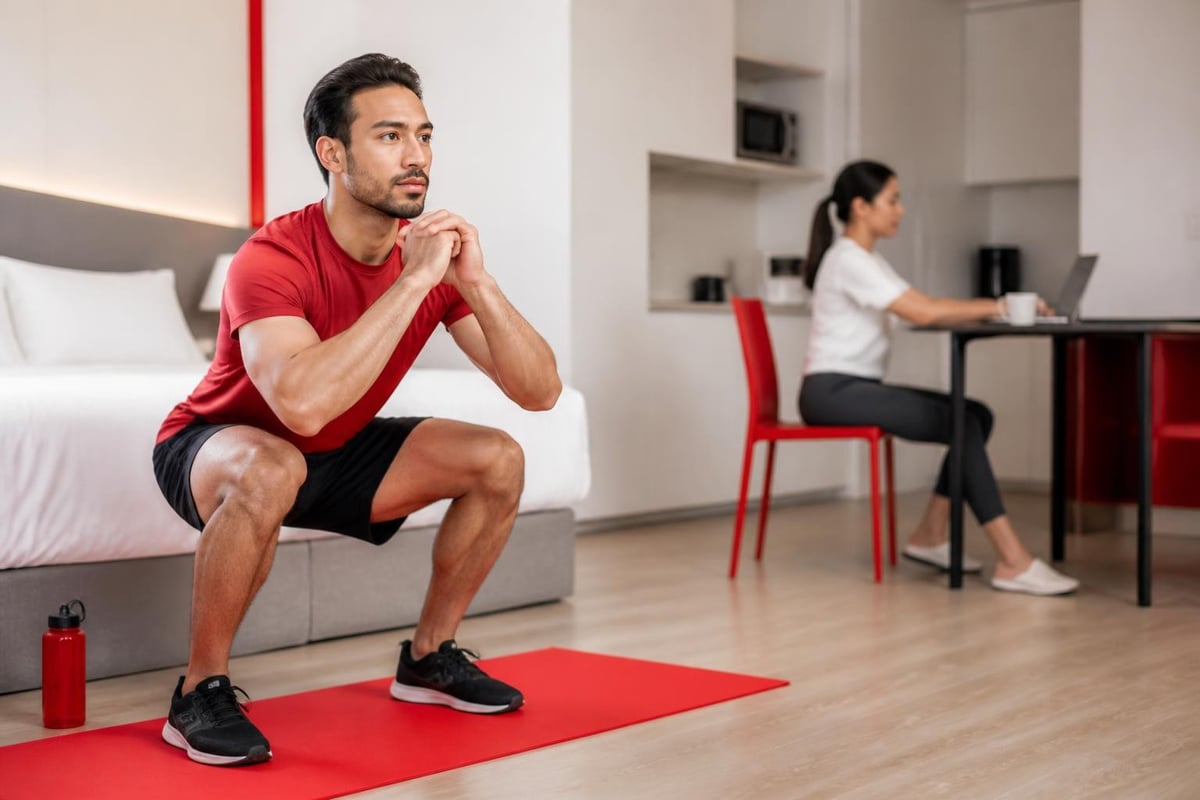
Transform the space from hotel room to home through personalization within property guidelines. Bring photographs, favorite coffee brands, familiar toiletries, and comfort items. Establish regular schedules for meals, exercise, and work.
Build relationships with hotel staff who become familiar faces during extended residence. Regular interaction with housekeeping, reception, and maintenance teams creates the social fabric missing from purely transactional hotel stays.
Managing Expenses and Budgets
Track spending carefully when living in hotels long-term. While inclusive pricing simplifies budgeting, incidental expenses accumulate quickly. Categories to monitor include:
- Dining beyond included meals or in-unit cooking
- Additional housekeeping or services
- Parking fees if applicable
- Guest fees for hosting visitors
- Premium amenity access
- Personal laundry services
Corporate travelers should understand their company’s extended-stay policies, per-diem allowances, and reimbursement procedures. Maintain detailed expense documentation for reporting and tax purposes.
Regional Considerations: Extended-Stay Markets Worldwide
Hotels you can live in have gained popularity globally, with regional variations reflecting local market conditions, regulatory environments, and cultural preferences. Understanding regional differences helps set appropriate expectations.
Asia-Pacific Markets
Asian cities with significant expatriate populations and multinational corporate presence lead in serviced apartment development. Jakarta, Singapore, Hong Kong, Bangkok, and Shanghai offer extensive extended-stay options catering to business travelers and diplomatic personnel.
Properties in these markets emphasize security, proximity to international schools and business districts, and cultural amenities familiar to Western residents. Service standards typically exceed global averages, reflecting hospitality traditions and competitive markets.
North American Extended-Stay
The United States pioneered the extended-stay hotel concept, with established brands operating thousands of properties. The market segments into economy, midscale, and upscale tiers, each serving distinct price points and service expectations.
Recent trends show increasing interest in adaptive reuse projects converting hotels to housing, particularly in markets facing affordable housing shortages. These conversions serve different populations than traditional extended-stay hotels but demonstrate market flexibility.
European Serviced Apartments
European markets favor serviced apartments over hotel-branded extended-stay properties. Cities like London, Paris, Berlin, and Amsterdam offer extensive furnished accommodation options, often in converted residential buildings rather than purpose-built hotel structures.
Regulatory environments vary significantly across European markets, affecting minimum stay requirements, tenant protections, and operational models. Research local regulations when selecting accommodations for extended European assignments.
Making Hotels Your Home: Preparation and Mindset
Successfully transitioning to living in hotels requires both practical preparation and mental adjustment. The experience differs fundamentally from vacation stays or occasional business travel.
Pre-Arrival Planning
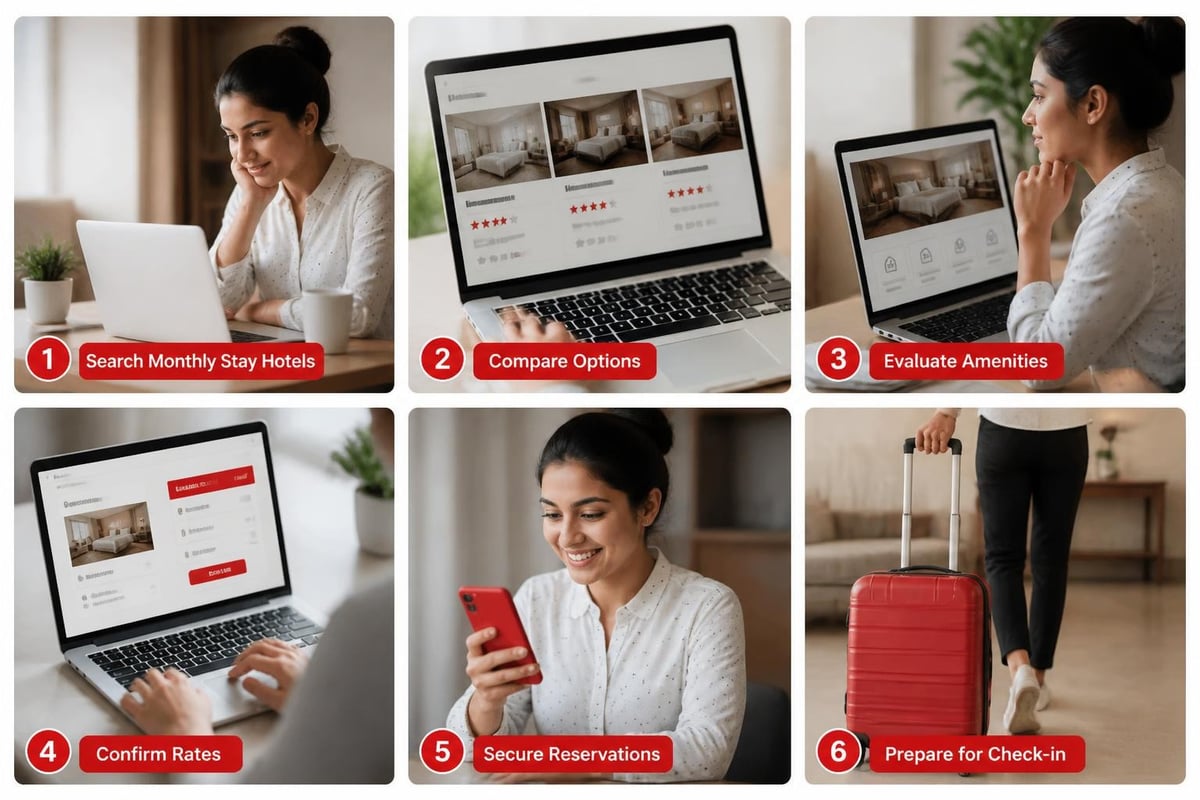
Research properties thoroughly before committing. Virtual tours, detailed floor plans, and comprehensive amenity lists help set accurate expectations. Read recent guest reviews, focusing on comments from extended-stay residents rather than overnight travelers.
Clarify all contract terms before signing. Understand payment schedules, deposit requirements, cancellation policies, and included services. Request written confirmation of agreed rates and terms.
What to Pack for Extended Stays
Balance bringing familiar items with avoiding excess. Essential categories include:
Kitchen and dining:
- Favorite cooking tools or specialty equipment
- Preferred coffee or tea preparation items
- Spices and condiments not typically provided
Personal items:
- Sufficient clothing for climate and professional requirements
- Favorite toiletries and personal care products
- Medications and health-related items
Work and productivity:
- Computer equipment and peripherals
- Reference materials and supplies
- Ergonomic accessories for workspace comfort
Comfort and personalization:
- Photographs and meaningful objects
- Favorite entertainment media
- Exercise equipment if fitness facilities are inadequate
Cultural Adaptation for International Stays
Extended stays in foreign countries require cultural sensitivity and adaptation beyond tourist interactions. Learn basic local language phrases, understand business customs, and respect cultural norms. Building relationships with local staff provides cultural insights and practical assistance.
Join expatriate communities and networking groups relevant to your profession or interests. Many cities host regular meetups, professional associations, and social clubs that facilitate integration and provide support systems for international residents. Check local events and activities to discover community engagement opportunities.
Maintaining Work-Life Balance
The convenience of hotels you can live in can blur boundaries between work and personal time, particularly for remote workers. Establish routines that separate professional and personal activities. Use different spaces within your apartment for work and relaxation when possible.
Take advantage of hotel amenities to decompress. Regular gym visits, pool time, or exploring surrounding neighborhoods create structure and prevent isolation. Maintain social connections through video calls with distant friends and family while building new relationships locally.
Hotels you can live in offer compelling solutions for modern mobility, combining residential comfort with hospitality services across flexible timeframes. Whether relocating for business, transitioning between permanent homes, or embracing location-independent lifestyles, extended-stay accommodations eliminate the complexity of traditional housing while providing professional support and comprehensive amenities. For those seeking fully furnished serviced apartments in Jakarta’s central business district, Swissôtel Living Jakarta Mega Kuningan delivers premium accommodations with 240 residences available for daily, weekly, monthly, and yearly stays, positioned for immediate access to Kuningan, SCBD, Sudirman business districts, embassies, shopping destinations, and Soekarno-Hatta International Airport.