
Extended Stay Hotel Prices: Complete Cost Guide 2026
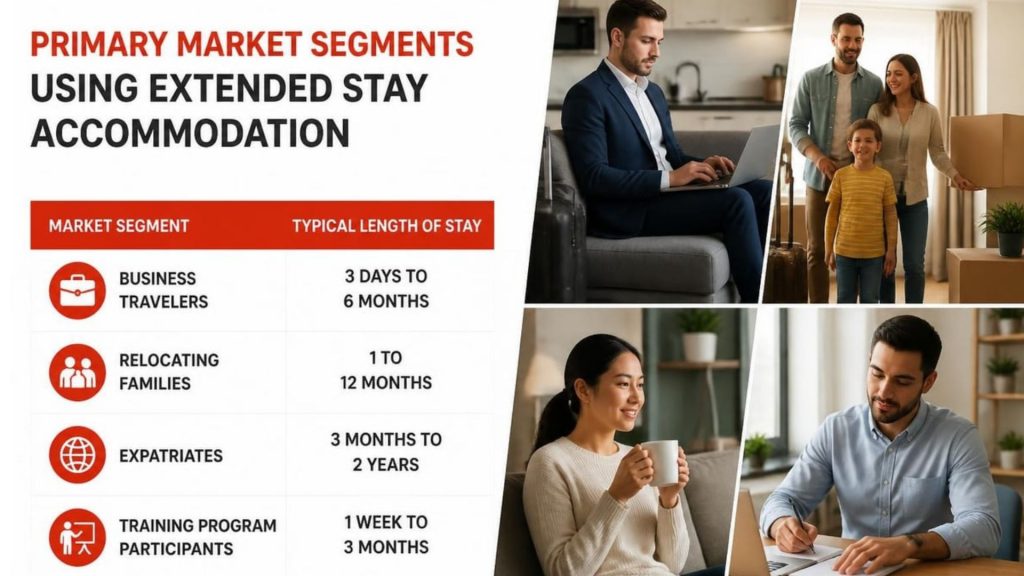
Understanding extended stay hotel prices requires analyzing multiple pricing tiers, contract durations, and value propositions that traditional hotels cannot match. Business travelers, relocating families, and expatriates increasingly seek accommodations that combine the service standards of hotels with the functionality of fully furnished apartments. In 2026, the extended stay segment continues to evolve, with pricing structures reflecting length of stay, location, amenities, and seasonal demand patterns. Markets such as Jakarta, Singapore, and other major Asian business hubs demonstrate distinct pricing dynamics shaped by corporate demand and expatriate populations.
Understanding Extended Stay Pricing Structures
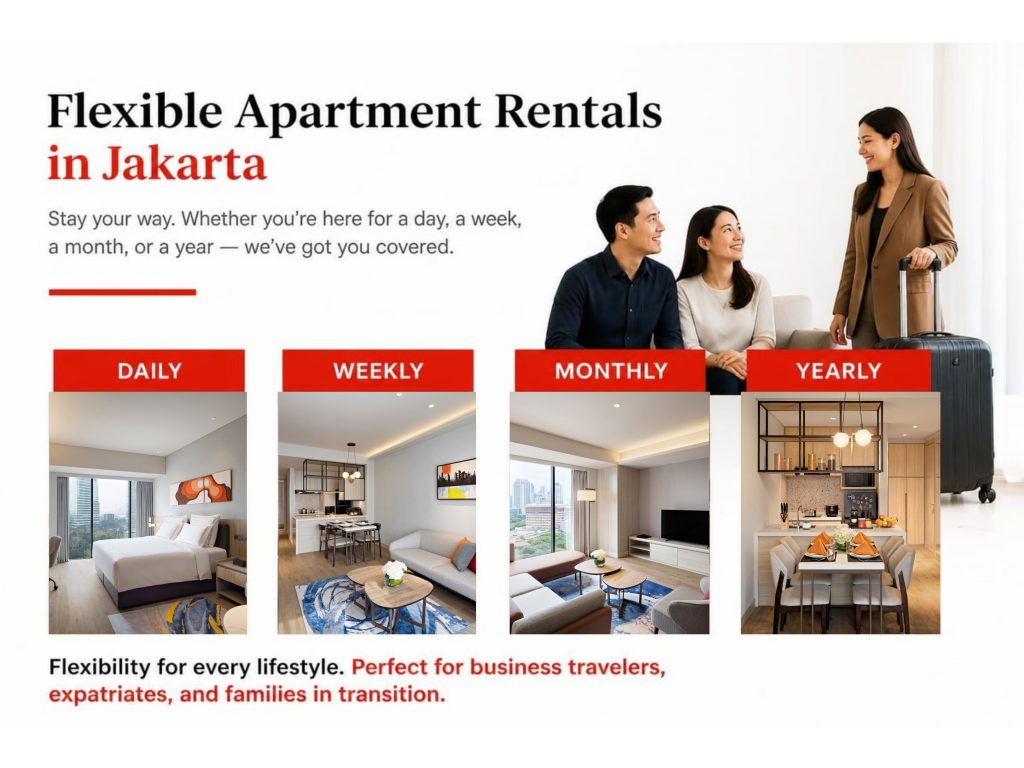
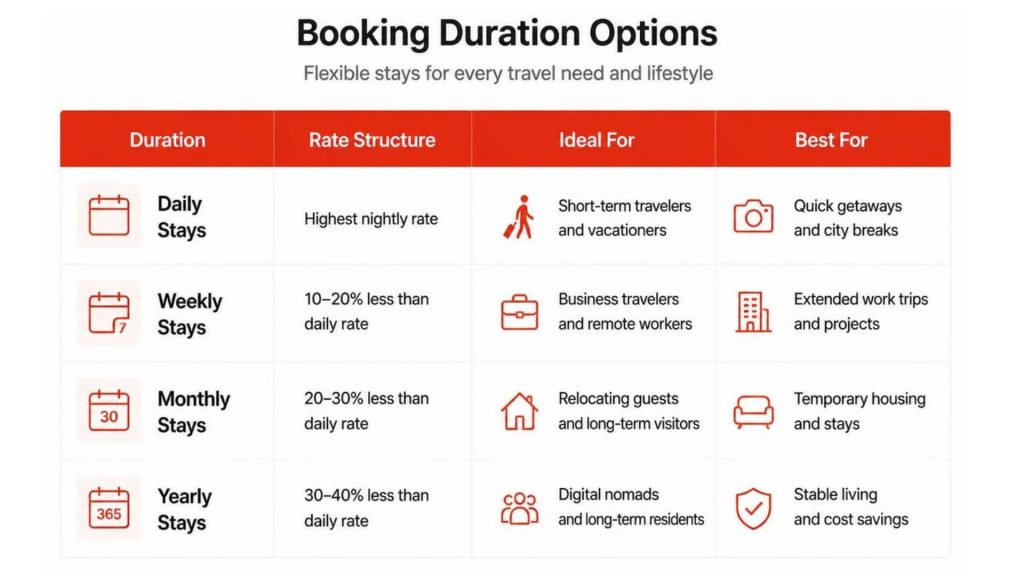
Extended stay hotel prices differ fundamentally from traditional transient hotel rates because they account for longer occupancy periods and reduced operational costs per guest night. Properties typically offer tiered pricing that rewards commitment, with daily rates decreasing substantially as guests book weekly, monthly, or annual contracts.
Daily vs. Weekly vs. Monthly Rate Comparison
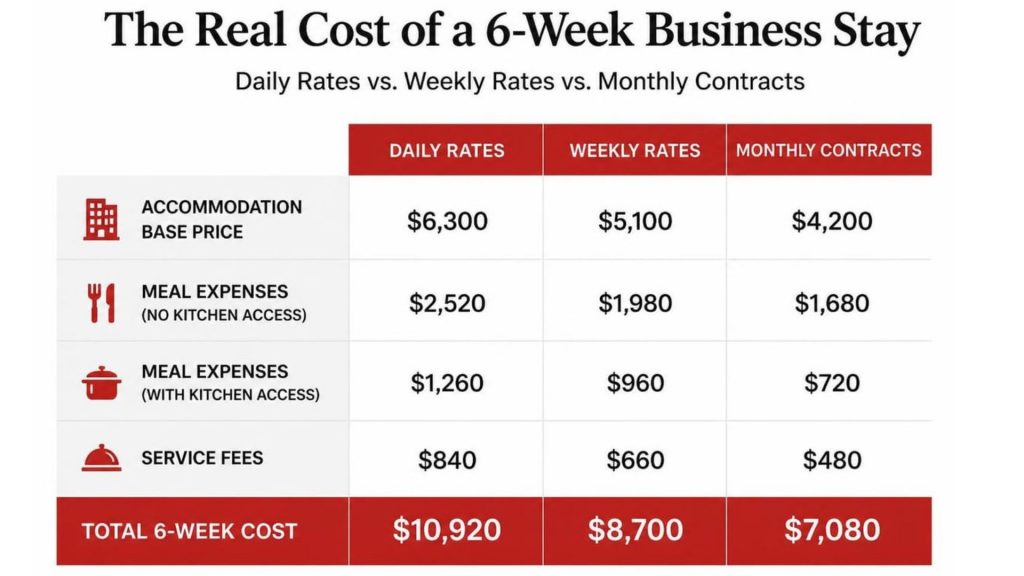
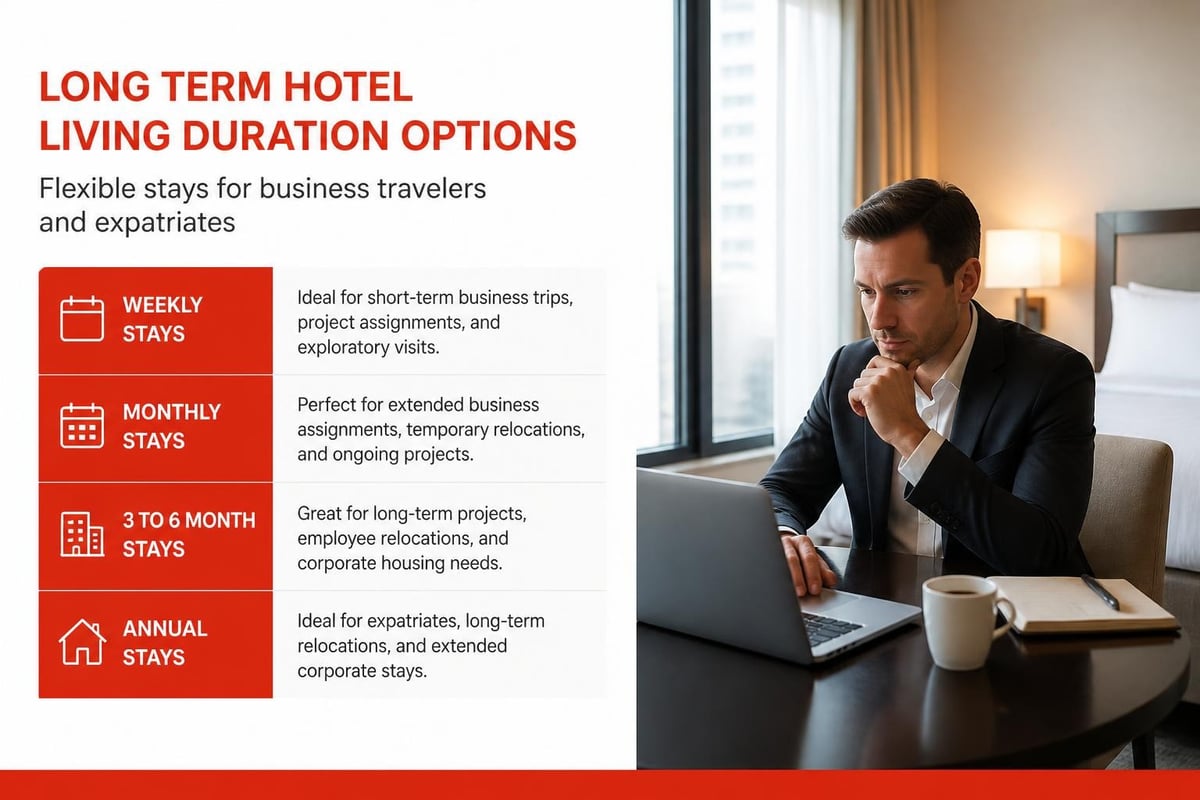
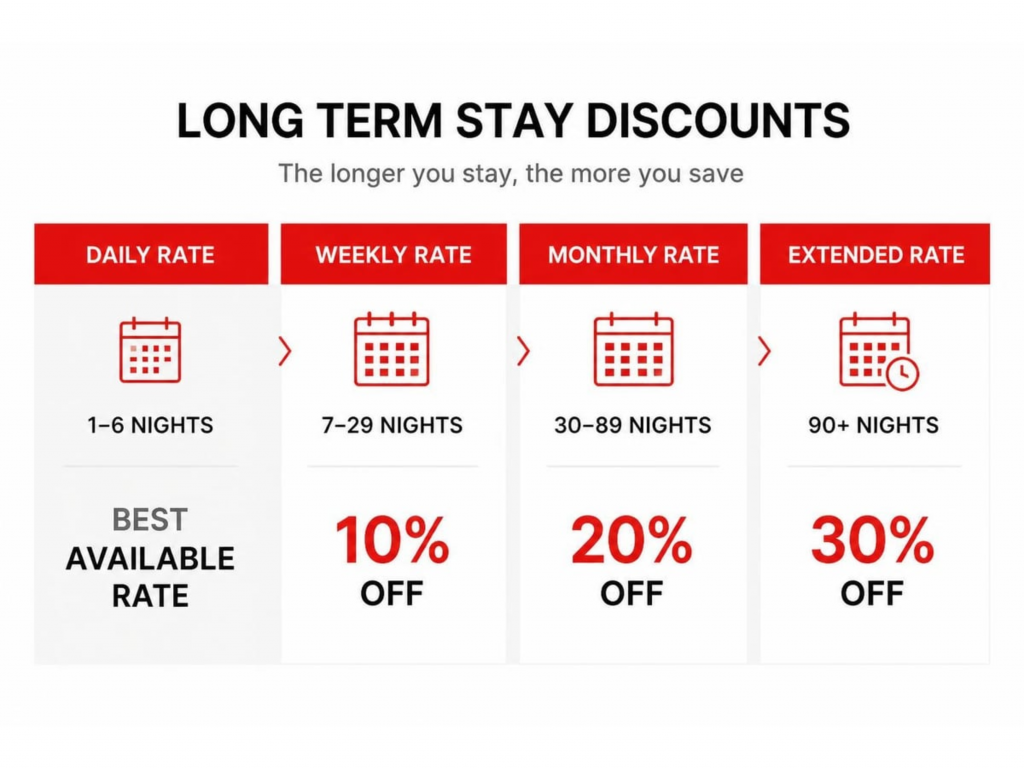
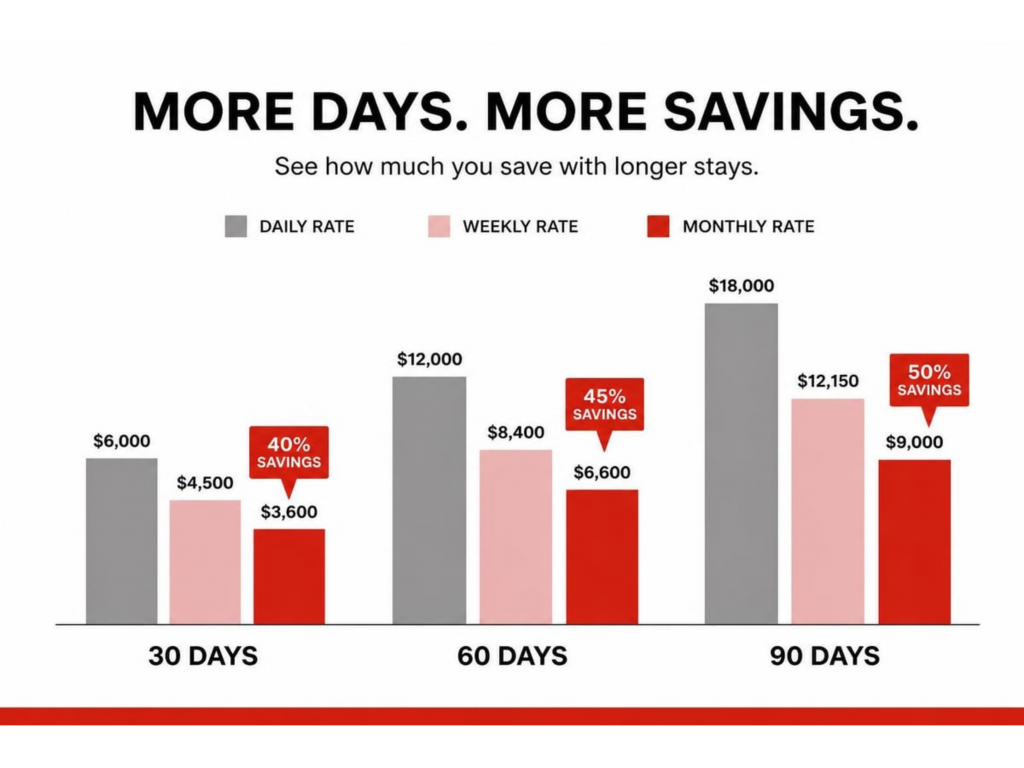
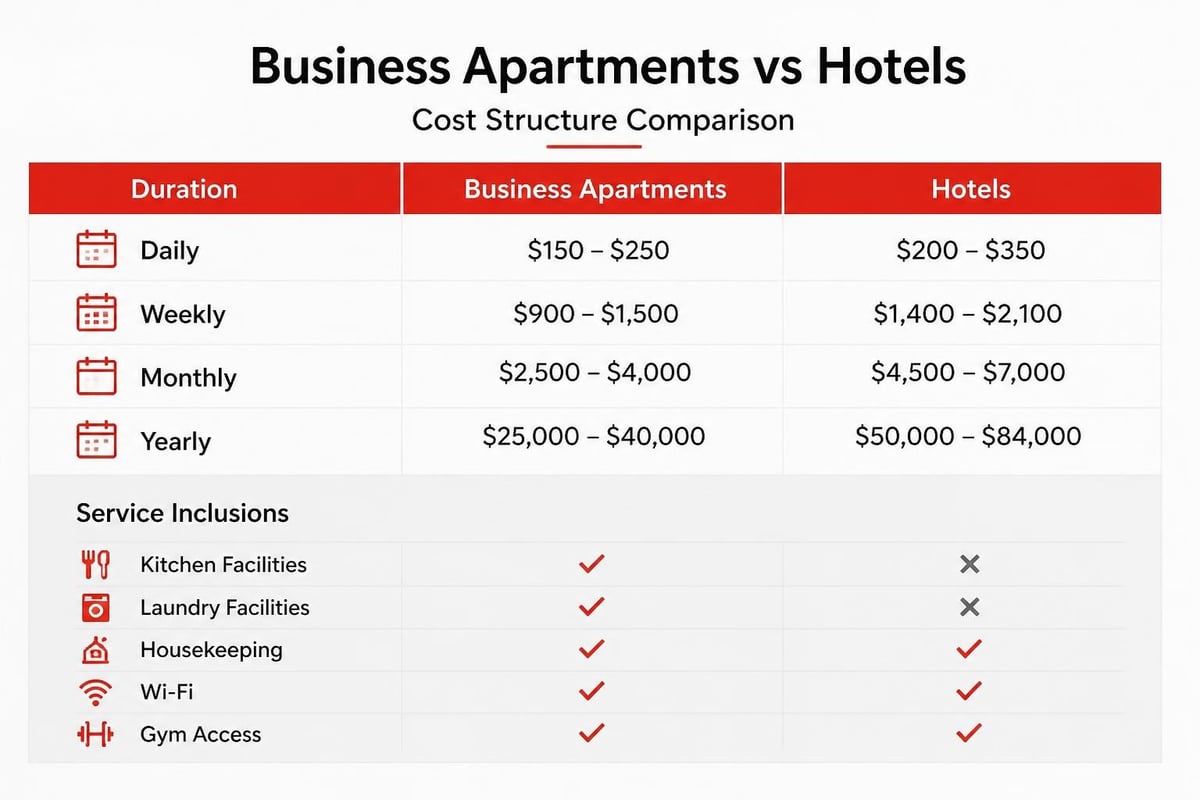
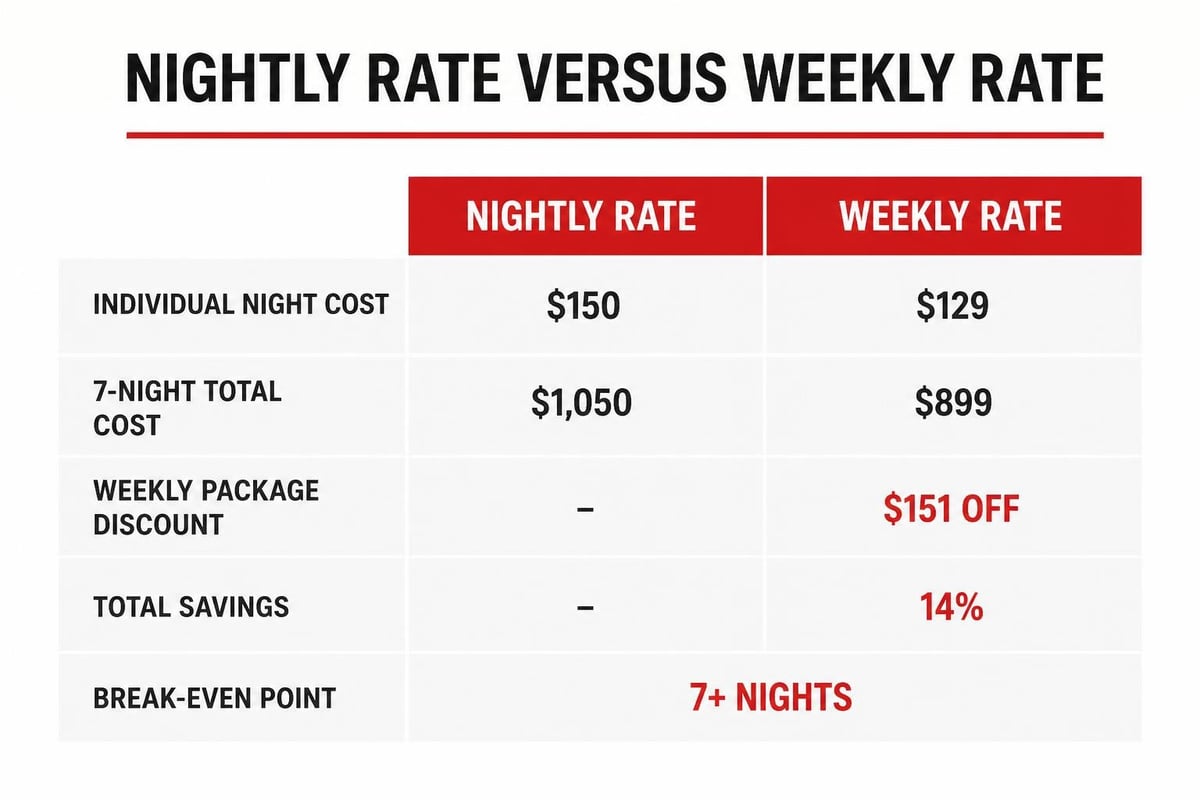
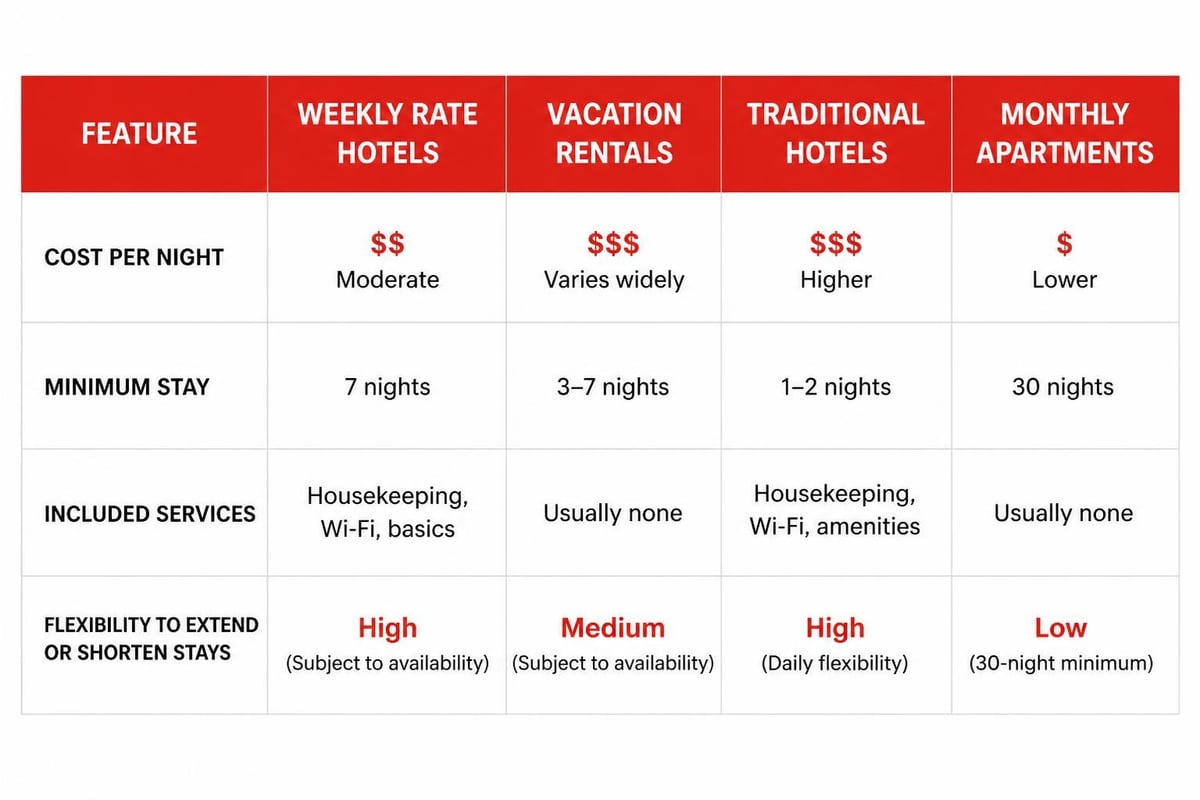
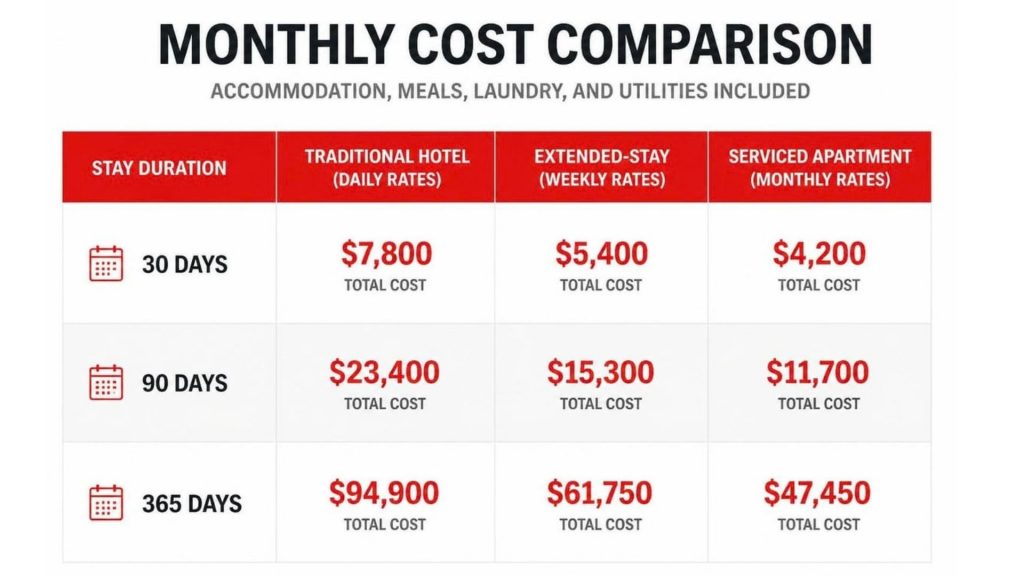
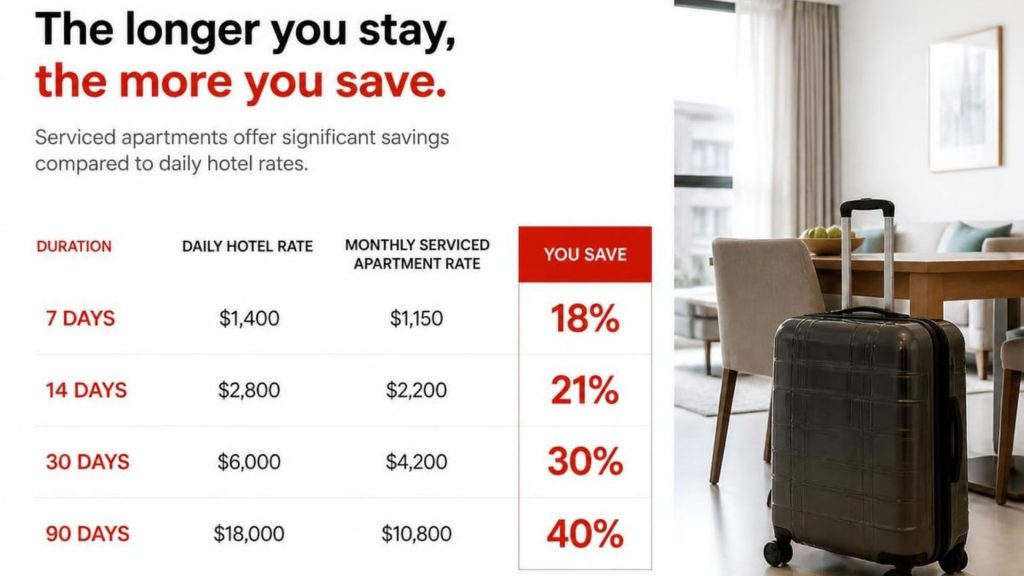
The pricing ladder in extended stay properties creates clear incentives for longer commitments. Daily rates serve walk-in guests and short-term needs but represent the highest per-night cost. Weekly rates typically offer 10-20% savings compared to seven individual nights, while monthly contracts deliver 30-50% reductions versus thirty daily bookings.
| Stay Duration | Typical Discount vs. Daily Rate | Best For |
|---|---|---|
| 1-6 nights | 0% (standard daily rate) | Short business trips, interviews |
| 7-29 nights | 15-25% | Project assignments, temporary relocation |
| 30-89 nights | 35-50% | Extended projects, interim housing |
| 90+ nights | 50-65% | Expatriate assignments, long-term corporate stays |
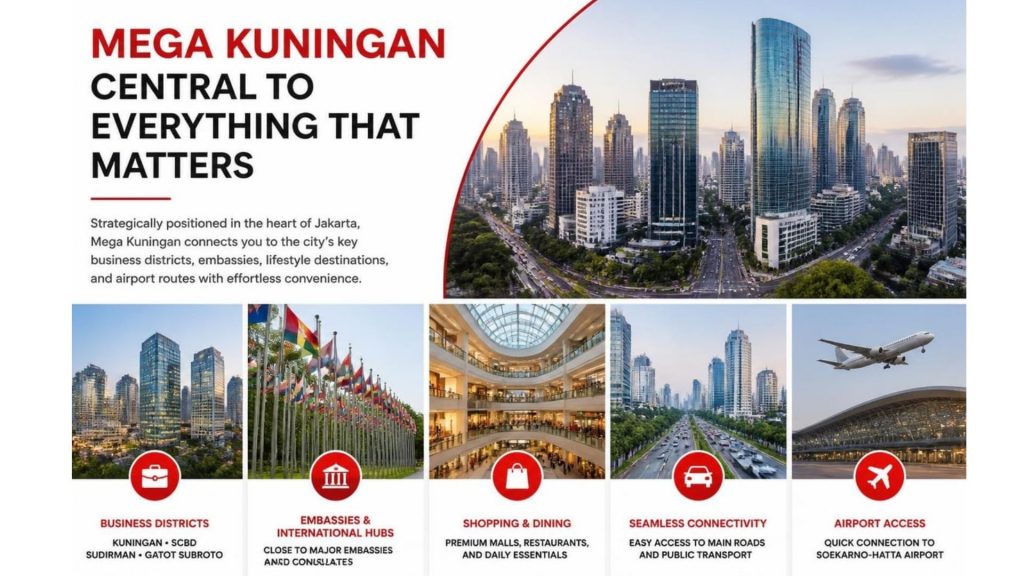
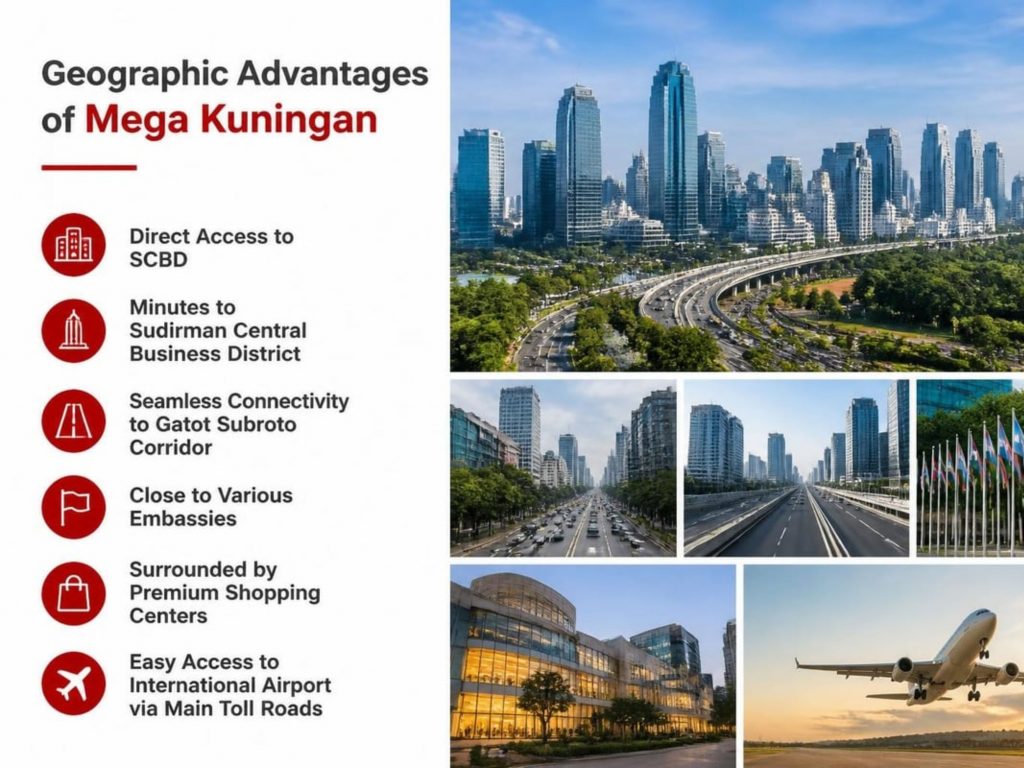
Properties in central business districts like Mega Kuningan adjust their pricing based on proximity to corporate offices, embassies, and transportation infrastructure. According to JLL’s extended-stay outlook, properties near major business centers maintain premium positioning while delivering superior value through included services and amenities.

What Drives Extended Stay Hotel Prices
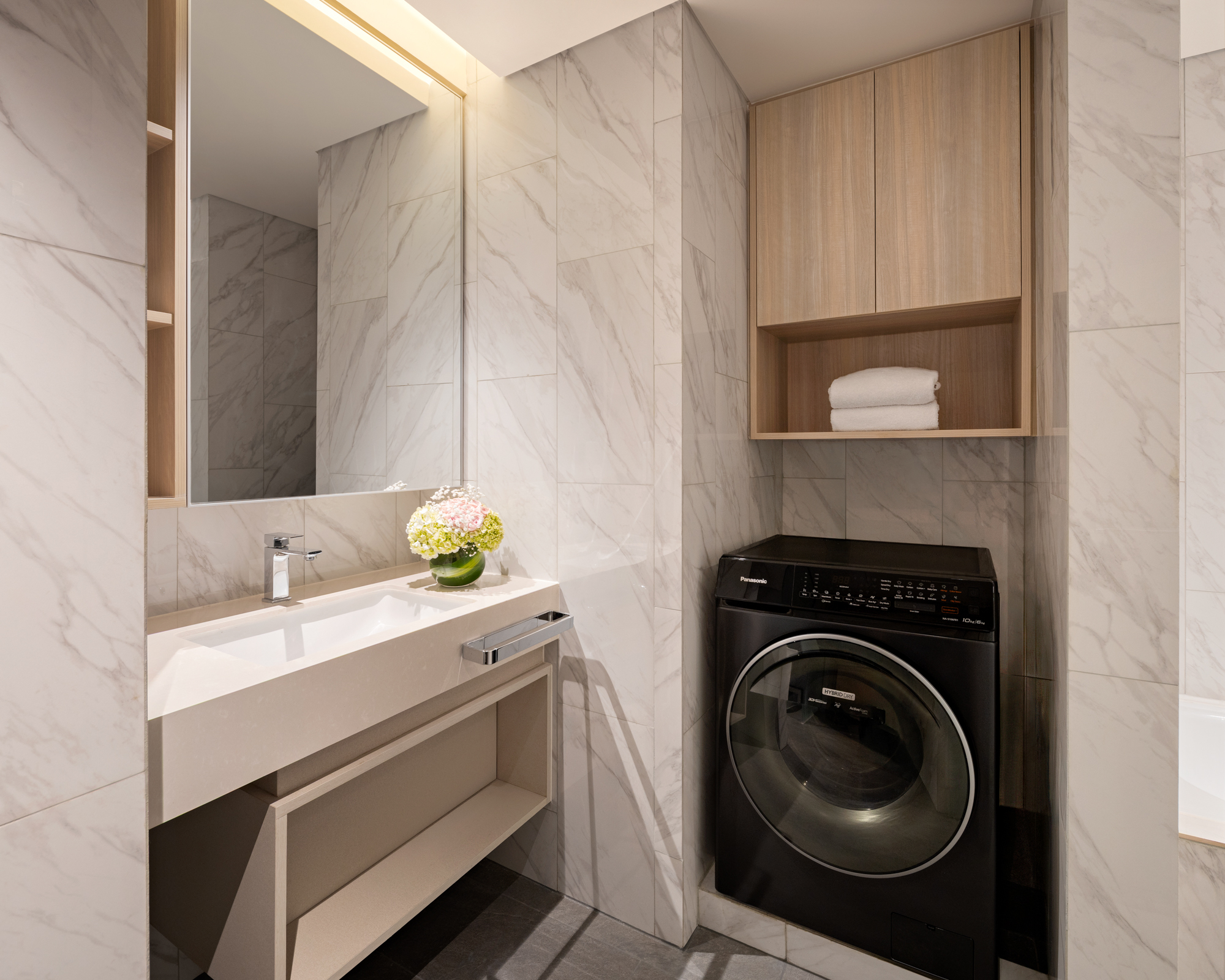
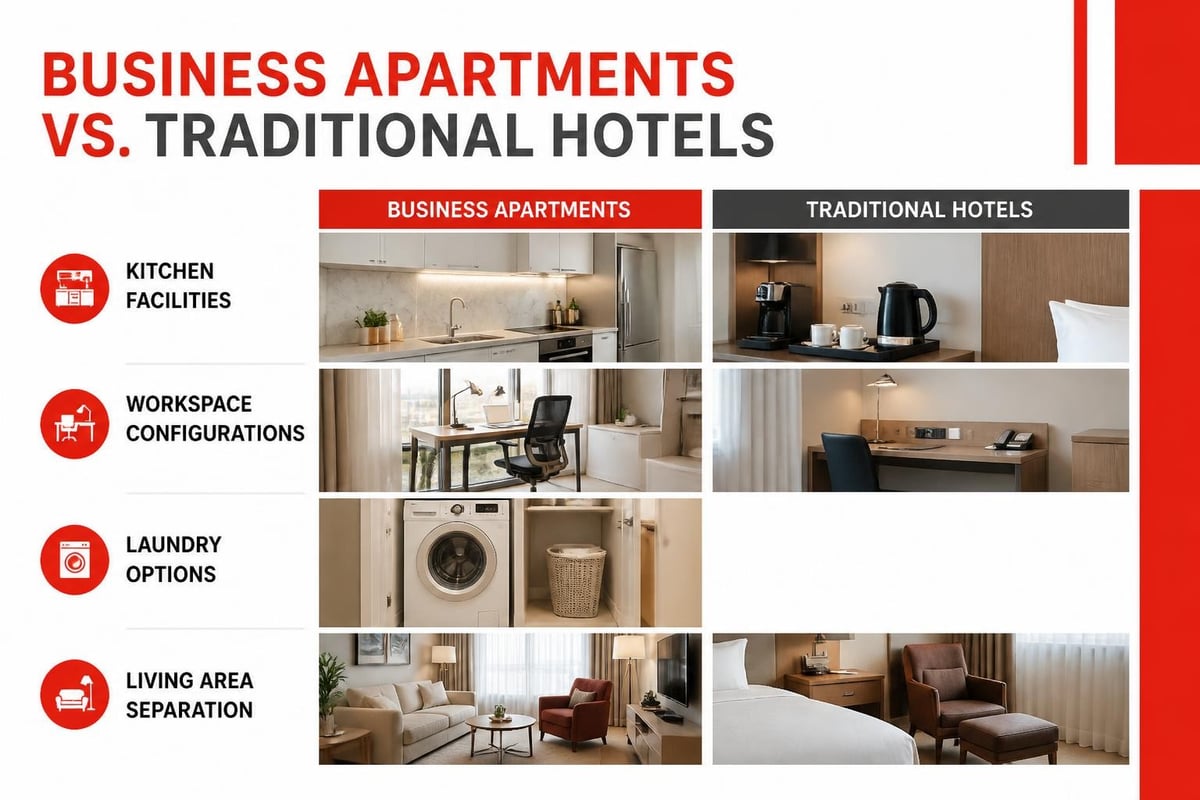
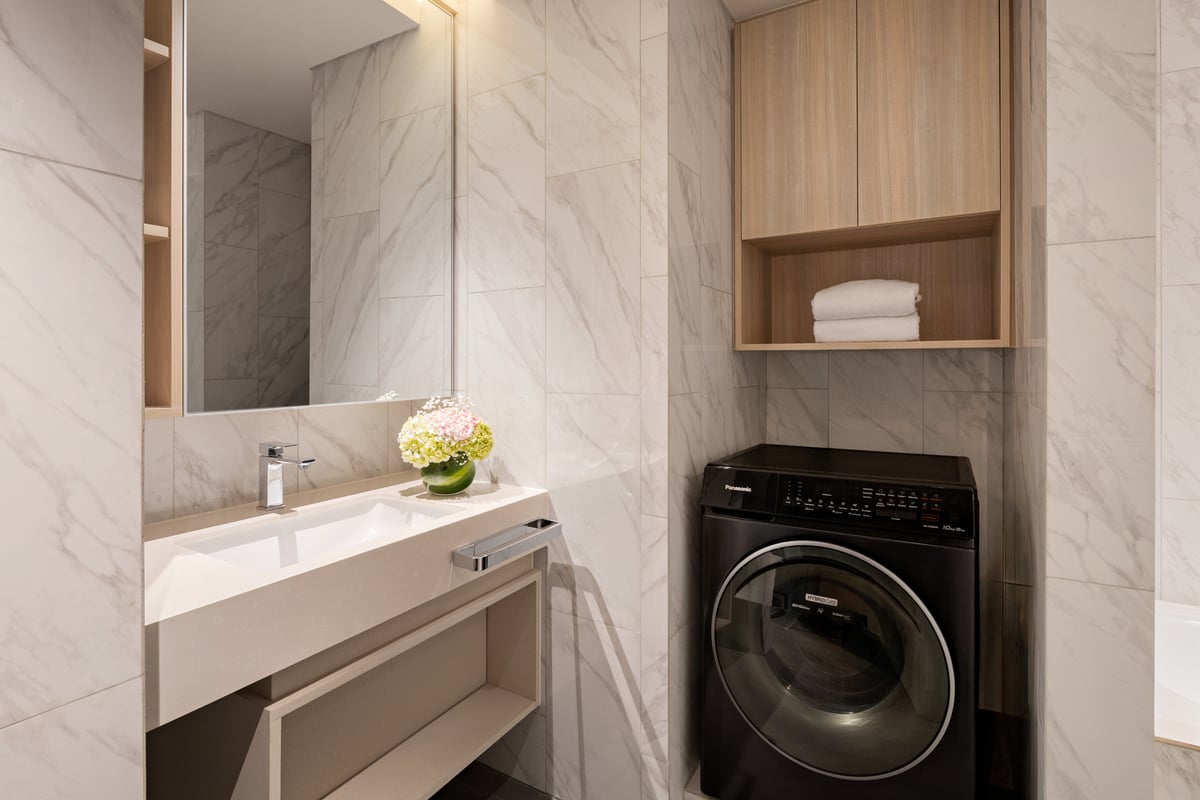
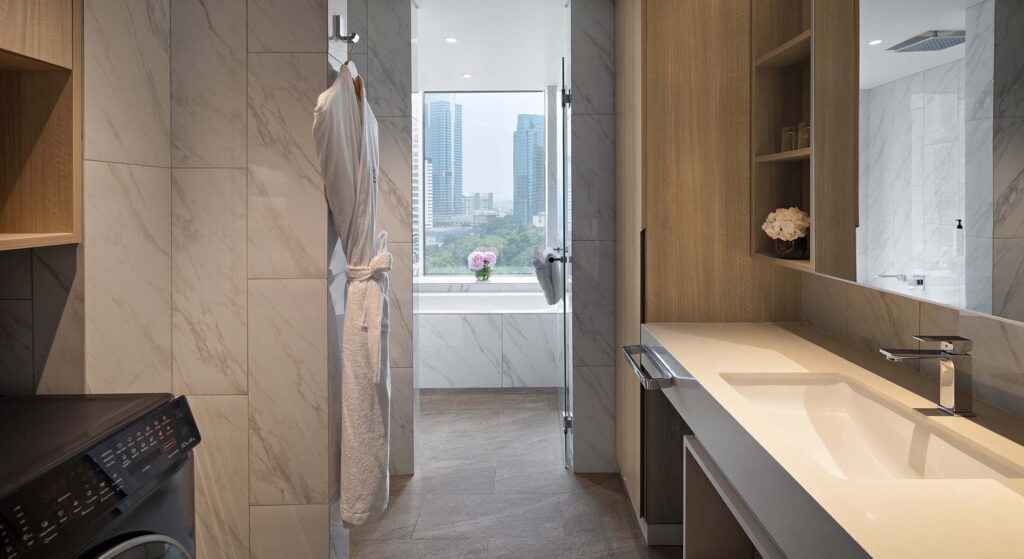
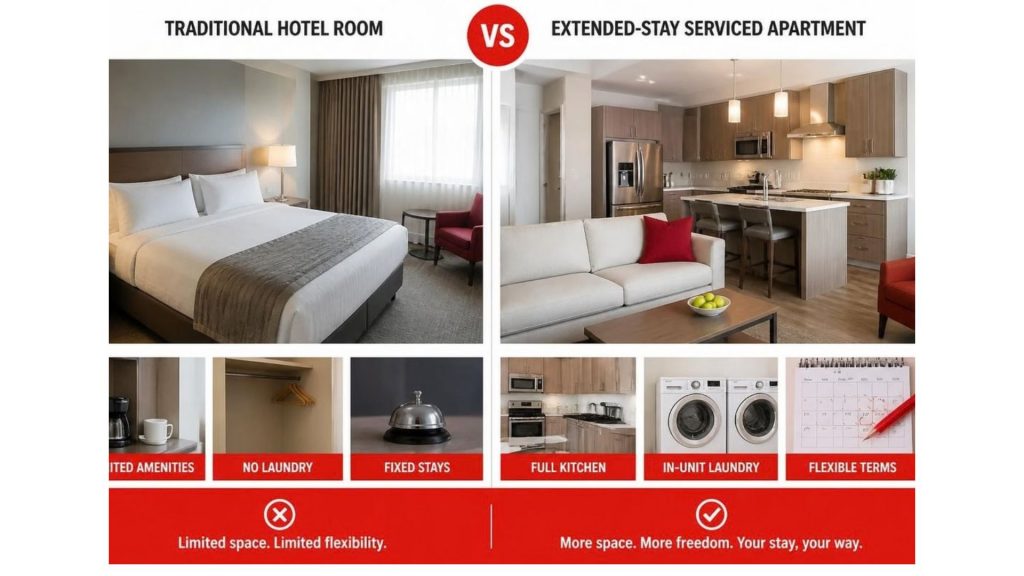
Several factors influence pricing beyond simple occupancy duration. Location within a city’s business district commands premium rates, particularly when properties offer access to multiple commercial zones. Fully furnished apartments with separate living spaces, equipped kitchens, and in-unit laundry facilities justify higher base rates than standard hotel rooms.
Key pricing drivers include:
- Square footage and apartment configuration (studio, one-bedroom, two-bedroom, three-bedroom)
- Kitchen equipment quality and completeness (full-size appliances vs. kitchenette)
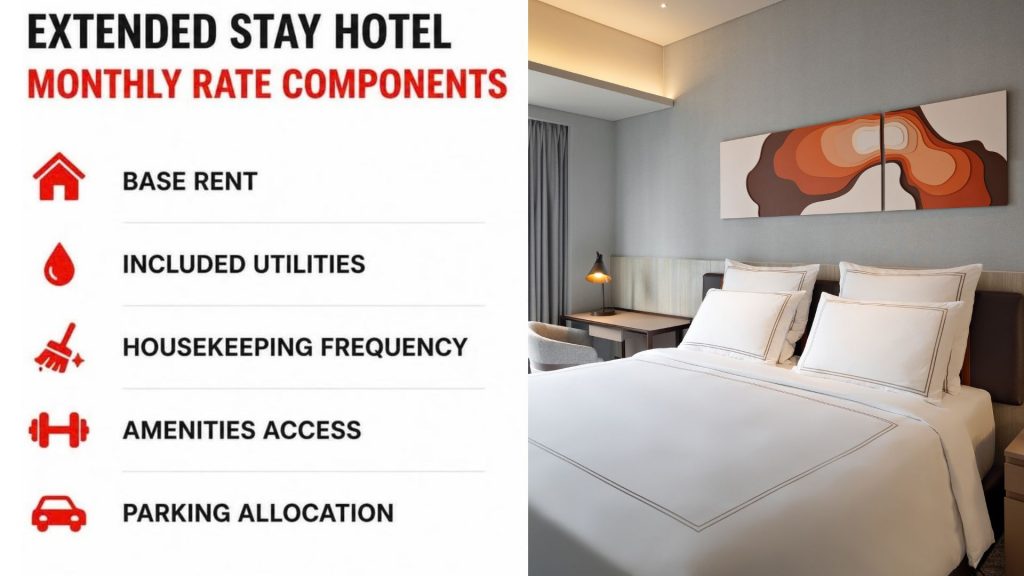
- Included utilities, internet, and housekeeping frequency
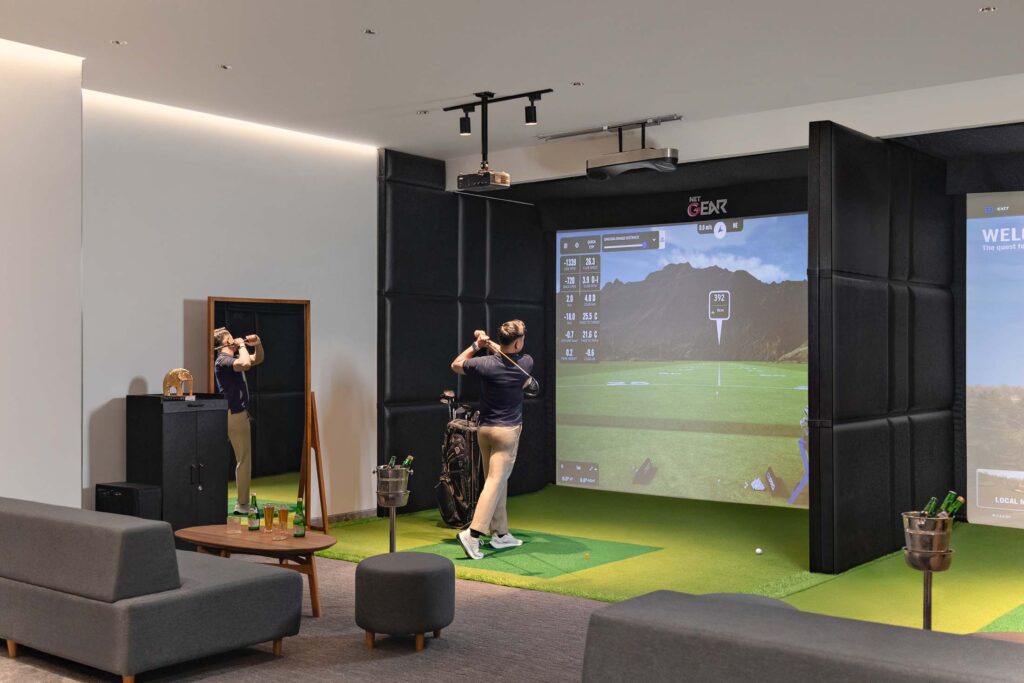
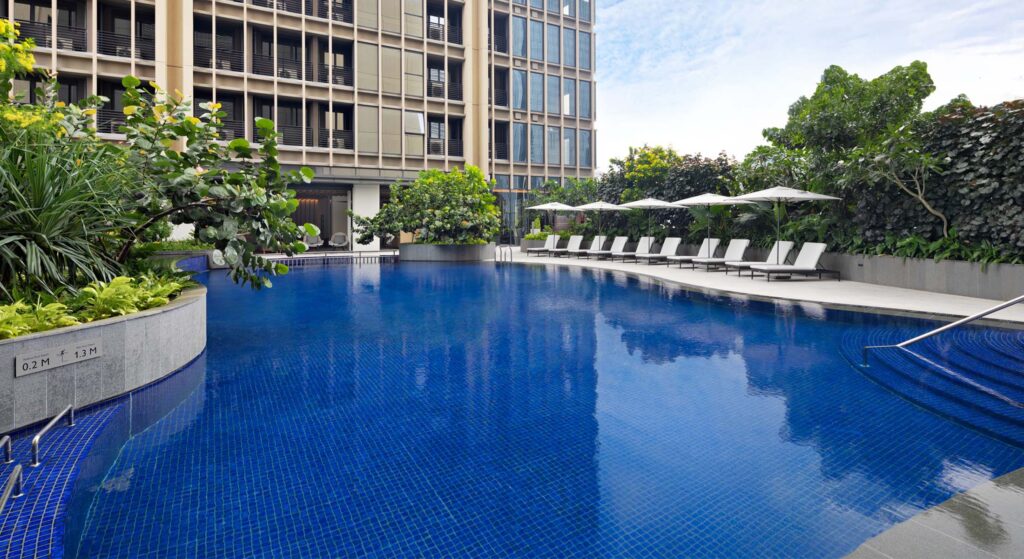
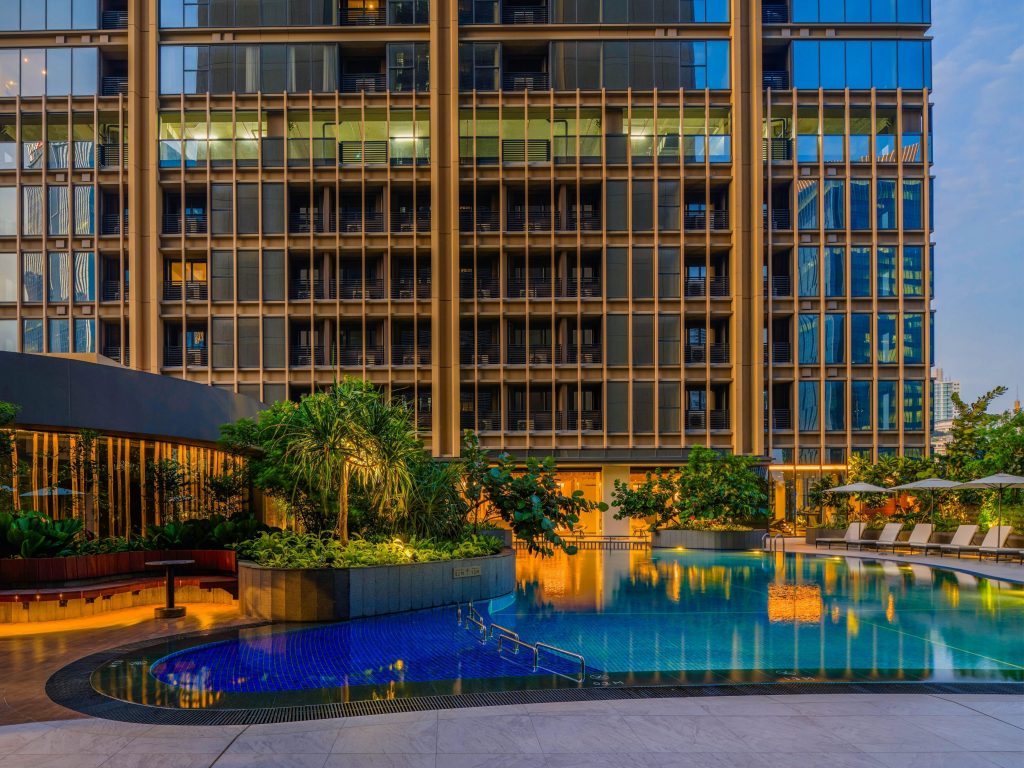
- Access to fitness centers, pools, business centers, and meeting rooms
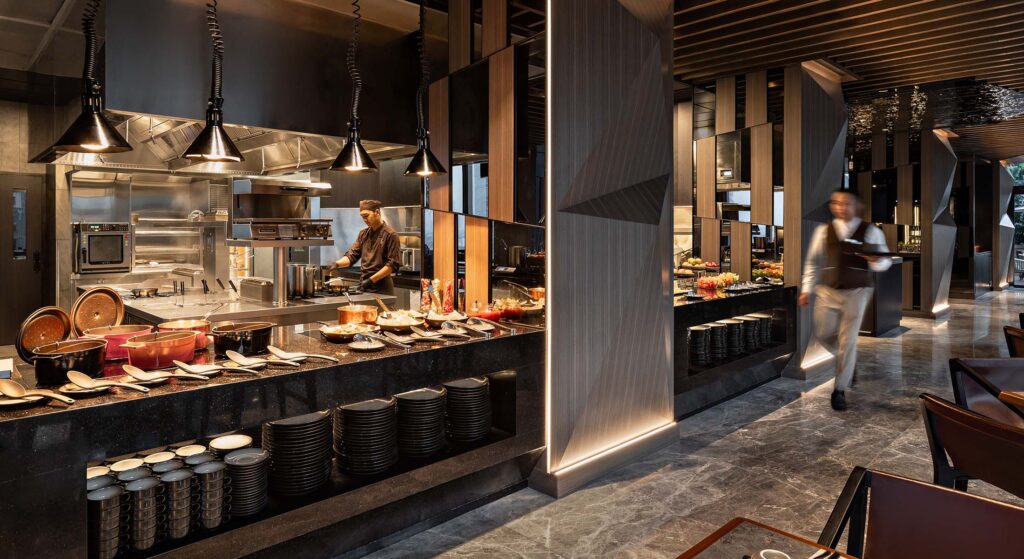
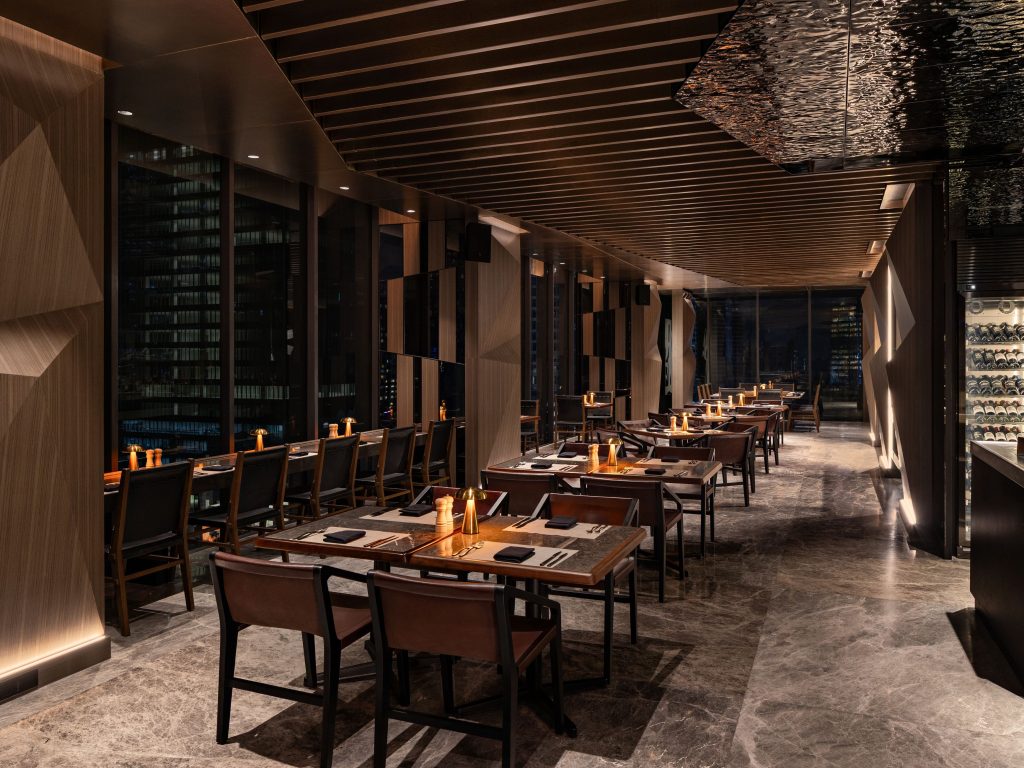
- On-site dining options and meal plan availability
- Proximity to corporate offices, embassies, and international schools
Properties operated by international hotel groups often price 20-40% higher than independent extended stay hotels due to brand standards, loyalty program access, and consistent service delivery. The Highland Group research shows that branded extended stay properties maintain occupancy premiums while commanding higher average daily rates across all stay durations.
Market Pricing Benchmarks by Region
Extended stay hotel prices vary significantly across global markets, with Asian financial centers demonstrating distinct patterns compared to North American or European markets. Jakarta’s serviced apartment sector reflects Indonesia’s growing expatriate population and multinational corporate presence.
Jakarta Extended Stay Market Overview
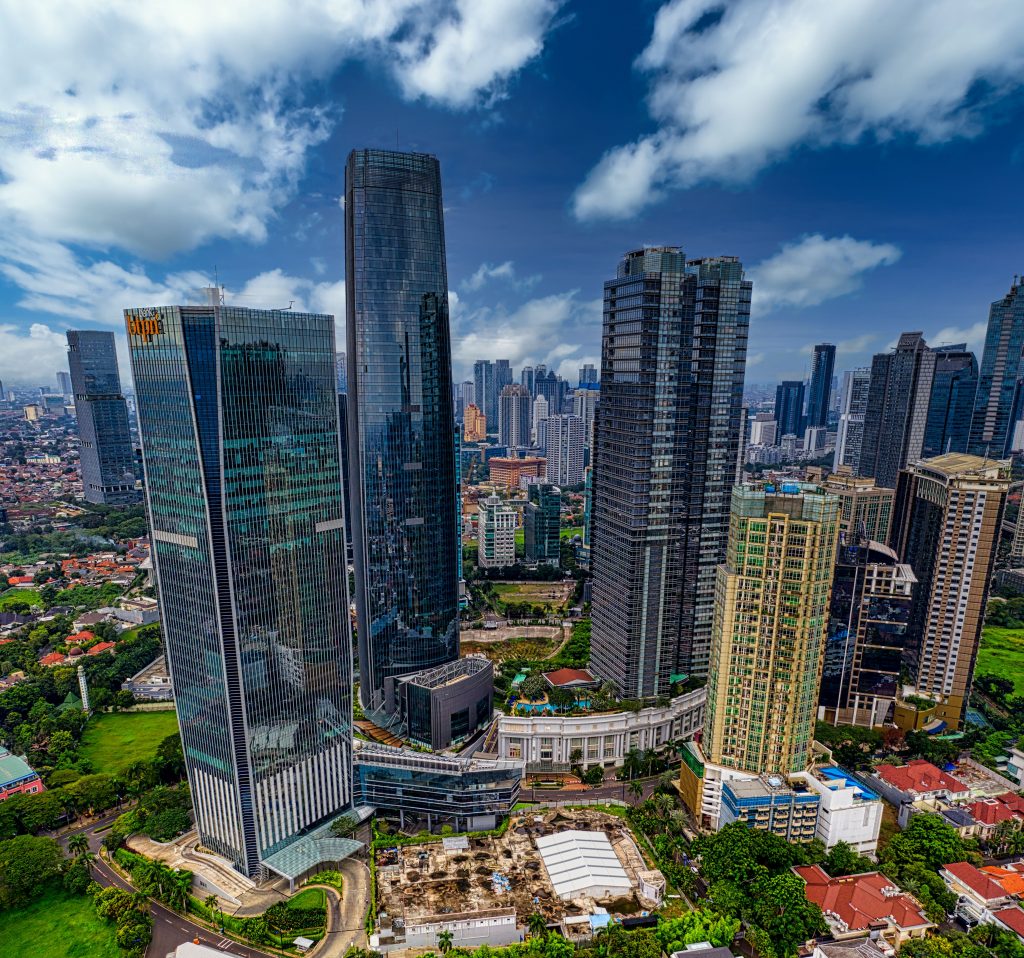
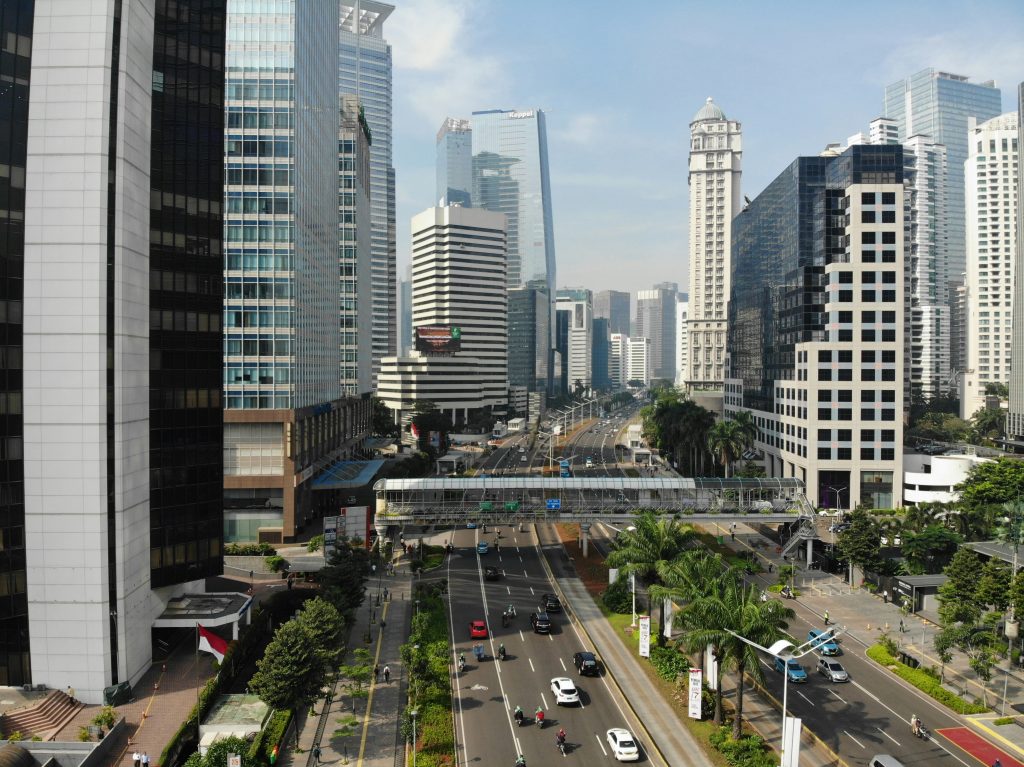
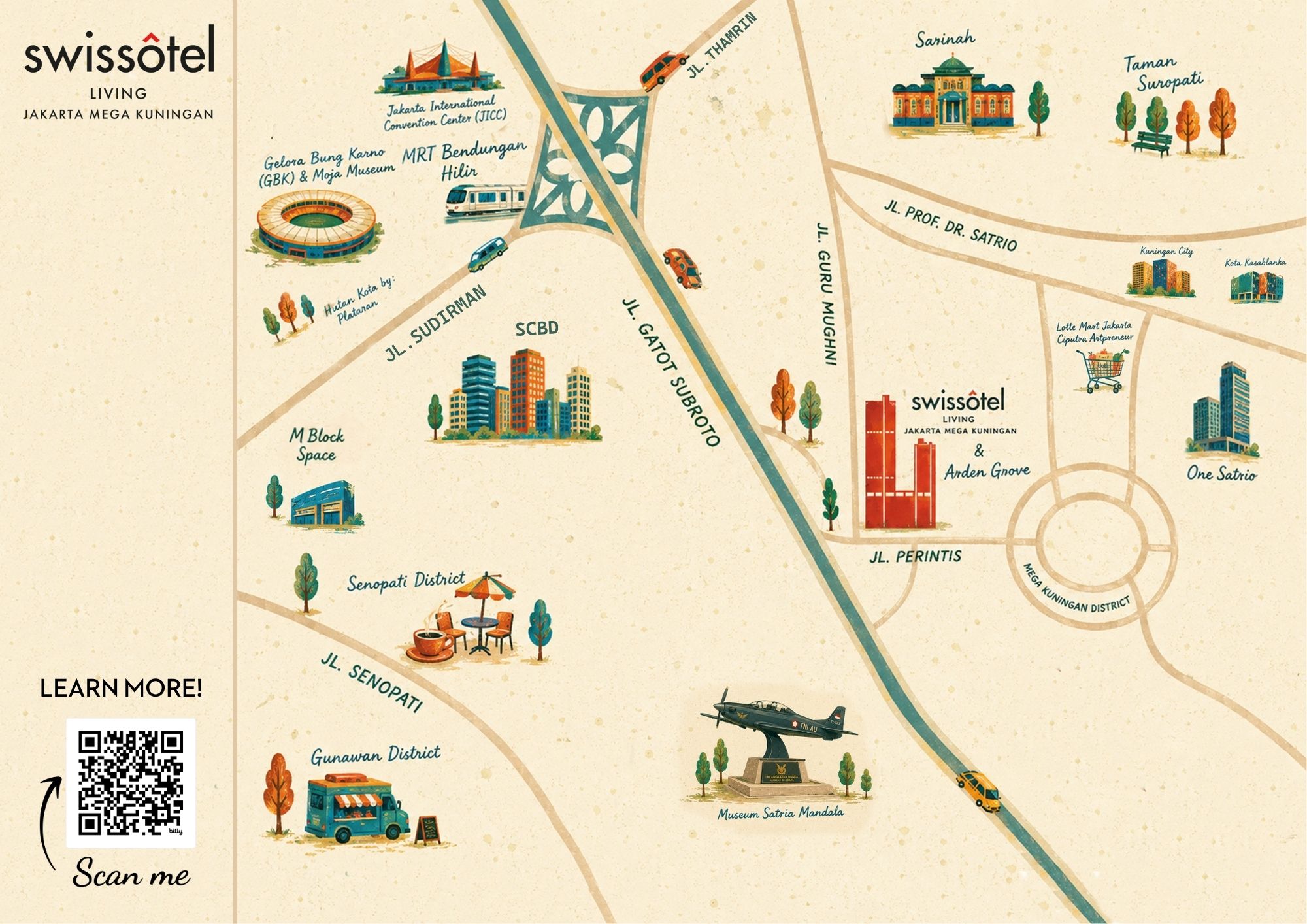
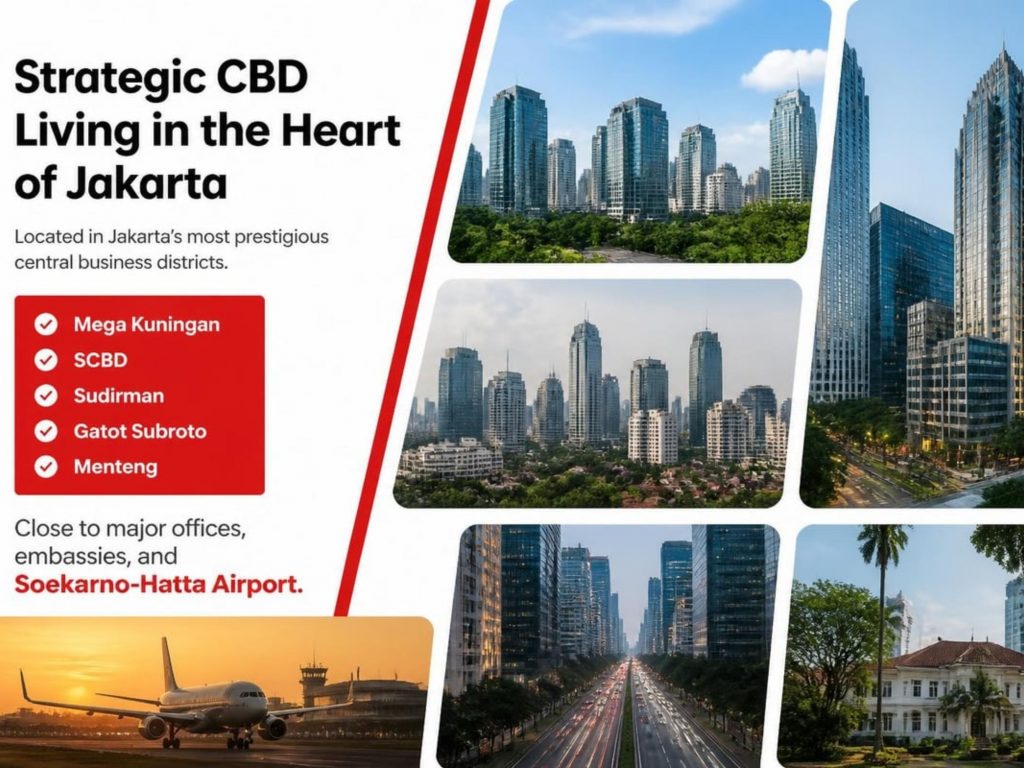
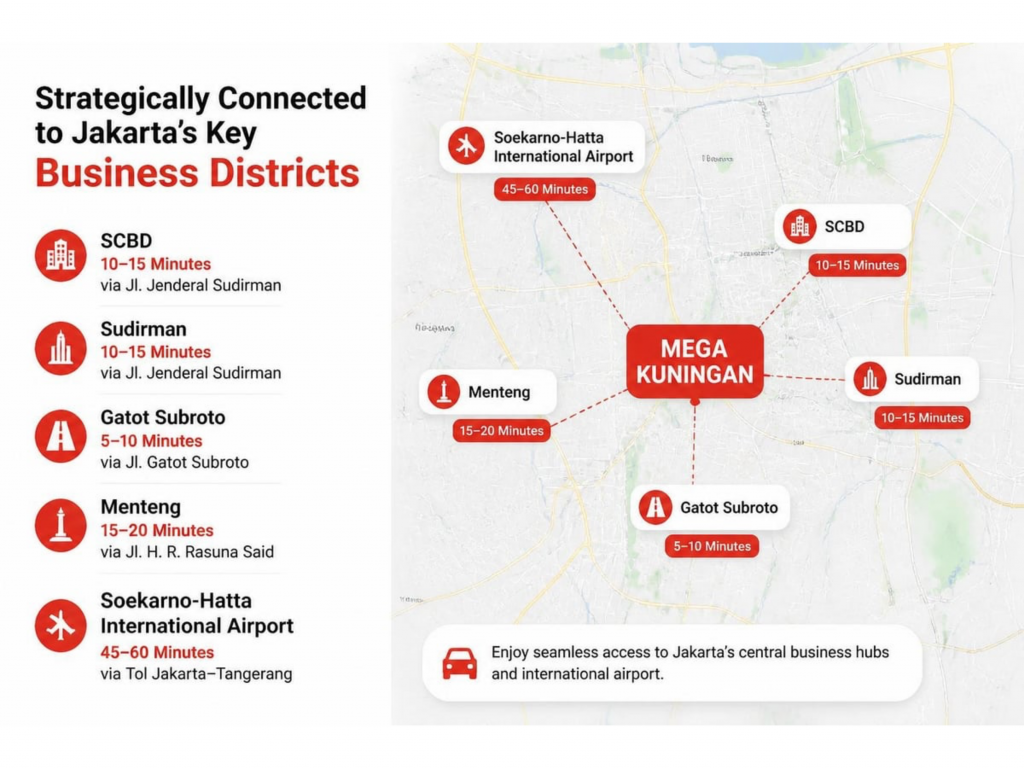
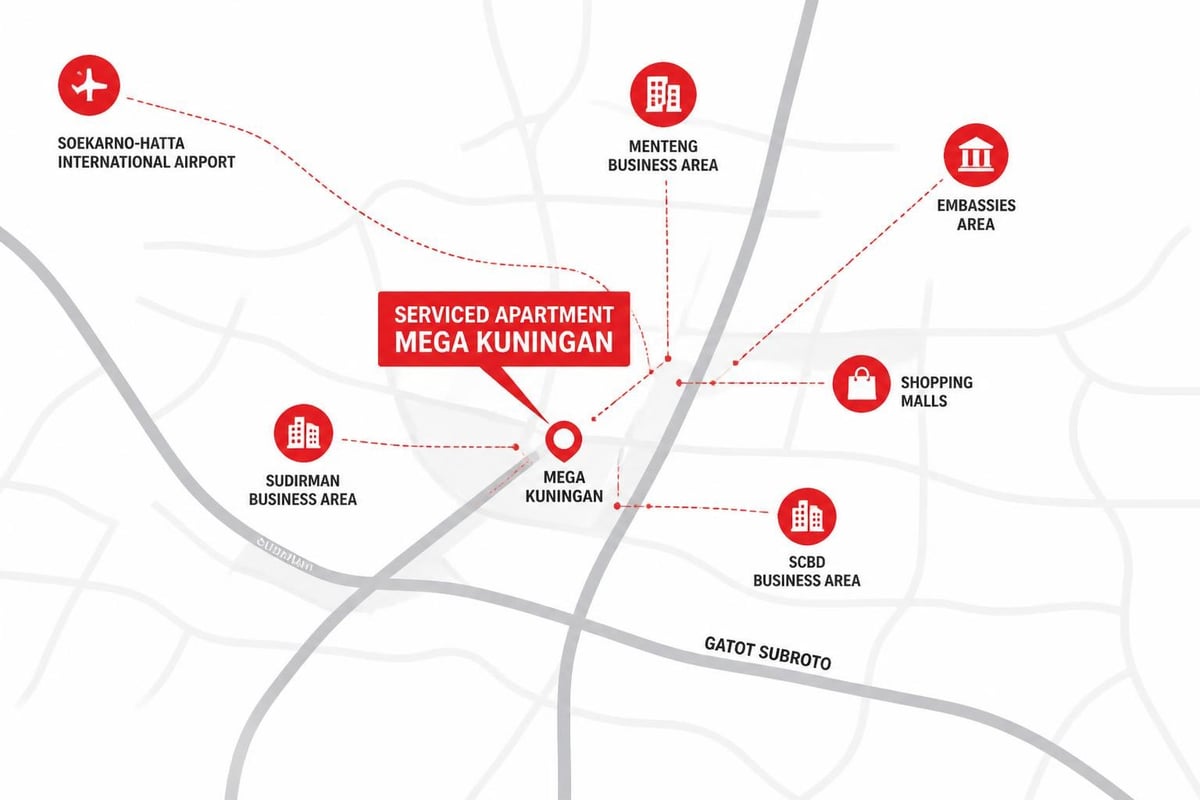
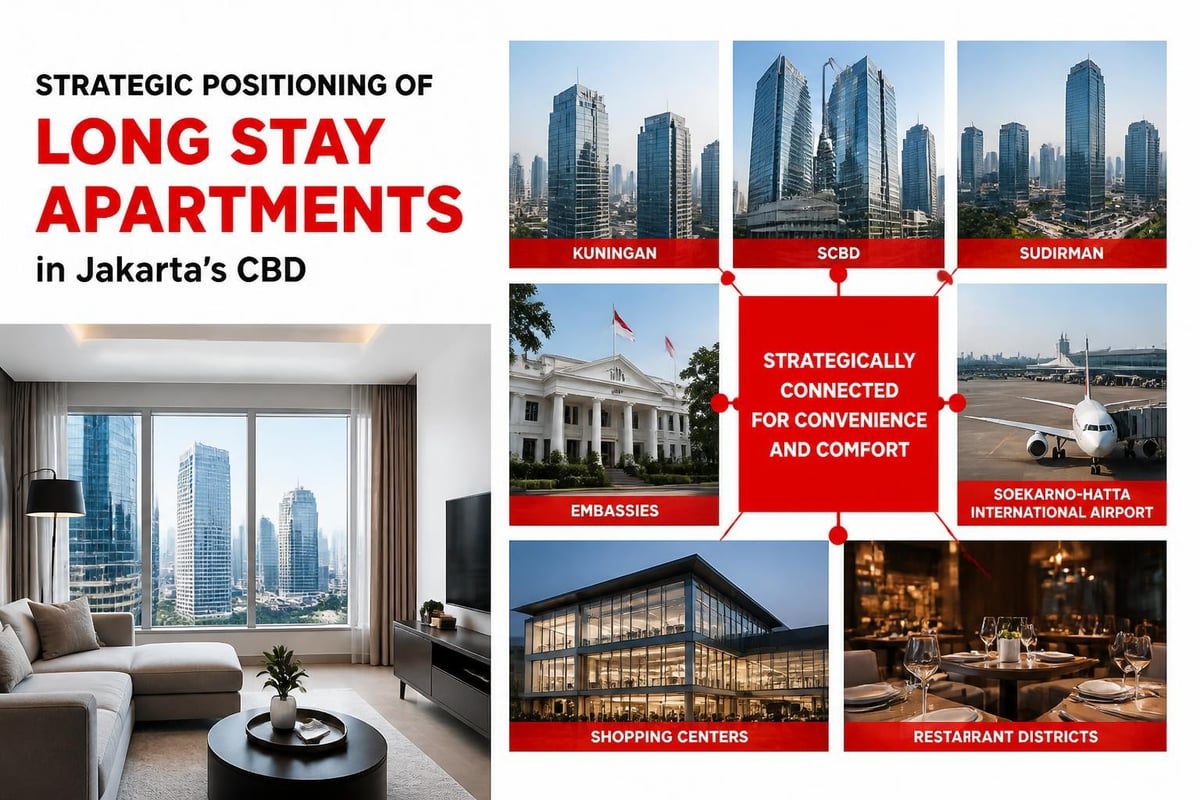
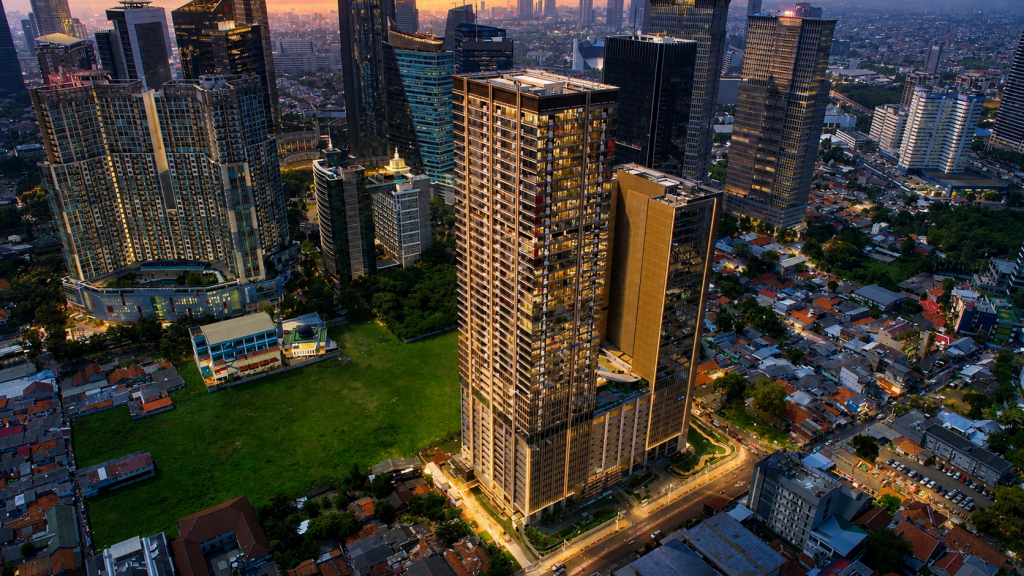
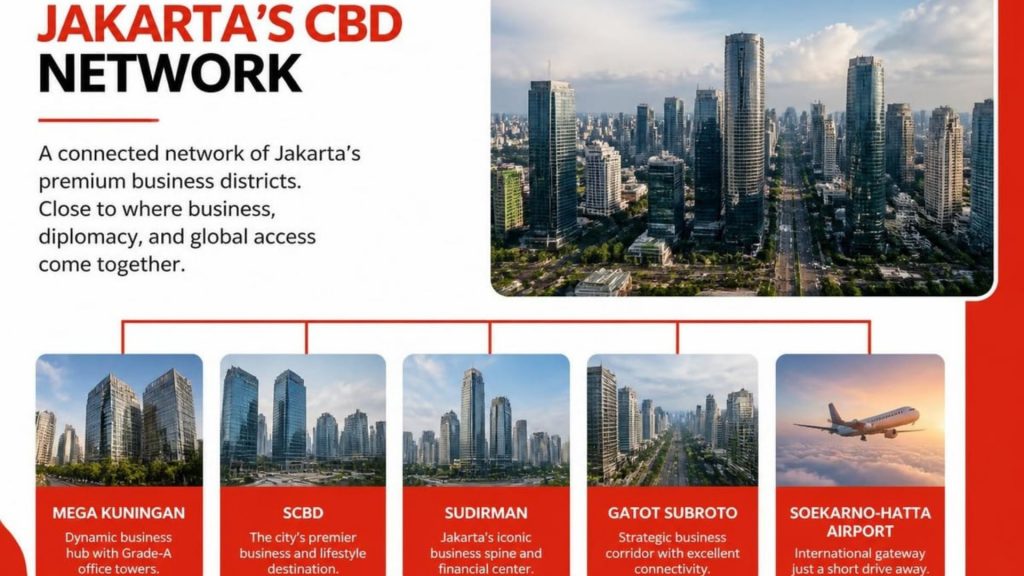
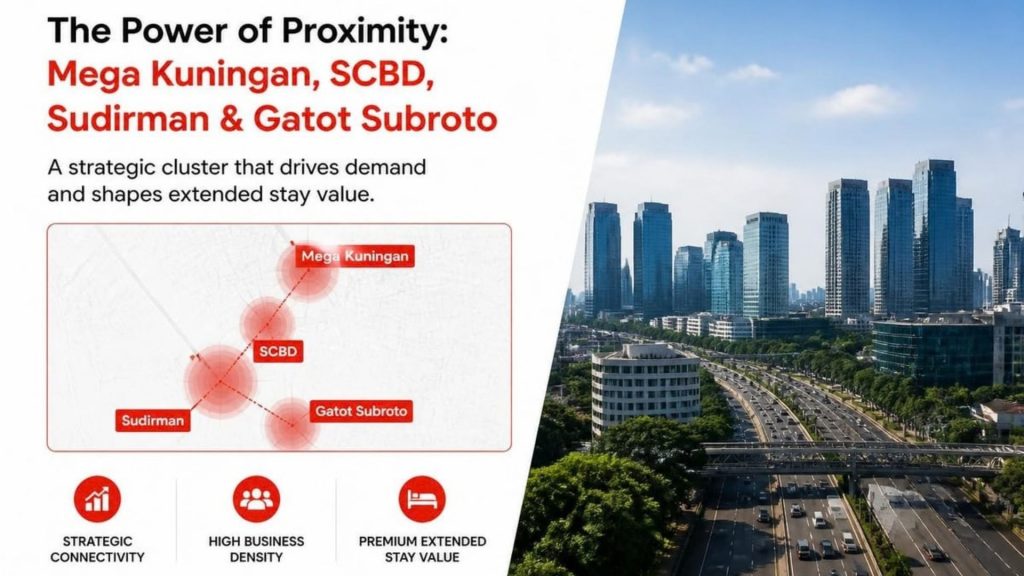
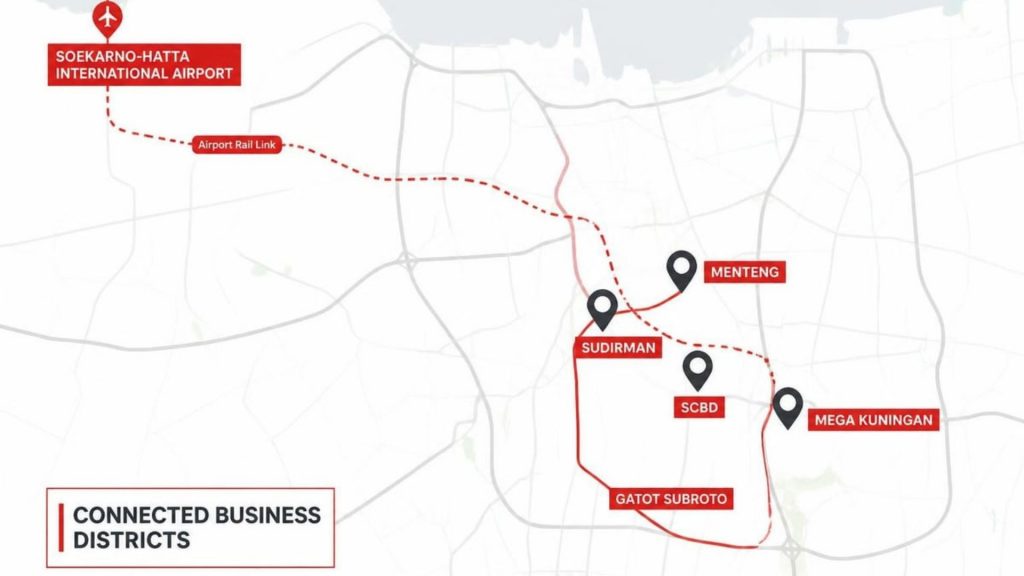
South Jakarta’s prime business districts, including Mega Kuningan, SCBD, and Sudirman, represent the premium tier of the city’s extended stay market. Properties in these areas serve corporate relocations, diplomatic staff, and senior executives requiring proximity to international business operations.
Monthly rates for studio apartments in Jakarta’s CBD typically range from IDR 25-45 million ($1,600-2,900 USD), while one-bedroom units command IDR 35-60 million ($2,250-3,850 USD). Two-bedroom and three-bedroom residences, favored by families and senior expatriates, range from IDR 55-95 million ($3,550-6,100 USD) monthly depending on property standards and included services.
Jakarta extended stay advantages:
- Lower cost of living compared to Singapore or Hong Kong
- Growing inventory of internationally branded properties
- Strategic access to Soekarno-Hatta International Airport
- Established expatriate communities and international schools
- Comprehensive business infrastructure in Kuningan and SCBD
The pricing structure for monthly serviced apartments reflects included utilities, housekeeping, security, and property management that would otherwise require individual contracts and coordination.
Global Comparison: Extended Stay Pricing Trends
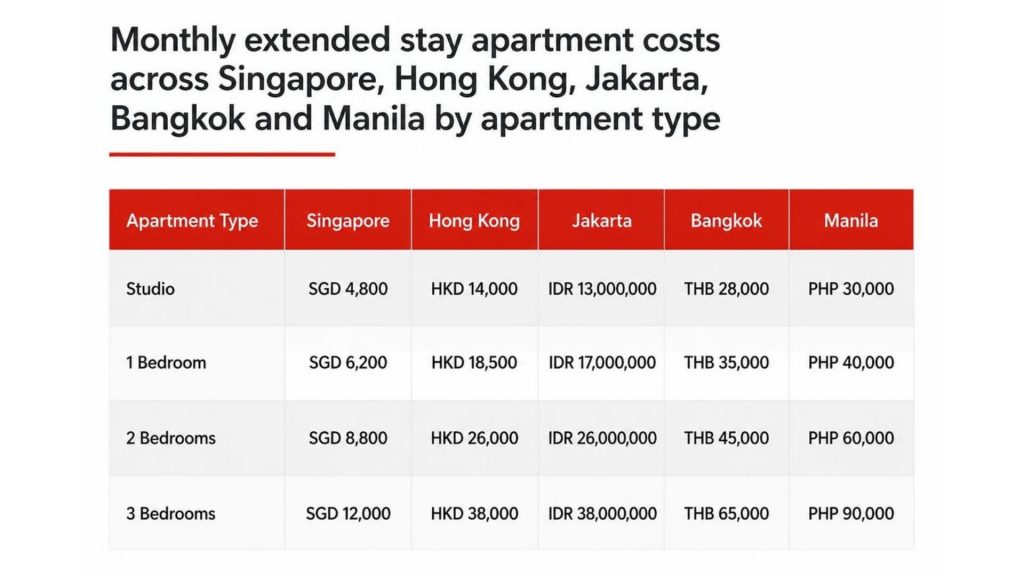
Understanding extended stay hotel prices across major markets provides context for value assessment. Singapore and Hong Kong represent Asia’s highest-cost markets, while Bangkok and Kuala Lumpur offer mid-tier alternatives. Jakarta positions competitively for quality-conscious corporate travelers.
| City | Studio Monthly Average | One-Bedroom Monthly Average | Premium Positioning |
|---|---|---|---|
| Singapore | $3,800-5,500 | $5,200-7,800 | Highest regional costs |
| Hong Kong | $3,500-5,200 | $4,800-7,200 | Space-constrained premium |
| Jakarta | $1,600-2,900 | $2,250-3,850 | Value with quality |
| Bangkok | $1,400-2,400 | $1,900-3,200 | Competitive mid-tier |
| Manila | $1,200-2,100 | $1,700-2,900 | Cost-effective option |
These benchmarks from Cushman & Wakefield’s lodging overview demonstrate Jakarta’s positioning for corporations balancing quality accommodations with cost management. Properties offering Swiss hospitality standards deliver European service expectations at Southeast Asian price points.
Calculating True Cost of Extended Stays
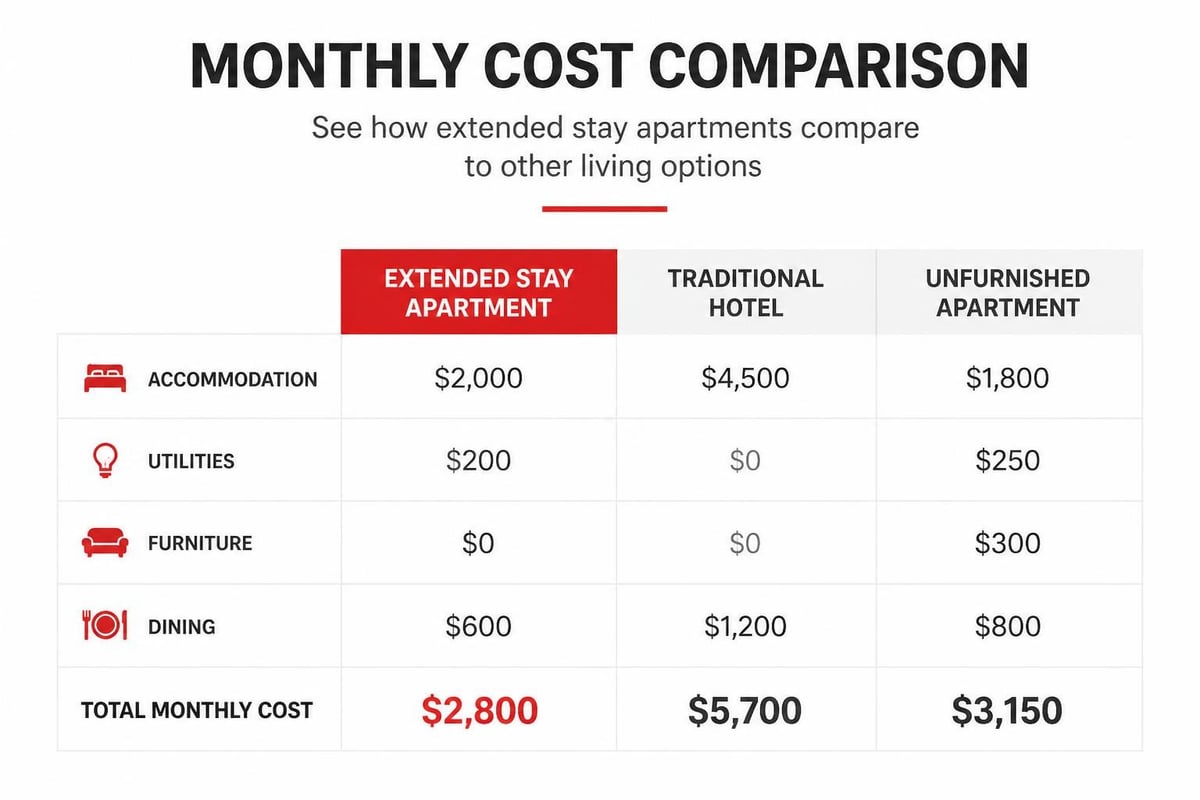
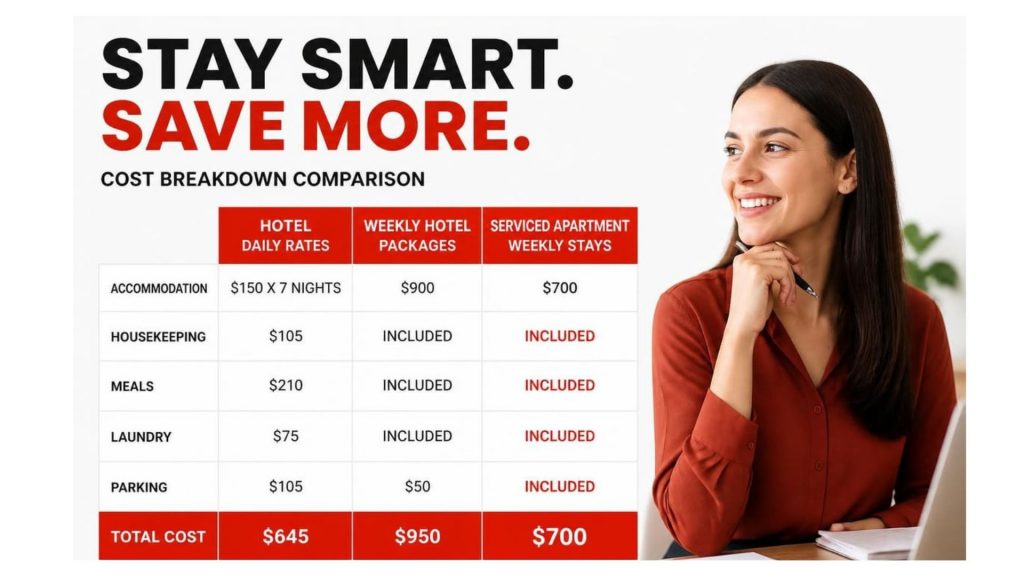
Extended stay hotel prices require comprehensive analysis beyond quoted nightly or monthly rates. Hidden costs, included services, and opportunity savings significantly impact total expenditure and value realization.
Included Services That Affect Overall Value
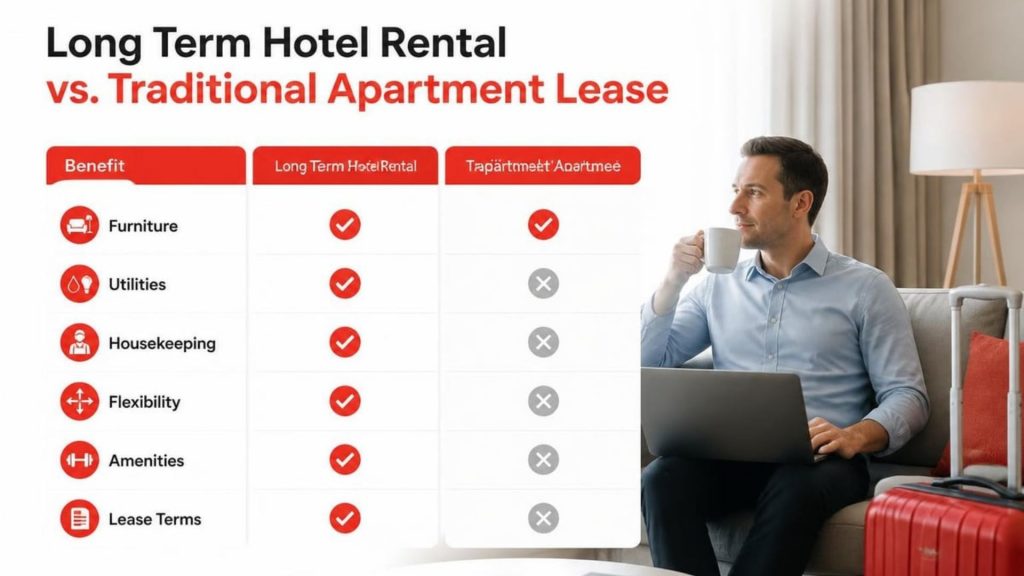
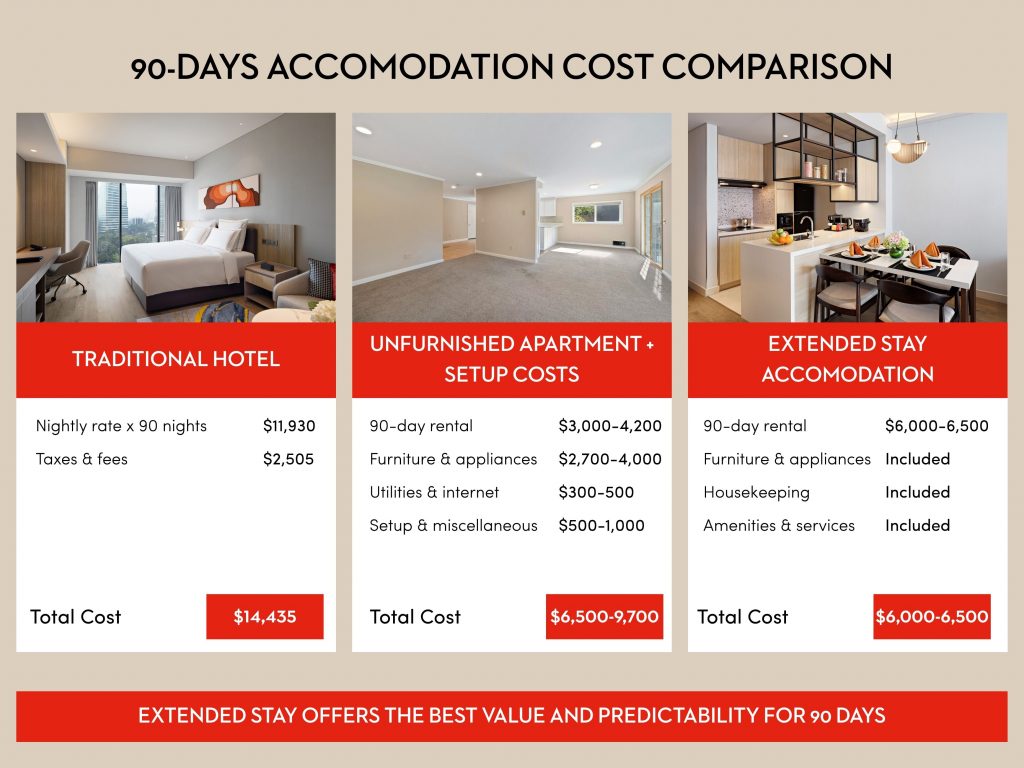
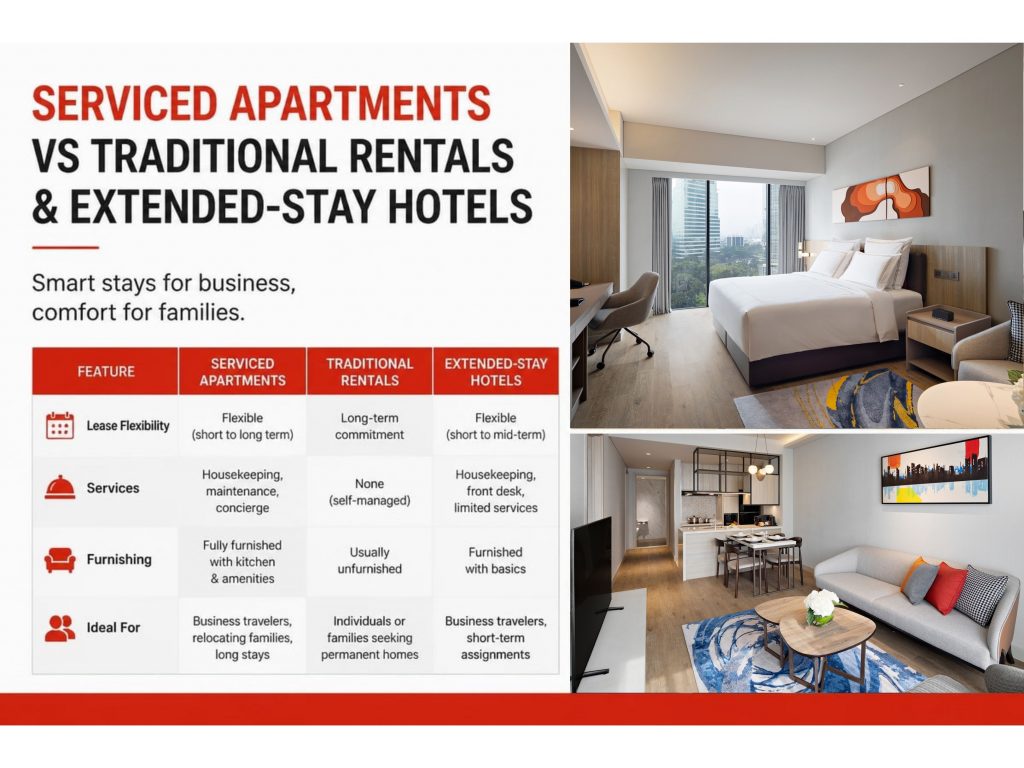
The most significant pricing differentiator between extended stay properties involves service inclusions. Weekly housekeeping, utility costs, internet connectivity, and property maintenance represent substantial expenses when renting traditional apartments, yet these services are typically bundled into extended stay rates.
Standard inclusions in professionally managed properties:
- Utilities (electricity, water, gas)
- High-speed internet and cable/streaming services
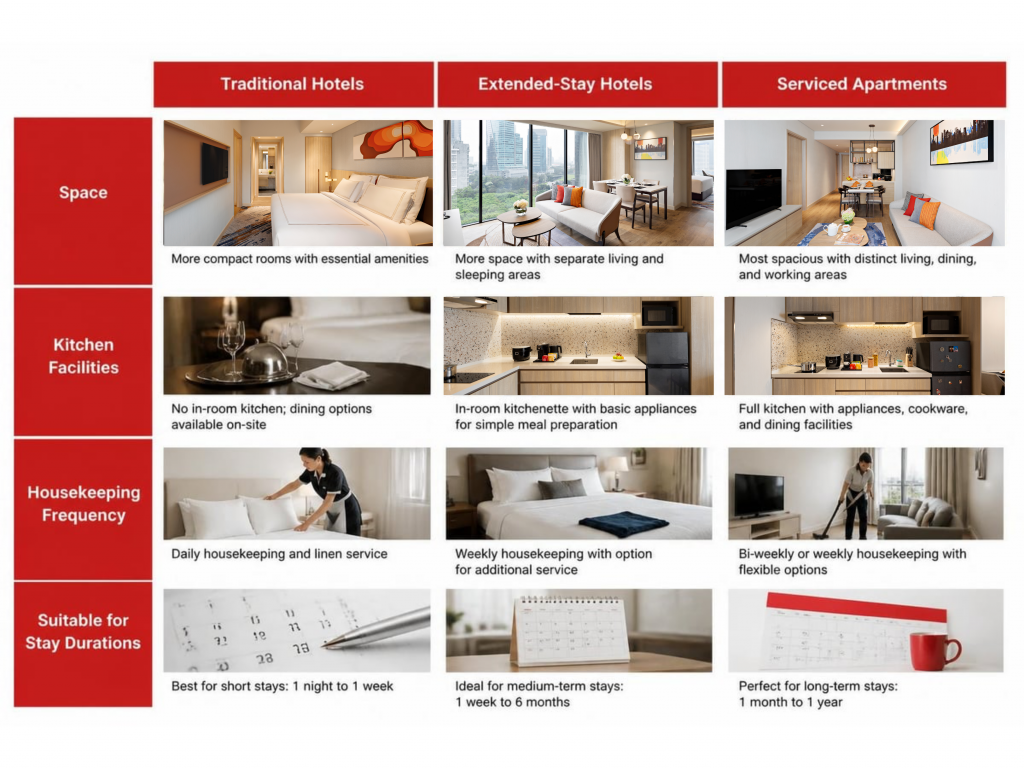
- Weekly or bi-weekly housekeeping
- Fresh linens and towel service
- 24-hour security and concierge
- Fitness center and pool access
- Maintenance and repair services
- Parking (property-dependent)
When evaluating extended stay hotel prices, calculate the independent cost of these services. In Jakarta, utilities for a one-bedroom apartment average IDR 2-3 million monthly, housekeeping services cost IDR 1.5-2.5 million for bi-weekly cleaning, and internet connectivity runs IDR 500,000-800,000. These add IDR 4-6.2 million ($250-400 USD) to any base rental rate.
Hidden Costs in Traditional Apartments
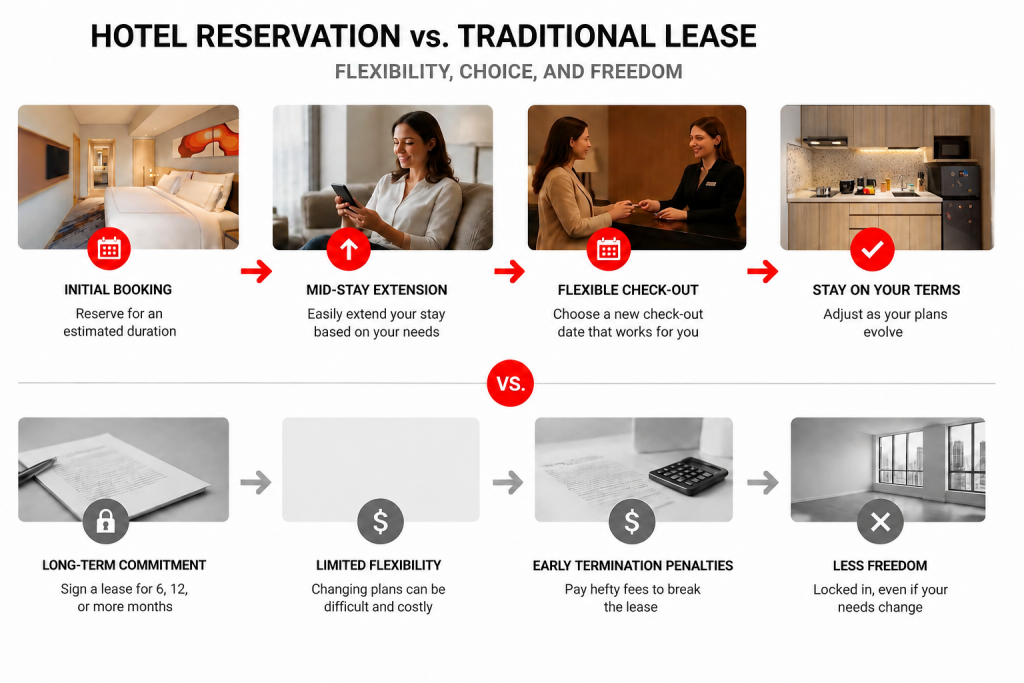
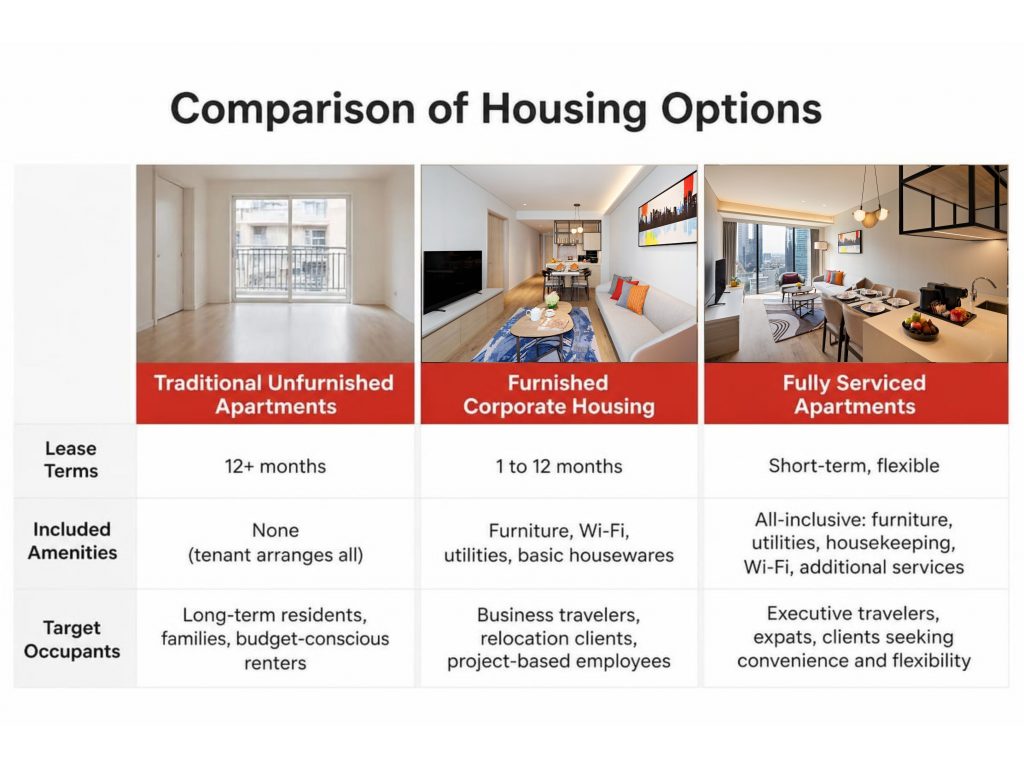
Corporate housing coordinators frequently underestimate setup and maintenance costs when comparing extended stay properties against traditional apartment rentals. Security deposits, furniture purchases, utility connections, and lease break penalties create financial risks absent in extended stay arrangements.
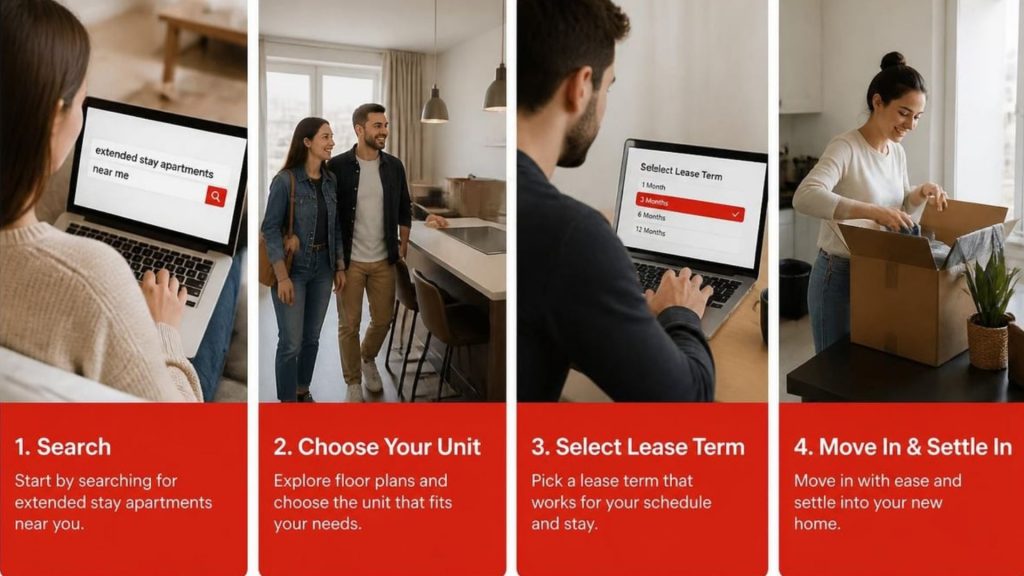
Serviced apartments eliminate these friction costs through flexible contracts. A corporate traveler requiring accommodation for an uncertain 3-6 month period faces significant financial risk with a 12-month apartment lease. Extended stay properties offer month-to-month flexibility after initial commitment periods, typically 30-90 days.
The analysis from Kalibri Labs on extended-stay development demonstrates how operational efficiency in extended stay properties allows competitive pricing despite higher per-square-foot development costs documented in the HVS Hotel Development Cost Survey.
Optimizing Extended Stay Budgets
Corporate travel managers and individual relocators can substantially reduce extended stay hotel prices through strategic booking timing, contract negotiation, and property selection aligned with actual needs rather than perceived requirements.
Negotiating Corporate Rates
Companies requiring multiple units or repeated placements command significant negotiating power. Extended stay properties allocate 20-40% of inventory to corporate contracts, offering volume discounts and guaranteed availability in exchange for commitment.
Effective negotiation strategies:
- Bundle multiple bookings across calendar year
- Commit to minimum monthly room nights
- Accept seasonal flexibility for rate reductions
- Negotiate value-adds (parking, breakfast, late checkout)
- Establish direct billing relationships
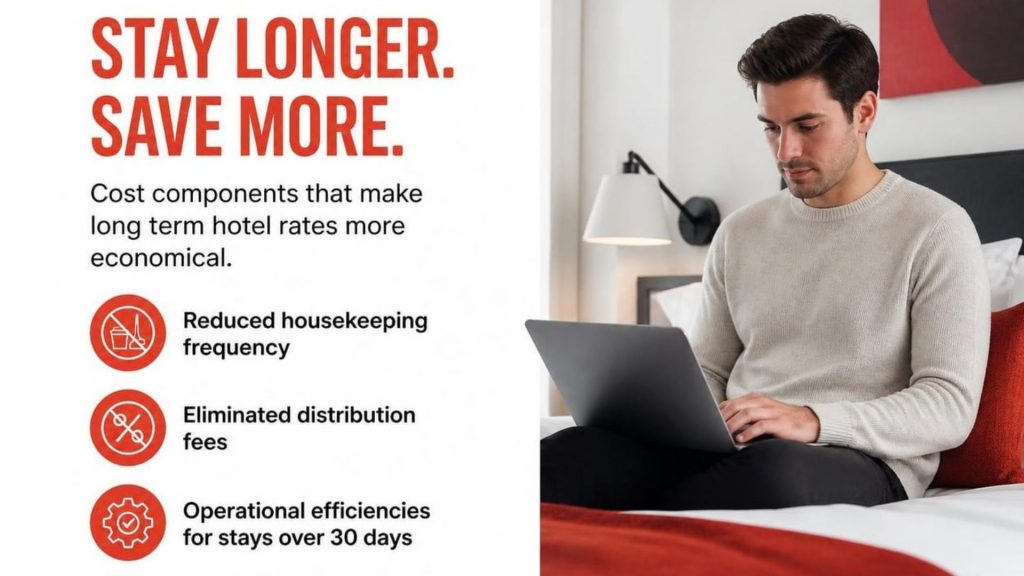
Corporate rates typically deliver 15-30% savings versus retail pricing, with deeper discounts for high-volume accounts. Properties near major business districts prioritize these relationships because they stabilize occupancy and reduce distribution costs.
Seasonal Pricing Patterns
Extended stay hotel prices fluctuate based on corporate demand cycles, holiday periods, and local business activity. Jakarta experiences peak corporate demand during January-June and September-November, when multinational companies cycle expatriate assignments and project work intensifies.
Properties adjust monthly rates 10-25% between peak and low seasons, though extended stay contracts typically lock rates for the commitment period. Booking during softer periods (July-August, December) and accepting longer initial terms secures more favorable pricing that remains fixed despite market fluctuations.
Understanding long-stay serviced apartment market dynamics allows strategic timing. Companies planning Q1 relocations who book in Q4 of the prior year often secure year-end incentive pricing that properties offer to boost occupancy metrics.
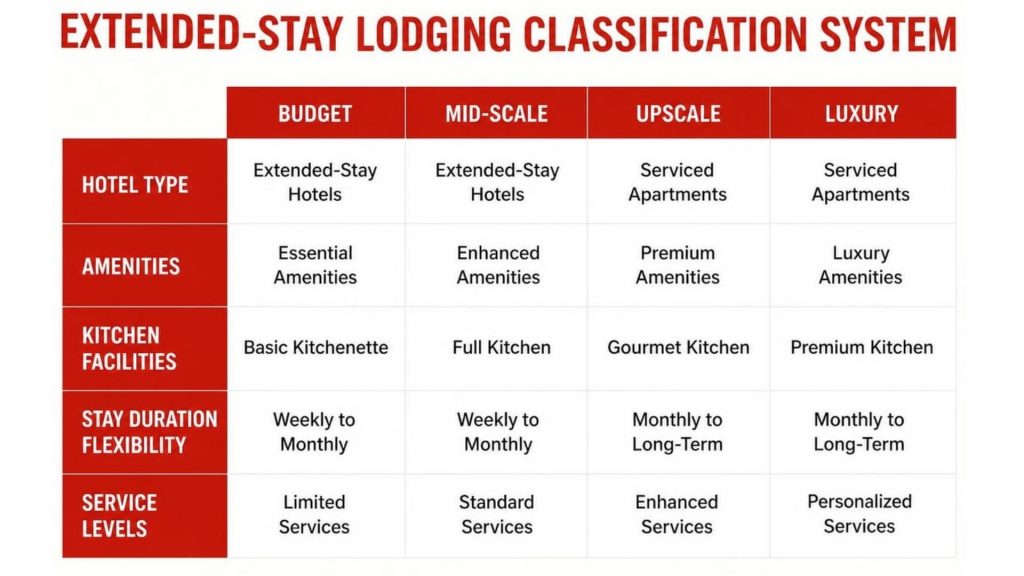
Choosing the Right Extended Stay Category
Extended stay hotel prices scale dramatically with apartment size, but choosing excessive space wastes budget without improving quality of life. Proper category selection balances space requirements, budget constraints, and lifestyle needs.
Studio Apartments for Solo Business Travelers
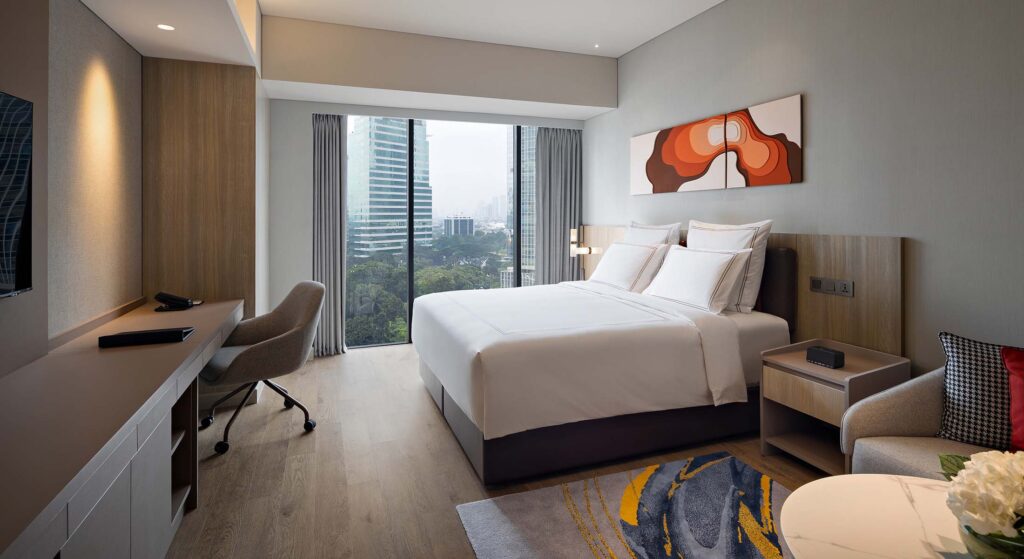
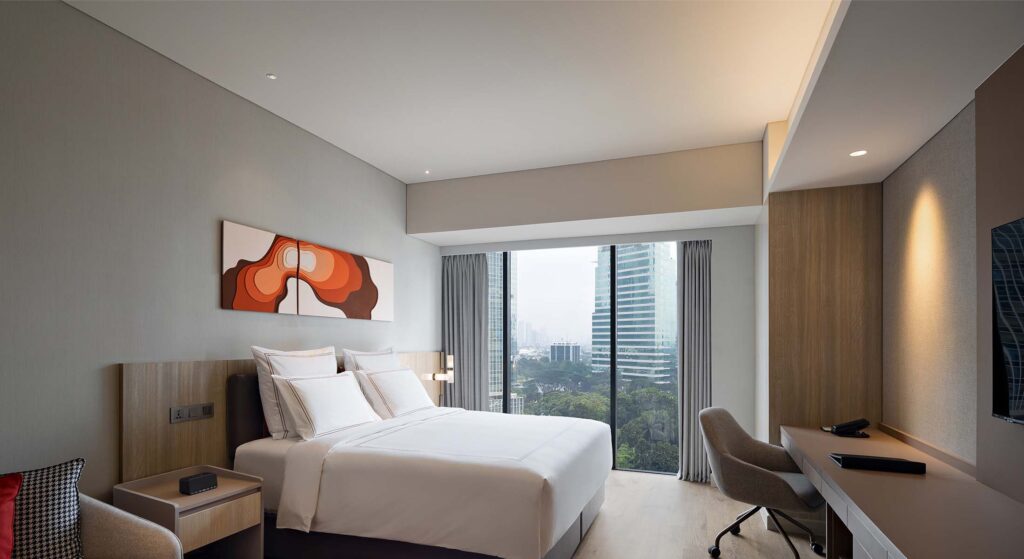
Studio configurations, typically 35-45 square meters, serve individual business travelers prioritizing location, services, and cost efficiency over space. Modern studio layouts provide sleeping areas, functional kitchens, workspaces, and separate bathrooms within open-concept designs.
Monthly pricing for quality studio apartments in Jakarta’s business districts ranges IDR 25-40 million ($1,600-2,550 USD) depending on property positioning and included amenities. Studios deliver optimal value for consultants, project managers, and individual expatriates who spend limited time in-residence.
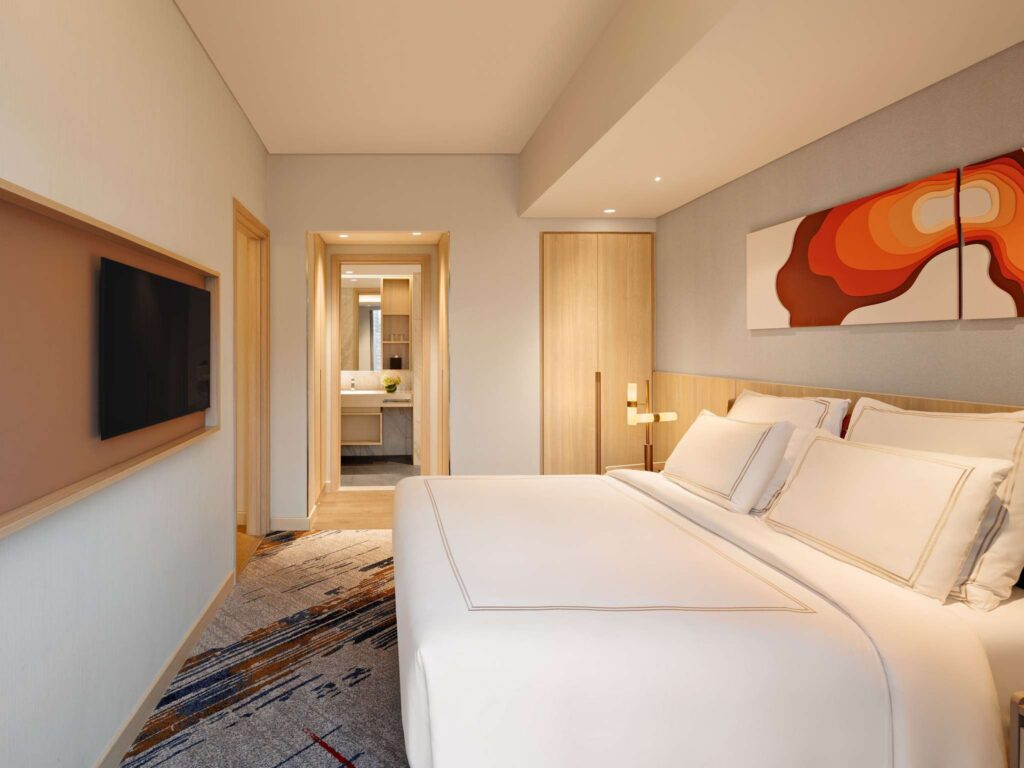
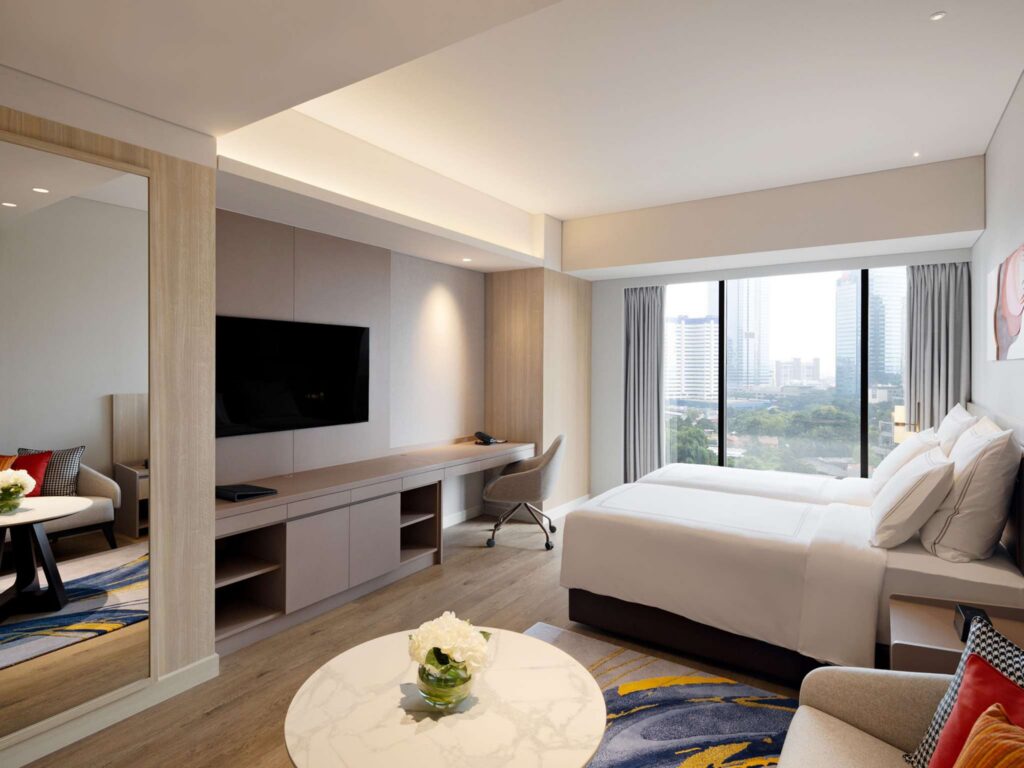
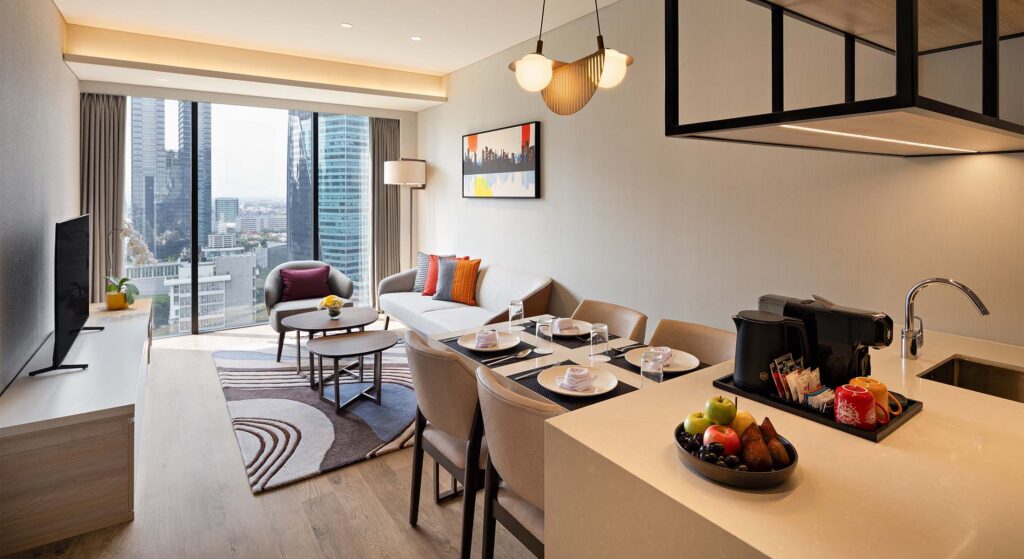
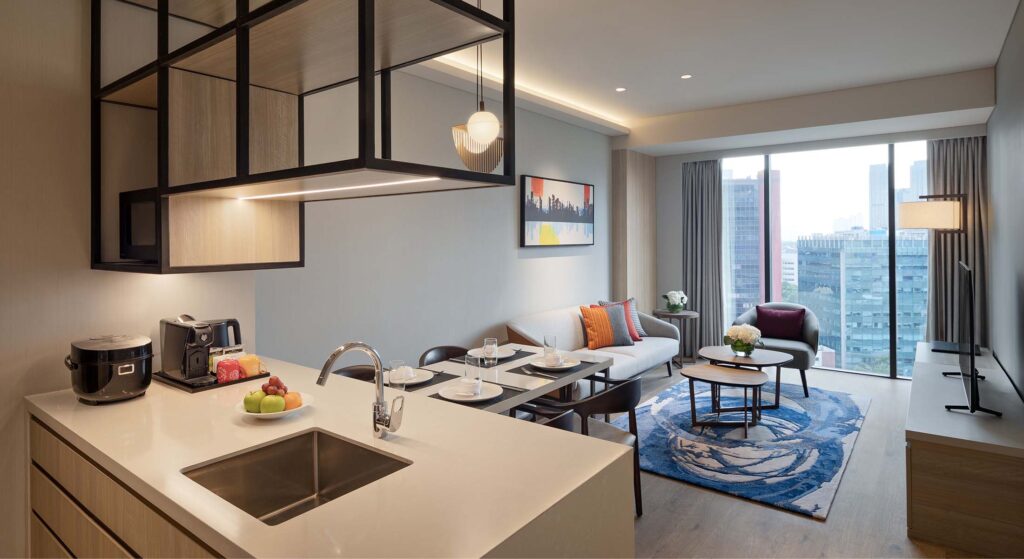
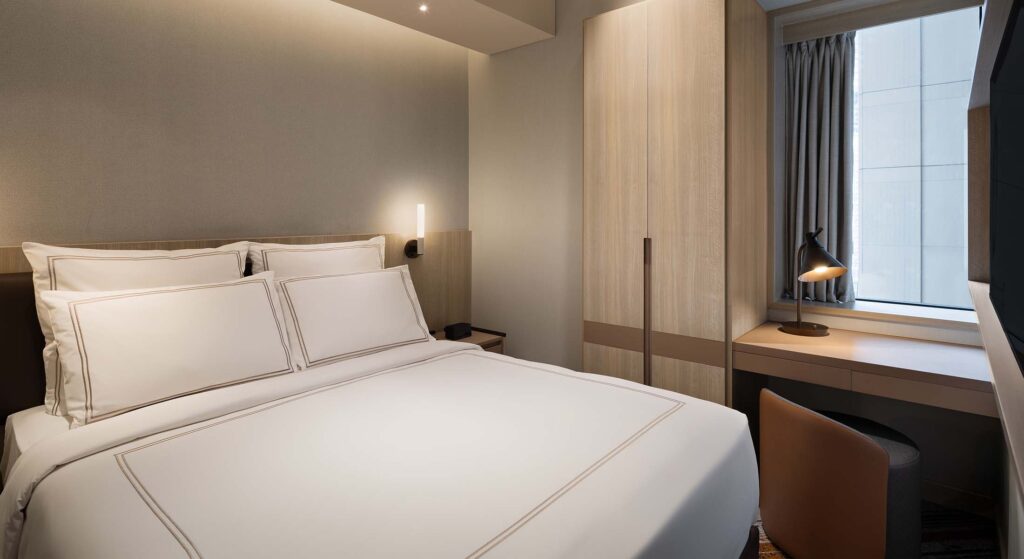
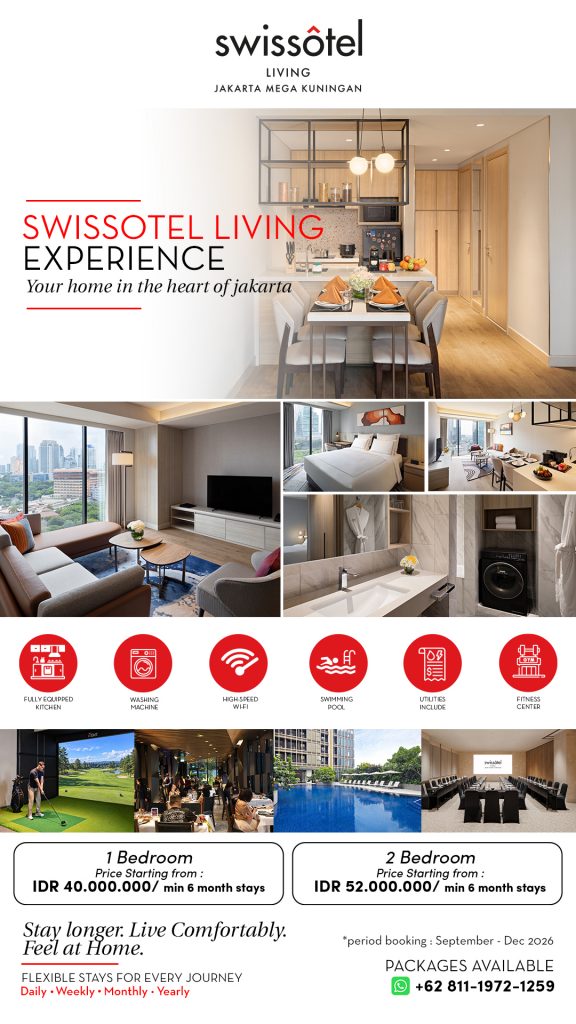
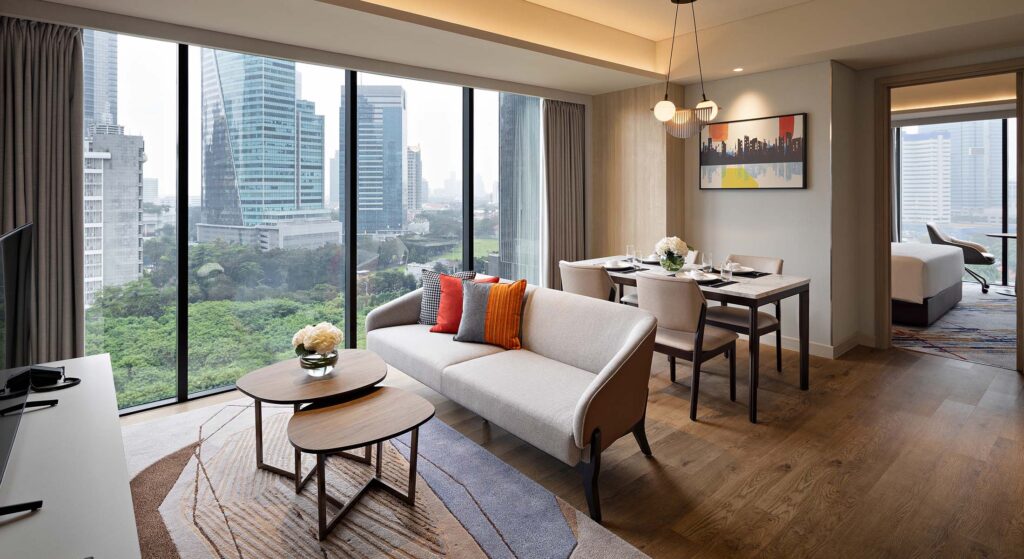
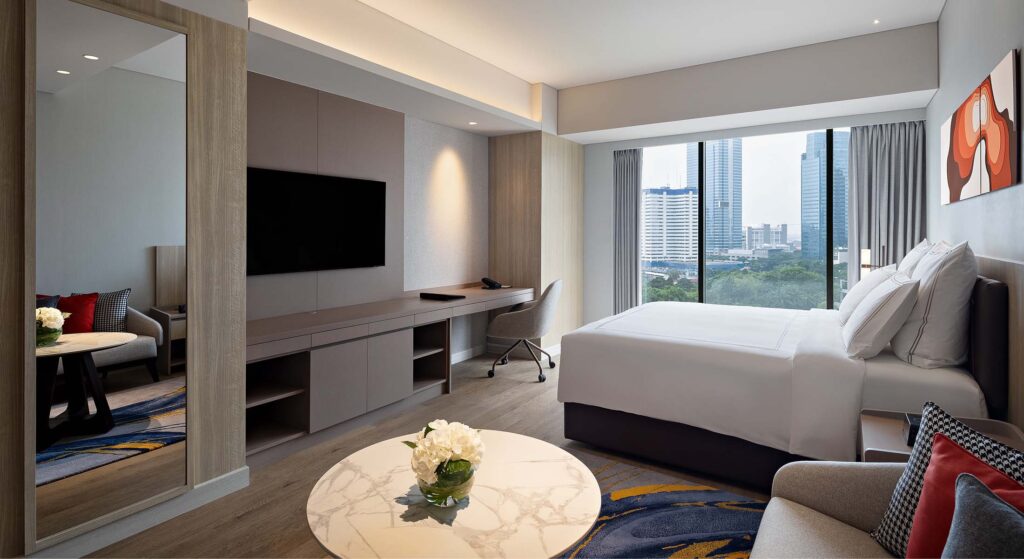
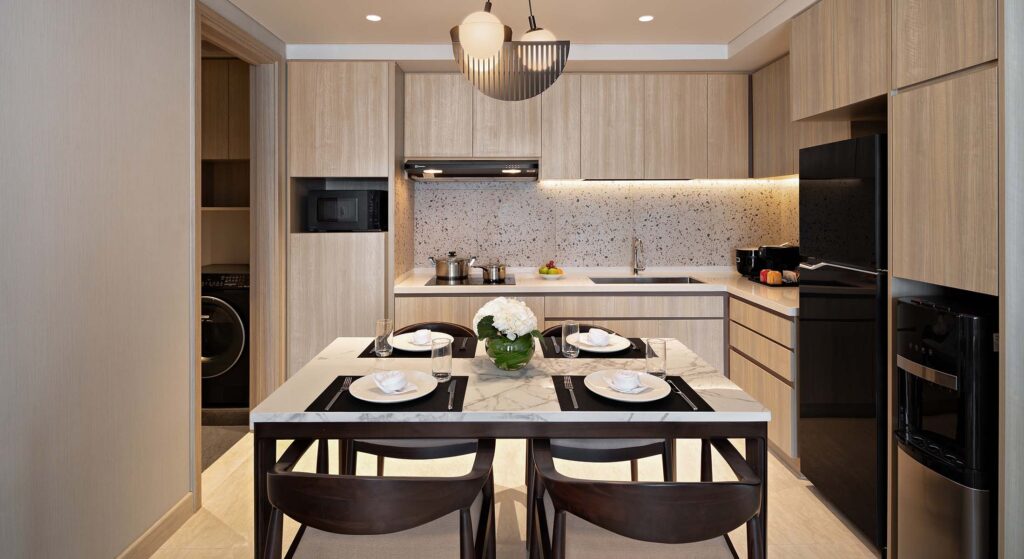
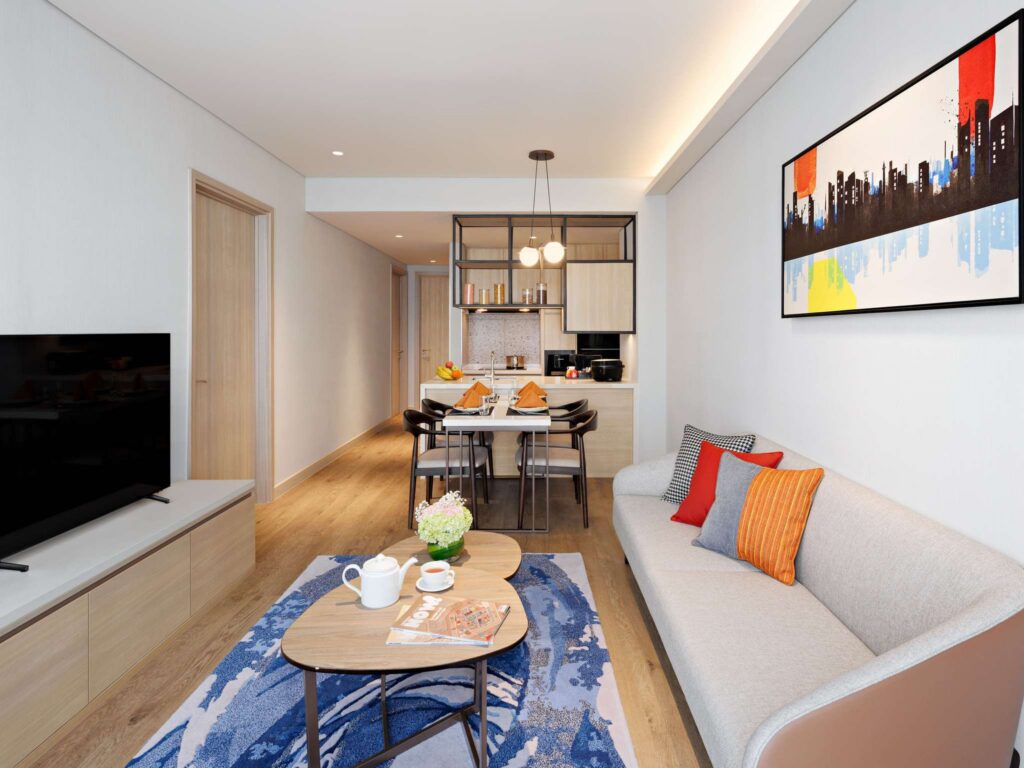
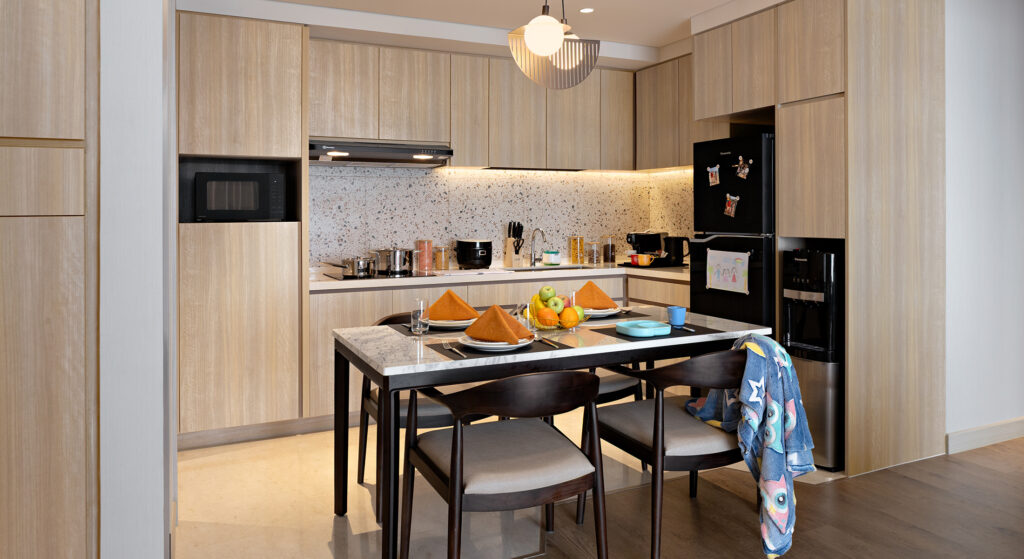
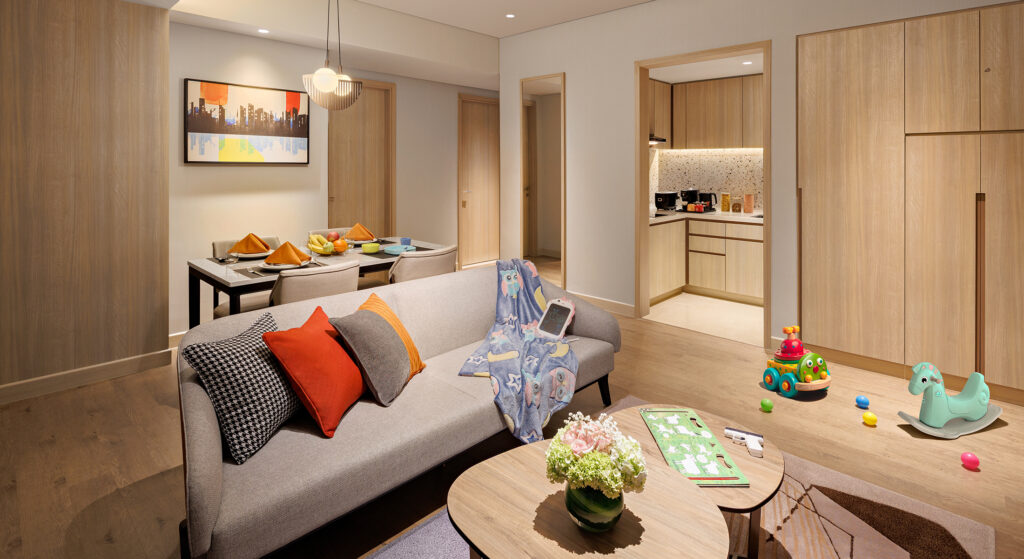
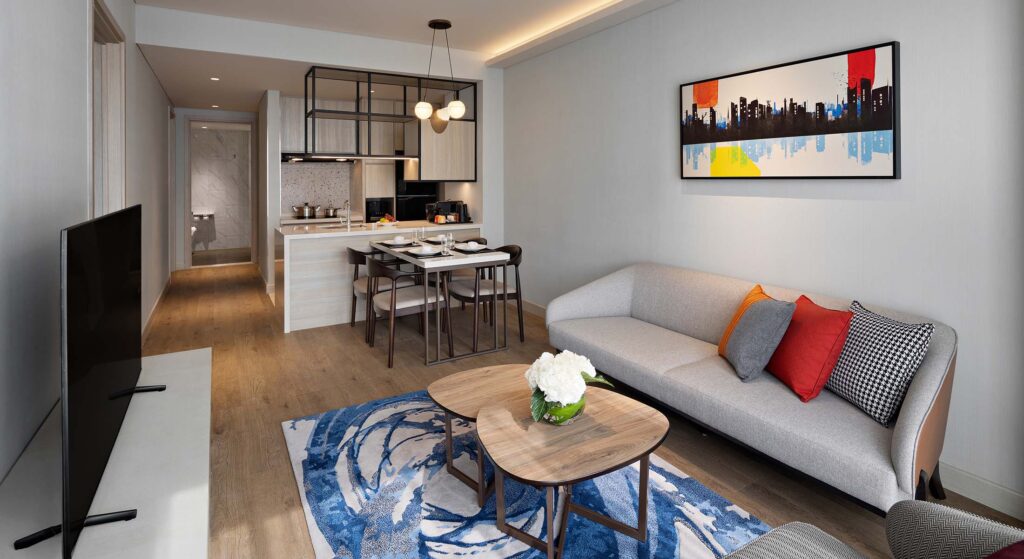
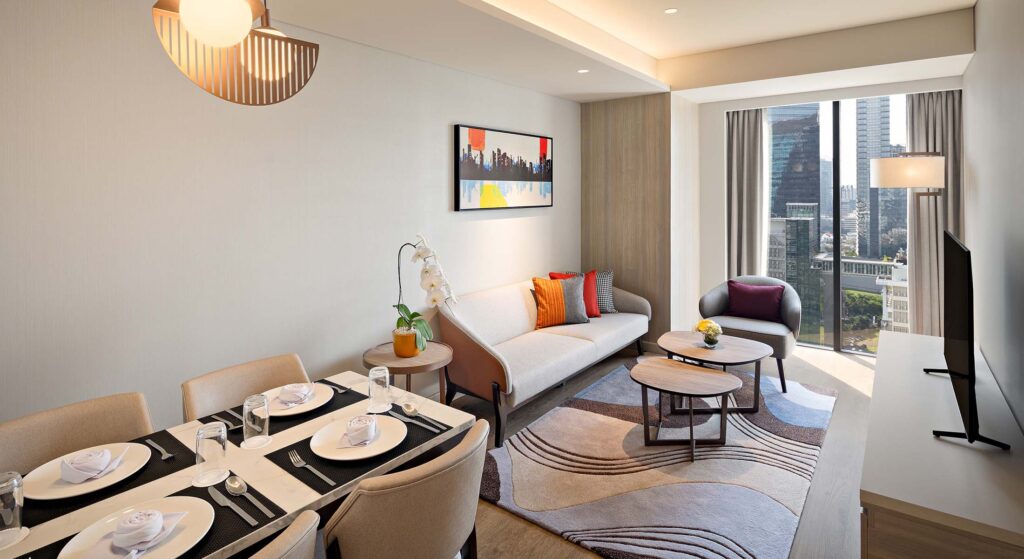
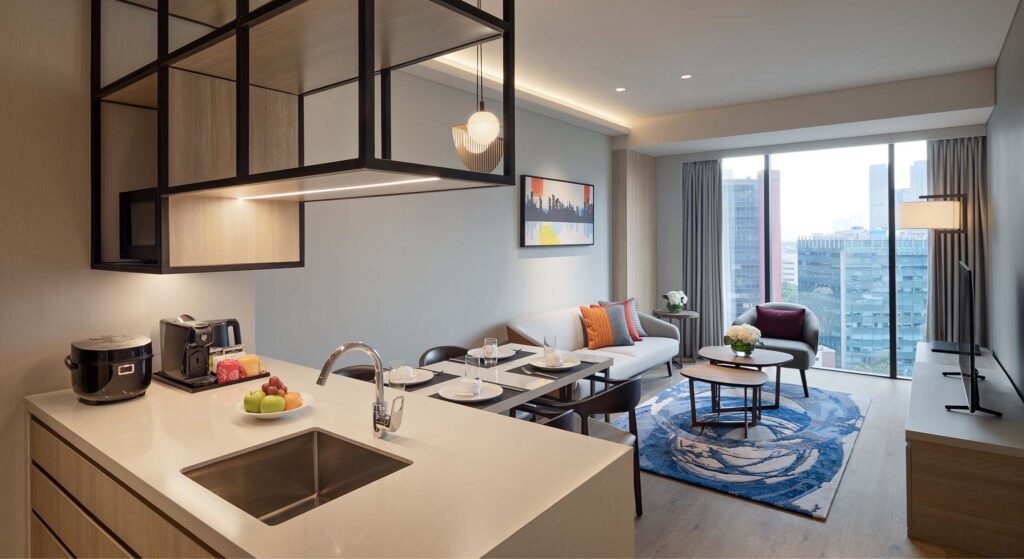
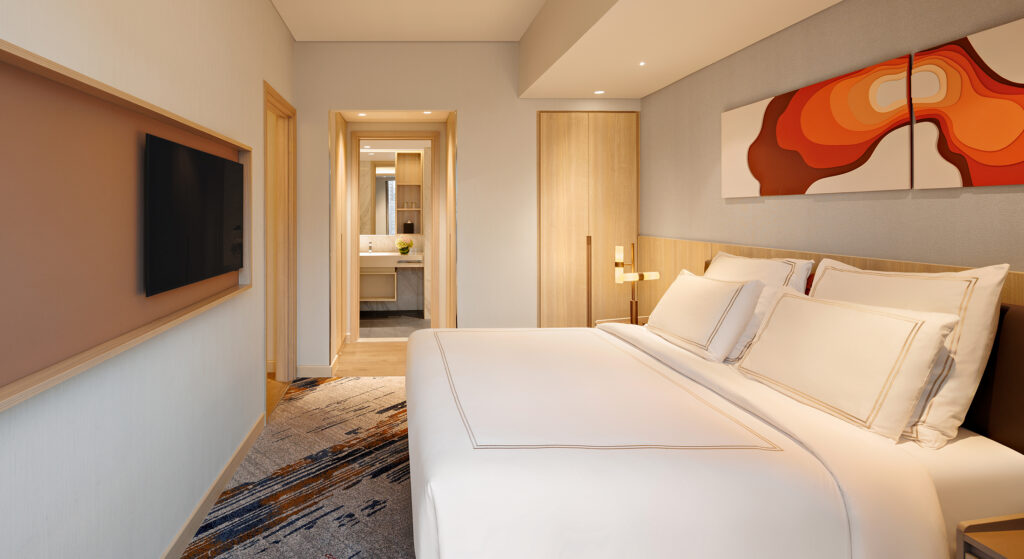
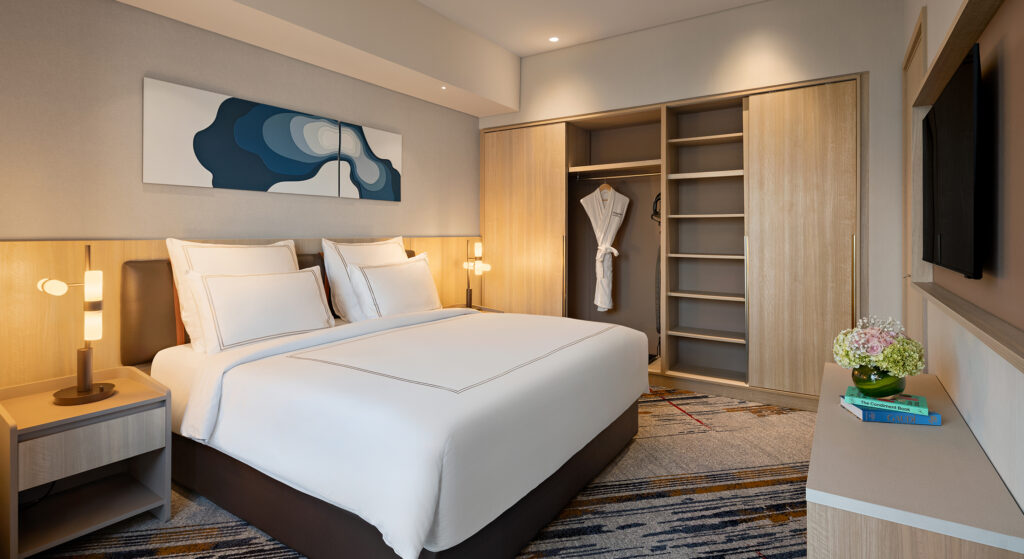
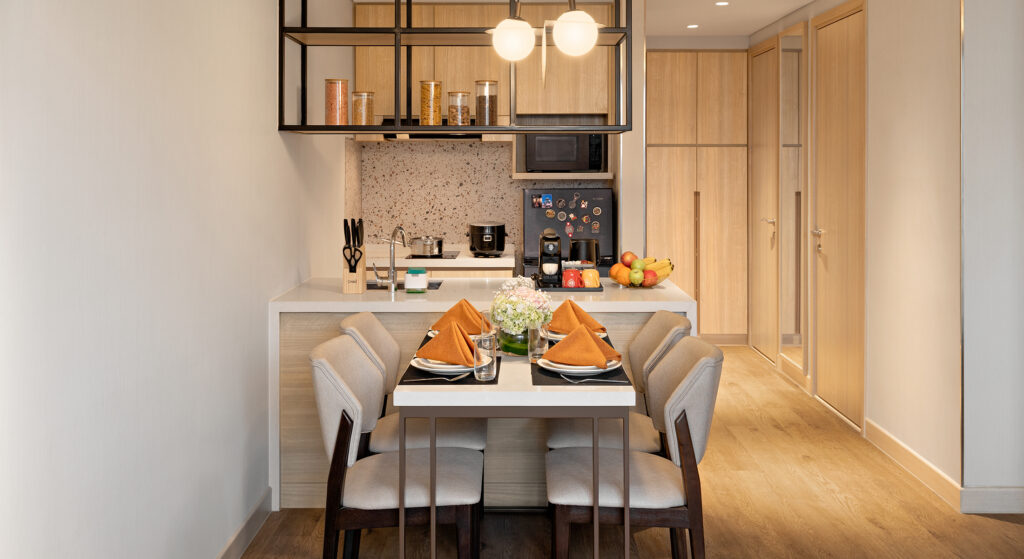
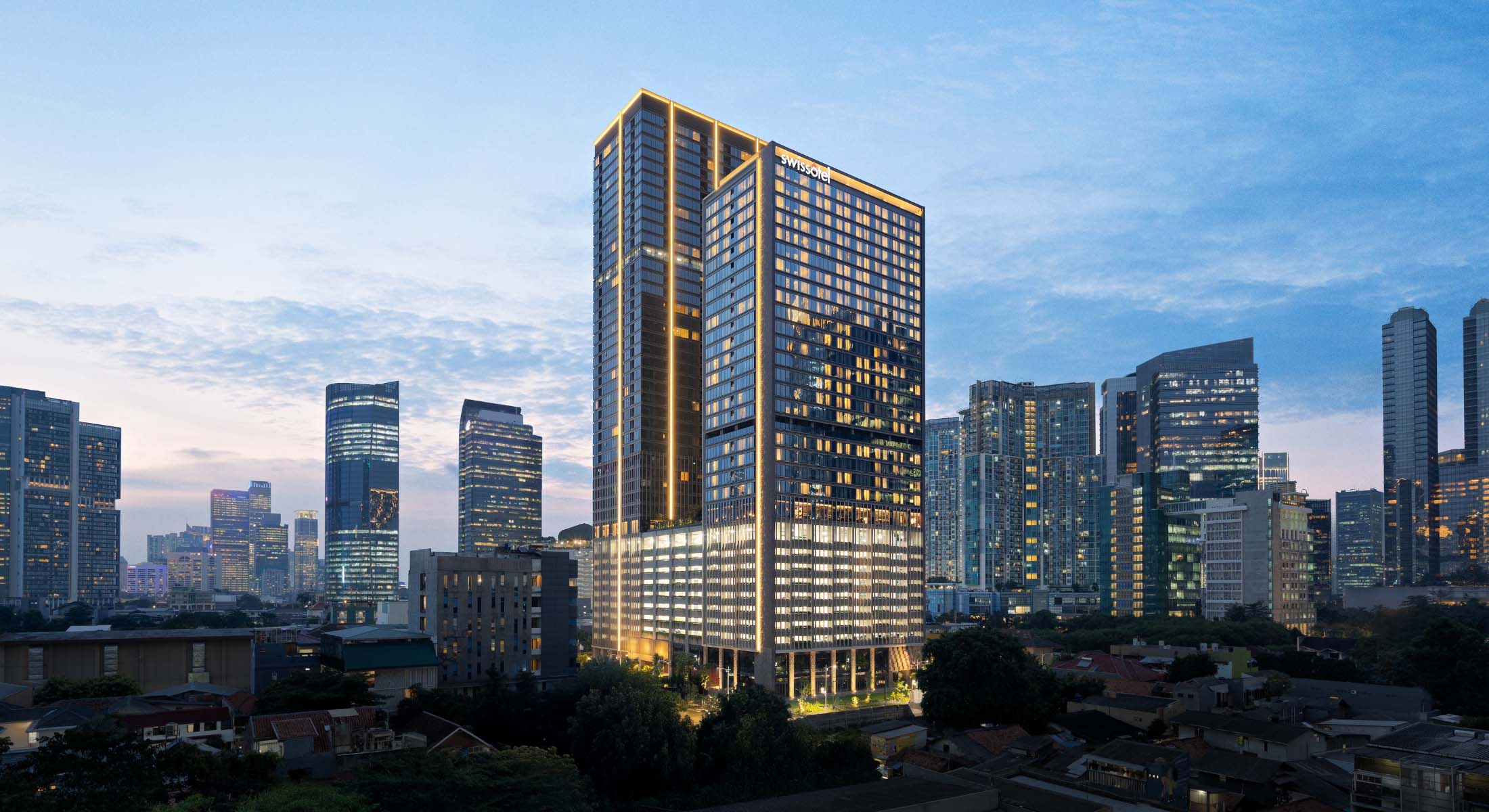
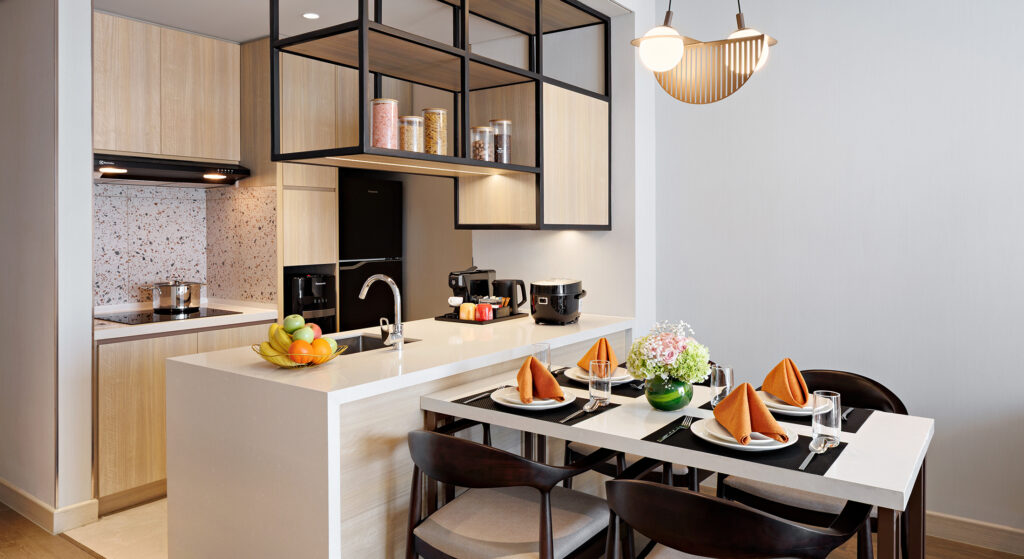
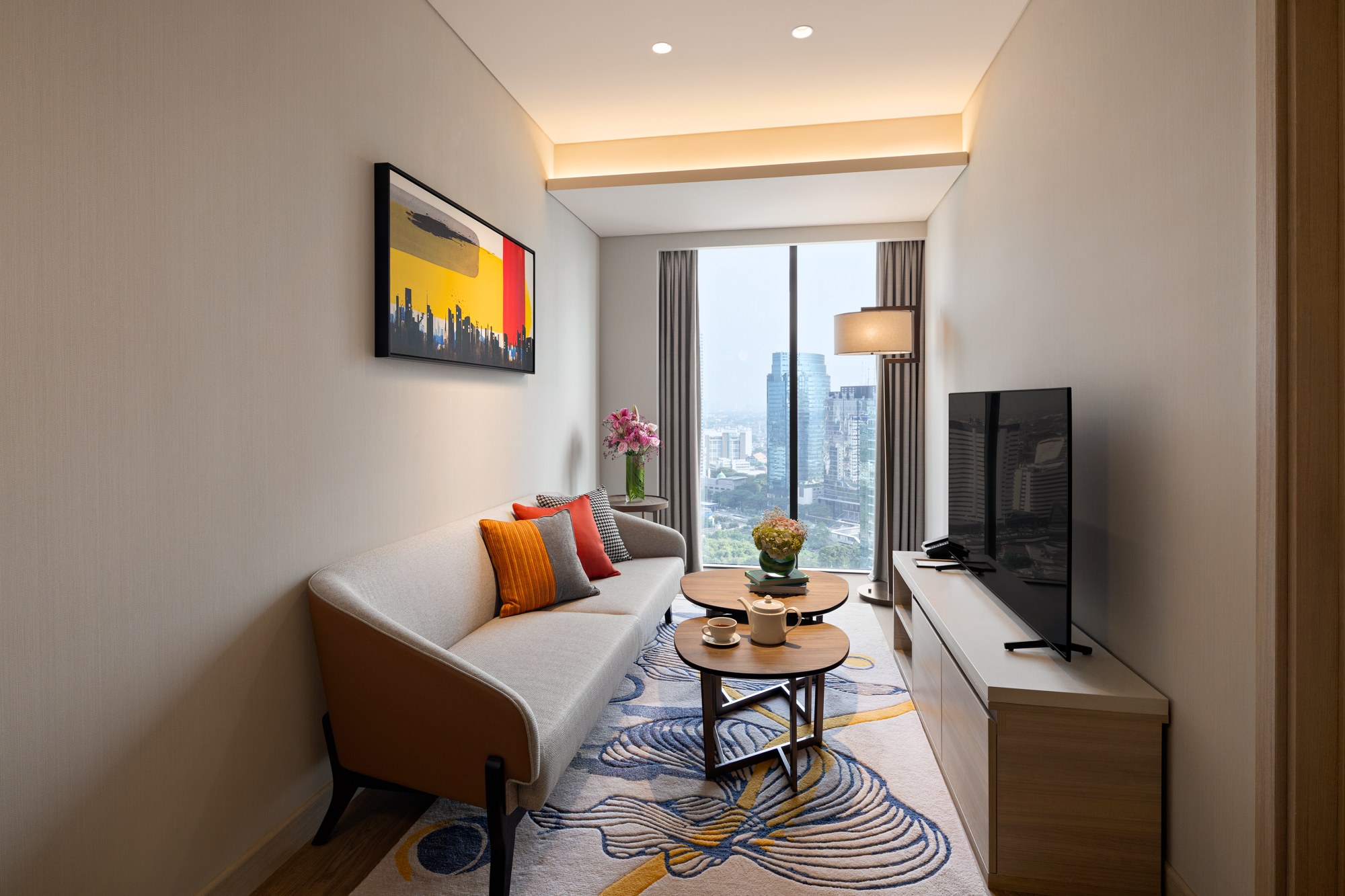
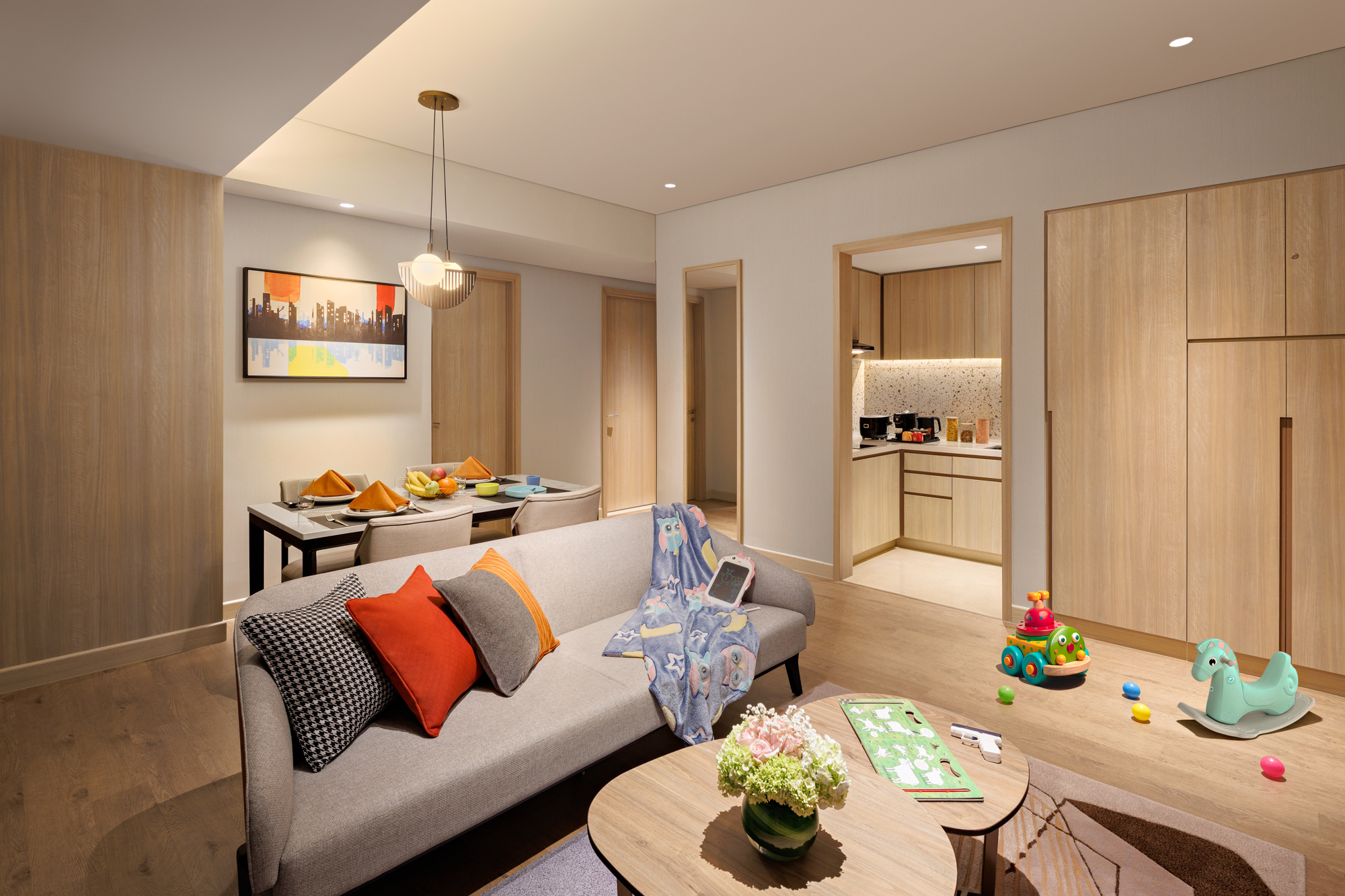
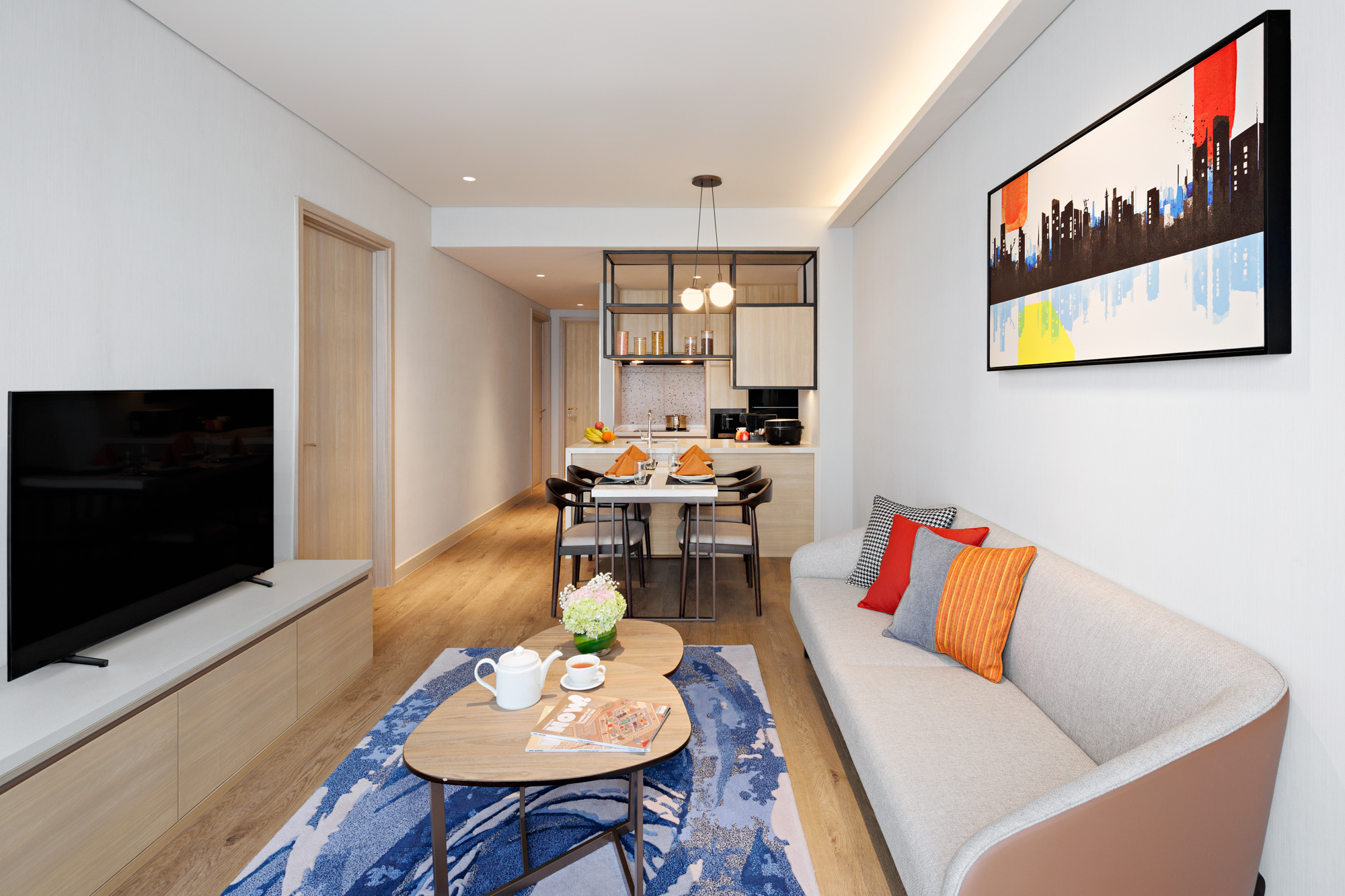
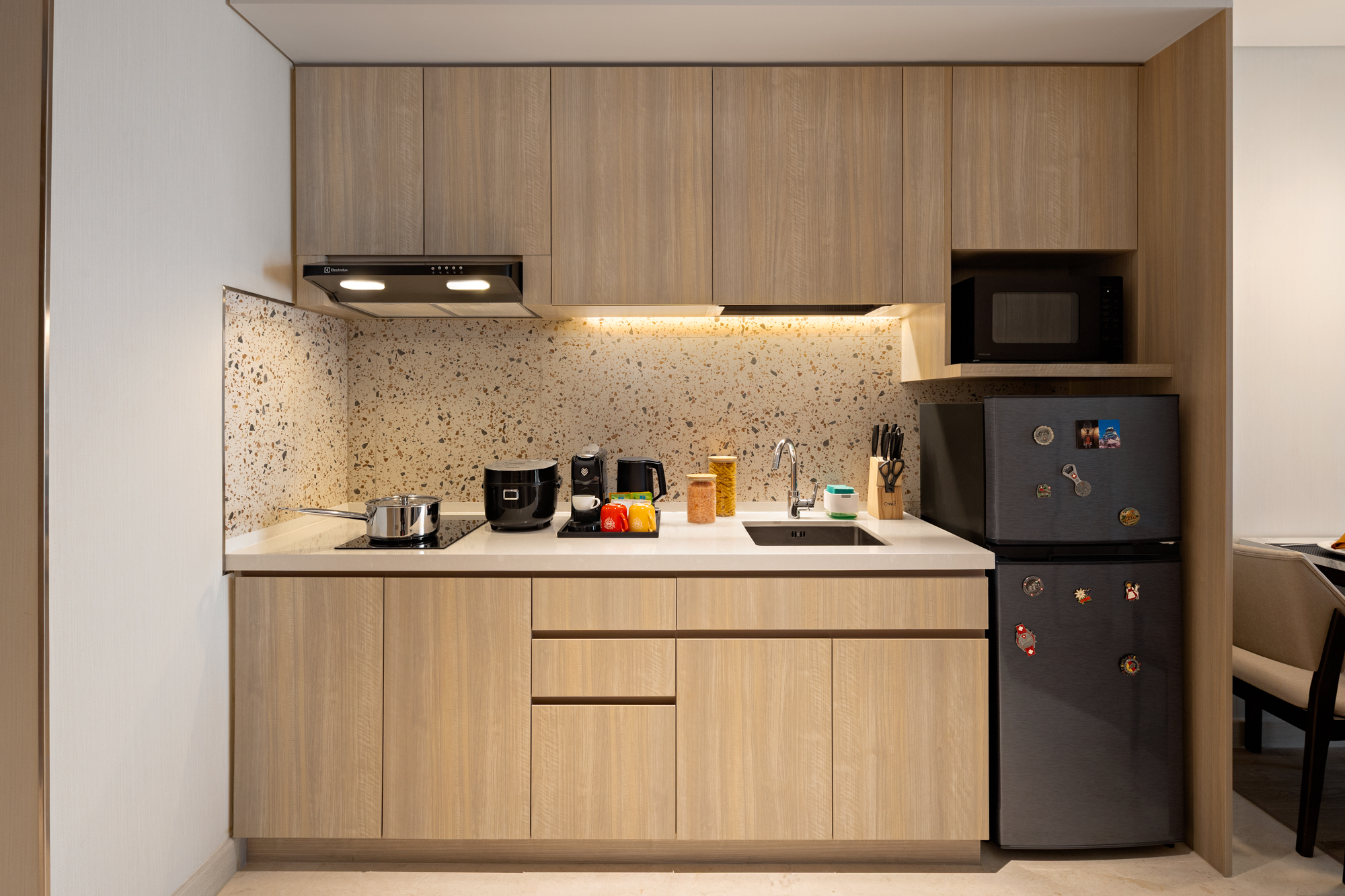
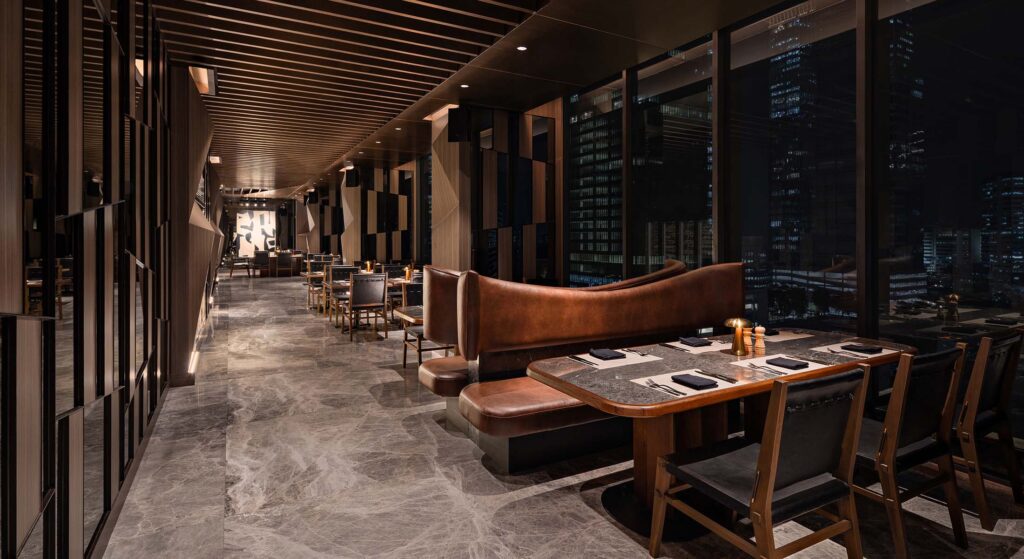
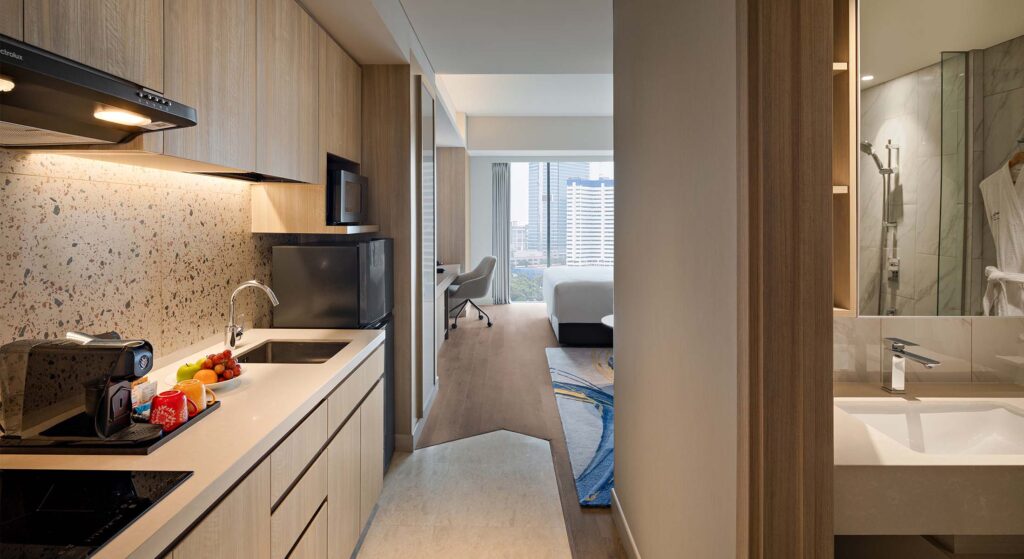
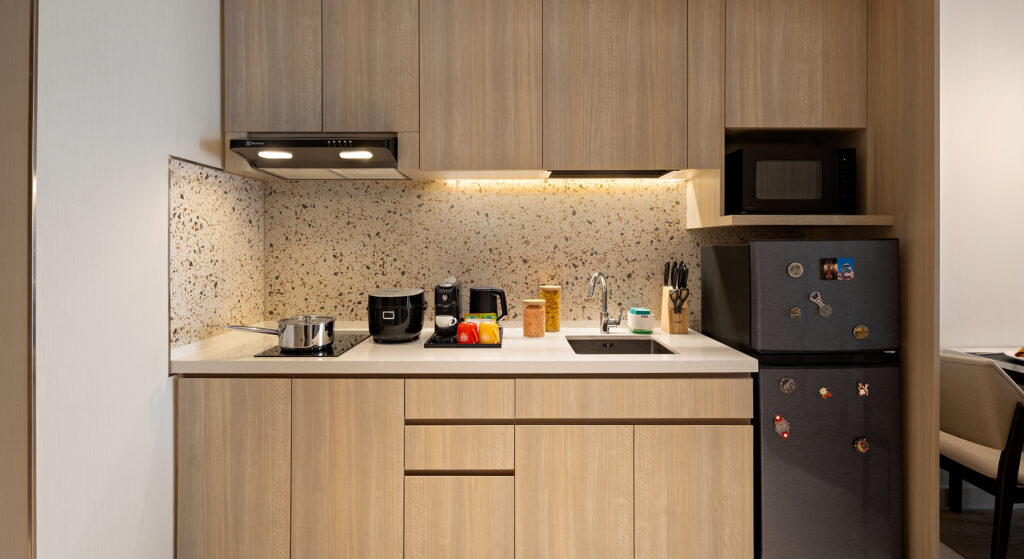
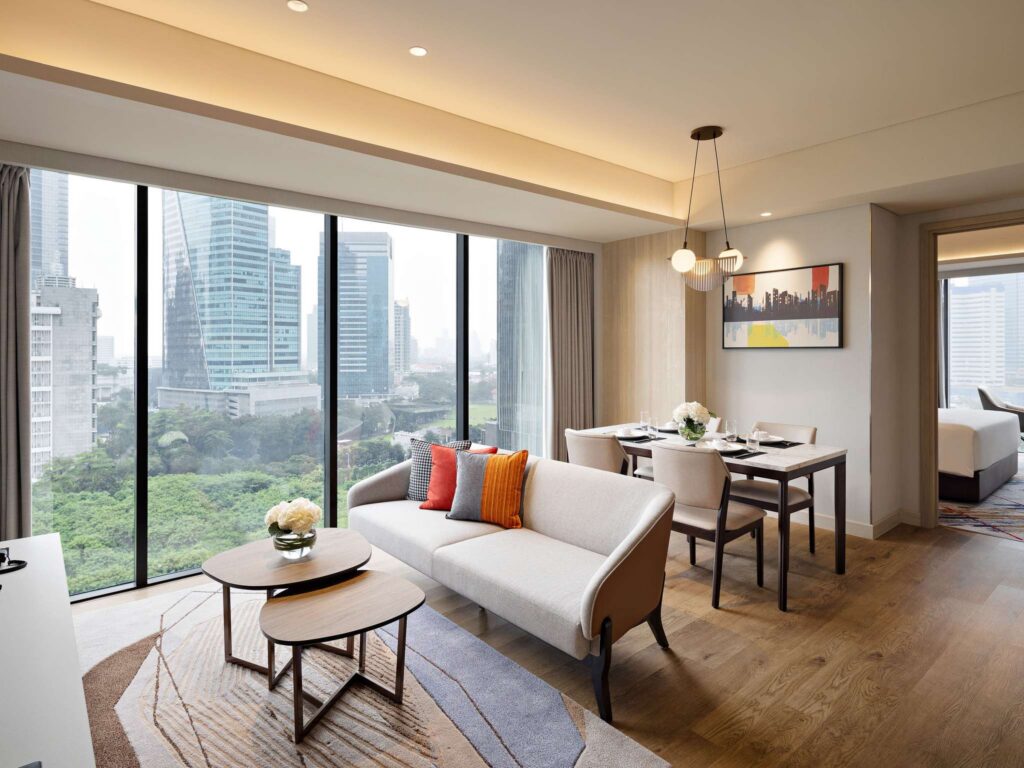
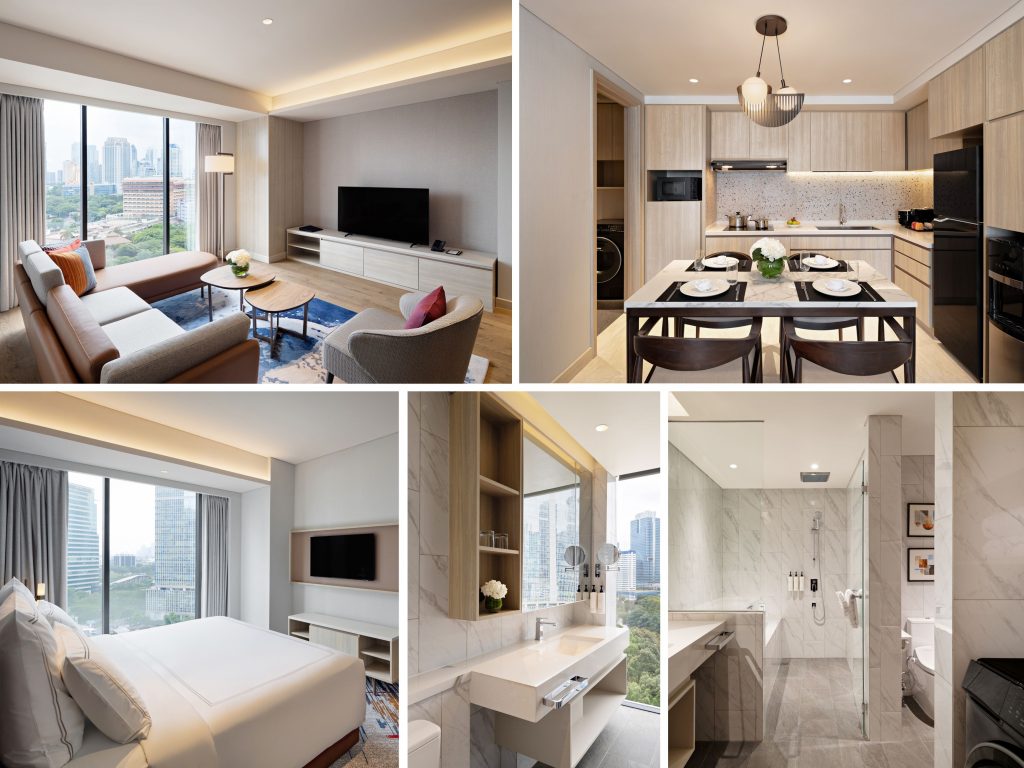
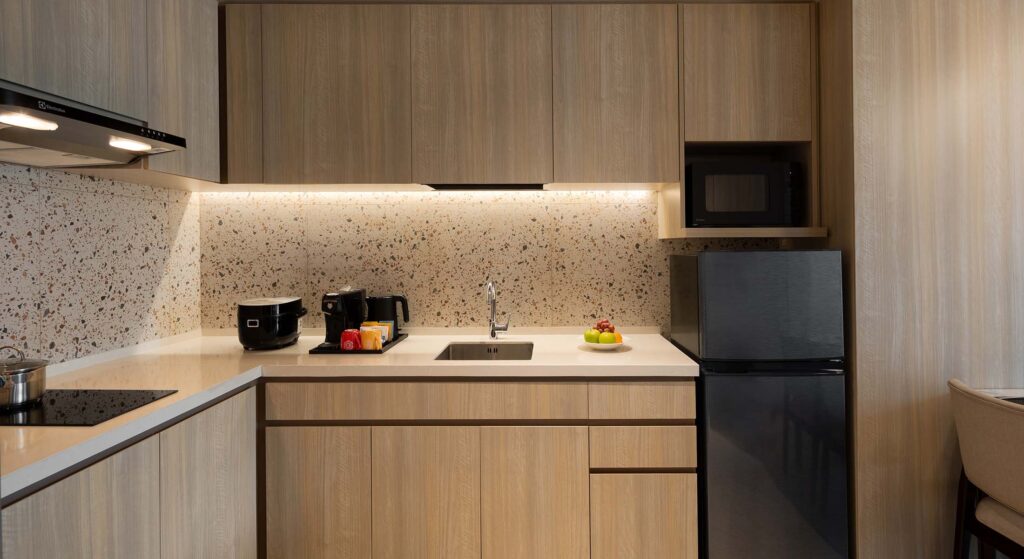
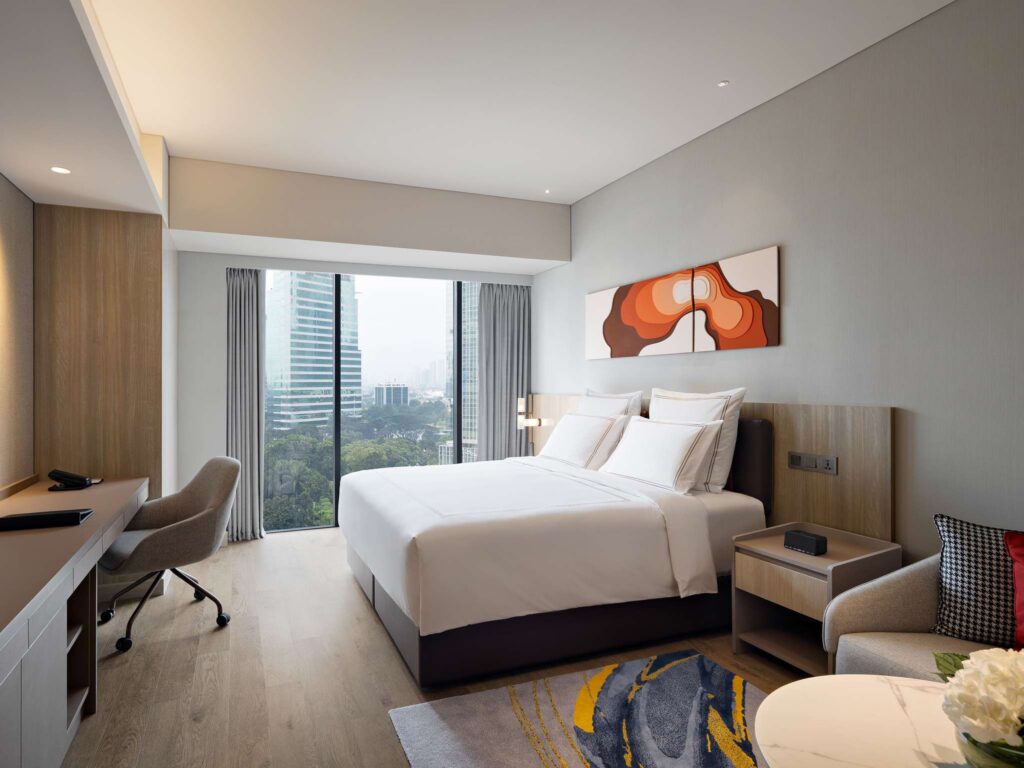
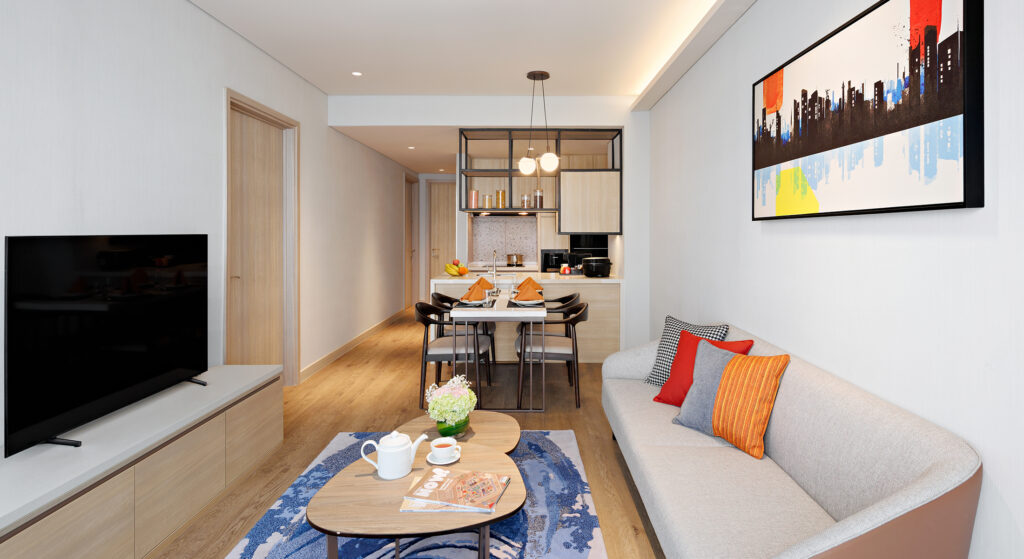
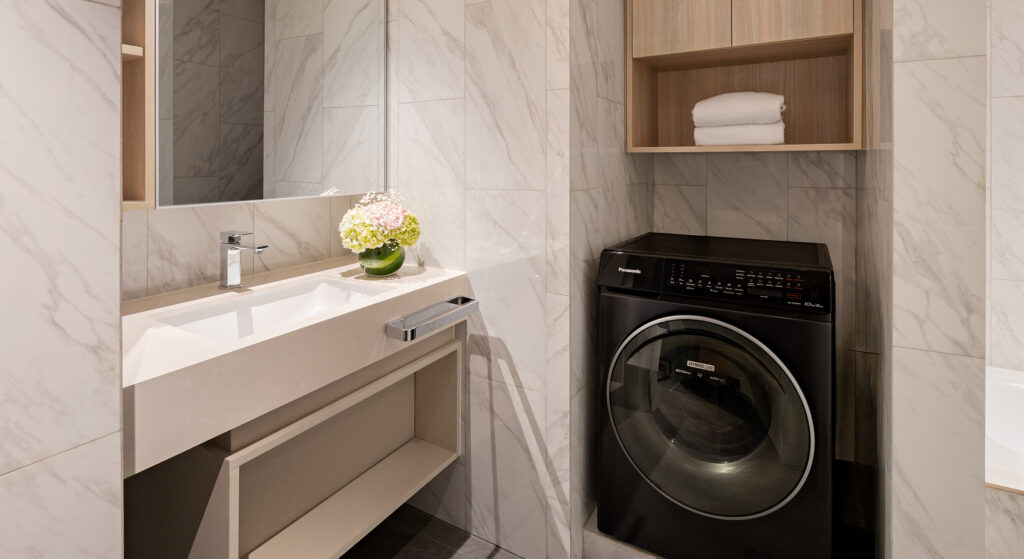
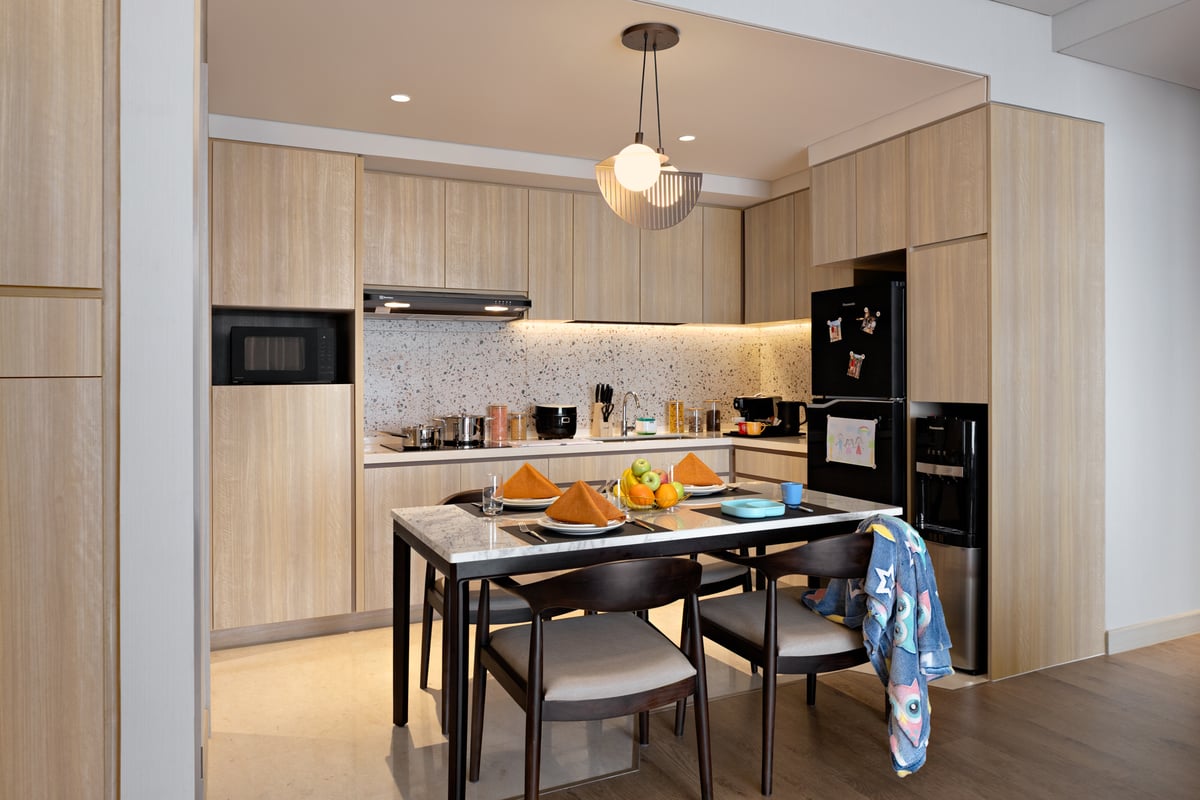
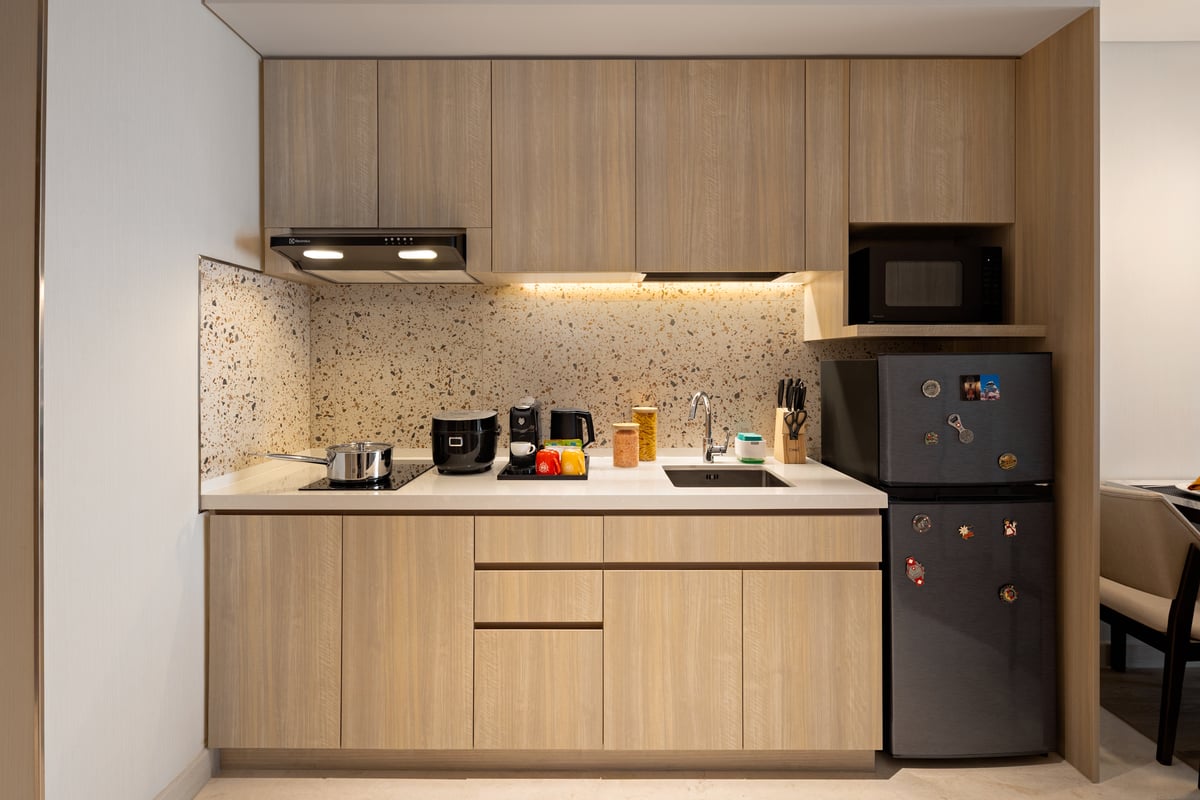
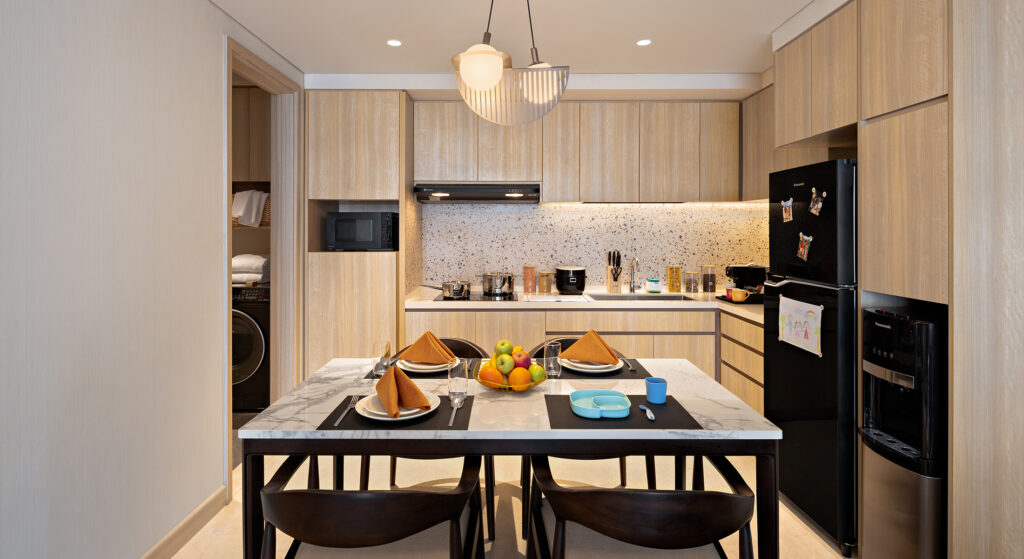
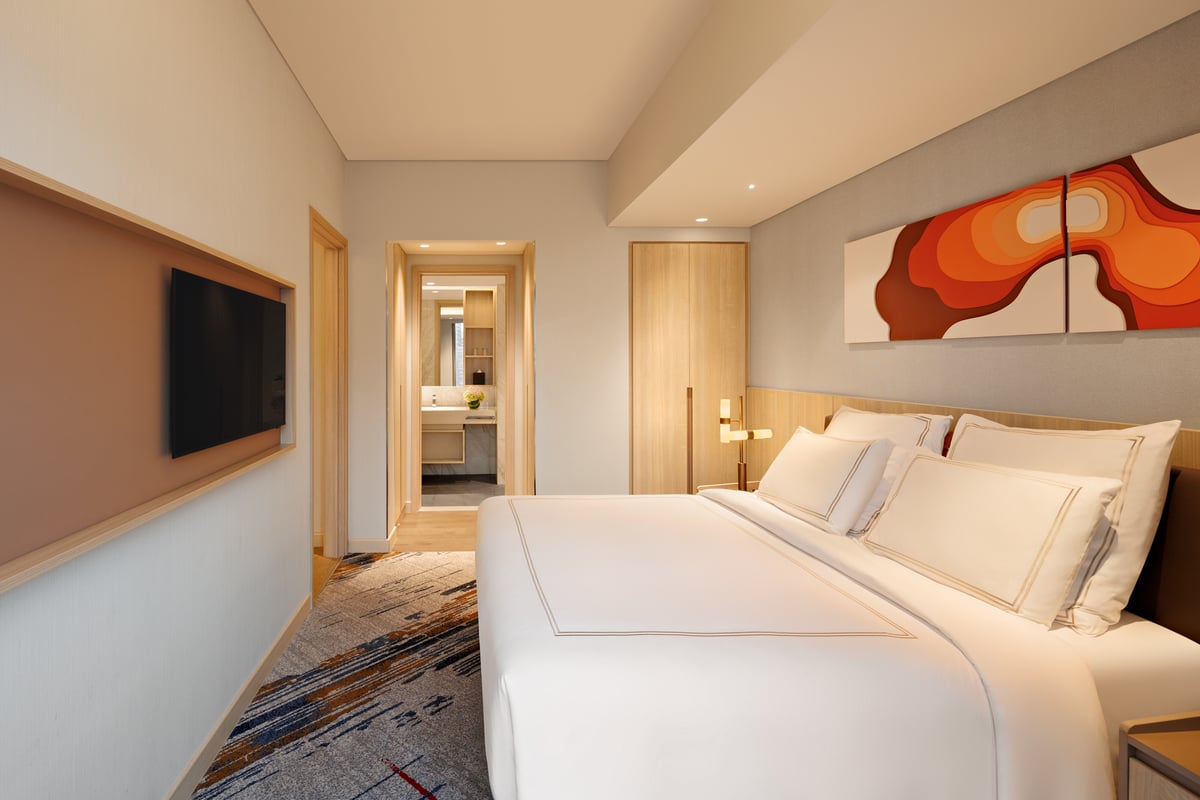
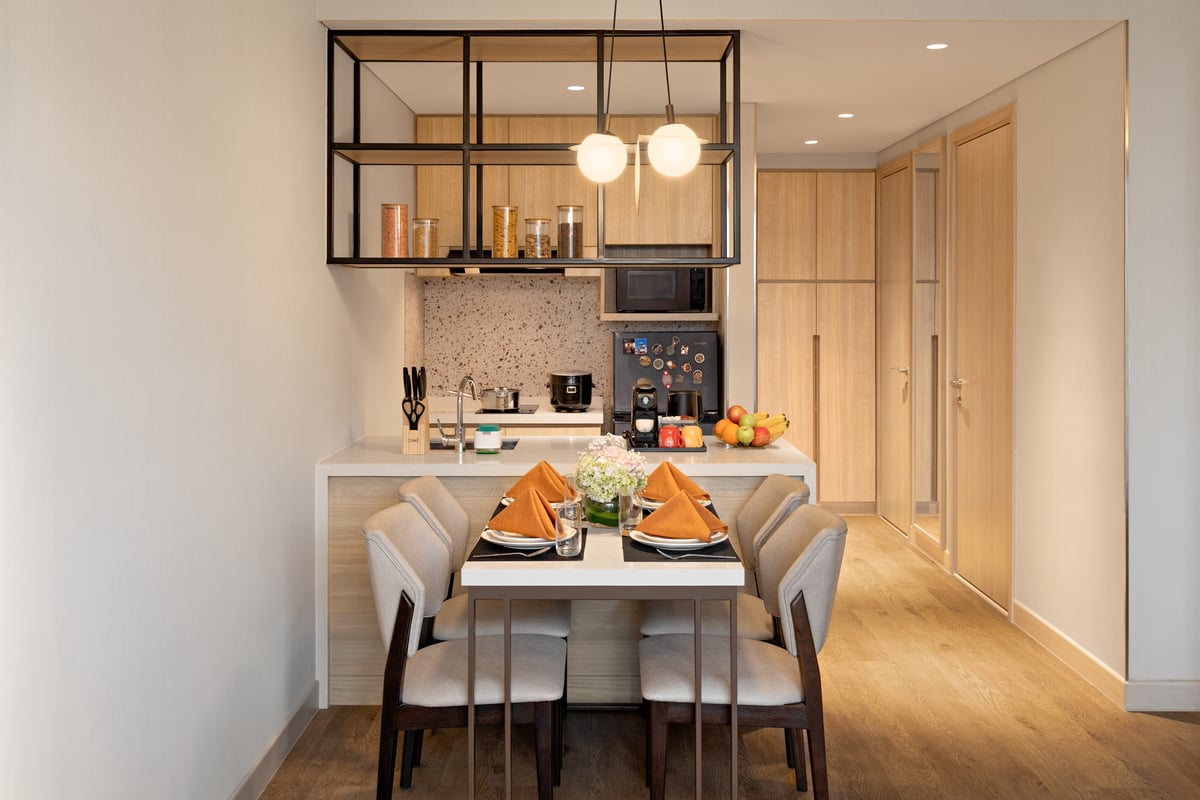
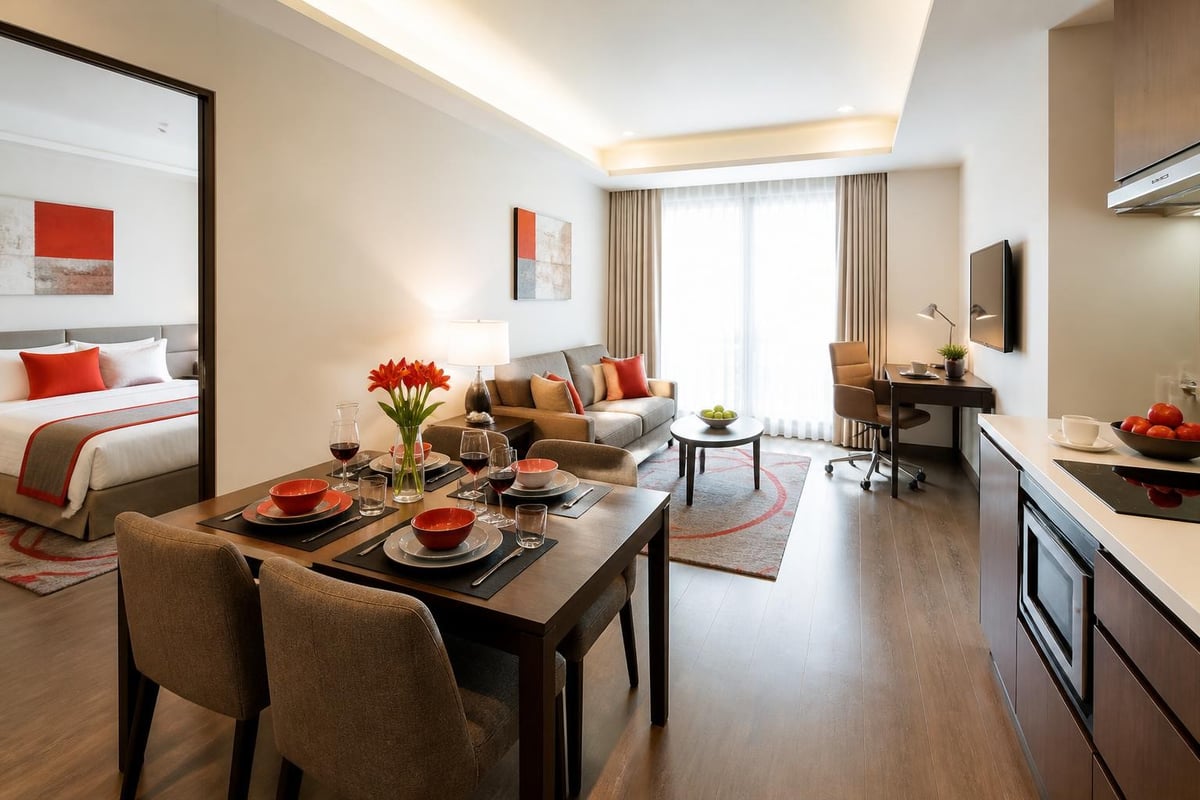
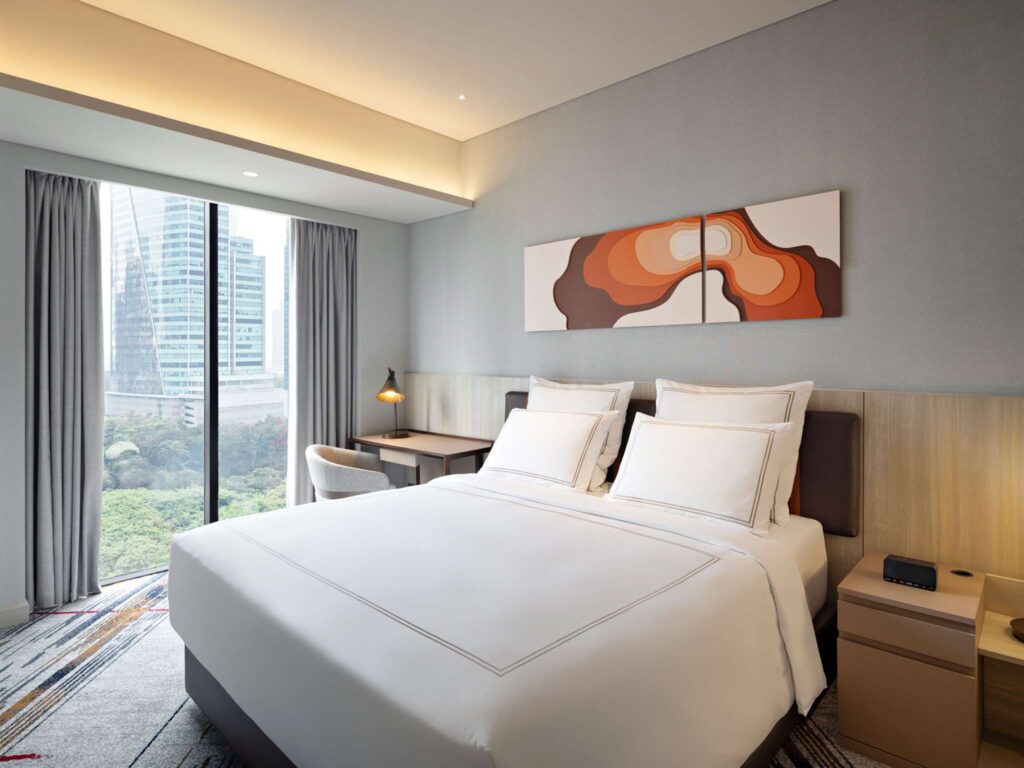
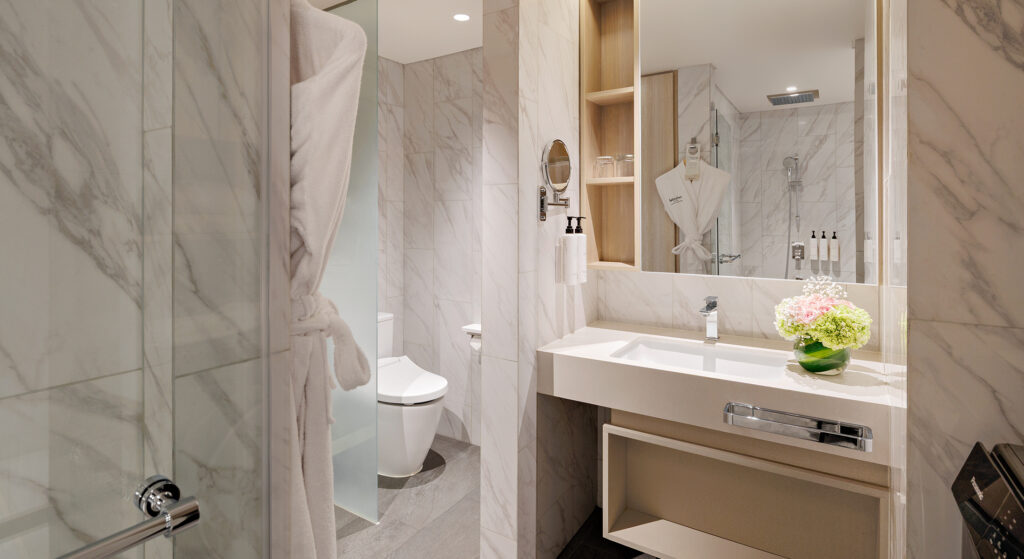
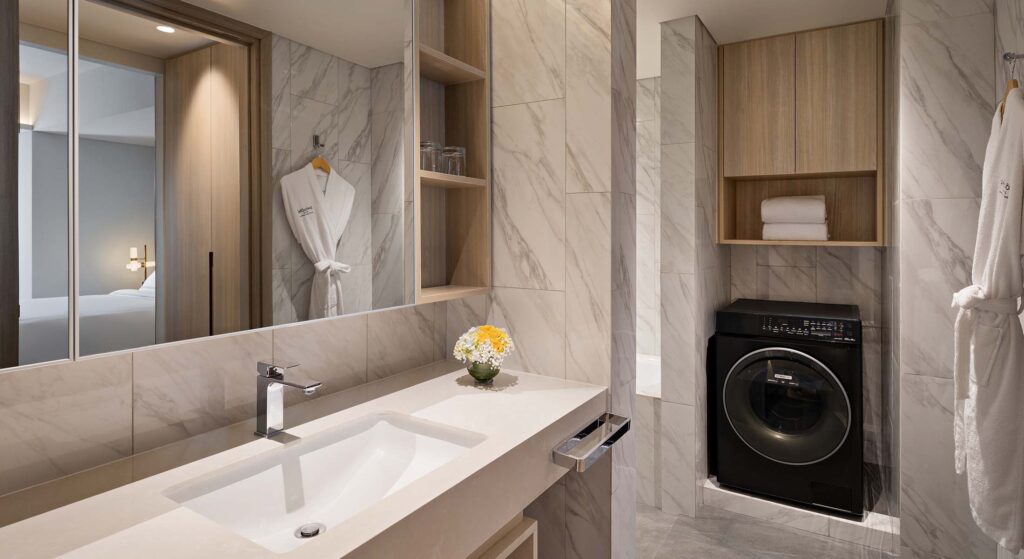
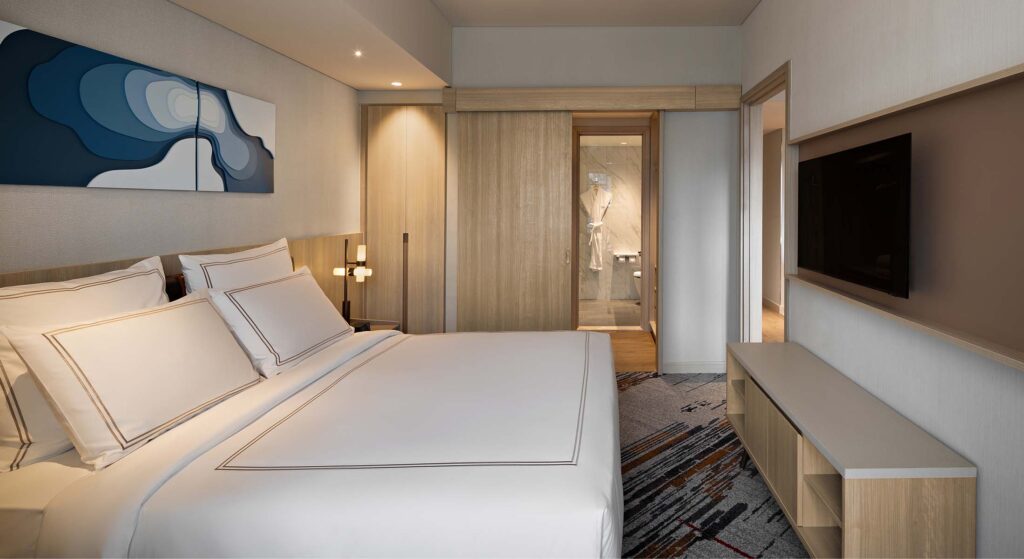
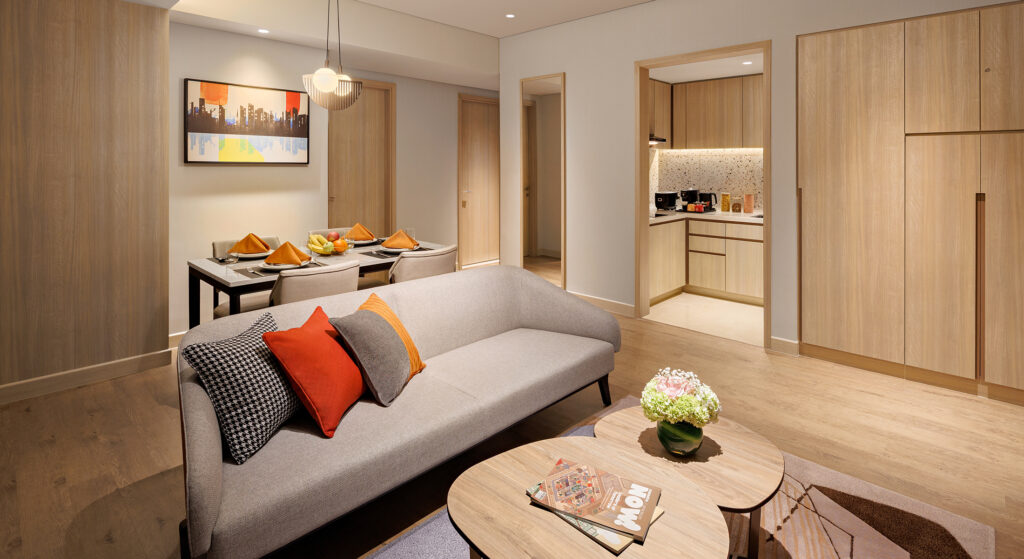
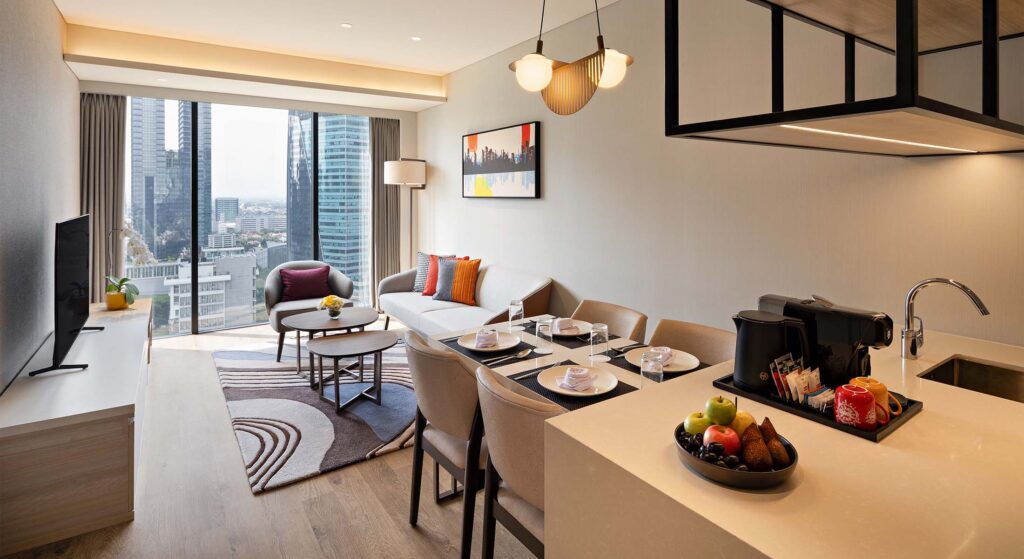
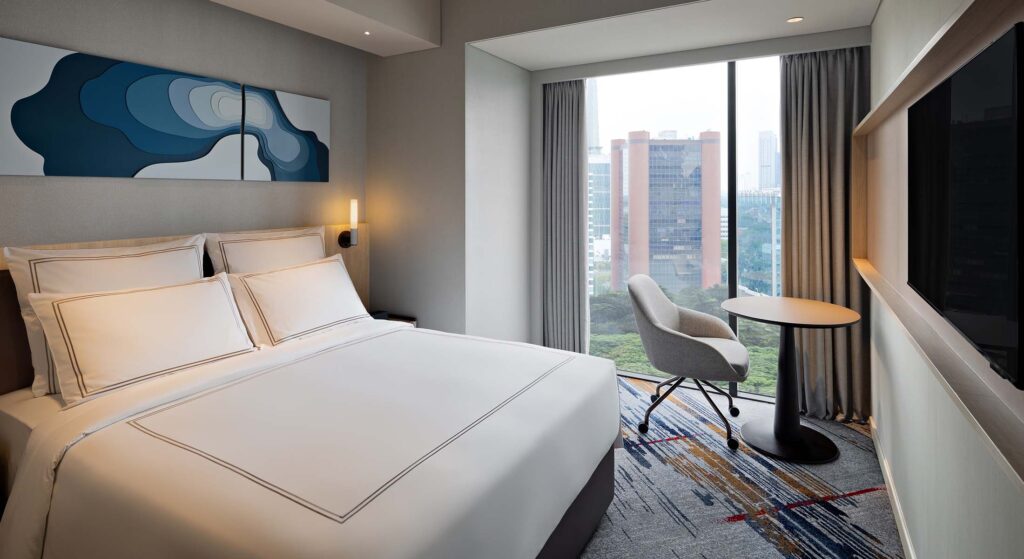
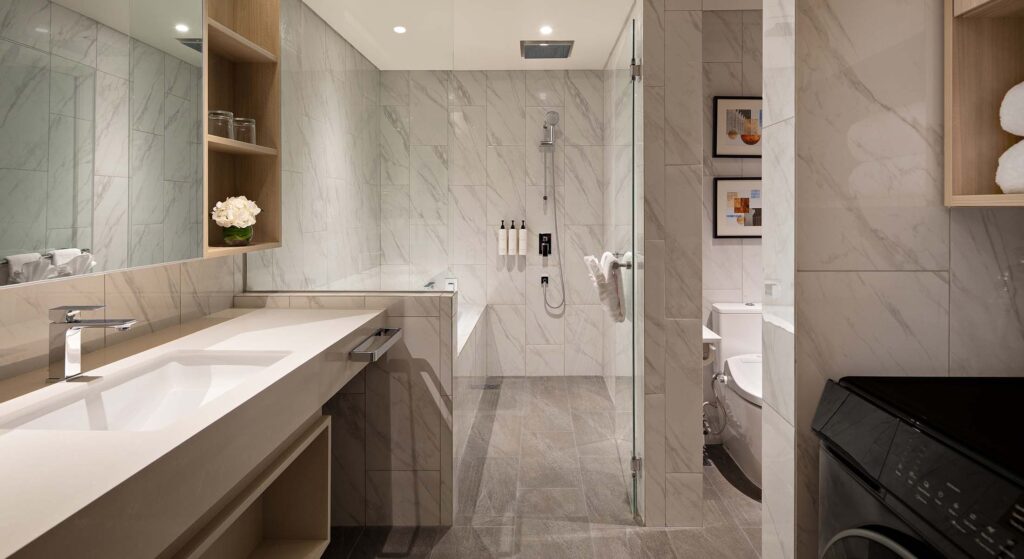
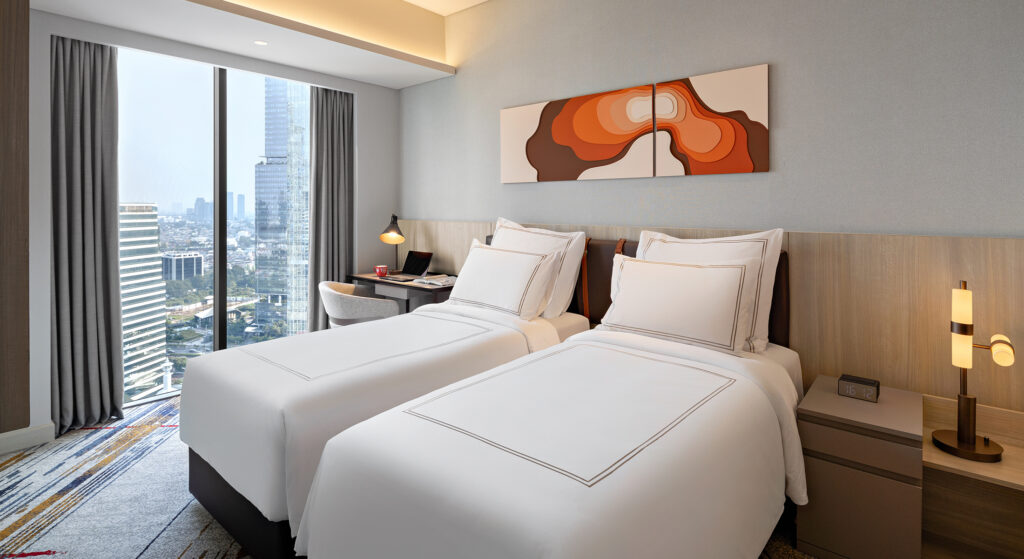
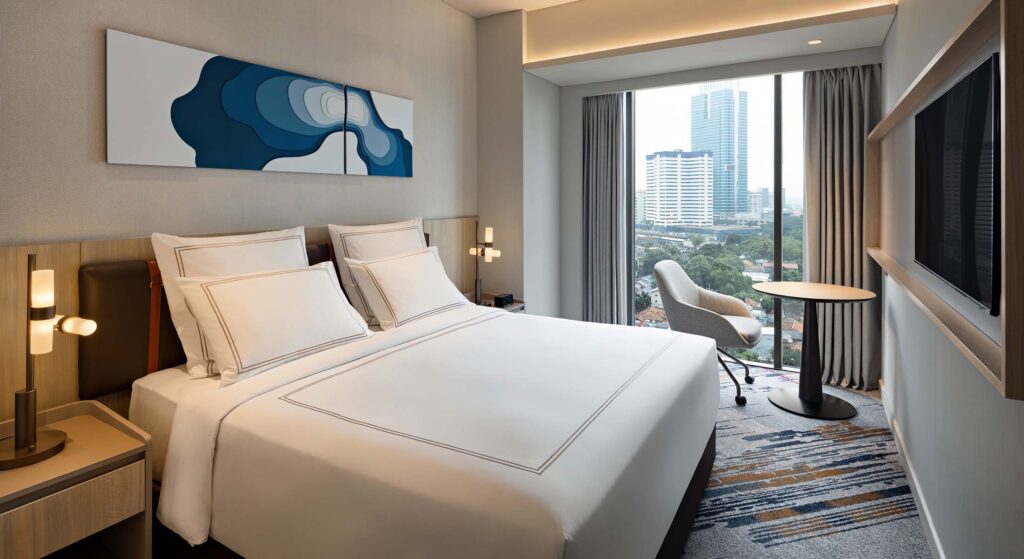
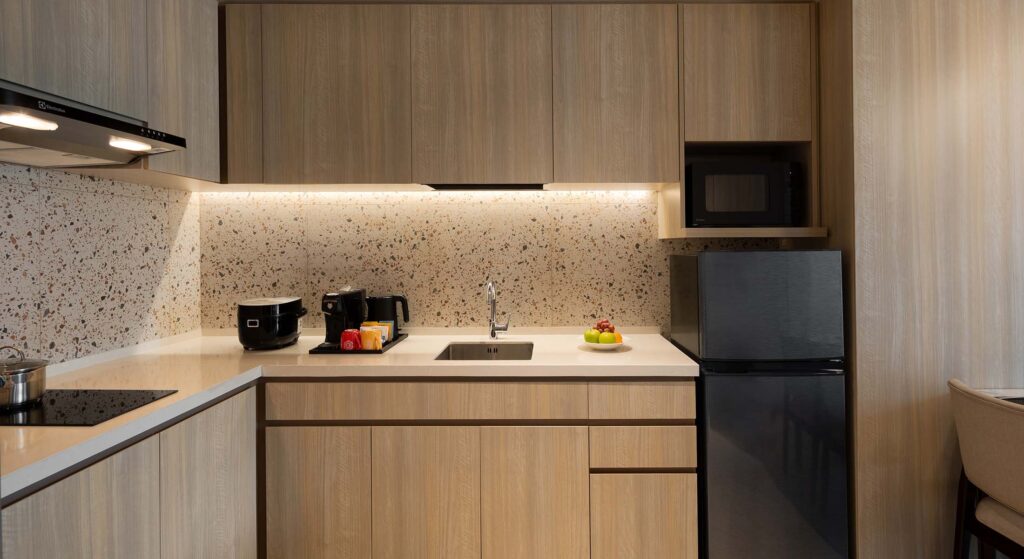
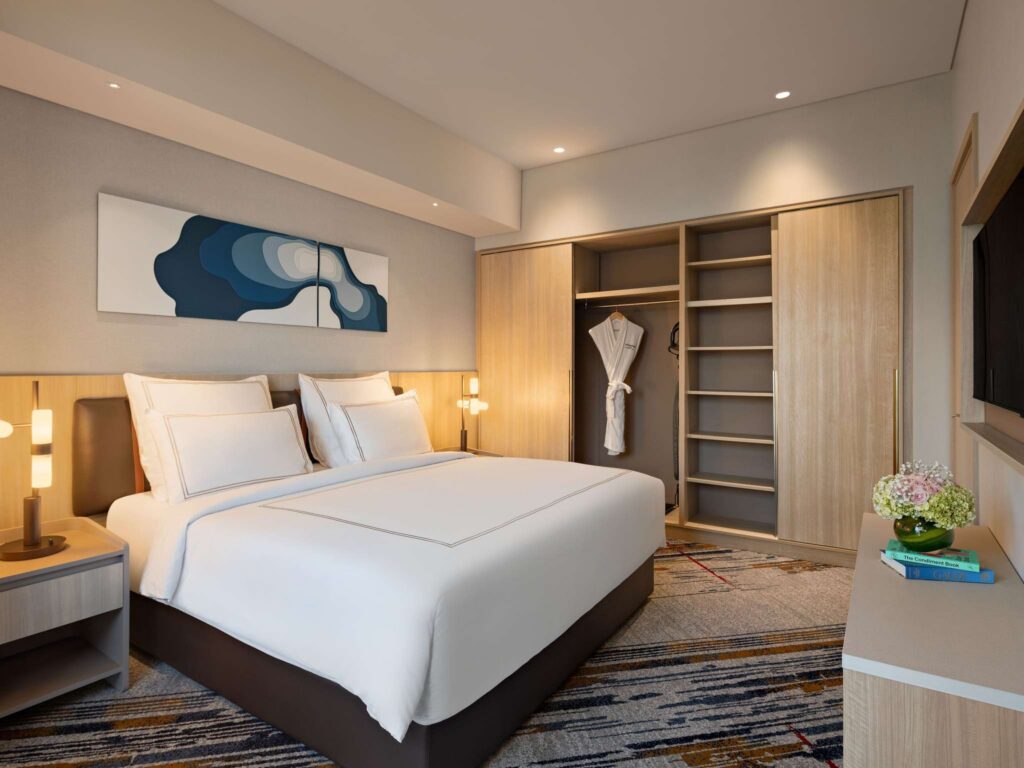
Properties like Swissôtel Living Jakarta Mega Kuningan offer studio residences with premium positioning, providing 37 square meters of efficiently designed space with king beds, full kitchens including induction stoves and rice cookers, washing machines, and Swiss hospitality service standards. These facilities suit professionals who value quality over quantity in their temporary housing.
One-Bedroom and Two-Bedroom Units
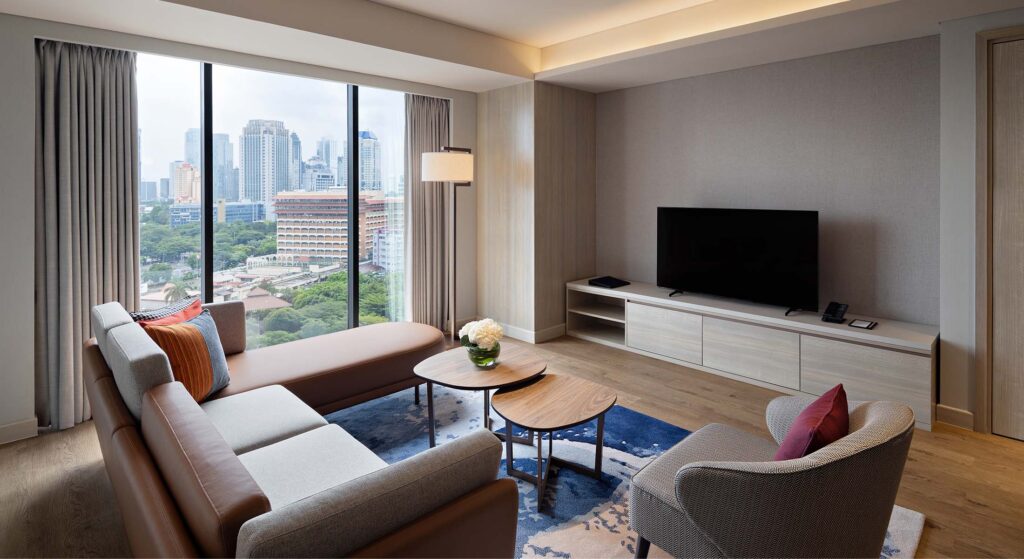
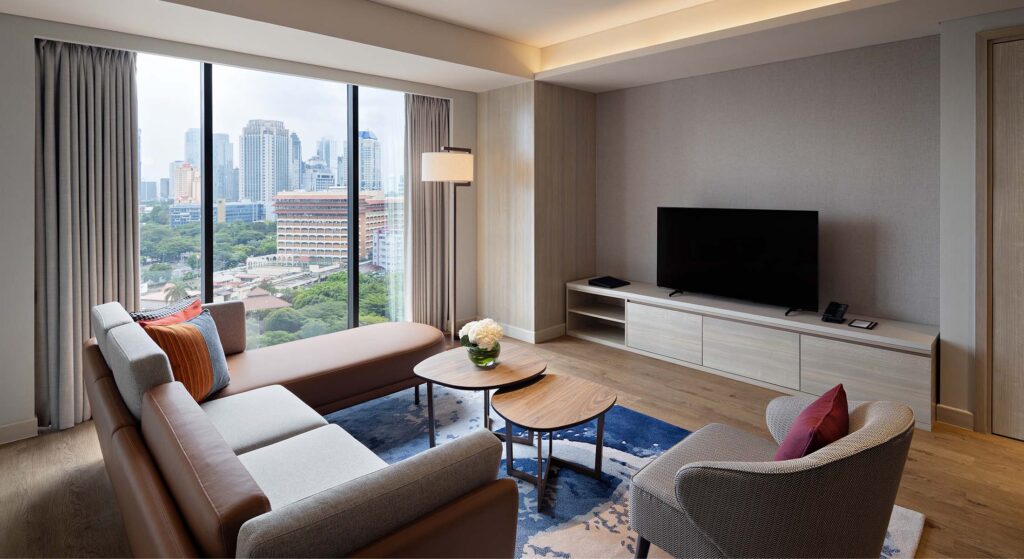
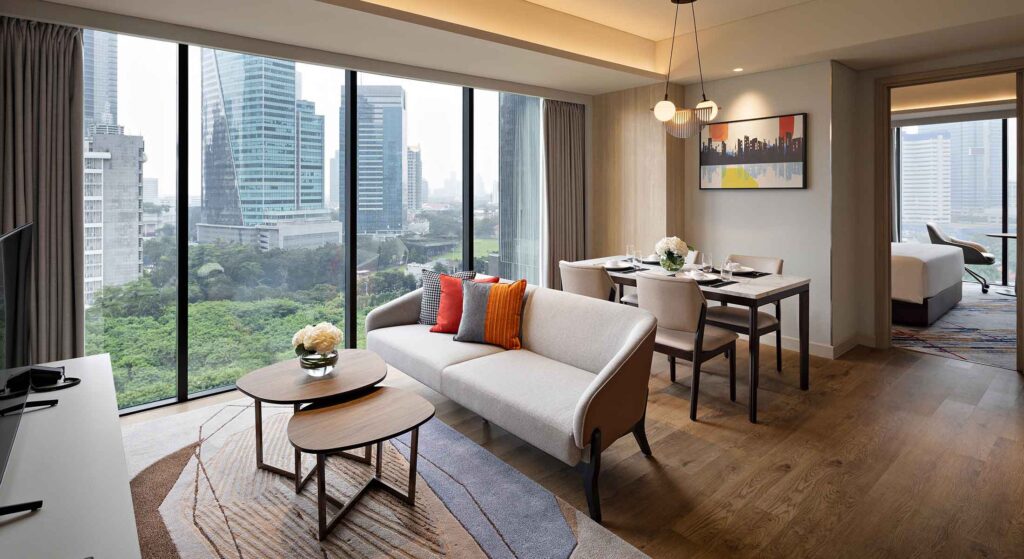
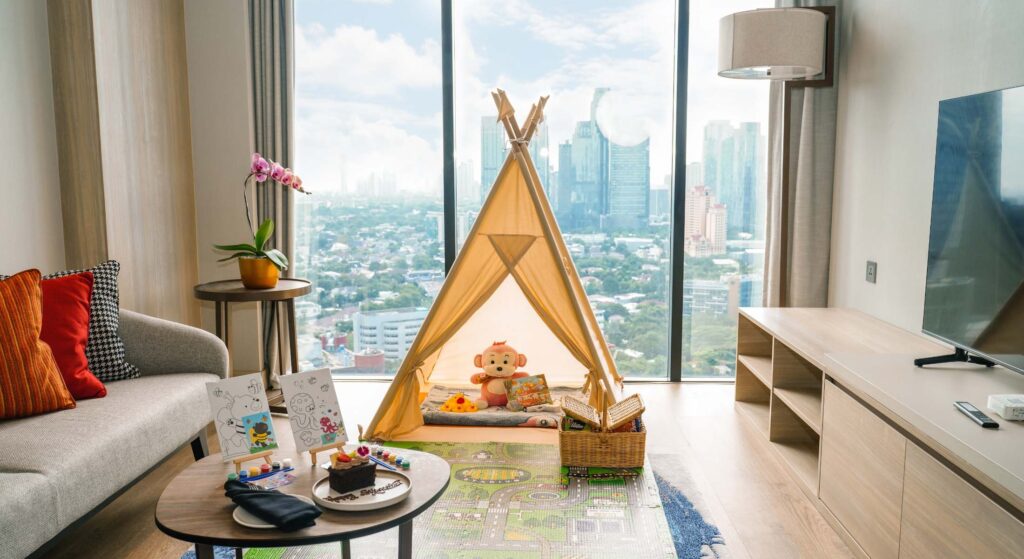
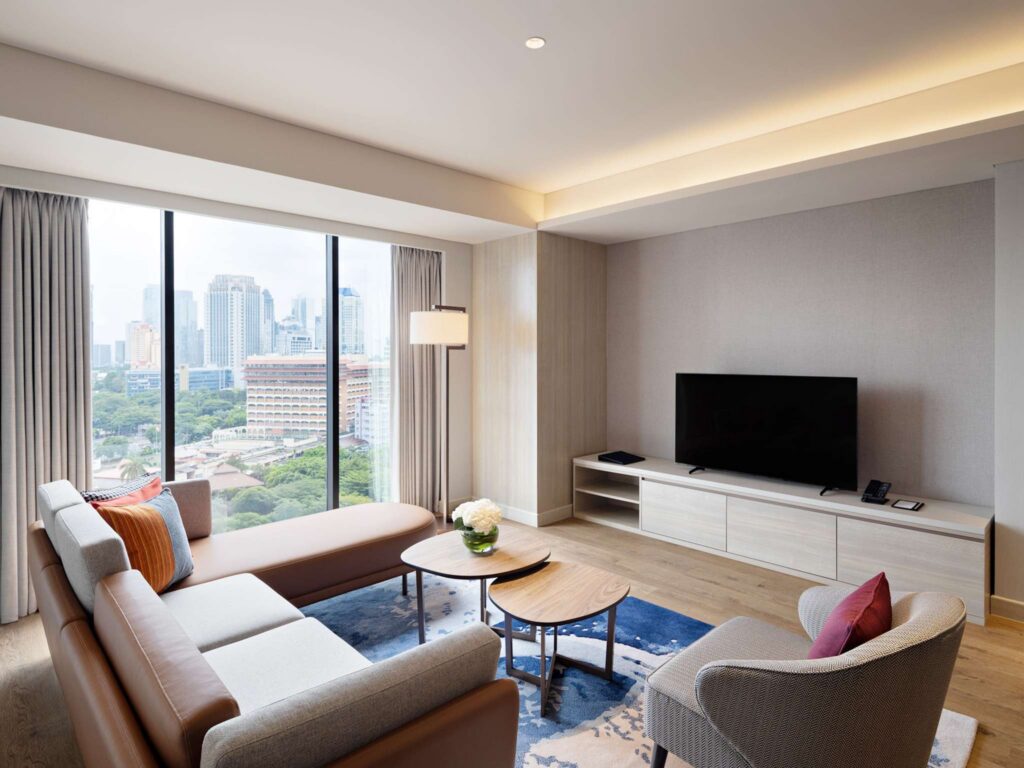
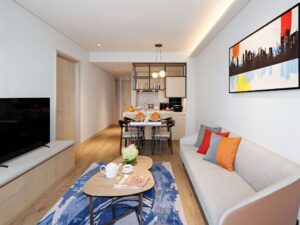
One-bedroom apartments accommodate couples, individual travelers requiring separation between work and living spaces, or those hosting occasional business guests. The additional 15-25 square meters versus studios provides dedicated bedrooms, larger living areas, and enhanced kitchen facilities.
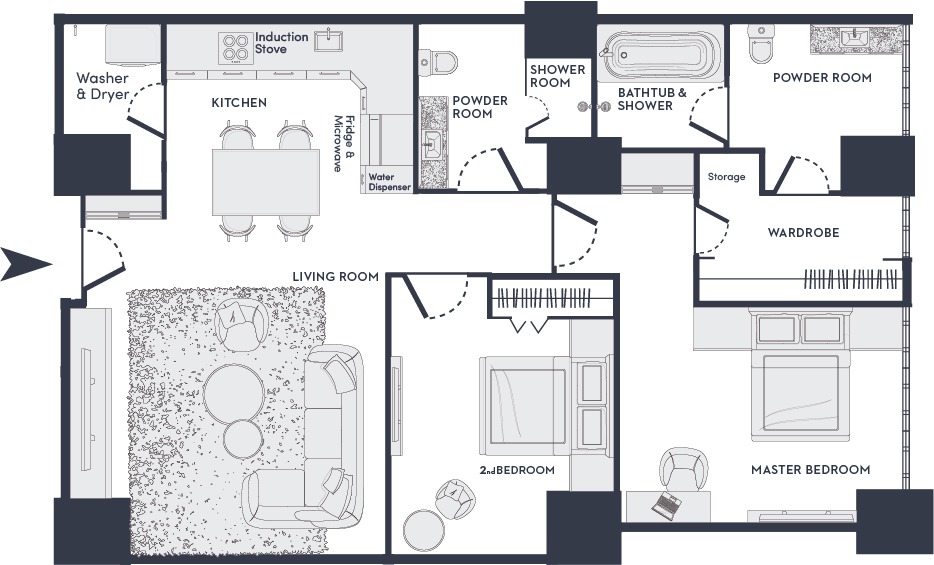
Two-bedroom residences serve small families, senior executives, or travelers requiring home offices and guest accommodations. Extended stay hotel prices for two-bedroom units reflect premium positioning, with monthly rates 60-80% higher than studios in the same property.
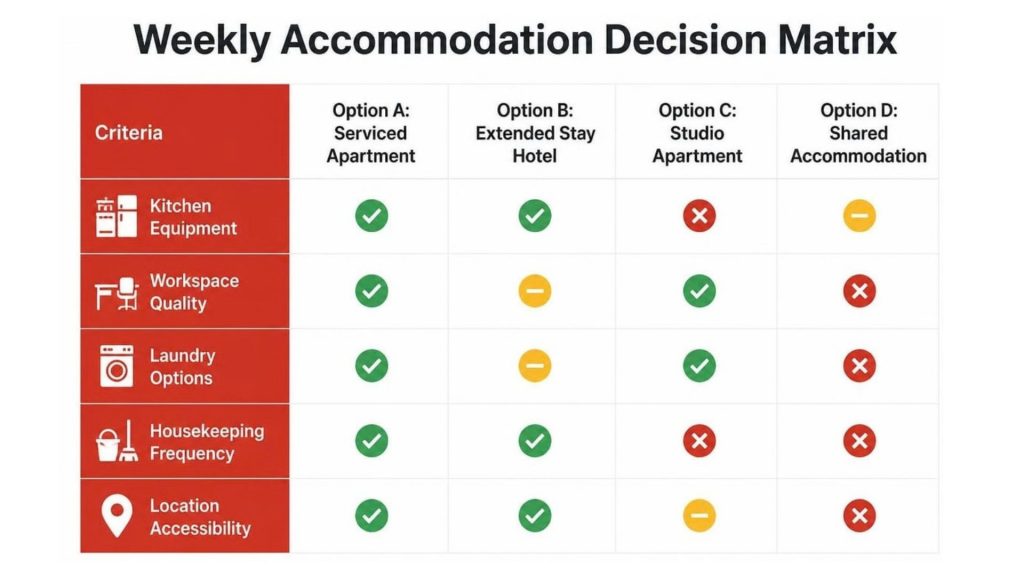
Apartment category decision matrix:
- Studio: Solo travelers, 3-12 month stays, budget-conscious, limited in-room time
- One-bedroom: Couples, work-from-home requirements, 6+ month stays, need space separation
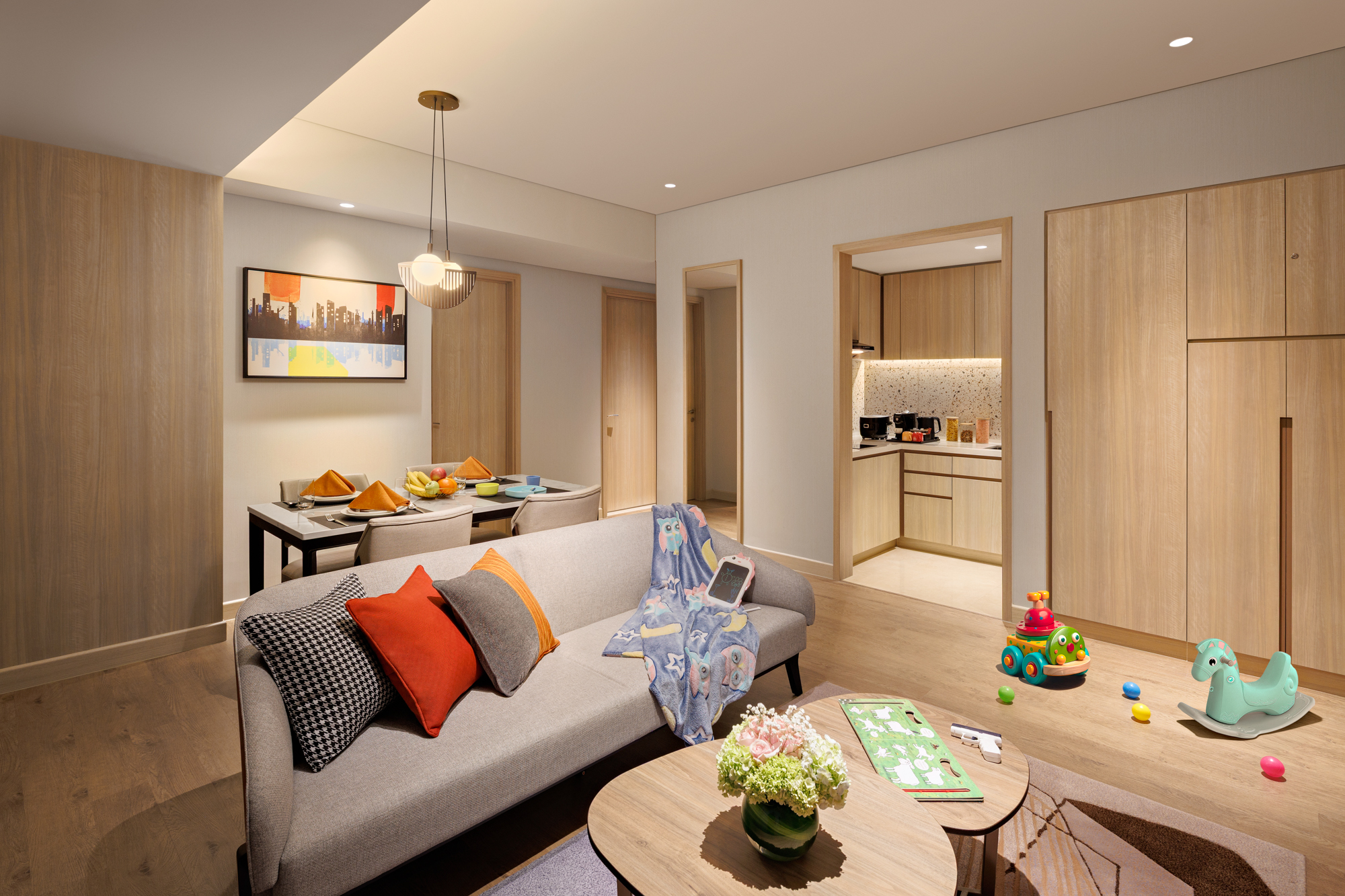
- Two-bedroom: Families with children, senior executives, 12+ month assignments, frequent hosting
- Three-bedroom: Large families, regional executives, multi-year assignments, full household relocation
Balancing Location Premium Against Space
Properties in ultra-prime locations like Mega Kuningan command 20-35% premiums over comparable units in secondary business districts. This location differential often equals the cost difference between a studio in the CBD and a one-bedroom unit 3-5 kilometers away.
Evaluate commute costs, time value, and lifestyle impact when comparing extended stay hotel prices across locations. A finance professional working in SCBD who selects a less expensive property in South Tangerang may save IDR 8-12 million monthly in rent but spend 90-120 additional minutes daily commuting, plus IDR 3-4 million in transportation costs.
Extended Stay Amenities Worth Premium Pricing
Not all amenities justify proportional price increases. Discriminating travelers focus on features that deliver measurable lifestyle improvements or cost savings rather than impressive but underutilized facilities.
Kitchen Quality and Equipment
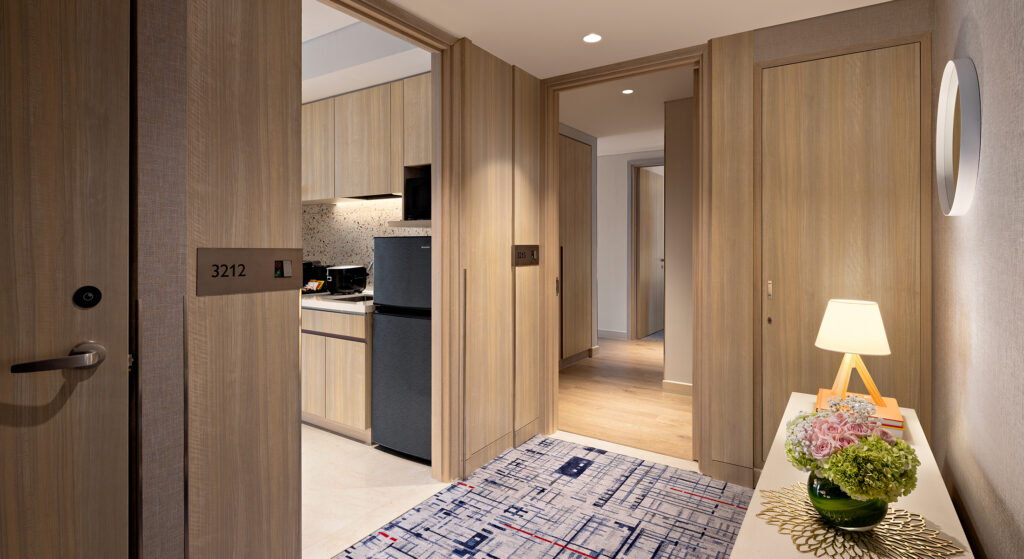
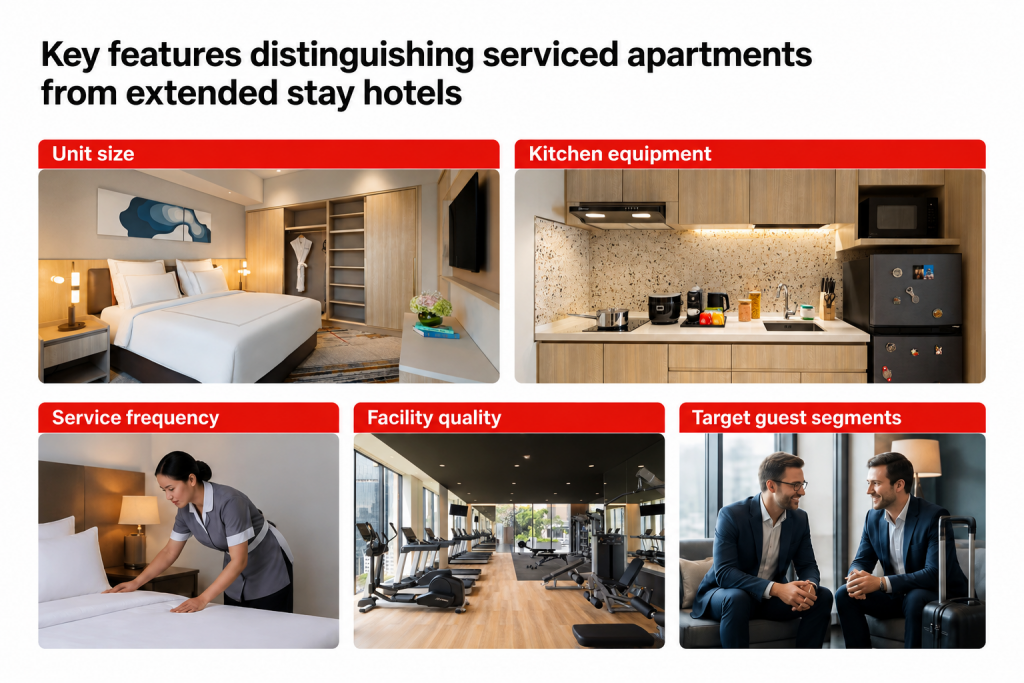
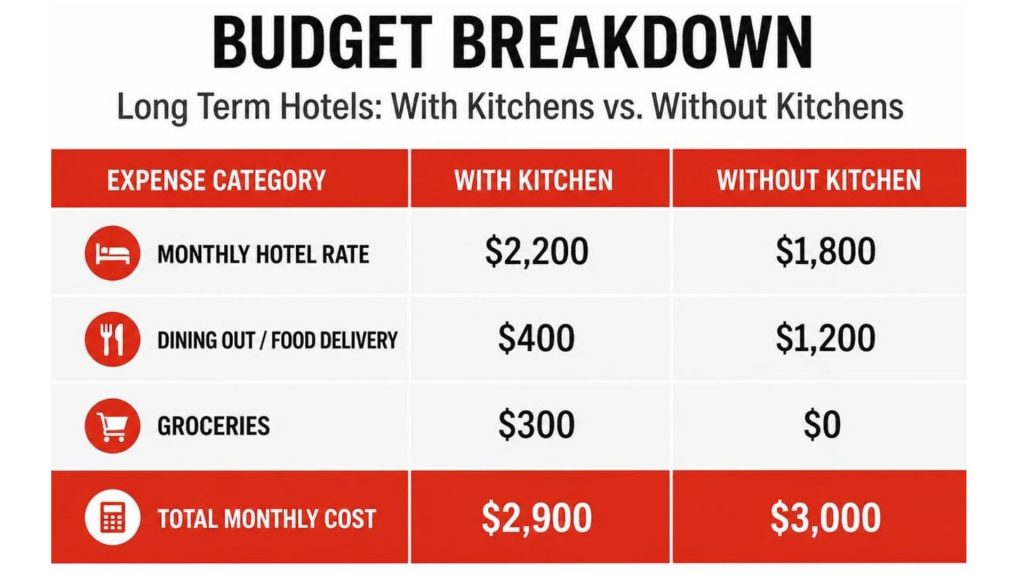
Full kitchens with standard appliances differentiate true extended stay properties from hotels with kitchenettes. Induction or gas cooktops, full-size refrigerators, microwaves, rice cookers, adequate cookware, and dishware enable meal preparation that reduces dining costs substantially.
Corporate travelers who prepare 60% of meals in-residence save IDR 6-9 million ($385-575 USD) monthly compared to full restaurant dining. This savings partially offsets the premium that extended stay hotel prices command over limited-service hotels.
Essential kitchen equipment checklist:
- Multi-burner cooktop (induction or gas)
- Full-size refrigerator with freezer
- Microwave oven
- Rice cooker (essential in Asian markets)
- Coffee maker or kettle
- Complete cookware set
- Dinnerware and glassware for 4-6 people
- Basic utensils and serving pieces
Fitness and Wellness Facilities
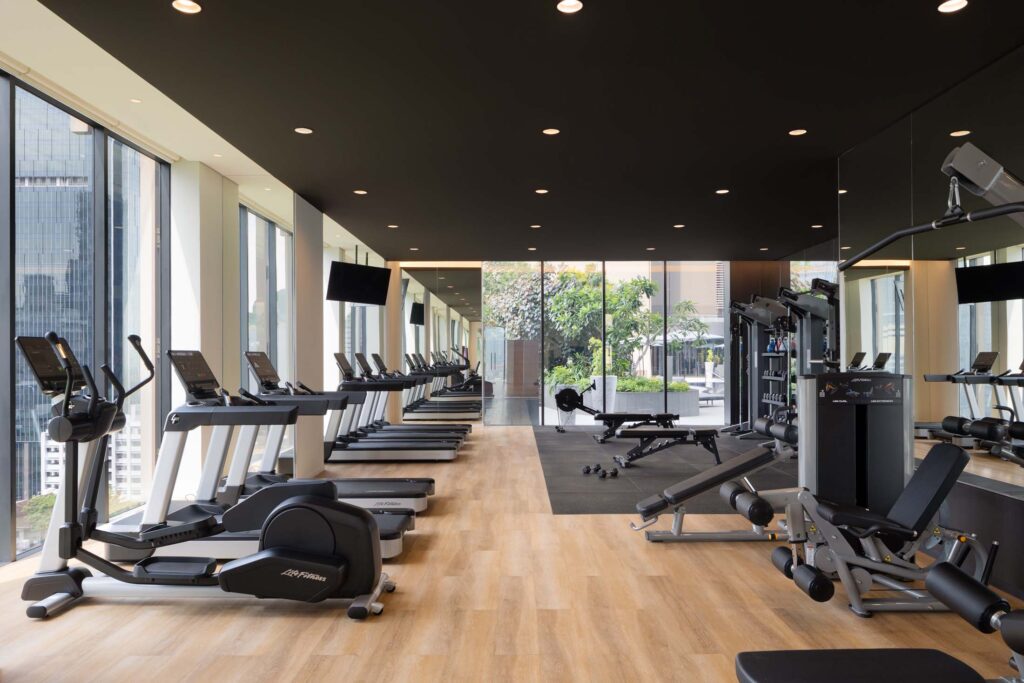
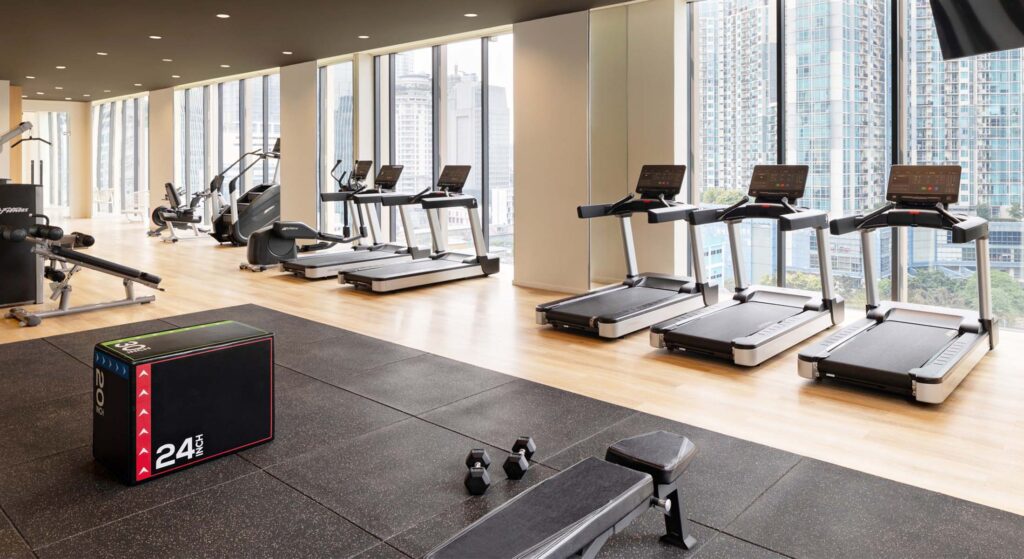
On-site fitness centers, swimming pools, and wellness facilities appear standard but vary dramatically in quality and accessibility. Budget-conscious travelers should assess whether premium fitness facilities justify 10-15% higher rates when quality commercial gyms nearby cost IDR 800,000-1,500,000 monthly.
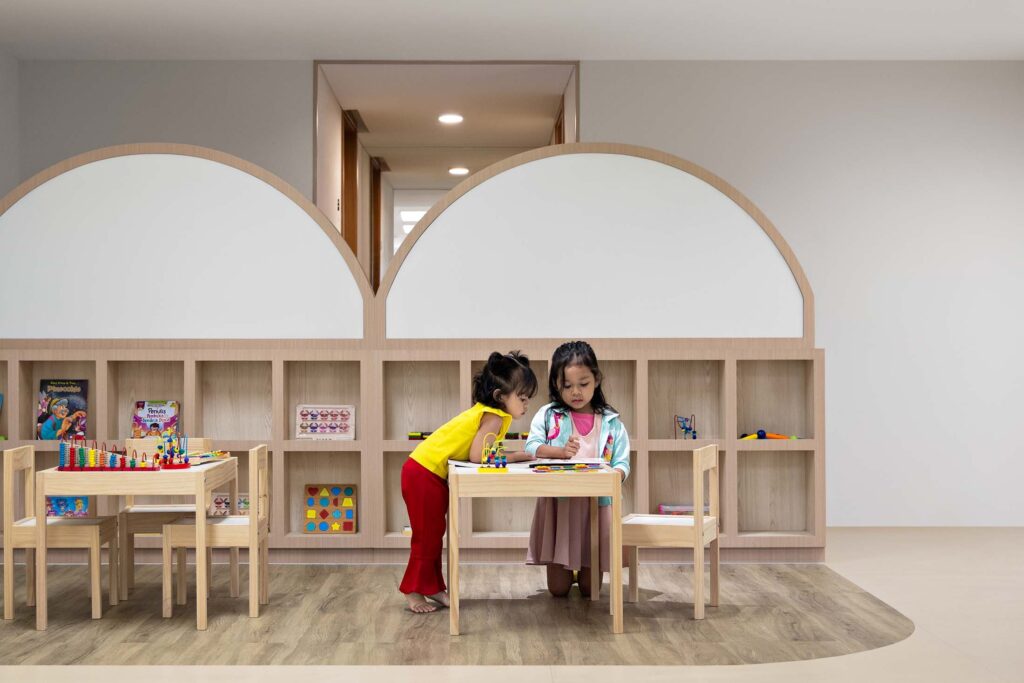
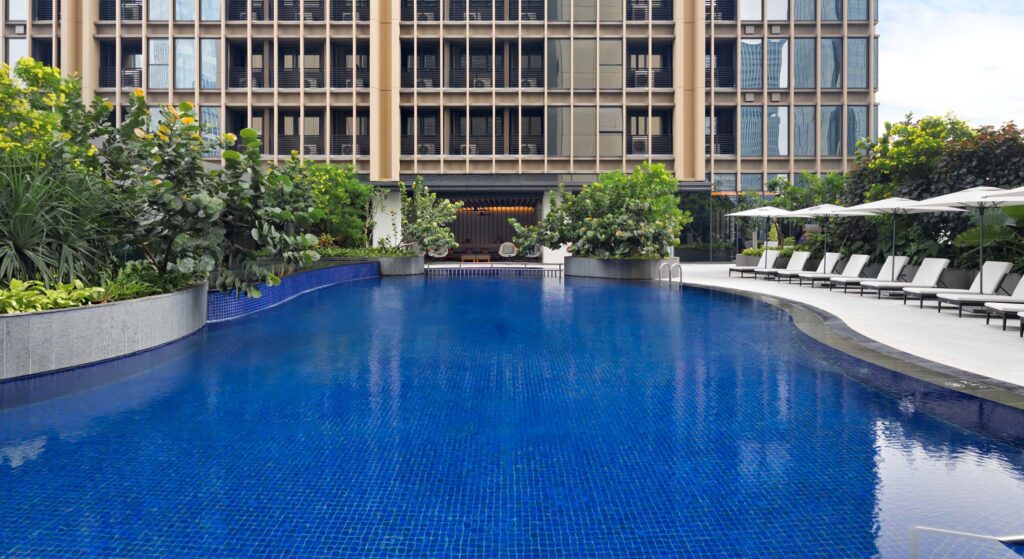
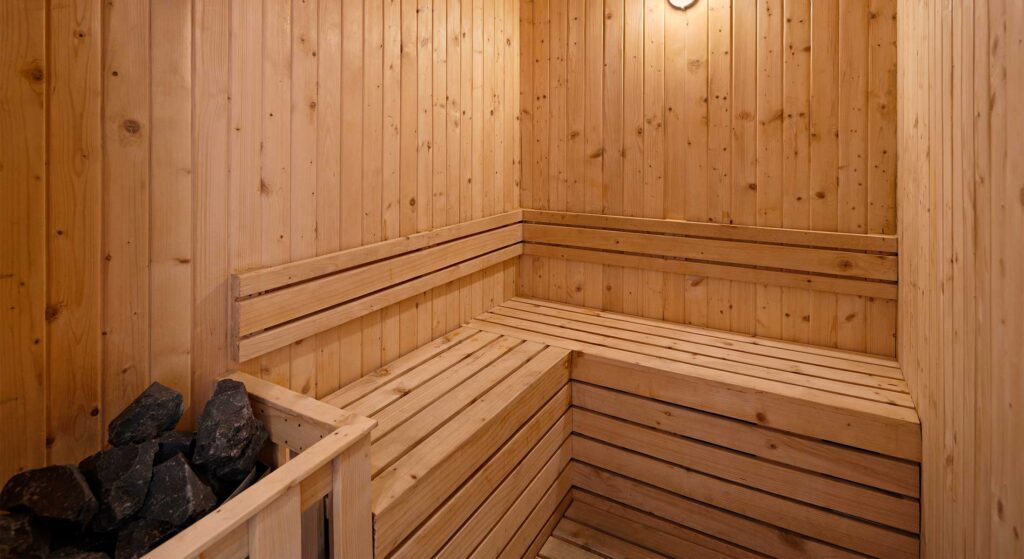
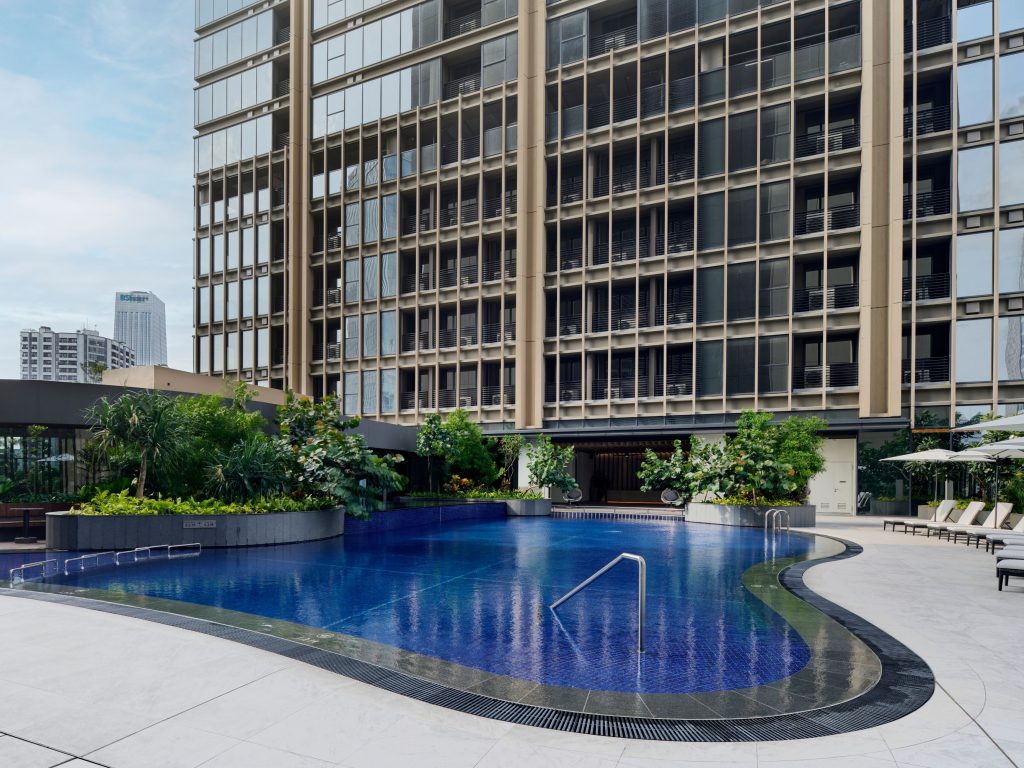
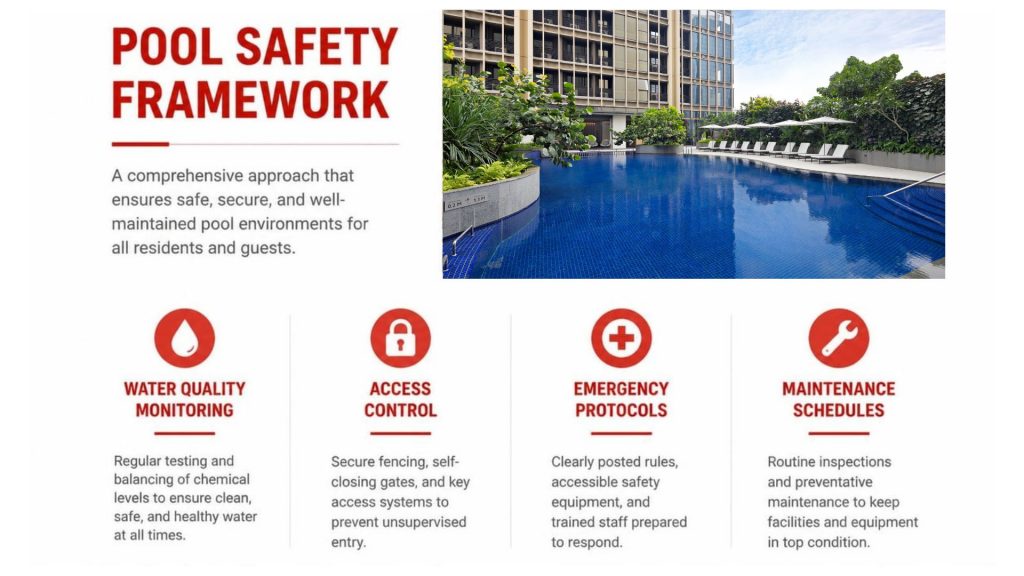
Properties with comprehensive fitness facilities, pools, saunas, and wellness amenities suit health-focused travelers and families requiring safe recreational spaces. These features particularly benefit long-term residents (6+ months) who establish routine fitness practices.
Business Infrastructure and Meeting Spaces
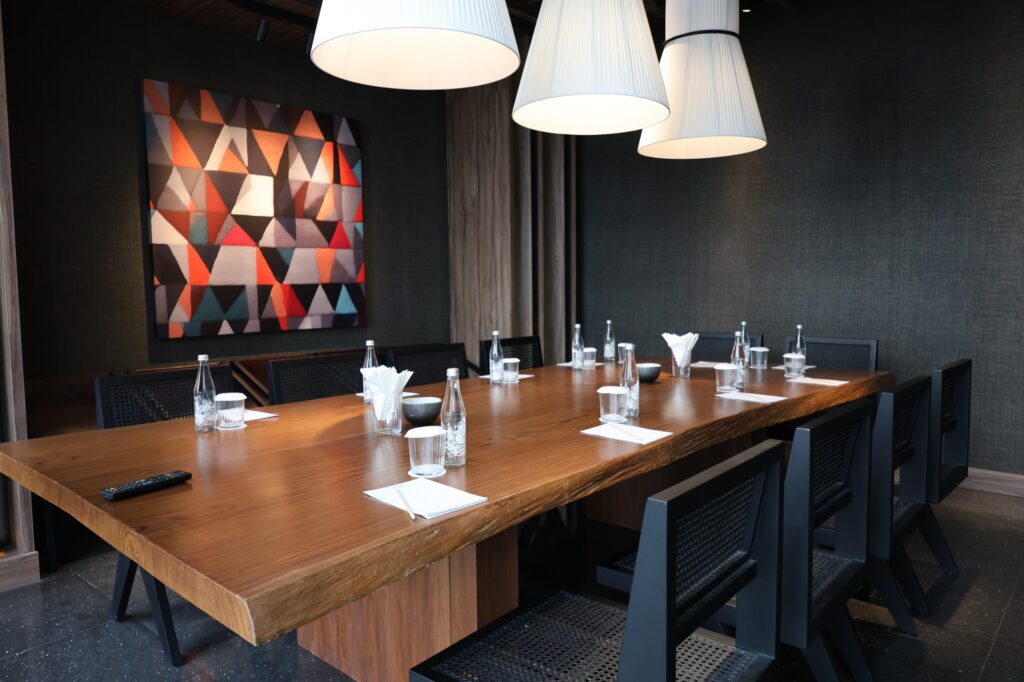
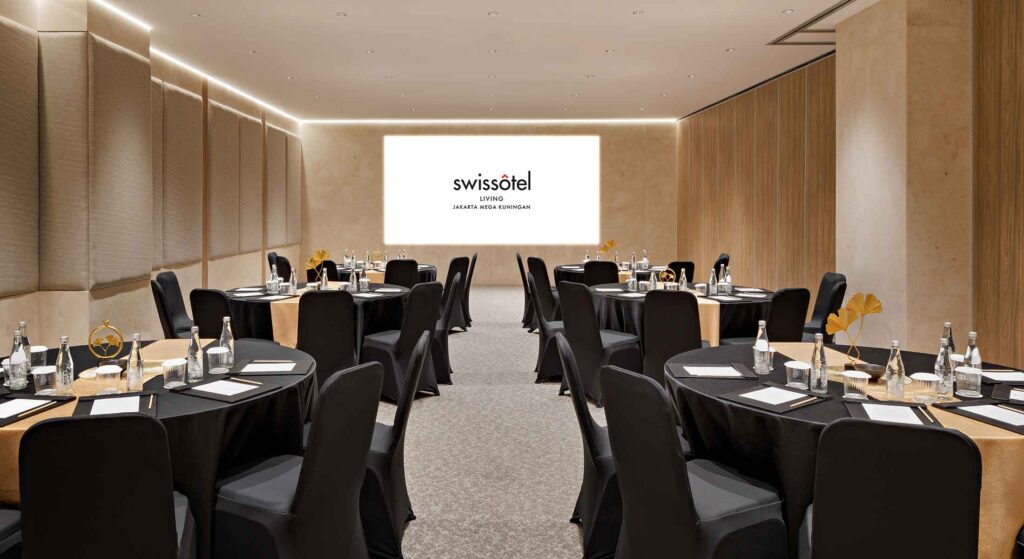
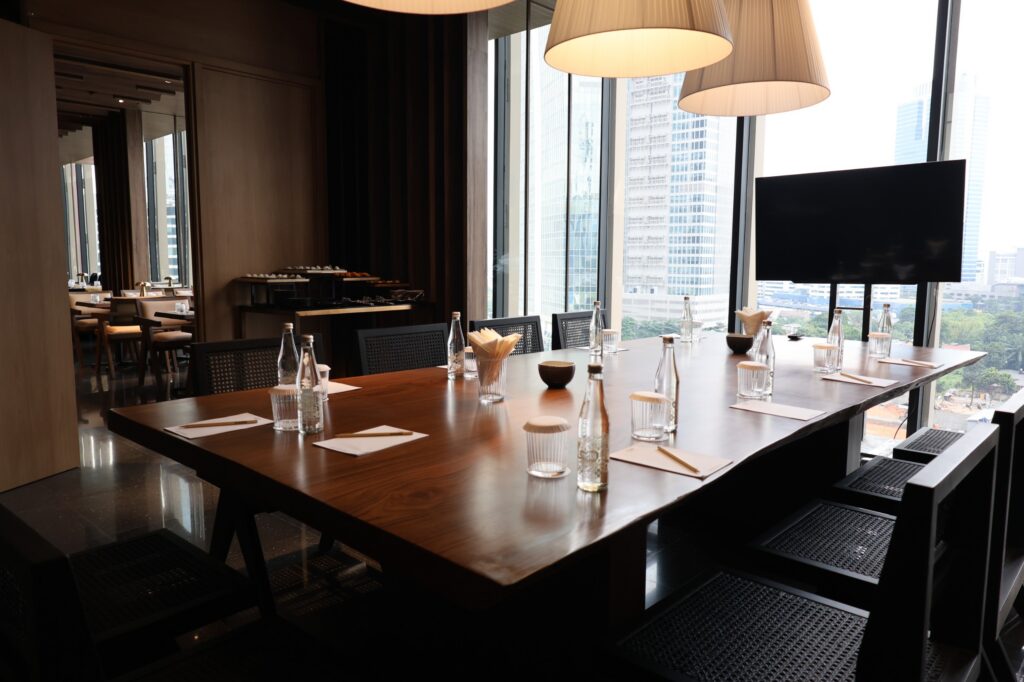
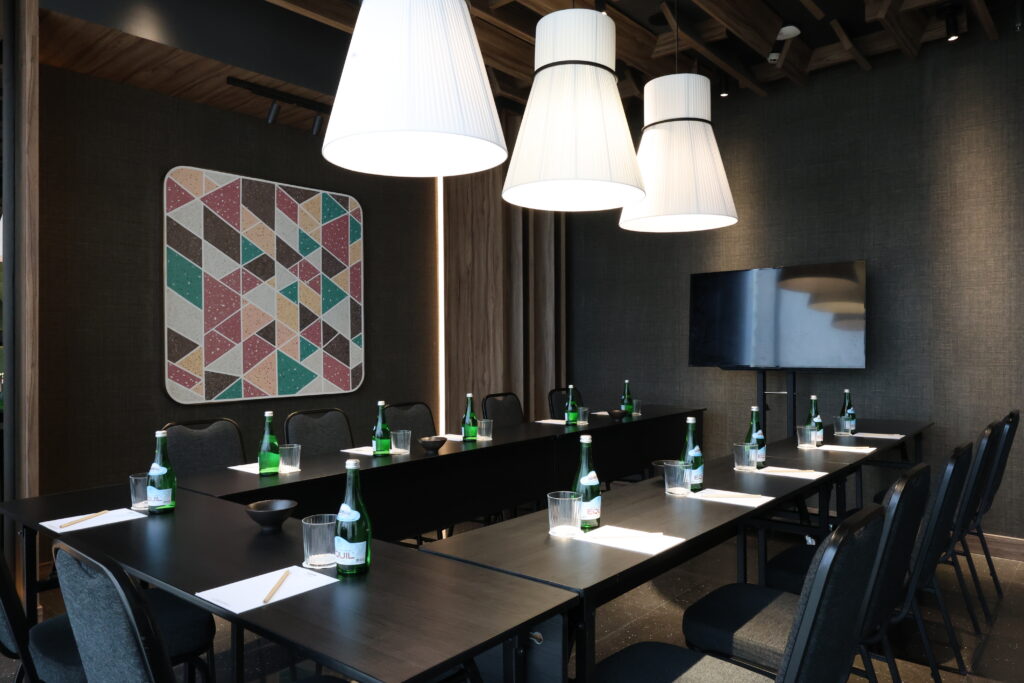
Extended stay properties targeting corporate guests provide business centers, meeting rooms, and high-speed connectivity infrastructure. Professionals conducting client meetings, interviews, or team sessions value on-site facilities that eliminate external venue costs.
Calculate the monthly utilization of business facilities when evaluating extended stay hotel prices. A consultant conducting two client meetings monthly in on-site conference rooms saves IDR 2-4 million versus external meeting room rentals, helping justify premium positioning.
Tax Implications and Corporate Policies
Extended stay hotel prices interact with corporate tax policies, expatriate tax treatment, and business expense documentation requirements that affect net costs and reimbursement eligibility.
Tax Treatment of Extended Accommodation
Many jurisdictions tax hotel stays differently than long-term apartment rentals, creating compliance complexity for corporate housing. Properties classified as hotels typically include value-added tax (VAT) or goods and services tax (GST) in quoted rates, while serviced apartments may structure pricing differently.
In Indonesia, hotel and serviced apartment stays incur 10% VAT plus local taxes, typically included in published rates but requiring clear documentation for corporate expense reporting. Extended stay arrangements exceeding 30 days may qualify for preferential tax treatment under specific circumstances.
Corporate documentation requirements:
- Detailed invoices separating accommodation from services
- Payment receipts with tax identification numbers
- Occupancy certificates for tax residency purposes
- Monthly statements itemizing charges and taxes
- Lease or service agreements defining contractual terms
Expense Policy Compliance
Corporate travel policies establish maximum daily rates (per diems) or monthly accommodation budgets that extended stay hotel prices must satisfy. Properties positioned above policy limits require exception approvals, creating administrative friction.
Experienced corporate travelers negotiate with finance departments to demonstrate that extended stay properties delivering superior value through included services justify higher headline rates. A serviced apartment at IDR 40 million monthly ($2,550 USD) that includes utilities, housekeeping, and amenities may deliver better value than a IDR 30 million apartment requiring IDR 10-12 million in additional service costs.
Making Extended Stay Decisions
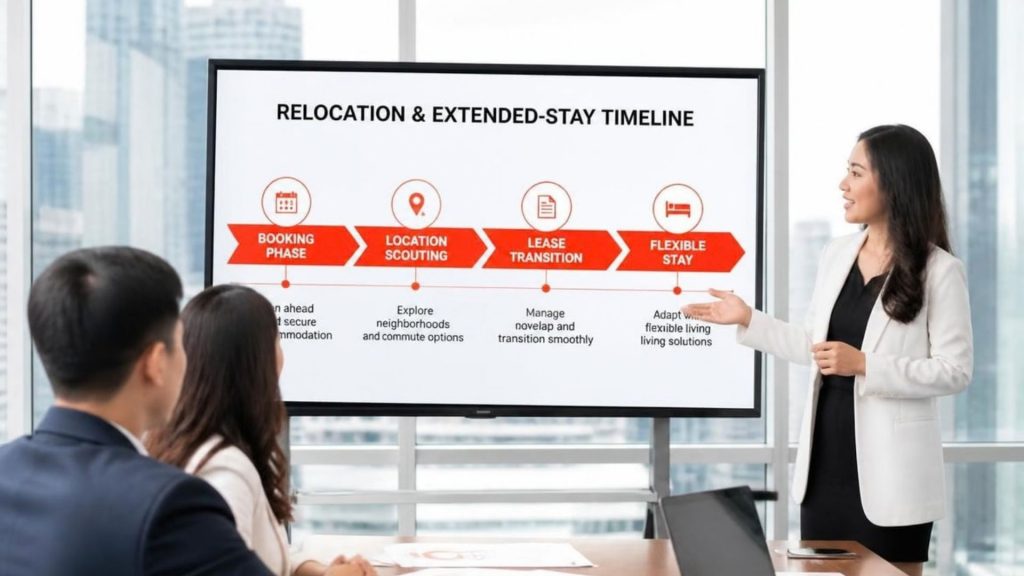
Selecting appropriate extended stay accommodation requires balancing extended stay hotel prices, location convenience, space requirements, service standards, and contract flexibility. Decision frameworks vary based on stay duration, party composition, and lifestyle priorities.
Short-Term Extended Stays (1-3 Months)
Project assignments, interim housing during home searches, and trial relocations benefit from maximum flexibility. Properties offering 30-day initial commitments with month-to-month renewal options suit uncertain timelines, despite commanding 10-20% premiums versus 90-day minimum contracts.
Prioritize location and included services over apartment size for shorter stays. Business travelers spending minimal time in-residence gain limited value from extra bedrooms but benefit significantly from proximity to work locations, reducing commute time and transportation costs.
Medium-Term Assignments (3-12 Months)
The 3-12 month duration represents extended stay properties’ core market. These stays justify investment in appropriate space, neighborhood selection, and quality amenities while maintaining flexibility that traditional leases cannot provide.
Extended stay hotel prices for medium-term stays reward commitment through discounted monthly rates. Properties typically offer optimal value at 6-month contracts, balancing rate reductions with acceptable commitment risk. Consider neighborhoods beyond immediate business districts to access larger apartments at comparable monthly costs.
Long-Term Expatriate Housing (12+ Months)
Multi-year assignments create opportunities for maximum rate negotiation and customized service packages. Annual contracts deliver deepest discounts, often 50-60% below daily rate equivalents, though they sacrifice flexibility.
Evaluate whether extended stay properties or traditional apartment leases better serve stays exceeding 12 months. Extended stays excel when employer provides housing allowances, tax treatment favors serviced arrangements, or assignments involve uncertain timelines despite long initial projections. Traditional leases may offer superior value when commitment certainty is high and tenants accept furniture acquisition and utility management responsibilities.
Property Selection Criteria Beyond Price
Extended stay hotel prices represent just one selection factor. Property reputation, management responsiveness, community atmosphere, and neighborhood characteristics substantially impact residential satisfaction and overall value.
Management Company Standards
Properties operated by international hospitality groups maintain consistent standards, training programs, and service recovery processes that independent operators may lack. Brand affiliation typically adds 15-25% to extended stay hotel prices but delivers measurable service reliability.
Accor, Marriott, IHG, and other global operators bring sophisticated revenue management, loyalty program integration, and corporate sales infrastructure that benefits business travelers through preferential rates, upgrade opportunities, and seamless booking processes.
Community and Networking Opportunities
Extended stay properties attract similar demographics, creating organic networking opportunities valuable for relocated professionals. Properties with strong expatriate communities, social programs, and resident networking events help newcomers establish Jakarta business and social connections.
Neighborhood Lifestyle Compatibility
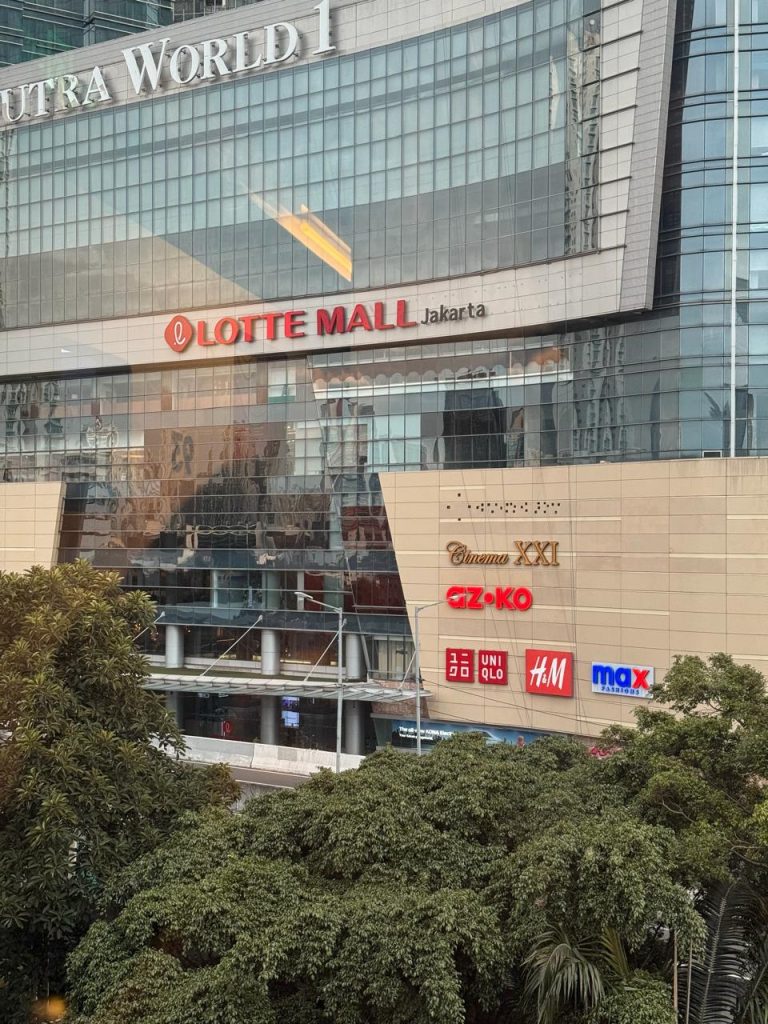
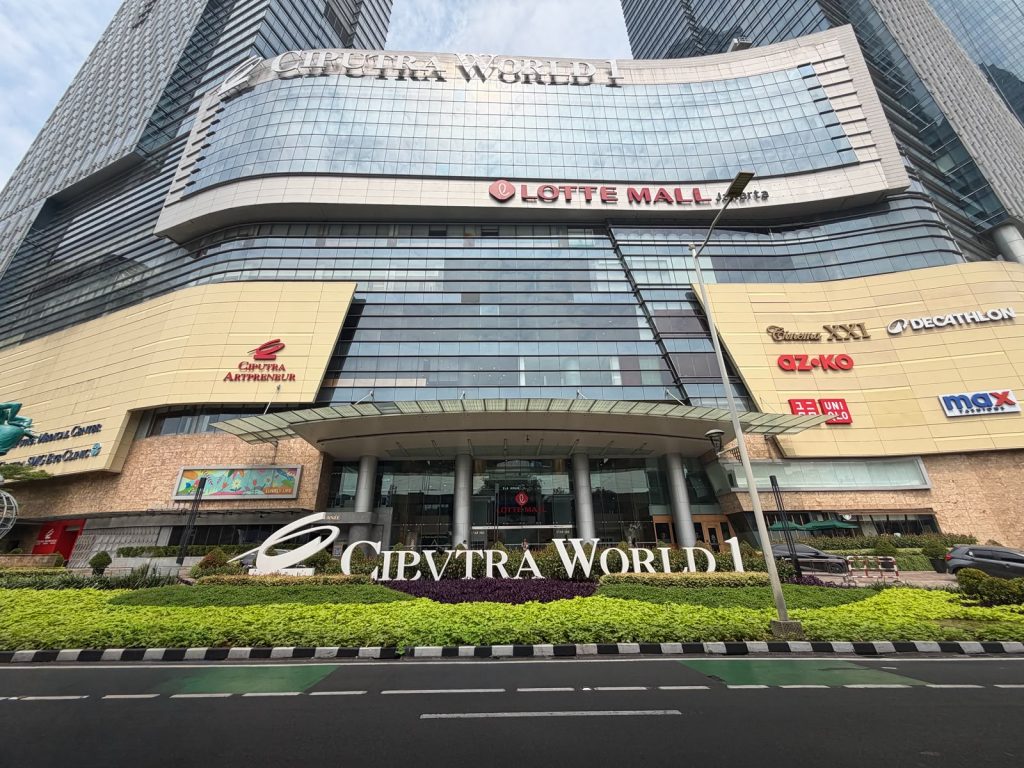
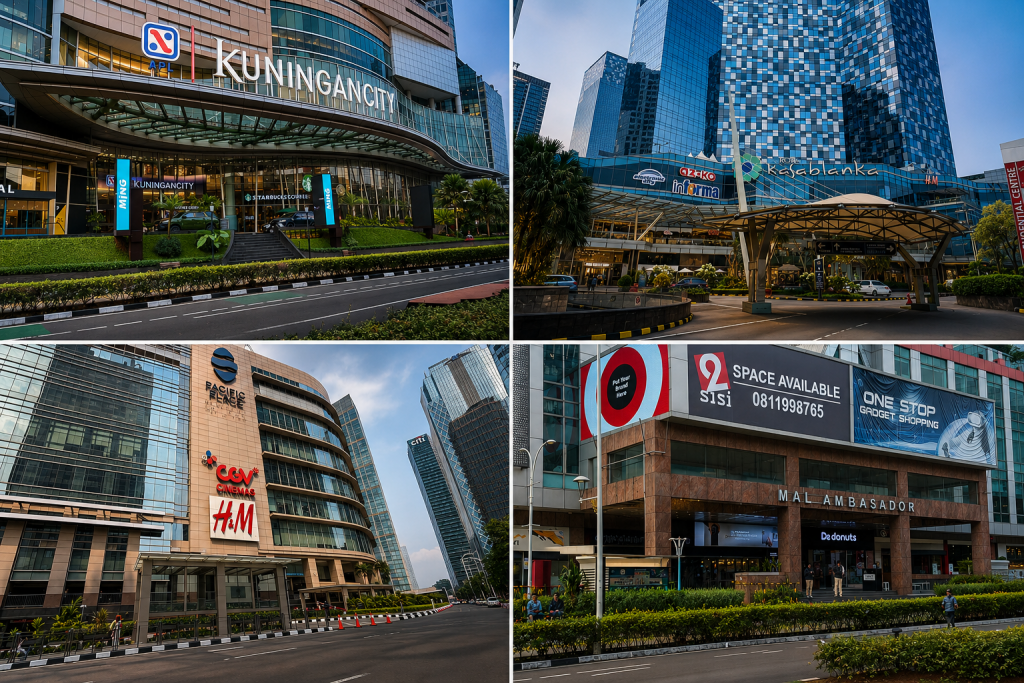
Location evaluation extends beyond office proximity to encompass dining options, shopping access, recreational facilities, and cultural compatibility. Areas like Mega Kuningan, SCBD, and Menteng offer distinct lifestyle characteristics affecting long-term residential satisfaction.
Research restaurants near Mega Kuningan and neighborhood amenities when evaluating properties. Access to international grocery stores, healthcare facilities, and lifestyle services substantially impacts daily quality of life during extended stays.
Properties in established business districts provide mature infrastructure, international dining, and English-speaking service environments that ease cultural transitions for expatriates and frequent international travelers.
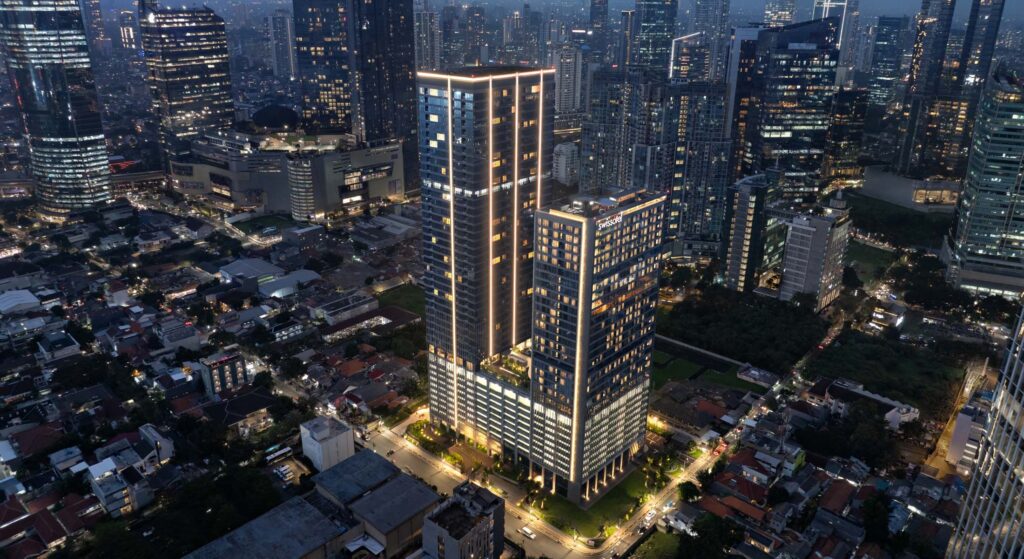
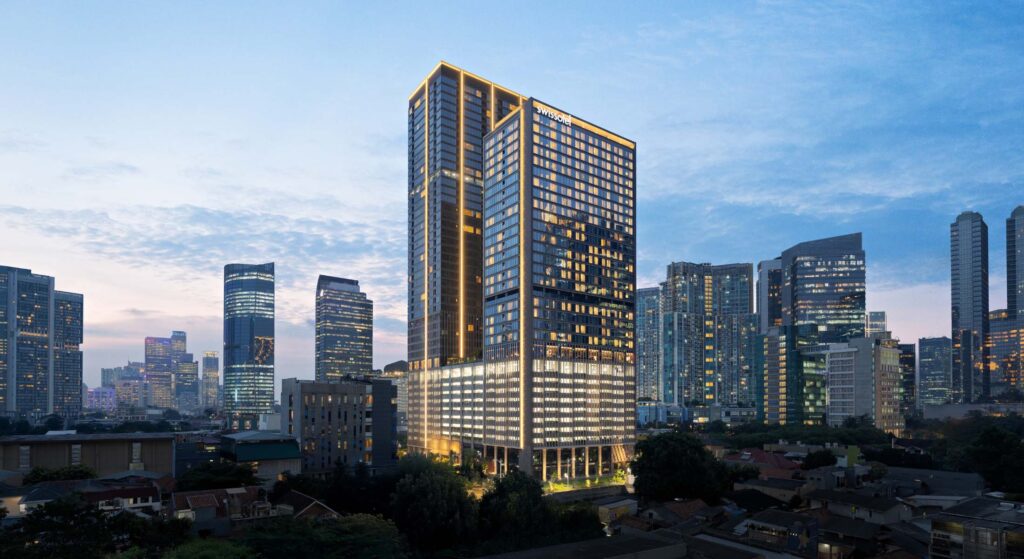
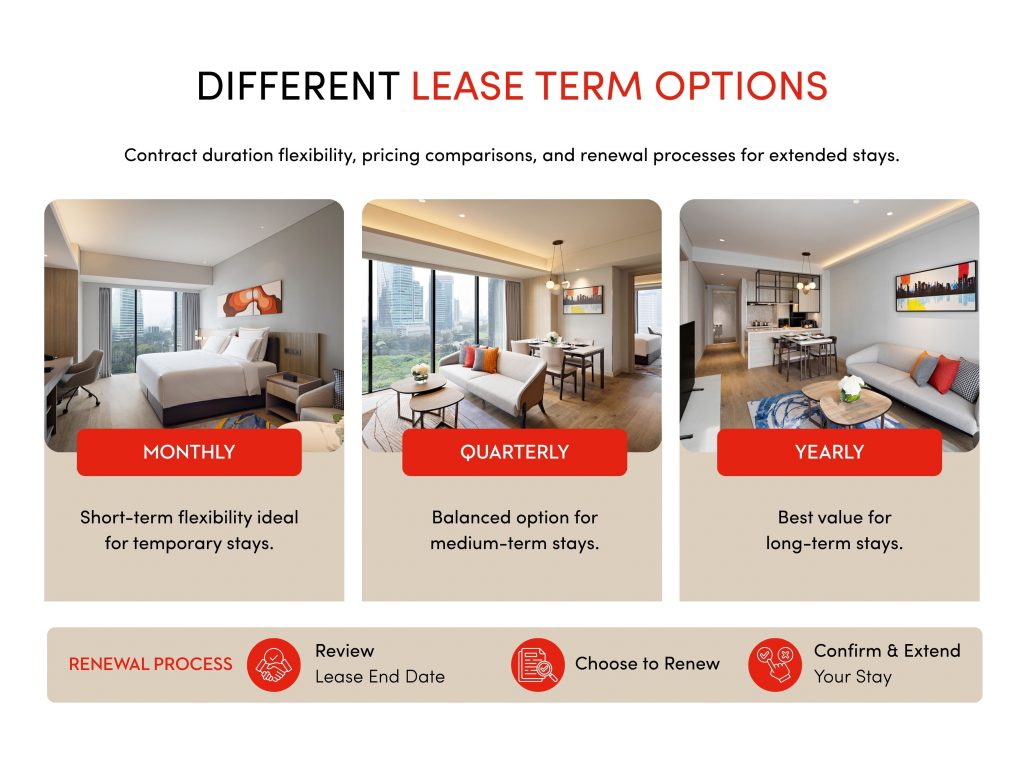
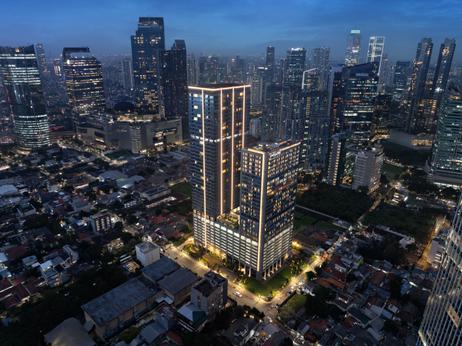
Extended stay hotel prices in 2026 reflect sophisticated market segmentation, rewarding longer commitments while delivering comprehensive services that traditional apartments cannot match. Understanding pricing structures, included amenities, and total cost implications enables informed decisions that balance budget constraints with quality of life requirements. For business travelers, expatriates, and relocating families seeking premium serviced apartments in Jakarta’s central business district, Swissôtel Living Jakarta Mega Kuningan delivers Swiss hospitality standards, 240 fully furnished residences from studios through three-bedroom apartments, and strategic access to Kuningan, SCBD, Sudirman, and major business centers with flexible daily, weekly, monthly, and yearly contract options.




































































 Should You Choose an Extended-Stay Hotel or Serviced Apartment in Jakarta for a Business Trip?